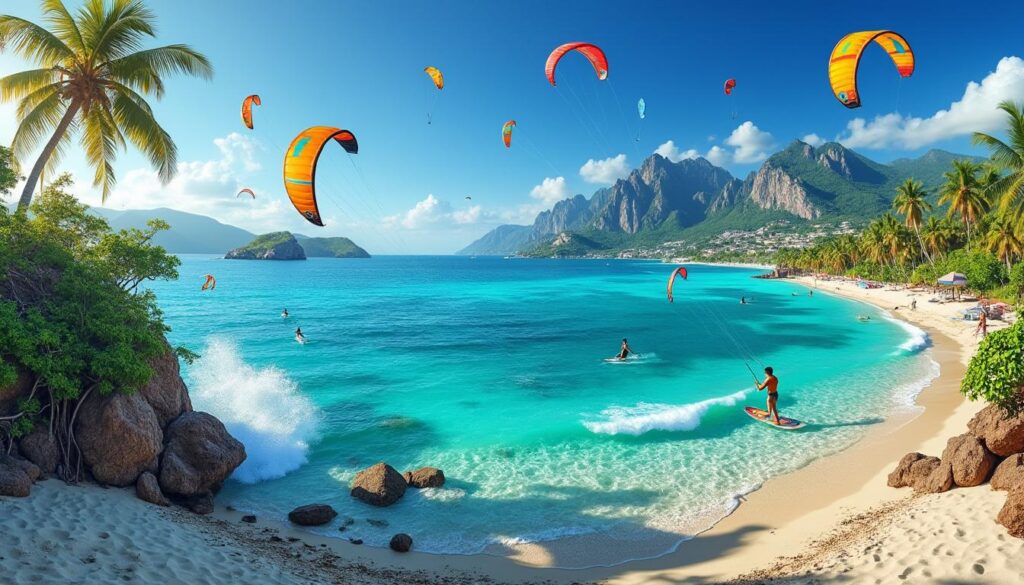
Wind that accelerates between two seas, long beaches, water that changes color between the Tyrrhenian and the Ionian, and a coast where every bay can become your next spot kitesurf Calabria. The region is now one of the strongest hubs for kitesurf in Italy, thanks to a geographic position exposed to different winds, regular thermals and a climate that allows you to plan real kitesurf holidays out of season. Those looking for powerful sessions find waves, chop and gusts; those who want to learn find schools, shallow water and huge spaces for their first runs.
Here the wind is not a brochure accessory but the true guide of the days. From the Gulf of Sant’Eufemia to the wildest Ionian beaches, Calabria offers conditions for all levels: from kitesurf for beginners to the most technical foil. While many still choose the more famous destinations of kitesurf in Salento or Sardinia, those who cross the Strait of Messina or travel along the Riviera dei Tramonti discover spots that have nothing to envy of the so-called best kitesurf spots in Italy. The cleverness is in reading the wind well and in knowing how to move between Tyrrhenian and Ionian according to the forecasts.
In short
- Two seas, double spots: the milder Tyrrhenian and the drier, windier Ionian allow you to find rideable conditions almost every week of the year.
- Reference spots: Punta Pellaro and Gizzeria are the historical centers of kitesurf in Calabria, with schools, events and reliable thermal winds.
- Different levels, same coast: wide beaches and sandy bottoms for those who want to learn kitesurf, rougher and windier stretches for those seeking jumps and advanced maneuvers.
- Smart session choice: the trick is knowing the dominant wind direction of the day and moving between Tyrrhenian and Ionian accordingly.
- Italy at 360°: those who already love kitesurf in Puglia or in Sicily find in Calabria a natural extension of their playground.
Kitesurf Calabria between Tyrrhenian and Ionian: why this region is a magnet for the wind
Calabria is a tongue of land stretched between the Tyrrhenian Sea and the Ionian Sea. This elongated shape creates a natural corridor for the wind which, almost every day, finds an outlet on one of the two coasts. On one side there is the milder “Mediterranean” shoreline, on the other the Ionian coast, drier and often windier. Result: a territory that, in terms of wind, plays in the same category as the most renowned areas of kitesurf in Italy.
The main currents that affect the region are Mistral, Sirocco, Libeccio and Grecale. In some stretches, these winds are further accelerated by orography: hills close to the coast, gorges, headlands that channel the airflow. This is exactly what makes spots like Gizzeria or Punta Pellaro famous, where thermals often pump even when forecasts seem modest. For the rider, this means more possible sessions, with less frustration from a “flat kite on the beach.”
Those used to the Adriatic kitesurf and Ionian kitesurf in Puglia immediately recognize the pattern: when one side doesn’t work, often the other side lights up. In Calabria this dynamic is even more evident, because the distance between the two coasts is relatively short in several stretches. With an hour’s drive you can turn a flat day on the Tyrrhenian into a solid session on the Ionian, or vice versa.
To better understand the potential of the region, just look at what happened in the Gulf of Sant’Eufemia, not far from Lamezia Terme. Here an international championship stop shone a spotlight on the value of the local spots, confirming Calabria as one of the leading regions for kitesurf in Italy. It’s not only a matter of strong wind, but of predictable and repeatable wind: the kind that allows you to plan a weekend, not just hope for a lucky gust.
A concrete example is Luca, an intermediate rider from Rome who for years alternated between kitesurf in Salento and Sardinia. After discovering Gizzeria almost by chance, he began planning a couple of long weeks in Calabria every summer. The reason? “Here if a weather system goes wrong, often it’s enough to change coast and you get the session.” It’s exactly this flexibility, between Tyrrhenian and Ionian, that makes the region interesting for those who want to maximize time on the water.
Compared to other areas, Calabria also remains more authentic and less squeezed by mass tourism. Those who arrive with a van or loaded gear won’t find beach clubs everywhere, but often long beaches, simple access points and plenty of space to rig the kite. For kitesurf beginners this translates into less stress during the first water starts, lower risk of collisions and a more relaxed environment.
The key point to keep in mind is simple: between two seas, you don’t look for the “ideal weather” in an absolute sense, you look for the right spot for that precise wind. Those who learn to read this mental map of Calabria well can transform the region into a huge playground, active almost year-round.
Punta Pellaro: the wind laboratory on the Strait of Messina
When talking about Ionian kitesurf in Calabria, the name that immediately comes up is Punta Pellaro. Located along the Strait of Messina, it’s a spot that has built its reputation on two pillars: reliable wind and space. The beach is wide, with plenty of safety margin for launches, landings and less-than-elegant recoveries, especially during the first practice days. Here the kite is not treated as a photo attraction, but as a daily sport.
The leading wind is the so-called Bora, a flow that channels through the Strait and which, on good days, offers long and regular sessions. This type of wind, combined with the seabed configuration, allows relatively tidy water near the shore, while further out the surface ripples just enough to mark the legs and push a few jumps. For those who have good control of the bars, fun is guaranteed.
Another plus of Punta Pellaro is the presence of kite schools and equipped centers along the beach. Those who want to learn kitesurf can easily find a structured kitesurf course, on-water assistance and, importantly, rental kites in different sizes to adapt to the wind of the day. In addition, the local community is used to hosting both beginners and experienced riders, without the tensions sometimes felt at super crowded spots.
An image that describes this spot well is that of Sara, a beginner with only a few hours of practice, who in a week at Pellaro went from hesitant body drags to her first water start with 50–100 meter legs. Not because Calabria is magical, but because constant wind, wide beach and present instructors create an environment where you can try, fail and try again safely.
Surprises are not lacking here either: the Strait area is known for the presence of dolphins and, more rarely, turtles, which occasionally show up during sessions. These encounters remind you that the spot is not a pool, but a living piece of sea. For this reason, schools emphasize respect for the environment, safety distances and attention to bathing areas.
From a weather point of view, Punta Pellaro works particularly well in the warm season, when thermals strengthen the wind from late morning. However, those who know how to choose the right windows can find rideable days even outside summer, especially when temperature exchanges between sea and land create interesting gradients. For those who organize with a few days’ margin, the probability of sessions remains high.
The real value of Punta Pellaro, beyond statistics, is this: it’s a spot that allows a rider to grow. From the first hours to getting comfortable with the harness up to the first advanced maneuvers, the combination of wind, space and local community offers continuous training ground, without having to change spot every two days.
Gizzeria and the Gulf of Sant’Eufemia: the competitive heart of kitesurf in Calabria
If Punta Pellaro is the wind laboratory, Gizzeria Lido is the international showcase of kitesurf in Calabria. We are in the center of the region, facing the Tyrrhenian, a few kilometers from Lamezia Terme airport. Here the wind undergoes a real acceleration, due to the shape of the gulf and the hills behind that channel the airflow. The Mistral, in particular, often arrives stronger and cleaner than elsewhere.
This mix of wind and topography has transformed Gizzeria into an ideal spot for freestyle, big air and especially kite foil. Not surprisingly, the Gizzeria coast was chosen as a stop for an important world foil circuit, attracting athletes from all over the planet. The water here can present very varied conditions: days with regular chop perfect for jumps, and others with flatter water ideal for kite lessons or for those training in foil at high speed.
To better understand the differences between the main spots in the region, here’s a concise overview:
| Spot | Sea | Main wind | Recommended level | Strengths |
|---|---|---|---|---|
| Punta Pellaro | Ionian (Strait of Messina) | Bora, thermal winds | From beginner to advanced | Wide beach, schools, frequent wind |
| Gizzeria Lido | Tyrrhenian (Gulf of Sant’Eufemia) | Mistral, thermals | Intermediate/advanced, foil | Accelerated wind, event-ready spot |
| Smaller Ionian beaches | Ionian | Sirocco, Grecale | Beginner/intermediate | Less crowded, authenticity, space |
In Gizzeria the wind often comes in around midday and can remain steady until sunset, with “non-stop” sessions especially in summer. Those focused on freestyle find kilometers of space to try loops, kite loops and long landings. Foil riders, on the other hand, exploit the combination of medium wind and manageable sea to train at speed and on deep tacking angles, a bit like the best areas of kite foil in Italy.
Also for those progressing, Gizzeria can be interesting. Several schools offer kitesurf courses with a modular approach: first launches in the less choppy water near the shore, then gradual moving to areas with more chop to learn to control the board in realistic conditions. A typical beginners’ mistake is looking only for perfectly flat water; in reality, learning to handle a bit of ripple early helps you feel more confident in any spot.
A useful example is Marco, a foil rider focused on racing, who chose Gizzeria to prepare a season of competitions. In two weeks he could count on many days of usable wind, alternating early morning training and long fine-tuning sessions in the afternoon. The feedback? “A demanding but consistent spot, perfect for working on consistency.” For those seeking a step up, this kind of playground makes a difference.
Gizzeria’s strength is not only in the spectacle of events or in the videos of those who fly high. It’s in predictability: knowing that, if the Mistral is forecast, the gulf will hardly betray you. Those who plan their kitesurf holidays with the goal of maximizing hours on the water end up keeping this stretch of coast in high regard.
Watching some videos of foil races or freestyle gatherings helps immediately understand the kind of potential this area offers. Then, once on site, the difference is made by equipment setup and managing power on the bar.
Other kitesurf spots in Calabria: Tyrrhenian, Ionian and less crowded beaches
Besides Punta Pellaro and Gizzeria, Calabria hides a series of lesser-known but very interesting spots for those who love to explore. Along the Ionian coast, for example, you’ll find long, undeveloped beaches where Sirocco and Grecale can offer honest sessions, without crowds and with plenty of space to rig the kite. They’re not always “postcard” spots, but they’re perfect for those who just want water, wind and a board.
Some areas near Steccato di Cutro, Gabella and stretches further south offer conditions that range from light flat to moderate chop depending on swell and wind direction. Here kitesurf for beginners can work well on days with not-too-strong wind, because the seabed often slopes gently and the beach maintains good width. Obviously, as always, it’s essential to talk to locals to understand any currents, submerged rocks or seasonal restrictions.
On the Tyrrhenian side, there are stretches where Libeccio and Mistral come in decisively, but the key is always the same: avoid improvising on unknown spots without precise information. Some stretches may have rocky bottoms or more aggressive shore breaks. For a rider already used to Italian seas, however, these situations are manageable with some common sense and the right reading of the sea.
To build your own kitesurf holiday itinerary between Calabria, Puglia and perhaps Sicily, many riders create a “triangle” of spots connecting the main windy areas of the South. For those who already frequent kitesurf in Lecce and kitesurf in Taranto to the Calabrian coasts, the step is short. Conditions change, but the logic remains: follow the wind and always choose the spot that is safest and most functional for your level.
A good practice is to divide the days with a small ritual:
- Morning: detailed check of forecasts from multiple sources, paying special attention to direction and thermal gradient.
- Midday: inspection of the chosen spot, assessing waves, current, traffic on the water and space on the beach.
- Afternoon: main session, with start time and duration decided based on the wind peak and your own fatigue.
Following this scheme greatly reduces the typical mistakes of an outsider rider who rushes and rigs in the wrong spot or at a time when wind is already dropping. Remember: at new spots, the sea dictates the timing, not the plan built in your head the night before.
Those who want to deepen the “Italy kite tour” topic can compare Calabria with other hubs like Naples, Tuscany or Sicily, perhaps starting from dedicated guides such as those on kitesurf in Naples and surroundings. The more coastline stretches you know, the faster you learn to read a new spot the moment you set foot there, and this is extremely useful in Calabria.
The real advantage of lesser-known spots is simple: they give you time. Time to rig calmly, to rehearse maneuvers, to experiment with different boards. In a world of crowded beaches and constant noise, some Calabrian bays can still give you the right silence before entering the water.
How to choose equipment, schools and timing for kitesurf in Calabria
Truly exploiting the potential of kitesurf in Calabria means arriving prepared. The first choice concerns timing: spring and summer are the most popular seasons, with reliable thermals and warmer water. Autumn, however, can surprise with windier fronts and still uncrowded beaches. Riders who already have good sail control often appreciate these windows, because they offer stronger wind and a livelier sea.
For equipment, the ideal is to cover a medium-wide wind range. Many riders opt for a two-kite set, for example 9–10 m² and 12–13 m², paired with a versatile twin-tip board. Those who like to vary may add a small surfboard or a foil to take advantage of days with slightly lighter but steady wind, especially at spots like Gizzeria. To choose your quiver sensibly, technical guides on kitesurf equipment can help avoid useless or unbalanced purchases.
A common mistake by beginners is arriving with gear that is too advanced or not adaptable. For kitesurf for beginners in Calabria, priority should be kite stability, easy relaunch and a board with good surface area to facilitate the water start. Only after a few dozen hours on the water does it make sense to consider smaller boards or aggressive kites for big air.
The choice of kitesurf school is the other key piece. Both Punta Pellaro and Gizzeria host structured schools with certified instructors, rescue boats or assistance vehicles and radio systems to follow students in the water. For those starting from zero, a kitesurf course of 8–12 hours spread over several days is often the ideal format: enough time to internalize safety, basic kite control and first legs, without rushing the stages.
To make the choice easier, here are some practical criteria to select school and timing:
- Safety first: always ask how on-water assistance is managed and what procedures are followed in case of emergency.
- Group sizes: to really learn, small groups or semi-private lessons are often more effective.
- Timing: if you’re a beginner, favor months with warmer water and medium wind, for example late spring or peak summer.
- Equipment included: for those who don’t yet have their own kit, it’s useful to choose courses that include everything, from the wetsuit to the board.
Those who are already independent can use Calabria as a great training ground to refine technique and gear. The strongest Mistral or Libeccio days are perfect for testing new kites, trying different setups and maybe starting to play strapless or with foil. Deepening with articles dedicated to differences between windsurf and kitesurf or board choice, like those on the topics windsurf kitesurf equipment, helps clarify which upgrades really make sense for your level.
The last variable is logistics: the proximity of Lamezia Terme airport makes it easy to arrive even for those living far from the South. In addition, the possibility of combining Tyrrhenian and Ionian coasts on the same trip allows you to build a flexible itinerary, ready to adapt to the Salento wind when you move towards Puglia or to Sicilian breezes if you continue beyond the Strait.
The golden rule remains unchanged: preparation on land, lightness on the water. The more you arrive organized in terms of equipment, school and timing, the more Calabria will reward you with real sessions, not just photos taken from the umbrella.
What is the best time to kitesurf in Calabria?
The most used season for kitesurfing in Calabria runs from late spring to early autumn, when thermal winds blow regularly and the water is warmer. Summer offers many days with moderate wind, ideal for lessons and progression. Autumn and some winter windows can bring stronger weather systems, suitable for riders who are already experienced and looking for more powerful sessions.
Is Calabria suitable for kitesurfing beginners?
Yes, several spots in Calabria are suitable for those starting out, thanks to wide beaches, relatively gentle seabeds and structured schools. Punta Pellaro and some areas of Gizzeria offer zones with less choppy water, perfect for body drags, water starts and first legs. It’s important to rely on a kitesurf school with certified instructors and programs specifically designed for beginners.
What equipment is needed for a kitesurfing holiday in Calabria?
For a typical holiday in Calabria, many riders choose two kites (for example 9–10 m² and 12–13 m²) and an allround twin-tip board. A wetsuit thickness that varies by season, a comfortable harness and an impact vest complete the basic kit. Those who want to also take advantage of lighter wind days can add a foil or a voluminous surfboard. Alternatively, several schools offer full equipment rental.
Is the Tyrrhenian or the Ionian coast better for kitesurfing in Calabria?
There is no absolutely “better” side: Calabria’s strength is precisely the possibility of choosing between Tyrrhenian and Ionian according to the forecasts. The Tyrrhenian, with spots like Gizzeria, works very well with Mistral and summer thermals, while the Ionian, with Punta Pellaro and other beaches, exploits winds like the Bora, Sirocco and Grecale. The secret is to check wind direction and intensity and move accordingly.
Do you need a lot of prior sea experience to start kitesurfing in Calabria?
You don’t need great sea experience, but it’s essential to feel comfortable in the water, be a good swimmer and accept the idea of falling often during learning. Calabrian schools structure courses starting from safety, teaching kite control on land and only later in-water exercises. With the right approach and suitable conditions, even someone starting from zero can progress in a few days.