The wind pushes you, the board glides, the kite responds to every small movement of your hands. Learning kitesurfing is not just “trying a new sport”, it’s changing the way you experience the sea. Those approaching kitesurf for beginners often arrive with a mix of curiosity and fear: fear of strong wind, of the kite pulling, of deep water. With a structured kitesurf course, serious instruction and carefully chosen spots, these fears turn into respect and control. The goal is not to “resist” the wind, but to use it to your advantage. Especially in areas like Salento, where the Salento wind changes mood between the Adriatic and the Ionian, learning well from the start makes the difference between frustration and pure fun.
In Italy, and particularly in Puglia, kitesurfing has gone from a niche sport to a widely practiced activity. People increasingly talk about kitesurf Italy, about schools along the entire coast, about kitesurf spots Puglia that attract riders from all over Europe. But those starting from zero need concrete guidance: understanding how the equipment works, how long a course lasts, what happens from the first day on the beach to the first real water start. This guide collects what really matters to learn kitesurfing safely: how a first basic course is structured, which mistakes to avoid, how to choose the right kitesurf school and why the coasts between kitesurf Lecce and kitesurf Taranto are a perfect classroom to start kitesurfing.
In short:
- You need a real basic course: 3 days, 4 targeted lessons (1 theory + 3 practical) are the serious standard to start without burning out.
- Safety above all: helmet, life jacket, quick release systems and an IKO or FIV certified instructor are not optional.
- Course structure: theory and first flight, body drag, then board and first water start attempts with support from a RIB.
- Right spots: Salento, between kitesurf Adriatic and kitesurf Ionian, offers ideal conditions for those starting from zero.
- Real costs and timing: a properly run basic course costs around €300 and requires at least 3 days with suitable wind.
Learning kitesurfing from scratch: how a first course really works
Those who dream of their first edge often imagine immediately getting on the board and being towed by the kite. The reality of a good kitesurf course for beginners is different, much more gradual and above all much safer. To learn well you need precise steps: know the wind, understand the spot, become familiar with the kite, then with the water and finally with the board. This progression allows you to have fun from day one without throwing yourself in blindly.
A serious basic course lasts on average three days and includes 4 one-hour lessons: an initial theory part, then three practical sessions in the water or from the RIB. Often the first two lessons (theory + first flight) are concentrated on the same day. It’s the moment when the head absorbs the information and immediately after the body puts it into practice. The other two hours, dedicated to body drag and the first board departures, tend to be more intense; it’s advisable to spread them over different days to arrive in the water clear-headed and reactive.
The common thread of the whole course is simple: progressively reduce anxiety and increase mastery. For this reason, in serious kitesurf Salento schools, each lesson is individual, with an IKO certified instructor who follows the student closely, often with the support of a RIB. No waiting on the boat while others do exercises, no “mass course” with multiple students connected to the same kite. Every minute is dedicated to the learner, and this enormously speeds up progression.
Take Luca as an example, 32 years old, he arrives in Salento in spring for a long weekend. He has seen videos on social media, but zero real experience. On the first day he learns to rig the kite, to recognize wind direction, to handle the bar on the RIB. The second day he goes into the water without the board, discovers body drag, finally understands how his body “talks” to the wind. On the third day, with the board on his feet, he feels that right push: water start, hips forward, eyes toward the direction of travel. He does his first 5 meters, then 10, then a longer glide. He is not “already jumping”, but has truly begun kitesurfing.
The big advantage of this structure is that every student leaves the course with an IKO certified level, a sort of kitesurfing “license” that indicates what they can do: basic piloting, body drag in different directions, relaunching the kite from the water, first departures. This is crucial if they later want to rent equipment or continue with advanced lessons at other kitesurf Italy schools. In practice, the basic course does not make you an expert rider, but it gives you all the foundations to continue growing safely.
To close this first overview, the message is clear: those who want to start don’t need “extreme courage”, but a guided path that transforms the energy of the wind into control and enjoyment.
How the basic course is carried out: days, phases and objectives
Going into more detail, a well-structured basic kitesurf course follows a clear progression. Each day has a different focus, and each step prepares for the next. You don’t move to the board if you don’t first have safe control of the kite, and you don’t think about speed if you haven’t first understood how to stop and depower.
The typical three days look like this:
- 1st day – theory and first flight: wind dynamics, wind window, right of way, gear rigging, safety systems, then piloting from the RIB.
- 2nd day – body drag: review of kite control, entering the water without the board, body towing exercises in various directions, relaunching the kite from the water.
- 3rd day – board and water start: board on the feet, kite-body-board coordination, first departures, managing power and body position during the glide.
This schedule is not rigid; it is adapted to the wind and the student’s pace. Some enter the water already on the first day, others need a bit more time on the RIB to feel comfortable. What matters is that each phase has a clear and verifiable technical objective, not a generic “do some practice”.
Before moving on to the safety section, it’s worth fixing one concept: learning kitesurfing is a process. There is no magic shortcut offered by those who promise that “after two hours you’re on your own”. Method is needed, and a good course is the best ally.
Safety and wind: learning kitesurfing without taking risks
Kitesurfing is pure adrenaline, but underestimating safety is the quickest way to ruin the fun. You can’t command the wind, but you can learn to read and respect it. On the southern coasts, from kitesurf Lecce to kitesurf Taranto, it’s common to find days with tight Mistral or strong Scirocco. For beginners, these names must become allies, not threats. The first step is to understand that every session starts on land, with eyes on the sky and the sea surface.
In the basic course, safety comes into play from the very first lesson: the wind window of the kite is studied, that imaginary clock where the sail is more or less powerful depending on its position. You learn how the quick release on the harness works, how to depower it by pushing the bar forward, how to behave if the kite falls into the water or is dragged into the power zone. All these actions become automatic only if practiced calmly beforehand, not when panic has already set in.
The presence of the RIB with the instructor nearby adds a fundamental level of safety, especially in the first days of kitesurf for beginners. No one is left adrift, no one has to swim back against the wind. The instructor ensures the distance from the shore and other riders remains appropriate, corrects posture, calls attention if they see signs of fatigue.
To give a clear idea of the differences between an improvised approach and a professional one, here’s a concise comparison.
| Approach | Characteristics | Risks/Benefits |
|---|---|---|
| Structured course with kitesurf school | Certified instructor, individual lesson, use of RIB, full safety equipment, controlled spot | Maximum risk control, faster progression, solid and certified technical foundations |
| “Do-it-yourself” try with a friend | No insurance, equipment not always suitable, sketchy explanations, spot chosen at random | High risk of injuries, bad habits hard to correct, fear of the wind persists |
At a mandatory level, anyone enrolling in a serious kitesurf course must present a medical certificate for non-competitive sports activity. It’s not useless bureaucracy: the body is put under strain, especially the back, shoulders and core. Knowing you are fit makes everything more serene, for the student and for those who supervise them.
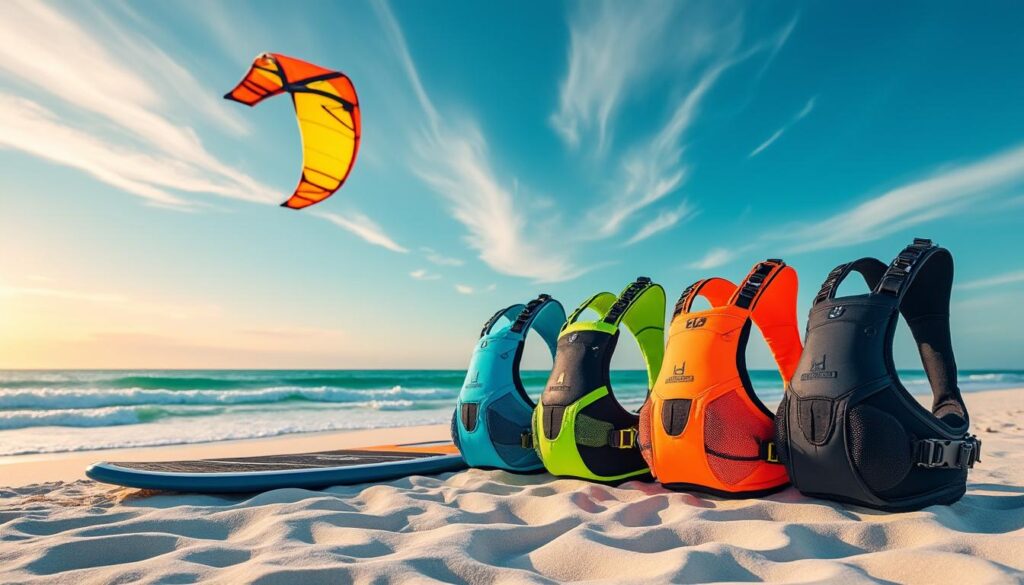
Added to this is protective equipment: helmet, life jacket, wetsuit, harness and leash are not aesthetic accessories, but work tools. The helmet protects from impacts with the bar or the board, the life jacket helps keep you afloat even when tired or agitated. The wetsuit keeps the body warm and reactive, especially off-season, while a well-adjusted harness transfers the kite’s pull from the torso to the hips.
The Salento spots, when well used, become a perfect gym to practice these procedures. Some stretches of the Ionian coast, with relatively flat water and gently sloping bottoms, are ideal for those who still need to get familiar with quick releases and relaunches. Conversely, certain days on the windy Adriatic teach you to respect more challenging conditions, always with an instructor nearby.
The core teaching is simple: true freedom on the water is born from discipline in safety procedures.
Salento wind and choosing the spot for beginners
Before every session, those who teach kitesurfing in Salento look at wind direction and intensity. Not the color of the water on Instagram. The Salento wind ranges among Mistral, Tramontana, Scirocco, and Libeccio, and each direction makes some stretches of coast more suitable than others. This is the real art of “reading the territory”.
For beginners, the rule is to aim for spots with clean bottoms, wide launch areas, few obstacles at the shore and wind as side-onshore as possible (which tends to push you toward the beach). Some of the best kitesurf spots Italy follow this logic. To get a broader idea of the places to start kitesurfing along the Peninsula, it can be useful to explore an overview like this: guide to the main kitesurf spots in Puglia.
The gist is clear: choosing the right spot, with manageable wind and a school present, reduces stress and speeds up learning. No beginner needs big waves, unmanageable gusts and a shore crowded with swimmers. You need space to make mistakes, fall, get back up, without creating problems for yourself or others.
Complete structure of the kitesurf course for beginners: theory, body drag, board
Once the importance of safety is clear, you can get into the technical heart of the basic kitesurf course. Each phase has a precise name: theory, first flight, body drag, water start. And each builds an indispensable block to reach independent riding. Knowing what will happen in each lesson helps you arrive on the beach more relaxed and focused.
The theory part is not a “necessary evil” to endure before touching the kite. It’s the key to reading the sea. In this hour you talk about spots, obstacles, currents, how to recognize gusts and wind holes. You study right-of-way rules among riders to avoid conflicts and collisions. You analyze the wind window as if it were a map, understanding where the kite pulls most and where it barely works.
In parallel, the complete equipment is rigged: lines are laid out, the bar is connected, kite valves and bladders are checked. The instructor shows how to verify safety systems and how to arm them correctly. Every move that seems “slow” on land will become a vital reflex in the water.
After theory, you move on to the first flight. You get on the RIB wearing the harness, reach the area with cleaner wind and away from obstacles. Here the kite is inflated, attached to the student and launched. The instructor guides a hand on the bar, explains how to keep the arms relaxed, how to hold the sail at “12 o’clock”, how to move it slowly along the edge of the window. This is the moment when many discover that, in reality, the kite is much more controllable than they thought.
The next day the body drag comes into play. The student goes into the water without the board, only with the kite attached to the harness. The objective is clear: be pulled by the kite forward, sideways, upwind, learning to use your body like a fin. You try controlling the kite with one hand while slightly swimming with the other, you simulate situations of board recovery and relaunching the kite.
This phase is very physical, but also very freeing. It’s the moment you get comfortable with the water and with the real traction of the kite on the body. Those who skip it or approach it too hurriedly usually pay the price when the board moment arrives: without body drag there is no balance, and without balance every water start becomes a dive.
Finally comes the lesson everyone awaits: the board. Here we talk about the water start, the technique to get up on the water. You learn to place your feet in the straps while remaining in flotation, to position the body slightly back, to give the right “pull” of power with the kite to lift up, without overdoing it and getting catapulted. The instructor follows closely, often helping physically in board recovery to allow more attempts in an hour. Each start, successful or not, is corrected with small tips: shoulders, hips, gaze, timing with the bar.
At the end of this third day, most students have already tried their first short glides. Those more athletic may manage to keep the board going for a few dozen meters. Those less used to the water take a bit longer, but the seed is planted: they know what to do, feel when the kite “goes into power”, recognize their mistakes and have the tools to correct them.
The essence of this structure is simple: the basic course does not promise miracles, but delivers mental and technical autonomy to continue the journey into the world of kite.
What is included in a good basic kitesurf course
Another aspect to clarify is what a basic kitesurf course for adults concretely includes. Beyond the lesson hours, there’s a whole package of services that make the difference between a serious offer and an improvised one. Knowing what to expect avoids unpleasant surprises and helps evaluate the price realistically.
Generally, the registration fee (often around €300 for 4 hours of lessons) includes:
- full use of equipment: kite, board, harness, wetsuit, helmet, life jacket;
- presence of a certified instructor with RIB or jet ski support;
- school liability insurance for third-party damage;
- annual registration to the sports center;
- issuance of the international IKO certification with the level achieved.
Single extra lessons, if you want to extend the course or refine technique, usually cost more per hour, around €80–90. To this are added, if not included, about €20 for annual registration and insurance. These figures are in line with the rest of kitesurf Italy and reflect the fact that the school provides quality equipment, support boats and above all technical expertise.
For those who want a deeper look into materials and personal equipment costs, an analysis like this overview can be useful, for example: complete kitesurf equipment and how to choose it, helpful when it’s time to buy your own gear.
The overall picture is clear: the basic course is an investment that concentrates in a few days years of trial-and-error “do-it-yourself”. Fewer risks, less trauma, much more desire to keep kitesurfing.
Equipment, terminology and first progression tips
Understanding the language of kitesurfing helps a lot to feel comfortable from first contact with a kitesurf school. Words like “depower”, “downloop”, “beating”, “twin-tip” at first sound like another language, but after a few sessions they become natural. At the same time, knowing individual pieces of equipment makes it easier to communicate with the instructor and ask for what you need on the beach.
The heart of the setup is the kite, the inflatable wing that generates traction. There are different models: C, delta, bow. Beginners usually use sails that are more forgiving, stable and easy to relaunch from the water. Connected to this is the control bar, with four high-strength lines that transfer commands to the sail. Pulling the bar toward you increases power, pushing it forward depowers; a simple gesture that is worth gold in the water.
The board at the beginning is almost always a twin-tip, i.e. bidirectional: it allows you to ride both starboard and port without turning it 180 degrees like a surfboard. Later, with experience, some choose directional boards, foils or shapes specific for waves and freestyle. But for beginners, a generous twin-tip surface helps planing and forgives many posture errors.
The harness is the harness that transfers the kite’s force to the hips, preventing arm fatigue. There are waist and seat versions; the choice depends on height, build and personal preferences. Completing the package are the wetsuit, with different thicknesses depending on the season and water temperature, the helmet and the life jacket.
For those who want a broader set of technical terms, abbreviations and beach slang at hand, a glossary like the one dedicated to kitesurfing in Italian is very useful, designed precisely to clarify kite language directly.
After the basic course, the typical progression follows some key steps:
- maintain a glide in one direction without losing too much downwind distance;
- learn to change direction (tack or jibe) without getting off the board;
- begin to beat to windward, that is, sail upwind to return to the starting point;
- manage speed and power in variable wind conditions;
- introduce the first small controlled jumps.
Each step may require a few additional lesson hours or a lot of autonomous practice in easy spots. The most important aspect, especially in the first months, is not to rush the stages: work on control first, then on style, only later on more technical maneuvers.
The daily reality on Puglia’s beaches shows this progression well: in summer you see students doing their first edges along the coast, while more experienced riders work on tricks and foil further offshore. It’s a continuous flow, where those who have just finished the basic course watch those ahead and find new motivation to keep improving.
Practical tips to learn kitesurfing faster
Beyond the course structure, there are some simple habits that allow you to learn kitesurfing more smoothly. The first is banal but decisive: sleep well and arrive at lessons rested. A tired body means slower reflexes, less ability to listen to the instructor and a higher risk of small distractions.
The second concerns training: you don’t need to be a professional athlete, but having a minimum of leg and core tone helps hold the position in the water better. Plank exercises, light squats and some mobility work for shoulders and back done regularly in the weeks before the course make everything more natural.
Finally, the mind matters at least as much as the body. Entering the water with the idea of “never making mistakes” is the fastest way to become stiff. The trick is to consider every fall as feedback. Did you pull the bar too much? Did you start with your body too far back? Did you look at your feet instead of the direction of travel? The instructor is there exactly to turn these details into progression.
A good habit, especially in the early days, is to keep a sort of mental session diary: remember which mistakes repeated, what instead improved, which wind conditions proved easier to manage. In a few weekends, this conscious attention makes the difference between those who “do a few tries” and those who really begin to feel like riders.
Kitesurfing in Italy and in Salento: choosing where to start and where to continue
One of the advantages of choosing kitesurf Italy to start is the variety of spots available along all the coasts. From Lake Como to Sardinia, from Tuscany to Calabria, each region offers different conditions, winds and landscapes. Beginners can take advantage of this richness to plan kitesurf holidays that combine course, practice and discovery of the area.
Salento, in particular, is a natural gym because it allows you to play with two seas. The Adriatic to the east and the Ionian to the west create opposite scenarios just a few dozen kilometers apart. If one coast is too rough or the wind is off, often just moving to the other finds much more manageable conditions. This is a huge advantage for those who need to fit lessons into a few days of vacation.
On the coasts of kitesurf Lecce, many schools have been working for years with Italian and foreign beginners. Sandy spots, gentle bottoms and the presence of support RIBs make the learning phase much more relaxed. Toward kitesurf Taranto and further down the Ionian, you find sheltered bays that with the right wind become true playgrounds for students in progression, often with flatter water.
Looking beyond Puglia, other Mediterranean regions also offer interesting contexts for those who want to continue progressing after the first course. From Tuscany to Calabria, and Sardinia, the Italian network of spots and schools is much more mature than a few years ago, with centers specialized for every level and discipline (twin-tip, surfboard, foil). Those who completed the basic course in Salento can therefore plan subsequent sessions in new locations, staying within the circuit of the best kitesurf spot Italy available for the season.
From the basic course to discovering new spots
When you finish the basic course, the temptation is often to return to the same spot. It’s an understandable choice: you know the bottom, you recognize the faces on the beach, the wind is no longer a total unknown. But at a certain point, to grow, it’s healthy to start changing scenery. New spots mean new winds, new wave directions, new situations to manage.
For those who started between kitesurf Salento and Puglia, it can be stimulating to plan a stop on other Italian shores. The Tyrrhenian coast, for example, offers different combinations of waves and wind, ideal for those who want to gradually approach surfboard riding or simply less “flat” conditions. The South, with areas dedicated to kitesurf Calabria or regions like Campania, also opens up riding possibilities in varied scenarios, where the wind can have very different characteristics from those in Puglia.
The important thing at this stage is not to lose track of what you learned in the basic course: read the wind direction, assess space at the shore, always check where you would end up in case of an unexpected event. These questions must accompany every new session, wherever you decide to launch the kite.
In short, the kitesurf course is only the beginning. The real school becomes the sea itself, with its variety of spots and winds, if approached with respect, method and a continuous desire to progress.
How many lessons are needed to start kitesurfing?
On average, a well-structured basic kitesurf course includes 4 one-hour lessons spread over at least 3 days. At the end of the course, many students can already make their first short glides with the board on their feet. True confidence, however, comes with a few additional hours of practice or extra lessons, especially to learn how to sail upwind and handle different conditions.
Is it dangerous to learn kitesurfing if I can’t swim well?
To start a kitesurf course it is essential to be able to swim in open water without fear. Serious schools require good confidence in the water and a medical certificate for non-competitive sports activity. The life jacket increases safety, but does not replace the ability to swim. If in doubt, it’s better to first strengthen your swimming skills.
What equipment is included in a basic kitesurf course?
A basic kitesurf course usually includes everything you need: kite, board, harness, wetsuit, helmet and life jacket, as well as use of the support RIB and the school’s liability insurance. The student only needs to bring swimwear, possible booties, a towel and the required medical certificate. At the end of the course an international certification (such as IKO) with the level achieved is often issued.
How much does a beginner kitesurf course cost on average?
In many Italian schools, a basic kitesurf course for adults costs around €300 and includes 4 hours of individual lessons, complete equipment, membership and insurance. Additional single lessons typically cost between €80 and €90 per hour. Prices may vary slightly depending on location, season and included services.
Can I buy my equipment right after the basic course?
It is possible, but it is advisable to do so with the help of your instructor. After the basic course you have a first idea of the sail and board sizes best suited to you, but choosing alone can lead to wrong purchases. Often schools offer dedicated advice or rental packages to try different setups before investing in personal gear.