Tarifa is the place where the wind never pretends: it either blows, or it blows hard. For those coming from kitesurf Italia, perhaps used to kitesurf spots in Puglia, the northern lakes or the two wind coasts of Salento, this Andalusian town is a real change of pace. Here the Atlantic meets the Mediterranean, Levante and Ponente alternate without respite, and every day revolves around the same question: what time do you get in the water and what kite size to use. A kitesurf trip to Tarifa is not just a holiday, it’s a small school of strategy: reading the wind, choosing the spot, managing safety and organizing sessions by level and objectives.
Anyone dreaming of learning or improving here must arrive prepared, not only with the right bag and kites, but with a clear idea of the seasons, the best spots, the local rules and how the schools operate. From the bay of Valdevaqueros framed by the dunes of Punta Paloma, to the more technical stretches of Los Lances, Tarifa offers conditions almost all year round, but it does not forgive carelessness. Knowing in advance the conditions of Levante and Ponente, differences between beginner zones and areas for experienced riders, tips for equipment rental and budget management makes the difference between a week of frustration and a series of solid sessions that truly make you progress.
In short
- Tarifa is one of Europe’s wind capitals, with Levante and Ponente offering sessions almost year-round.
- Choosing the season is crucial: summer is windier and more intense, spring and autumn are perfect for learning and progressing calmly.
- The main spots are Los Lances (North and South), Valdevaqueros and some alternative spots like Palmones and Balneario.
- Rules, kite zones and rescue boats must be respected to the letter, especially with strong Levante and offshore wind.
- The local schools are the safest and fastest way to learn kitesurf for beginners and to handle Tarifa’s particular conditions.
- Good planning of gear and costs (lessons, rental, accommodation, flights) makes the trip sustainable and focused on the sessions.
Wind and season guide to organize your kitesurf trip to Tarifa
To understand Tarifa you must first understand its wind. The town lives in balance between two main regimes: Levante, from the east, warm, often gusty and powerful, and Ponente, from the west, cooler and steadier. This mix creates the conditions that made Tarifa a kitesurf legend, but it requires smart choices about when to leave and how many square meters of kite to pack. Those coming from spots like kitesurf Adriatico or kitesurf Ionio encounter an “amplified” version of what they know: stronger gusts, sudden changes, more open sea.
The period considered “strong” for kitesurfing in Tarifa roughly runs from May to October. In these months the percentage of windy days is very high, with many days above 18–20 knots. June, July and August often see Levante episodes that comfortably exceed 30 knots; it’s not uncommon to see expert riders going out with small kites, 7 or 8 meters, while beginners are moved to more sheltered areas or kept ashore when conditions become unmanageable. Spring and autumn instead bring more balanced winds, a good frequency of Ponente and less crowding in the water: a perfect combination for those who want to learn kitesurf without suffering the pressure of a beach full of kites.
In winter Tarifa does not shut down. The wind continues to work, but in a more variable way. There are splendid Ponente days with a more formed sea, ideal for those who love the kitesurf-wave combination and seek a style close to ocean wave riding. The water, however, is colder and the wetsuit becomes a key piece of the puzzle, as does good forecast management: you must accept that some days will not be rideable, alternating kite sessions with trekking, surf or simply walks among the walls of the old town.
A practical way to choose when to leave is to cross-reference wind, budget and level. Those still in the learning kitesurf phase would do better to aim for periods like May-June or September-October, when you can find a balance between consistent wind, pleasant temperatures and less crowded spots. Advanced riders, perhaps used to exploiting the wind in Salento or the windiest spots of Puglia, can also aim for the summer peaks of Levante to train control, extreme edging and powered jumps.
The key is to arrive knowing that Tarifa does not run at “half power”. Even on apparently calm days, the wind can strengthen within a few hours. Checking multiple forecast sources, talking to schools and observing the direction of sails already in the water becomes part of the daily ritual. Just as in kitesurf Salento you learn to respect tramontana and scirocco, here you must accept that Levante and Ponente set the agenda.
| Period | Prevailing wind | Recommended level | Notes for the kitesurf trip |
|---|---|---|---|
| April – May | Ponente steady, first Levante episodes | Beginners and intermediates | Water warming up, beaches comfortable, great for kitesurf courses |
| June – August | Frequent and strong Levante, Ponente in phases | Confident intermediates and advanced | Strong wind, crowded spots, powerful and long sessions |
| September – October | Balanced mix of Levante / Ponente | All levels | Mild climate, steady wind, ideal for technical progression |
| November – March | More variable wind, sea often rough | Intermediates and advanced | Thicker wetsuit, fewer crowds, possible significant wave days |
Anyone planning their trip based on these dynamics arrives in Tarifa with the right mindset: calendar, spots and wind start speaking the same language.
Tarifa spots: where to kitesurf between Los Lances, Valdevaqueros and surrounding areas
Once you’ve clarified when to leave, the question everyone asks is: where do you ride in Tarifa? The coast here is a mosaic of spots with very different characteristics, and knowing how to read them is essential, just like when moving between kitesurf Lecce and kitesurf Taranto going from the Ionian to the Adriatic. Each spot has its own character, its pros and its pitfalls for the inattentive visitor.
Los Lances Norte is probably the most iconic beach for those planning their kitesurf holidays here. Wide sand, plenty of space to launch and land, schools spread along the shore and a mix of Levante and Ponente that makes it rideable most of the year. With Ponente the waves often remain manageable and the wind arrives side-on, offering ideal conditions for freeride and basic progression. With Levante, however, the direction tends to be more side-off and the water quickly becomes challenging: less experienced riders should only enter under the supervision of a school, counting on the presence of rescue boats.
Valdevaqueros, framed by the dunes of Punta Paloma, is the kind of spot that stays in your head forever. The bay narrows, the venturi effect does its work and the wind often enters stronger than elsewhere. For advanced riders it’s a playground: powerful jumps, space to train old-school maneuvers or for those working on more modern freestyle tricks. Those used to kitesurf freestyle in Italy will find a “turbo” version of the conditions they know here. Beginners, however, must be careful: the beach is shorter, traffic in the water is significant, and managing right-of-way becomes vital.
Moving down towards the town, Los Lances Sur offers a different configuration. With Ponente it becomes a great playground for freeride and first explorations of backside or frontside turns, while in summer some parts of the beach are reserved for sunbathers and others for kiters. Areas marked by buoys and flags are not a suggestion, they are mandatory: ignoring them means risking fines and, worse, compromising coexistence between those entering the water and those who just want to sunbathe.
When Tarifa is hit by an exaggerated Levante, many expert riders move to alternative spots like Palmones, more sheltered, inside the bay of Algeciras. Here the wind can be a few knots milder and the water a bit more manageable, allowing less extreme sessions—perfect for those who don’t want to skip the day but also don’t want to have their arms ripped off. Then there’s Balneario, a technical spot close to the center, often the scene of spectacular sessions but with very strict rules and seasonal hours: for many visitors it remains above all the place to sit on the wall and watch locals throw kiteloops from the manual.
To navigate all these possibilities, a good method is to behave like riders who move between spots in kitesurf Italia: avoid fixating on a single name and learn instead to change beach based on wind direction and intensity. There is no single “best” kitesurf spot in Italy or Spain, there is rather the right spot for the day, for your level and for the objective you set. One day you’ll train water starts, the next day first transitions, then the time will come to attempt a higher jump or surf a nice wave shoulder.
This mental flexibility is what allows you to enjoy Tarifa from start to finish, without fixating on the most Instagrammed spot but following the wind, the tides and your progression.
How to choose your Tarifa spot based on your level
Imagine a fictional rider, Luca. He started with a kitesurf course at a kitesurf Puglia spot, got comfortable in Salento and now wants to test himself in Tarifa. On the first day, with moderate Ponente, he chooses Los Lances Norte: space, schools present, rescue boats operational. Perfect to regain feeling with the board and the bar in a more challenging but still manageable sea. After a few days of solid sessions, when confidence increases, he can push himself towards Valdevaqueros in the less crowded hours, perhaps in the morning, to feel the stronger wind but with fewer kites around.
Those who arrive with zero experience should plan the trip knowing that not all spots are “friendly”. In this case it is essential to rely on a kitesurf school with instructors who know every detail of Los Lances, Valdevaqueros and the other launch points. They will decide where to take you each day based on the weather, as serious schools in the kitesurf Ionio or kitesurf Adriatico areas move students from a more enclosed bay to a more open one.
Understanding that there is no single spot for the entire trip is the first mental step toward experiencing Tarifa as a rider rather than as a mere tourist with a kite.
Safety, local rules and risk management in kitesurfing in Tarifa
Tarifa is extraordinary precisely because it is not an anesthetized playground. The wind is real, the gusts are real, and the ocean never gives the impression of being a placid lake. Those coming from environments like kitesurf Torino Piemonte or kitesurf Milano, used to internal lakes, must immediately perform a mental upgrade: here mistakes are punished faster, but risk can be reduced with a good strategy. Understanding local rules, rescue systems and water etiquette is an integral part of the trip, as much as choosing accommodation or booking the flight.
Many Tarifa beaches, particularly Los Lances and Valdevaqueros, have rescue boat services active especially on Levante days, when the wind tends to push riders offshore. In these conditions the purchase of a rescue card is often required that covers part of the intervention costs. This is not a bureaucratic detail, it is the safety net that allows you to attempt one more maneuver knowing that, if something goes wrong, you won’t end up miles from shore fighting alone with the kite in the water.
In summer, generally from mid-June to mid-September, dedicated zones also come into play. Some strips of beach are reserved exclusively for sunbathers, others for kitesurfing, with entry and exit corridors. Ignoring buoys, flags and signs means coming into conflict not only with the authorities but also with schools and locals who have worked for years to maintain possible coexistence. Much like on the busiest beaches of kitesurf Salento, where the distinction between kite area and bathing area allows the same stretch of coast to continue being used without unnecessary accidents.
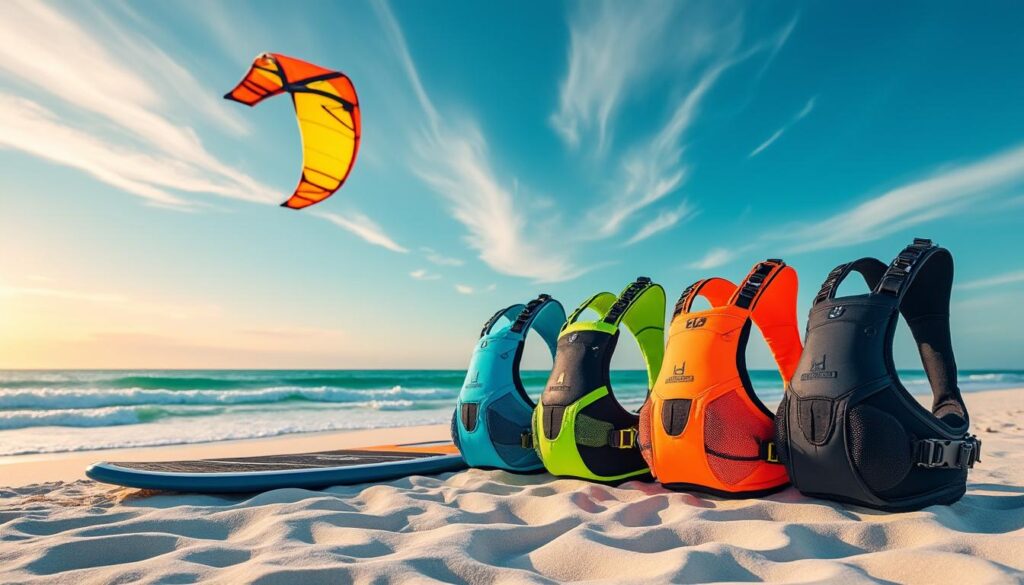
Safety also comes from the right gear. In such a windy spot it’s not enough to bring “your favorite kite”. You need a wider range, with small kites for strong Levante days and intermediate sizes for Ponente. Travelers with only one bag would do well to optimize space by reading specific guides like those on how to prepare the kitesurf travel bag, so as to combine kites, bar and protections intelligently. Helmet and impact vest are not a luxury: they become standard as soon as gusts start to exceed 25 knots.
Managing the “distance” between kites is also fundamental. On very crowded days, especially at Valdevaqueros, it’s easy to find crossed lines, forgotten right-of-way and improvised landings on the beach. A responsible rider always keeps a lateral and upwind safety margin, anticipating others’ trajectories. It’s the same principle that applies on the beaches of the best kitesurf spot in Italy: those who can predict others’ movements, not just their own, drastically reduce the probability of collisions.
Finally, there is an often-overlooked aspect: managing fatigue. With almost continuous wind for a week it’s easy to overdo it. Two sessions a day, perhaps with tight Levante, consume more than you imagine, especially for those used to kitesurfing only on weekends. Intentionally inserting half a day of rest, or a shorter session, can save shoulders, knees and concentration. The clear-headed rider is the one who returns home intact, not the one who collected the most wipeouts.
Respecting these rules does not take away freedom, it amplifies it: it allows you to truly harness the power of Tarifa’s wind with the calm of someone who knows what they are doing.
“Unwritten” rules shared among riders
Beyond official rules, there are habits locals respect and that you should adopt. You don’t launch your kite in the middle of a group of beginners doing body drags. You don’t head out at full speed a few meters from shore when someone is attempting their first water start. You don’t deliberately occupy the same edge as a rider who is clearly working on a trick. These are details you won’t find on a sign, but they distinguish a visitor who has understood the local kite culture from someone who remains a tourist even after twenty sessions.
Adopting these small attentions allows you to integrate into the beach flow and, often, to receive valuable tips in return from those who live Tarifa year-round.
Schools, courses and progression: learning kitesurf in Tarifa
For those who want to learn kitesurf or take a step up, Tarifa is one of Europe’s best laboratories. The concentration of schools is impressive and allows you to find offers for every level, from beginner kitesurf lessons to clinics dedicated to freestyle and wave. But precisely because the offer is wide, choosing well is essential. A good school does not limit itself to teaching water starts: it explains the behavior of Levante and Ponente, reading clouds, the role of tides, the correct use of safety corridors and the relationship with rescue boats.
Those arriving from experiences in Italy, perhaps after taking a course at a kitesurf Salento school or other spots, usually already have a solid base: knowledge of the wind window, handling the kite on land, first points of sail. In Tarifa you move to the next phase: consolidating water starts, working on upwind, learning to control power when the wind increases. It’s the ideal place to turn a new rider who “gets by” on flat water into a kiter capable of handling chop, gusts and currents.
To get a realistic idea of how to set a budget for lessons, it can be useful to compare costs with those at other spots, for example by reading guides like this on kitesurf lessons and related costs. In Tarifa you can find different formulas: intensive three- or four-day packages, week-long programs, semi-private or full-private lessons, not to mention assisted rental for those already autonomous but who didn’t bring their own equipment.
A good strategy for the trip is to combine the first days with structured lessons to quickly get a feel for spots and wind, and then leave room for independent sessions in the following days. This way you make the most of what you learn in the water with the instructor, without remaining “dependent” on continuous lessons. Serious schools often also offer video analysis, gear selection advice and support for any upgrades of harness, bar or board.
It should not be forgotten that Tarifa is also a meeting point for those wanting to grow in specific disciplines. Some programs are dedicated to kitesurf freestyle, focusing on pop, edging and aerial control; others work on wave technique for those seeking a more surf-oriented approach. A rider who has honed first tricks following content like those on kitesurf freestyle and maneuvers can here turn theory into practice, taking advantage of the daily presence of experienced athletes and specialized coaches.
As in any intense spot, the mindset with which you show up at the school matters a lot. Those who expect to “master” Tarifa in three days will be disappointed; those who arrive to listen, adapt and use every session as a progression lab will return home with a quality leap hardly replicable elsewhere.
- First 2–3 days: lessons with a kitesurf school, goal secure water starts and first points of sail.
- Days 4–5: assisted rental or independent sessions in recommended spots, focus on upwind and speed control.
- Days 6–7: optional extra coaching session to consolidate transitions, first turns or small jumps.
This simple but effective schedule allows you to get the most from the trip, avoiding both lesson overdose and the feeling of being left alone in a challenging spot.
Equipment, travel and lifestyle: how to best experience Tarifa as a rider
A kitesurf trip to Tarifa is not just wind and spots: it’s also logistics, gear and lifestyle. Organizing these elements well makes every day smoother and allows you to focus on the sessions, not on avoidable problems. Those used to moving between the spots of kitesurf Italia already know that a rider’s backpack is made as much of kites and bars as of transfers, accommodation and the right food between sessions.
Let’s start with the kitesurf travel bag. With airlines checking kilos like they were knots of wind, it’s crucial to prepare a rational setup: two or three kites that cover the expected wind range, a single versatile bar (perhaps after checking guides on 2- or 4-line bars), a sturdy twin-tip board and a reliable harness. Details like choosing comfortable, solid harnesses, similar to those analyzed in technical brand guides, make the difference after many hours hanging on the kite in Levante.
The trip itself is fairly simple: flights to airports like Malaga or Seville, then transfer by bus or rental car to Tarifa. The choice between apartment, hostel or surf house depends on budget and holiday style. Many riders prefer shared accommodations to split costs, but also to fully live the local kite community: exchanging wind info in the evening over a beer sometimes pays more than an hour spent scrolling forecasts on the phone.
The lifestyle in Tarifa revolves around a very simple rhythm: observe the wind, decide the spot, do a session, eat well, rest. The town offers plenty of restaurants and bars, but those who want to make the trip also a moment of physical progression must remember that the body needs fuel to withstand hours in cold water, jumps and constant restarts. Meals that are too heavy or erratic schedules can ruin the afternoon session, just like on the long days of kitesurf on the most intense beaches of Salento.
Another interesting detail concerns extra-kite activities. Even in the windiest weeks there will come a day when the weather doesn’t cooperate or fatigue sets in. Tarifa and the surroundings offer Strait trekking, wave surfing, cultural visits to nearby cities and even day trips to Morocco. Planning a couple of low-intensity alternatives allows you not to experience the “no-wind day” as frustration, but as a useful break to recharge.
Those passionate about equipment often take advantage of the trip to update their setup, since numerous shops and test centers allow you to try and buy gear. It’s an opportunity to understand live the differences between harnesses, bars or boards, going beyond technical datasheets read online. This “on-field” approach is the same that strengthens articles dedicated to specific topics like choosing the right bar or wetsuits suitable for long sessions in colder waters.
In summary, living Tarifa as a rider means accepting that the trip is not an exotic parenthesis, but a coherent part of your kitesurf journey. Every detail, from how you pack your bag to how you manage sleep after the second session of the day, affects how much you will truly progress in the water.
What is the best period to organize a kitesurf trip to Tarifa?
For most riders, the ideal months range from May to October. In spring and early autumn the wind is frequent but more manageable, with less crowding: perfect for courses and progression. In high summer, especially between June and August, Levante can blow very strongly, ideal for confident intermediate and advanced riders who want to train control and powered jumps. In winter you can still kite, but the wind is more variable and a thicker wetsuit is needed.
Is Tarifa suitable for those new to kitesurfing?
Yes, but only if you rely on a serious kitesurf school and carefully choose the period and spot. Tarifa is not the softest spot in Europe: wind often strong, traffic in the water and open sea require professional support. For total beginners it is recommended to book a structured course, aim for intermediate seasons (May, June, September) and let instructors decide each day where and when to enter the water.
How many kites and what sizes should I bring for a trip to Tarifa?
It depends on your weight and the period, but generally it’s wise to have at least two or three sizes to cover a wide range, for example a small kite for strong Levante and a medium one for Ponente. Those coming in high summer and with low body weight will often use small sizes, while those traveling in spring or autumn will encounter more varied conditions. If you can’t bring everything, consider renting on site and organize your bag intelligently, choosing a versatile bar and well-protected gear.
Is a rescue card required for sea rescue in Tarifa?
On the main beaches of Tarifa, such as Los Lances and Valdevaqueros, rescue boat services are often active on strong Levante days. In many cases a card or rescue membership is required that covers part of the recovery costs. It is highly recommended to check with schools and beach kiosks upon arrival, buy the card if required and understand how the rescue system works, especially if you plan to go out independently.
How can I prepare technically before going to Tarifa?
The best approach is to arrive with solid basics: kite handling on the beach, directional control and water start in calmer waters. You can take a complete course at a nearby spot, for example in Puglia or other kitesurf Italy locations, and work on transitions and first upwinds. Studying technical content dedicated to freestyle, basic maneuvers and wind management, and possibly doing a few extra sessions with an instructor before departure, makes the transition to Tarifa much smoother and safer.