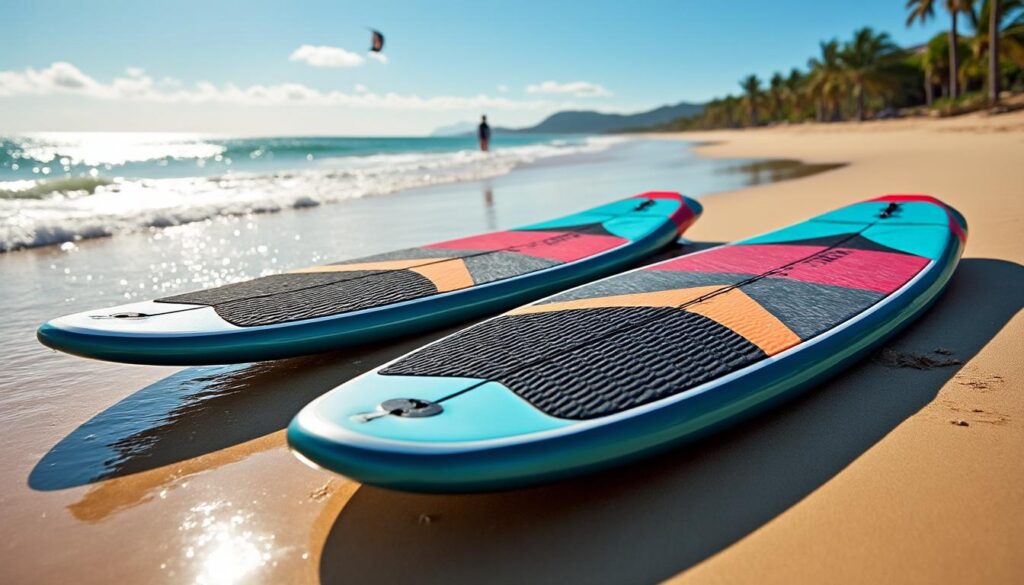
The trade wind enters cleanly from the east, the lagoon in front of Sanur lies flat like a carpet and, offshore, the reef breaks regular wave lines. Bali is not just surf: when the wind decides to cooperate, the island of the gods becomes a real playground for those who live for kiting, jumps and water starts. The key, however, is to understand when the right wind really blows and which spots to choose based on your level, instead of trusting random photos seen on social media.
Between dry season, monsoons, sharp reefs and beaches crowded with surfers, kitesurfing in Bali rewards those who plan sessions with their head on. Sanur, Nusa Dua and Canggu do not offer the same type of water, wind or risks. If you arrive thinking “I’ll go anywhere, inflate the kite and off I go”, you’ll ruin whole days because of a shore break or a nasty offshore wind. If instead you read the wind, choose the right coast and rely on local schools, Bali gives you light, long and solid sessions, perfect both for kitesurfing for beginners and for those who want to level up among waves and reefs.
In short:
- Best wind season in Bali: from May to September, peaking between June and August during the dry season with easterly trade winds.
- Main spots: Sanur to learn and progress, Nusa Dua for downwinders and more challenging water, Canggu for experienced riders among waves and often gusty wind.
- Wind and gear: often medium-light wind, you should bring or rent larger (12–14 m) and lightweight kites, ideal for long sessions.
- Safety: tides, reefs and surfers make careful contextual reading mandatory, especially on the west coast.
- Holiday strategy: think “mixed holiday”: Balinese culture, surf and kite; if you want only strong wind 24/7, also consider destinations like Tarifa, Dakhla or Fuerteventura.
Kitesurf Bali: wind season and when to find the best conditions
The question everyone asks is simple: “When does the wind blow reliably in Bali?”. On the local calendar, the answer revolves around the dry season. From May to September the easterly trade winds stabilize and create the most interesting window for your sessions, especially if you want to plan your kitesurf holidays with some guarantees.
Between June and August the wind tends to be more consistent, with many afternoons around 15–20 knots in the areas most suitable for kite. It isn’t the Venturi of Tarifa or the turbo of Dakhla, but it’s still enough to inflate a 12 or a 14 and stay on the water for hours. In this phase, the east coast (Sanur, Nusa Dua) benefits from side-on winds that push toward shore and make learning much more manageable compared to the beaches on the west coast.
There is also a more uncertain phase: April and October. These are transition months when you can find amazing days alternating with almost flat periods. If you think “kite above all”, targeting the peak dry season months remains the wisest strategy. If, instead, you’re happy with a mix of surf, excursions, temples and a few bonus sessions, these months can work, but without the illusion of daily wind.
During the rainy season (roughly from November to March) windy phases appear, sometimes even stronger, but much less predictable. One day 20 knots, the next day zero. For this reason many riders who seek reliability tilt the compass toward the Canary winds in Fuerteventura or toward the “European capital” described in this focus on Tarifa, where wind statistics are more aggressive compared to Bali.
Another factor not to be underestimated is the monsoon. The southwest monsoon, between June and August, combines with the trade winds and provides the most talked-about periods among kiters who frequent the island. In these months, if you keep an eye on local anemometers and forecasts, you can string together a series of almost daily sessions, alternating lagoon and reef without having to overturn your entire travel plan.
The trick, in short, is this: in Bali you don’t look for “extreme” wind, but a balance between glide, warm climate and life off the water. Those who arrive with this mindset return home with a smile. Those who expect 30 knots every day, better look at a map of the best kitesurf spot in Italy, kitesurf Salento or the windiest areas of kitesurf Adriatic and kitesurf Ionian to really compare the numbers.
Practical table: months, wind and probability of kite sessions in Bali
So you don’t waste time interpreting forums and social groups, here’s a clear summary of the most interesting months and the type of conditions you can expect when planning your trip.
| Month | Probability of kite wind | Notes on session type |
|---|---|---|
| April | Variable | Transition period, some good days but unpredictable; ideal if you are not traveling solely for kite. |
| May | Good | Start of the dry season; incoming trade winds, great for calm sessions in Sanur with large kites. |
| June | Very good | Strong month: more regular wind, main spots active, good mix between lagoon and reef. |
| July | Very good | Heart of the season: frequent windy days, perfect for planning intensive courses and progression. |
| August | Very good | Still peak season; possible heavier crowds on the water and beach, especially on weekends. |
| September | Good | Wind still valid, fewer crowds, great compromise between kite and island exploration. |
| October | Uncertain | End of season: some nice days, but don’t build a “wind-only” kite trip around it. |
With this mental map you already know when to book, which kite to pack and how much room to leave for surfing, temples and fried rice warungs between sessions.
Kitesurf spots in Bali: Sanur, Nusa Dua and Canggu explained honestly
Every coast of Bali tells a different story. For kitesurfing, the three names you’ll hear repeated are Sanur, Nusa Dua and Canggu. On paper they seem like three similar alternatives; in the water, they completely change how you handle a session, from launching the kite to returning.
Sanur is the most logical base for those who want to learn, take a structured kitesurf course or simply stay in comfort. In front of the Mercure hotel, the lagoon inside the reef offers relatively flat and shallow water at various tide times. The wind usually comes in side-on, pushes toward the beach and forgives many timing errors on water starts and upwind. Schools park pickups and trailers directly on the sand: just follow the line of colorful kites to know where to set up.
Inside the reef you train the fundamentals: bar control, steady starts, long tacks, first transitions. Those with solid basics find a perfect playground for freeride and first switch tacks. And when you want to raise the bar a bit, there are organized downwinders that take you closer to the outer wave line, always with local eyes checking you get back in one piece.
Nusa Dua, further south, is the “resort deluxe” side of the same coast. The beaches are narrower in some parts, tide management becomes more delicate and the distances between shore and reef can lengthen. Here kite comes into play mainly in the more exposed parts to the seasonal winds, with stretches of choppier water and logistics a bit more complex if you’re not with a car or scooter. Some expert riders enjoy linking Sanur and Nusa Dua in a long ride when the wind lines everything up, but it’s a game to play only with a high level and ground support.
Canggu is the exact opposite of the calm lagoon. Dark sand beach, shore break present, a well-stocked surfer lineup and often side-off or gusty wind. It’s not a place to try your first water start. You go in here if you already know how to handle re-starts in waves, relaunches in dirty wind and above all if you’re clear that a mistake can take you offshore, not toward the shore.
Many see Canggu videos with jumps against a sunset background and think it’s an easy and “Instagrammable” spot. In reality it’s an expert spot, closer in risk to certain conditions of Adriatic kitesurfing in bora or an offshore Mistral than to a classic school spot. If you feel even a little doubtful, keep Canggu for surf sessions and move the kite to Sanur, where the chances of getting out of the water smiling are decidedly higher.
How to choose the spot based on your level
To avoid turning a session into a fight with the reef, use a simple rule: the more the wind is side-on and the water is smooth, the more the spot is suitable for kitesurfing for beginners and intermediates. The more the wind becomes side-off and the waves big, the more experience is required. Applying it to Bali, the map traces itself almost automatically.
- Absolute beginner: Sanur, lessons with a local school, flat water inside the lagoon.
- Intermediate: Sanur with guided trips toward the reef; some runs to Nusa Dua with accompaniment.
- Expert wave/freeride: Nusa Dua and, in certain conditions, Canggu, always with great attention to wind and currents.
Those coming from the more predictable winds of kitesurfing in Italy (for example those used to a spot in Puglia or the regular thermals of kitesurf Salento, kitesurf Lecce and kitesurf Taranto) often underestimate how quickly tropical wind can change mood in a few hours. Respecting the spot means asking locals how tides and currents behave, observing where they launch the kite and where nobody goes, and only then inflating your kite.
Learning kitesurfing in Bali: schools, courses and intelligent progression
Bali attracts many beginner riders because it combines warm water, postcard scenery and a still-manageable cost of living. The idea of learning kitesurfing in Lycra, without a wetsuit, appeals to those coming from long, windy winters on northern Italy kitesurf spots or from cold days on the Ionian kitesurf spots. But, as always, between dream and reality there is the moment you attach the leash and give power to the kite.
The most active kitesurf schools are concentrated right in Sanur. Here you find instructors who work season after season, who know the whims of the local wind by heart and who know when to stop a lesson because the tide is uncovering the reef or because the wind has shifted a few degrees too much. It’s the kind of expertise you don’t see in photos, but which saves your session.
A typical path for someone starting from zero includes 2–3 days dedicated to the kite on land, body drag and first starts, followed by a package of sessions in the lagoon. The beauty of the Balinese wind is that, when it comes in, it often stays constant for hours, so you can chain multiple exercises without constantly changing kite sizes. Here having larger and lighter kites helps to make the most of every puff.
To prepare best, even if you dream of Bali, it makes sense to take a look at a structured beginner’s guide before leaving. Arriving with the theoretical basics of wind window, right-of-way and bar management saves you hours of course time and, above all, reduces the classic mistakes that lead to panic stops, unnecessary falls or tangled lines on every water start attempt.
Imagine a rider like Luca, who comes from years of windsurfing at the Stagnone in Sicily and decides to switch to kite in Bali. He knows the wind, but not kite management. After studying theory and doing a few trials in Italy, in Sanur in two days he’s already making short tacks in the lagoon. Without that preparation, he would probably have spent half the vacation just learning how not to be dragged onto the sand.
How to integrate Bali into your rider progression
Bali works great as a “level 2” in a progression path: you learn the basics in an easier environment (for example on a kitesurf spot in Puglia, in an Italian kitesurf context you know), then use the island to add volume to your practice hours. Warm water allows you to stay out longer without cold fatigue, and Sanur’s lagoon, if you manage the tides, is a huge training ground.
Intermediates can use Sanur as a gym to refine transitions, first simple rotations, controlled jumps and kite handling on downwind. Once you feel truly solid, you can attempt a more exposed outing or a run toward Nusa Dua with local support. The goal is not just to return home with two spectacular photos, but to cleanly raise your real level, which will then also help you when you return to your home winds in Salento, on Calabrian kitesurf spots or on other Italian coasts.
The biggest mistake? Thinking you can “skip” the path and throw yourself into Canggu on the third lesson. Kite doesn’t forgive shortcuts. Better two extra days in the lagoon with full bar control than a single nervous session among waves and reef with half fear in your body.
Equipment, light wind and tide management at Bali kite spots
Bali’s wind is not like a Mistral channel where you keep the same 9 m for a week. Here you often play on the edge between planing and “almost planing”. That’s why many riders coming from Europe pack in their bag large kites (12–14 m), often in lighter fabrics, so they can exploit even 13–15 knot afternoons without wearing their legs out pumping the board.
A typical setup for an average rider weighing around 75–80 kg could be:
- A 12 m as the main kite for most days in the dry season.
- A 14 m for lighter days or for those who prefer to ride twin-tip with total safety.
- Freeride board with good surface or a light wind board to anticipate planing.
Sanur schools often offer rental packages that include modern kites designed specifically for this type of wind. It’s important to be honest about your level when requesting equipment: if you say you’re advanced and then find yourself downwind at the reef, you’re testing not only yourself but also those who trusted you on the beach.
Another silent protagonist of Balinese sessions is the tide. When it’s too low, the reef emerges and the lagoon becomes a grater: shallow water, corals, rocks. In these phases schools often suspend lessons or shift times, precisely to avoid cuts and stupid accidents. When it’s too high, instead, the current above the reef can become stronger, and managing the return tack requires more leg power.
Practical checklist for a calm session in Bali
To avoid turning every outing into a lottery, it’s worth getting used to doing a small mental check before inflating the kite. A simple but effective routine:
- 1. Check the wind: direction (side-on or side-off?), actual strength and not just the forecast.
- 2. Observe the tide: reef visible? Lagoon too shallow? Obvious current?
- 3. Watch what the locals do: where they launch, where they return, which areas they avoid.
- 4. Assess the crowd: how many surfers are there? Is there space for safe tacks?
- 5. Review your level: is today’s spot really in line with your abilities?
You can take this same checklist home and apply it anywhere: from Adriatic kitesurf spots, to Ionian kitesurf, to the great African lagoons like those covered in the focus on Dakhla or the oceanic archipelagos of Cape Verde. The idea remains the same: understand the wind before asking it for too much power.
Safety, coexisting with surfers and how to integrate Bali into your “kite life”
Bali lived by surf long before kite, and you must remember this every time you cross the surf line with a board under your arm. Respecting right-of-way in the water is not just a written rule, it’s a matter of coexistence. An out-of-control kite in the middle of a crowded lineup can cause more damage than a set of badly managed waves.
On the west coast, especially in Canggu, the absolute priority is staying away from surfers’ take-off zones. It’s better to take a longer tack to get out of the hot zone than to pass close to someone focused only on the waves. Remember: with a kite you can move much faster along the coast, while a surfer remains tied to the peak.
Another crucial point is avoiding solo outings in technical spots. Wind that turns offshore, a leash that breaks, a board that drifts seaward: these are situations that, alone, can turn into serious problems. Having at least a buddy in the water and someone on the beach who knows you went out is a simple but powerful form of insurance.
Those who use Bali as a stop in a broader journey often combine it with other kite trips around the world and in the Mediterranean. Many used to plan a “wind tour” with Bali in the dry season and then a jump to Zanzibar kite spots or windier Italian coasts when returning to Europe. It’s a smart way to see different spots, compare conditions and, above all, never stick to a single sea style.
Bali compared to other Mediterranean and Italian spots
To truly understand the role Bali can have in your rider life, you need to compare it with the spots you might have closer in Europe. In the Mediterranean, a well-formed thermal or a decided Mistral can provide windier days compared to the Balinese average. Those who move between kitesurf Salento, Calabrian kitesurf spots or the great lagoons of North Africa know the feeling of having 25 knots stable that pull hard all day.
Bali, instead, focuses on a different package: warm climate, crystal-clear water, Balinese culture, surf and kite in the same week. You don’t choose it to set annual knot records, but to live a balance between sport and travel. If you want only strong wind 24/7, you’ll find more solid numbers in other destinations. If instead you’re looking for a place to combine lifestyle, waves and flat water, then Bali fully deserves a spot on the list.
The final lesson the island can teach you is simple: there is no perfect spot for everything. Every place has its character. Bali shows you how to read different conditions, how to respect tides and reefs, how to coexist with long-established surfing communities. All things that, once you return to your home spots in Italy, in Puglia, in Salento or on the Tyrrhenian coasts, will make you laugh at certain fears you had at the beginning.
What is the best time to kitesurf in Bali?
The most reliable period to kitesurf in Bali runs from May to September, during the dry season and the easterly trade winds. The months with the most consistent wind are June, July and August, when Sanur and the east coast spots offer the most steady conditions for long sessions with medium-large kites.
What is the best spot for beginners in Bali?
The spot most suitable for beginners is Sanur. The lagoon inside the reef offers relatively flat water, often side-on wind and the presence of several kitesurf schools that organize structured courses. Here you can safely learn body drag, water start and first tacks without immediately facing waves and gusty wind.
Should I bring my own gear or can I rent?
In Bali you can either bring your own gear or rent on site. In Sanur several schools and centers offer rental of modern kites and boards, often designed for medium-light wind. If you choose to travel light, it’s advisable to book equipment in advance, indicating your weight and level to get appropriate kite sizes.
Is Canggu suitable for someone learning kitesurfing?
No, Canggu is not recommended for beginners. The wind here can be side-off or gusty, the waves are often significant and the presence of reefs and surfers increases the risks. This spot is reserved for experienced riders used to managing starts and returns in wave conditions and irregular wind. For learning it’s much better to stay in Sanur.
Is Bali a good choice if I want strong wind every day?
If your goal is to have strong and constant wind every day, Bali is not the most extreme choice. The island offers reliable wind only in certain months and often of medium-light intensity. It’s perfect for combining kite, surf and travel, but if you’re looking for intense wind you can also consider destinations like Tarifa, Dakhla or the Canary Islands, which offer more aggressive wind statistics.