Corfù is not the most extreme island in Greece, and precisely for this reason it is perfect for those who want to combine kitesurfing, relaxed holidays and crystal-clear water. Here the wind does not arrive with the violence of the Meltemi of the Cyclades, but alternates active days with calm-flat pauses. This gentler rhythm gives less stressful sessions, ideal for beginner kitesurfing, couples and groups of friends where not everyone is obsessed with the board. Between Chalikounas and Issos Beach, two twin spots on the west coast, you go from a lagoon with water as smooth as glass to open sea with waves and Maestrale that can rise to 7 Beaufort.
Anyone arriving in Corfù with the “Tarifa” or “Paros” model in mind just needs to change approach: here you play strategy, study the forecasts and learn to read the thermals that build in the afternoon. Between forecasts on Windy, Windfinder and the eyes of the locals, every session becomes a small treasure hunt. Just like in kitesurf Salento between the Adriatic and Ionian, in Corfù the orientation of the coasts and the presence of dunes and lagoons also create microclimates that, if you understand them, give you hours of riding when others think “there’s no wind at all”.
In short
- Corfù is ideal if you want to combine kitesurfing and a relaxed holiday, without the obsession of 30-knot wind every day.
- Chalikounas is the most classic kite spot: lagoon, shallow bottom, excellent for learning and for trying new maneuvers safely.
- Issos Beach works well with Maestrale and afternoon thermals: soft conditions in the morning, 3–5 Beaufort in the afternoon and sometimes stronger gusts.
- The wind in Corfù arrives in blocks: a few good days followed by calmer periods, so flexibility in travel plans is needed.
- May–September is the best window to find manageable wind and pleasant water; beyond that, disturbances can become demanding.
Kitesurf Corfù: why choose the Ionian island for your sessions
Those looking for information on kitesurf Corfù often wonder whether the island “is worth the trip” compared to the more renowned names of Greece. The answer is yes, provided you understand that Corfù is not a continuous wind machine, but an Ionian island with its own rhythm. The Meltemi here arrives attenuated and mixes with local thermals and southwest disturbances: the result is regular but not daily sessions, ideal for those who don’t want a vacation entirely and only focused on kite.
For many Italian riders used to kitesurf Italy among northern lagoons, kitesurf Puglia spots and alpine lakes, Corfù is a natural step: similar conditions in terms of average wind intensity, but warmer water, greener scenery and a culture that slightly recalls the Ionian coast of southern Italy. The central beaches of the west coast, where Chalikounas and Issos are located, offer wide spaces, sandy bottoms and kite centers that are not excessively crowded, so they are great for those who want to progress without the pressure of kite fleets overhead.
It’s no coincidence that many instructors who work between kitesurf Lecce, kitesurf Taranto and Greece use Corfù as a “bridge” stop for those who have taken a kitesurf course basic in Italy and want a first experience abroad without stress. The typical configuration is simple: a calm morning, with light wind perfect for getting familiar with the kite, doing body drags or working on bar control; afternoon with the thermal that kicks in and brings the wind around 12–20 knots, enough to sail and try the first tacks safely.
However, a crucial point must be clarified: the wind in Corfù comes in phases. The locals know that after three or four good days, there can also be a week of almost total calm. For this reason, those planning a kitesurf holiday on the island should stay at least about ten days, so as to have more chances to fit a solid wind window. The same happens in several Italian spots on the Ionian: those who know the Salento wind know it can be generous, but also capricious.
To choose the period well, it is useful to set a practical rule: from May to September you have the best mix of mild climate, pleasant water and manageable winds. In the hottest months (July and August) afternoon thermals often kick in, while at the start and end of the season you can hit very windy but cooler days. From October onwards, when the wind arrives, it often does so in a strong version: perfect for experienced riders, less so for those still trying to nail the water start smoothly.
Another point in favor of Corfù is the off-water context. Windless days are not “wasted”: the island is green, full of villages, tavernas, coves and trails to explore. For a couple where only one kitesurfs, or for those traveling with non-rider friends, this flexibility is gold. No extreme compromises: those who want can go to the beach to watch the sails, those who aren’t interested can roam the island, and everyone meets in the evening in front of a plate of fish and a cold beer.
A useful insight before moving to the spots: Corfù doesn’t just teach you to hold the board, but to learn to read the wind. Those who leave here with a few sessions under their belt have often improved their ability to interpret clouds, directions and thermal changes. And it’s a skill that becomes immediately useful when you return home, whether on the beaches of Salento or spots in the North, as also seen in advice shared in guides like kitesurf in Northern Italy.
Chalikounas: lagoon, shallow bottom and a perfect spot to learn
Chalikounas Beach is the heart of kitesurf Corfù. A long tongue of sand separates the open sea from the Korission lagoon, creating one of the most interesting playgrounds for beginners. The bottom is shallow for tens of meters, the sand is soft and the maneuvering space abundant: exactly what is needed for those approaching kitesurfing for beginners and wanting to minimize complications.
The spot works especially with winds from west, northwest and southwest. The Maestrale, when it comes in well, is partially sheltered by the dunes but maintains good consistency, especially on the sea side. On typical summer days, the wind remains light and inconsistent in the morning, perfect for theory sessions on land, relaunching the kite, control with a large size or foil. From early afternoon the air heats up, the thermal activates and you can expect 12–18 knots relatively regularly.
To understand how Chalikounas really works, just imagine a typical day for Marco, an intermediate rider who usually goes out on the kitesurf Adriatic in Romagna. He arrives at the spot around 10:00: sea almost flat, wind around 7–9 knots. Instructors in the water with beginners connected to the bar with short leashes, body drag exercises and starting trials. Marco waits, watches the flags, checks the forecast apps. Around 14:00 the wind begins to fill the spot, kites gradually go from 12–13 to 9–10 meters, the first long glides appear in the lagoon. This “slow build” of the wind is perfect to avoid suddenly being overpowered.
One of the biggest advantages of the lagoon is its relatively flat water. Those coming from choppy spots or disordered waves find here a real playground to work on edging, speed control and first jumps. Every mistake is forgiven by the shallow bottom, every fall turns into a quick swim back. For this reason many instructors from Italian kitesurf schools choose similar conditions even when organizing camps abroad in other destinations, as seen in experiences recounted in guides about places like kitesurf in Fuerteventura.
It is important, however, to also know the spot’s limits. The presence of dunes and some wind shadow areas near the shore require attention to kite positioning during launch. The farther you move toward the center of the lagoon, the more the wind evens out. On the sea side, instead, you must consider a slight backwash and moderate waves on stronger Maestrale days. Nothing dramatic, but enough to make the departure a bit more technical compared to the smooth lagoon.
When Chalikounas gives its best for kitesurfing
The recommended period for Chalikounas ranges from May to September, with peak reliability in July and August. In these months the combination of warm water, thermal and long days creates the ideal window to organize a complete kitesurf course: from the first steps to the first tacks. Outside this interval, the wind can become stronger and less predictable, with southern disturbances that bring waves and gusts not exactly friendly for a beginner.
Those planning multiple consecutive sessions must keep in mind Corfù’s famous alternation: a few good days with wind, followed by a calmer period. It’s the same logic that applies when planning outings in the Ionian kitesurf in Puglia: instead of locking onto a single beach, it’s better to stay flexible, have alternative activities and check forecasts several times a day. wind sports forecasting platforms, based on models like the GFS, update data 4 times a day, often at fixed times. The arrows on the maps always indicate the direction from which the wind comes, a fundamental detail to read the spot well.
Regarding equipment, at Chalikounas you often see a range of sails between 9 and 13 meters for medium-weight freeriders, with some 7s on tougher days. Classic twin-tip boards are perfect for this spot, but foil also has its place in light mornings. Those coming from kitesurf Salento feel at home: the same “clever” wind logic, but a Greek context and a lagoon that invites trying new tricks.
At the end of a day at Chalikounas, what remains is not just the session, but the feeling of having learned something about the wind. Here you understand that it’s not enough to look at a number of knots on the app: you must cross-check reinforcement times, direction, cloud shape and even air temperature. This reading of the context is what distinguishes those who “carry the sail” from those who really take the bar.
Issos Beach: thermal wind, Maestrale and dynamic sessions
A few kilometers north of Chalikounas stretches Issos Beach, another key point for kitesurf Corfù spot and wind. Here the scene changes slightly: higher dunes, more exposed open sea and a historical windsurfing imprint that today coexists with kite. Issos is famous for its double face: calm mornings suitable for beginners, afternoons with wind rising to 3–5 Beaufort, and in case of well-placed Maestrale even stronger peaks, sometimes up to 7 Beaufort.
In practice, those who arrive early often find a still-tame sea, with winds under 10 knots, perfect for basic on-land lessons or for testing larger wings and foil. Toward midday, especially in summer, the thermal kicks in. The dunes heat up, the air moves and the wind strengthens, coming in side-on. It is in this time slot that Issos transforms into the real spot: twin-tips in the water, some regular waves forming small kickers and wide maneuvering spaces.
An aspect not to be underestimated is the shadow effect of the dunes, especially near the beach establishments. The wind, forced to overcome these sandy rises, can create zones of turbulence and power holes right near the shore. For kitesurfing this means paying attention to the launch and landing area, choosing corridors free of obstacles and always keeping a safety margin from umbrellas and sunbeds. The farther you go toward the center of the bay, the more the gusts stabilize.
How to manage Issos’ wind according to level
For a beginner rider, Issos works well if two simple rules are respected: work during the quieter hours and choose an area with an accessible bottom and fewer obstacles on land. In the morning the spot is almost a gym: weak wind, calm sea and the possibility to focus on kite relaunch, one-handed control and first short starts. Local schools often schedule beginner lessons here precisely to take advantage of this softer window.
In the afternoon, when the wind rises to 3–5 Beaufort, Issos becomes ideal territory for intermediate and advanced riders seeking dynamic sessions. The waves, while not huge, form a regular chop, enough to jump or work on pop tricks. With a stronger Maestrale, the level rises: those already experienced on best kitesurf spots in Italy exposed to the northwest feel at ease, but a beginner could find themselves overpowered.
Imagine Sara, who did her first course at a kitesurf school on the Ionian and now wants to measure herself with a Greek spot. In the morning she works on kite stability, gets used to the context and does some short starts. Lunch break, then around 15:00 the wind increases. The instructor checks the kite range, maybe suggests reducing one size. Within an hour, Issos becomes a real playground: Sara manages to make her first longer tacks, taking advantage of steady wind and small waves that help lighten the board.
When forecasts indicate a strong Maestrale, Issos shows its tougher side. Gusts can push beyond 25 knots, with rougher sea and a less playful beach for those not confident. On these days the spot is not recommended for those still building solid basics. The typical mistake is choosing the same kite size used in medium thermals, only to find oneself completely overpowered after half an hour when the wind really hits.
The use of specialized weather forecasts is fundamental for Issos. 13 km resolution models offer a good indication of hourly intensity, but the real reading is done by integrating direct observation: sea color, flag angle, intensity felt on the skin. Some apps also send weather alerts in case of dangerous conditions, with color codes indicating the intensity of the event. Even if these alerts do not cover every micro-variation, they are a good ally to avoid surprises.
In short, Issos is the spot you go to when you want something more than the tranquility of Chalikounas’ lagoon. It is a logical next step: same island, same side, but one gear higher in terms of energy. Those who dream of a day measuring themselves with tougher conditions, like those in stages of the Italian kitesurf championship, find at Issos an excellent intermediate training ground.
Wind in Corfù: understanding forecasts, windows and useful directions
To make the most of the wind in Corfù for kitesurfing, it is not enough to know that “from May to September it works”. You need to understand how the different types of wind operate on the island and how to read forecasts in a practical way. The keyword here is “window”: the wind arrives in blocks, alternating a few windy days with periods of calm. Those who plan their trip on this logic save themselves frustration and enjoy the island in every condition.
The Meltemi, which blows strongly especially over the Cyclades, arrives in attenuated form in Corfù and is often mixed with local thermals. On the west coast, Chalikounas and Issos work well when there is a west or northwest component, but can also offer sessions with light southwest. In summer, the typical pattern is light wind in the morning, gradual reinforcement in the afternoon up to 3–5 Beaufort and a drop toward sunset. It’s no coincidence that many centers organize main courses in the 13–18 time slot.
Online platforms dedicated to wind, waves and weather for wind sports use models like the GFS with resolution around 13 km. Forecasts are updated several times a day (often four), offering hourly values of intensity, direction, gusts and wave height. The arrows on the maps always indicate the direction from which the wind blows, an essential detail for evaluating whether the spot will work side, side-on or offshore. For practical reading it is advisable to combine at least two different sources, plus live observation.
Units of measure and practical interpretation of data
Forecasts in Corfù, as in many international spots, are often expressed in knots and degrees Celsius. Knots are the reference unit for sailors, kiters, windsurfers and paragliders. Those used to reading wind in km/h only need to keep an approximate conversion in mind: 10 knots correspond to about 18.5 km/h. Some platforms offer integrated calculators to switch from knots to km/h, m/s or mph, thus adapting to the habits of each rider.
For a medium-weight kiter using a twin-tip board, a good rule is to consider a practical range between 12 and 25 knots, depending on the kite and level. Below 10 knots you enter the foil zone or a “compromise session”, above 25 knots the conditions are for experienced riders only, especially if gusts greatly exceed the average. In Corfù, in summer, much of the useful days fall precisely within this intermediate range, perfect for those going out with kites between 9 and 13 meters.
An appreciable advantage of these services is the possibility to set weather alerts. When the local meteorological institute signals severe bad weather, many sites show a colored banner above the wind table. Color codes indicate the intensity of the expected event, allowing riders to prepare in time or simply decide to avoid going out. However, it is important not to delegate all safety to these alerts: dangerous conditions can present themselves even without official warnings.
The real school remains always the comparison between forecast and reality on site. A rider who has learned to interpret the Salento wind knows that certain sky and temperature configurations often anticipate the arrival or drop of wind beyond what models predict. The same applies in Corfù: observing clouds, the horizon line, sea color and the sensation on the skin often counts as much as a numerical chart.
| Period | Average wind intensity | Wind type | Recommended level |
|---|---|---|---|
| May – June | 10–18 knots | Afternoon thermals, W/NW | Beginners and intermediates |
| July – August | 12–22 knots | Thermal + Meltemi influence | Intermediates (beginners with a school) |
| September | 10–20 knots | Residual thermal, first disturbances | Calm intermediates |
| October – December | variable, peaks 25+ knots | Stronger disturbances | Experts only |
In conclusion, those who really want to exploit Corfù’s wind must think like an experienced Mediterranean rider: less fixation on a single spot, more attention to maps, windows and orientation. It’s the same approach that makes the difference when choosing between a kitesurf Puglia spot, an inland lagoon or a Greek island. You can’t command the wind, but you can learn to read it and use it to your advantage.
Comparison Corfù – Salento – other Greek islands: where it makes sense to go
Those who have already tasted kitesurf Italy and, perhaps, kitesurf Salento between the Adriatic and Ionian, often wonder whether it makes more sense to aim for Corfù or other Greek islands. The comparison is not only a matter of knots, but of travel style, personal level and progression goals. On one side there are islands like Paros, Naxos or Karpathos, where the Meltemi can push 30 knots for days; on the other Corfù, gentler, with phased wind and a green, relaxed context.
To get a better understanding, just compare some classic destinations for wind lovers. Karpathos, for example, is a playground for experts: in the south of the island, near the airport, the Meltemi rarely drops below 30 knots in high season. Bays like Paradise Bay or Gun Bay are suitable only for those already very confident with the kite. Chicken Bay, with slightly less strong but often gusty wind, is the “soft” option — which is really not soft for a beginner.
Paros and Naxos represent the more “competitive” side of Greek kitesurfing. Beaches like Mikri Vigla, Golden Beach or Pounta regularly host events and international gatherings. The wind blows almost daily from May to September, with peaks that can reach 7 Beaufort in the late afternoon. Here the average rider level is high, schools are organized and the atmosphere is that of destinations famous across Europe.
Corfù, on the other hand, plays a different game. The wind is “great” when it arrives, but it usually lasts only a few days in a row, followed by potentially long calm periods. This makes the island less suitable for those who want to train hard every single day, but very interesting for those seeking a balance between water and land. In this sense, Corfù resembles more a kitesurf Puglia spot or certain corners of the Italian Ionian, rather than a Cyclade battered by Meltemi.
When to choose Corfù and when to head elsewhere
To orient yourself simply, you can ask these questions: do you want a trip where kite is everything, or do you want a mix of sea, culture, food and some targeted sessions? Are you in the phase of learning kitesurfing or are you already working on an advanced repertoire of jumps and strapless maneuvers? Are you travelling alone, with rider friends or with companions who will never set a foot on a board?
Corfù is a sensible choice if:
- You are still building your basics or you are an intermediate progressing.
- You want a place where the lagoon and shallow bottom allow you to make mistakes without fear.
- You travel with non-riders and want to guarantee alternatives in case of flat calm.
- You love green landscapes and beaches less extreme compared to hyper-windy ones.
The windy Cyclades (Paros, Naxos, Mykonos) make more sense if:
- Your goal is to train hard every day with strong and regular wind.
- You are used to handling 25–35 knots and gusts don’t scare you.
- You like the “open-air gym” atmosphere, with many high-level riders in the water.
Crete, Kos, Rhodes and Lefkada instead offer a sort of compromise. In Crete the eastern part, especially Kouremenos, can have winds reaching 7–8 Beaufort, while along the north coast you find several centers suitable for various levels. Kos is a small paradise for kite, with beaches like Mastichari, Marmari and Tigaki offering shallow bottoms and conditions suitable even for beginners. Rhodes, in the Prassonissi area, is famous for the wave/flat mix and for winds of 3–5 Beaufort, sometimes up to 7, manageable by a wide slice of riders.
Lefkada deserves a special mention for Ionian kitesurf. Among the Ionian islands it is probably the most oriented to wind sports. Thanks to a constant thermal wind that strengthens from early afternoon, spots like Vassiliki and Agios Ioannis allow daily sessions with regular wind, both for windsurf and kite. For those who love the pattern “calm sea in the morning, adrenaline in the afternoon”, Lefkada is almost a certainty.
Looking at the overall picture, Corfù positions itself as an excellent stop for those who have taken their first steps in Italy (perhaps following advice similar to those in a beginner’s kitesurf guide) and now want to change the scenery without changing too much the “hardness” of the conditions. It is a natural bridge between northern lagoons, kitesurf Lecce and the windier Greek islands. It’s not the destination where you seek the absolute limit, but the place where you consolidate technique, safety and wind sensitivity.
How to prepare a kitesurf holiday in Corfù: practical advice and the right mindset
Organizing a kitesurf holiday in Corfù requires a different approach from what you would use for a hyper-windy destination. Here those who arrive with the right mindset win: flexible, curious and ready to make the most of both windy days and calm ones. It is not enough to glance at the weather once before leaving: you need to enter a small routine of reading forecasts and comparing them with reality once on site.
A useful starting point is to define “plan A” and “plan B”. Plan A is obviously the kite: choose accommodation near Chalikounas or Issos, have the right equipment (perhaps a quiver with a large and a medium kite), schedule days with wide time windows between morning and late afternoon. Plan B concerns all “no wind” activities: explore the interior, rent a scooter, discover hidden beaches, taste tavernas where fish comes directly from local fishermen.
For equipment, those weighing around 70–80 kg do well with a combination like 12 m + 9 m, perhaps paired with a twin-tip freeride board. Lighter riders can opt for 11 m and 8 m, heavier riders or those wanting to exploit light morning thermals can consider a 13–14 m. Bringing a foil makes sense only if you already know how to use it: in light mornings it can give extra sessions, but it is not strictly necessary to enjoy Corfù.
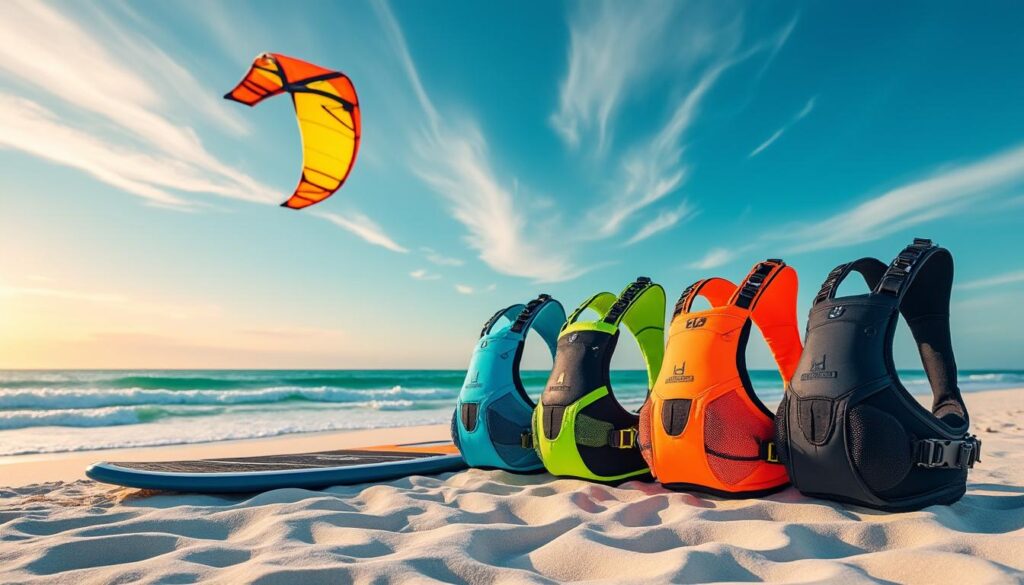
Your bag should also include basic safety items: helmet, impact vest, line knife. Even if Chalikounas’ lagoon and Issos’ bottom are relatively soft, the wind remains a non-negotiable element. Having a good safety culture, the kind built in serious kitesurf Italy schools, makes a difference wherever you go. And it matters even more when you find yourself in a new context, with possible unfamiliar obstacles and slightly different wind dynamics.
An often underestimated aspect is energy management. On days with afternoon wind, it’s easy to burn out in the first two days: long sessions under the sun, little hydration, casual food. The result is fatigue and drops in attention precisely when the wind starts to hit. A rider who thinks in a “progression” perspective, like someone training in regular spots such as kitesurf Taranto or on northern lakes, knows it’s better to do shorter but intense sessions, with recovery breaks and attention to drinking and eating properly.
Finally, the real secret weapon on a kite holiday in Corfù is contact with locals and other riders. Talking with those who have been going out there for years saves you mistakes: discovering small signals that anticipate the thermal entrance, understanding on which days it’s better to move between Chalikounas and Issos, knowing where to avoid rocks or wind shadow zones. This community spirit is the same that keeps the world of kitesurf Salento alive and, in general, the Mediterranean scene: you feel the wind in the sail, but you really learn it by exchanging a few words on the beach.
Those who return from a well-constructed vacation in Corfù take home much more than a few photos of kite at sunset. They bring a greater ability to read conditions, to manage their body and mind in the water, to face home spots with different eyes. In other words, Corfù becomes part of that continuous path that starts with the first tacks, goes through destinations like kitesurf Puglia spots, Greece, the Canaries, and never really ends as long as there is some wind to tame.
What is the best time to kitesurf in Corfù?
The most balanced window for kitesurfing in Corfù runs from May to September. In these months you find a good mix of manageable wind, pleasant water and long days. At the start and end of the season (May and September) the wind can be a bit more irregular but less crowded; July and August offer more reliable afternoon thermals, ideal for intermediate sessions. From October onwards, when the wind arrives, it tends to be stronger and more abrupt, suitable mainly for experienced riders.
Is Corfù suitable for someone who wants to learn kitesurfing from zero?
Yes, Corfù is a good choice for those who want to start, especially thanks to spots like Chalikounas, with lagoon and shallow bottom, and the calmer mornings of Issos. The medium wind conditions and relatively flat water allow you to focus on kite control and first starts without the pressure of big waves or extreme gusts. The important thing is to rely on a structured kitesurf school and to plan enough days to compensate for possible calm periods.
What kite sizes should I bring to kitesurf in Corfù?
For a medium-weight rider (70–80 kg) a classic quiver for Corfù includes a 12 m and a 9 m with a twin-tip freeride board. Lighter riders can aim for 11 m and 8 m, heavier riders can add a 13–14 m to exploit lighter days. In the summer months most useful sessions fall between 12 and 22 knots, so these sizes cover most situations, especially at Chalikounas and Issos.
Is Chalikounas or Issos better for a beginner?
For an absolute beginner, Chalikounas is usually the more comfortable choice thanks to the Korission lagoon: flat water, shallow bottom and wide space facilitate learning. Issos can be fine in the morning hours, when the wind is weaker and the sea calmer. In the afternoon, when the wind rises to 3–5 Beaufort or more with Maestrale, Issos becomes more demanding. The ideal is to follow the local instructor’s advice and choose the spot based on the day’s conditions.
What to do if there’s no wind during a kitesurf holiday in Corfù?
Windless days in Corfù are not wasted: you can explore the island by scooter, visit inland villages, dive into sheltered coves, go snorkeling or simply recover energy in anticipation of the next sessions. Many riders use these days for stretching, mobility and specific strength work, so they arrive more prepared when the wind returns. The important thing is to accept from the start that the wind travels in phases: those who leave with this awareness experience the holiday more serenely and, in the end, often more productively.