Kitesurf Dakhla: why the lagoon is truly a kite paradise
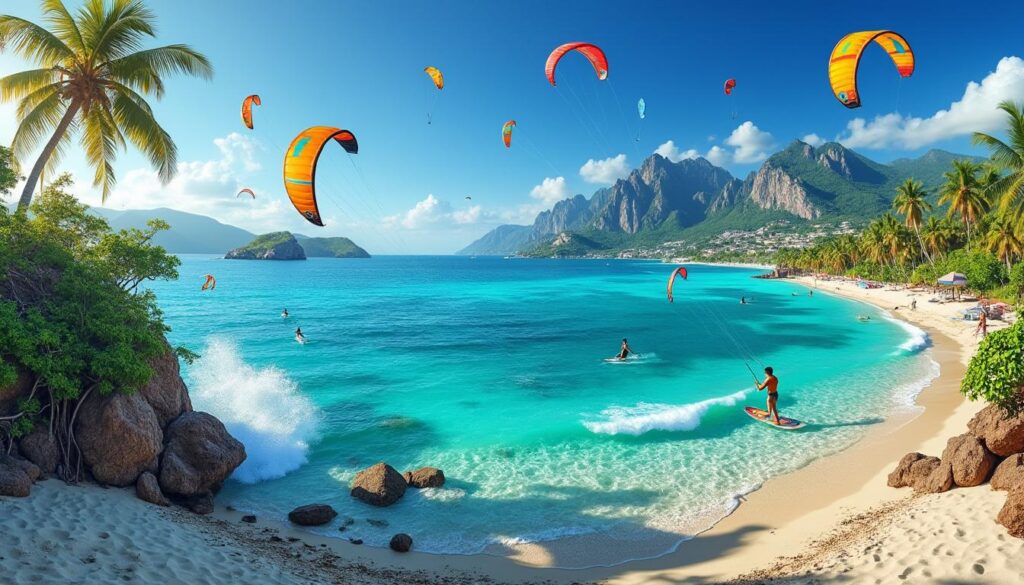
The main lagoon of Dakhla is the beating heart of kitesurfing in Morocco. A stretch of water several kilometers long, surrounded by desert, that offers a rare combination: shallow water, strong wind, endless space. Compared to a kitesurf spot in Puglia or a classic Adriatic kitesurf spot, here the feeling is of having a private playground at your disposal, with no shorebreak and without excessive crowding near the shore. The Main Kite Spot, about 4 km long, is the most frequented area: ideal for freeride, for working on freestyle moves with soft landings and for beginners’ first tacks where safety is a priority.
The wind blows predominantly from the North/North-East, crossing relative to the shore. This cross-shore direction guarantees distance from the beach when riding, but also an easy return with a few light upwind tacks. The combination of trade wind and the thermal generated by the contrast between the Sahara’s heat and the cooler ocean produces the famous “funnel effect”: the wind channels along the lagoon and gains strength and stability. Result? Long, predictable sessions — a dream for those planning an intensive kitesurf course or a week-long kite camp.
Wind conditions at Dakhla Main Spot: when to go to Morocco
For those organizing kitesurf vacations aimed at progression, the most solid season runs from April to September. In these months the Atlantic trade winds are at their peak, with statistics showing about 330 kiteable days a year. In practice, it’s very likely that every day of your stay will have at least one useful wind window, often abundant. Average intensity ranges between 15 and 25 knots, with days that can climb even higher, requiring small kites and good control.
Those used to choosing large kites for kitesurfing in the Ionian Sea or for kitesurfing in Lecce on marginal days often find themselves reducing their usual size by one or two meters here. Even in winter, when in Italy people watch for swells or migrate to spots like Fuerteventura or the European Atlantic, Dakhla continues to offer reliable wind. The difference is that in the low season temperatures drop a bit, but with a good wetsuit you can ride without problems, with less crowding in the water and often more affordable camp prices.
Flat water, freeride and freestyle: what to expect in the lagoon
The lagoon’s morphology creates areas of almost completely flat water, ideal for those who love freestyle and wakestyle. The sandy, shallow bottom allows attempting new tricks with an extra margin of safety compared to wave spots or rocky bottoms. Many planned riders arrive in Dakhla with a list of moves to unlock: from the first backroll to early unhooked maneuvers, moving through cleaner transitions and higher jumps thanks to pop on the flat.
The great thing about this spot is that, while perfect for the most experienced, it doesn’t exclude those at the beginning. Away from the launch and heavy-jump zones, there are calm parts of the lagoon where fundamentals are worked on: bar control, board handling and water starts. This technical accessibility makes Dakhla a reference point alongside the best kitesurf spots in Italy: many Italian riders alternate jumps on Lake Garda, kitesurfing in Taranto or Calabria with winter missions to the Moroccan lagoon to keep their level high year-round.
In the end, the real strength of the lagoon is the combination of wind, space and flat water: a trio that lets you plan progression goals and verify them day after day, without depending on yet another “maybe the thermal will come tomorrow.”
Dakhla for beginners: learning kitesurf between desert and ocean
Despite the image often associated with mega jumps and handle passes, Dakhla is also an excellent place for beginner kitesurfing. The presence of organized schools, boat support and vast stretches of shallow water facilitates every stage of learning. Compared to many Italian spots, where space can be limited or wind irregular, here there are few obstacles, very little shorebreak and a wind direction that helps control pull from the very first departures.
Those approaching kitesurfing from zero need mainly two things: safety and repetition. Safety, to feel protected while learning to manage the power of the kite; repetition, to accumulate practice hours with predictable wind. From this point of view, Dakhla checks both boxes. A typical day-by-day for someone following a kitesurf course in the lagoon includes short theoretical sessions on land, practice with a small kite, body drags and then the first water starts in shallow water.
How to choose the right kitesurf school in Dakhla
The quality of the kitesurf school is decisive. The best lagoon facilities combine internationally certified instructors, helmet radios, support RIBs and an organization of water zones that separates beginners from advanced riders. This reduces the risk of dangerous crossings and makes it easier to focus on teaching. When evaluating where to book, keep an eye on some fundamental elements:
- Number of students per instructor: better small groups, maximum 2 per kite.
- Presence of an operational rescue boat during windy hours.
- Recent equipment, kites with wide depower and well-maintained bars.
- Clear explanations on handling the lagoon’s offshore wind.
An intelligent option for those who have never touched a bar is to arrive in Dakhla with a minimum of theoretical background. Resources like this beginner’s kitesurf guide help to understand terminology, right-of-way rules and wind logic before even putting on the harness. That way, once in Morocco, time in the water is better used and the learning curve shortens.
From the first water start to the first controlled tack
Imagine a typical student, let’s call him Luca, who arrives in Dakhla after a few improvised attempts on Ionian kitesurf beaches. In Italy he struggled with wind holes, chop and the cold. In the lagoon, after the classic safety refresher, Luca goes into the water with a reduced-size kite. First body drag, then start attempts: steady wind, flat water, instructor on the radio. Within a few hours, the first real water start, with the board coming out of the water and the ride taking shape.
Dakhla’s strength is allowing Luca to repeat these attempts dozens of times in a single session, without having to wait hours for a suitable gust. This kind of concentrated practice, day after day, brings many beginners from zero to their first independent ride in a few days of intensive course. It’s not magic, it’s pure wind math: more usable hours, more attempts, more progress. Those who then return to Italian kitesurf beaches find themselves with a solid base, ready to tackle Salento or Tyrrhenian thermals with much more confidence.
For beginners, the message is simple: Dakhla’s lagoon can turn doubts and fear into control and willingness to push. All of this, however, only if you accept the rules of the wind and follow the instructors’ directions with discipline.
Organizing a kite trip to Dakhla: logistics, accommodation and rider life
A kite trip to Dakhla is not like booking a quick weekend at a classic Northern Italy kitesurf spot. The peninsula is isolated, the town is quite far from the main camps and logistics must be planned before boarding the plane. The arrival point is Dakhla airport (VIL), small but now well connected to several European cities via connections within Morocco. Once landed, the best thing is to have already organized the transfer with your kite camp or lagoon hotel.
Public transport in the region is scarce, taxis are not always available, especially in the evening, and car rental is not particularly recommended for those unfamiliar with desert roads and distances. Many flights land in the evening or at night and risking being stranded at the airport without a transfer is the worst way to start a trip that should be all about knots of wind and spray in the face. The more serious camps clearly communicate schedules, costs and transfer methods, often including them in full packages kite + accommodation + meals.
Accommodation, kite camps and services at the spot
Most kitesurfer facilities in Dakhla are located right on the lagoon or at a very short distance from the spot. We’re talking bungalows, eco-lodges, resorts and more spartan camps, all designed for those who live with their wetsuit hung outside the door. Since the region is still sparsely urbanized, accommodation options are not endless. Booking in advance, especially in peak months from April to September, is essential to avoid settling for inconvenient or out-of-the-way solutions.
Many camps offer full-board packages with breakfast, lunch and dinner included, snacks between sessions, gear storage, equipped launch areas and additional services such as rescue service, kite repair and full rental of kites, boards and foils. In case of small incidents or snapped straps, it’s reassuring to know that a sailmaker or repair center is a few meters from your room. Additionally, several camps organize lagoon shuttles to reach specific spots, such as the super-flat zones for speed runs or sandbanks exposed at low tide.
| Elemento | Dettagli tipici a Dakhla |
|---|---|
| Vento medio | 15–25 nodi, circa 330 giorni kiteabili l’anno |
| Tipo di acqua | Laguna piatta, fondale sabbioso e poco profondo |
| Stagione top | Da aprile a settembre, ma si ride tutto l’anno |
| Servizi | Scuole, rescue, kite repair, noleggio, escursioni |
| Livello consigliato | Da totale principiante a rider professionista |
What to pack for a kite trip in the desert
Packing for Dakhla is a small ritual, especially if you arrive from Tuscany kitesurf beaches or from cooler Tyrrhenian spots. By day the temperature is often mild or warm, but at night the desert is felt and the wind can make the air biting. Besides technical gear, it’s essential to bring with you:
- An appropriate wetsuit for the season (3/2 or a full 4/3 for safety).
- A light windproof jacket and a sweatshirt for evenings at the camp.
- High-factor sunscreen, a rash guard and a hat to protect from the sun reflected by the lagoon.
- Any medication for sensitive stomachs, since some road transfers can be long.
Golden rule: better one more sweatshirt than one less. The typical day consists of intense sessions followed by relaxing moments on the terrace watching kites backlit by the sun: doing it with your body warm completely changes the quality of the trip. A well-organized kite trip to Dakhla is not just a sequence of tacks, it’s a simple routine: sleep, eat, laugh with other riders, get back on the water. And repeat.
Dakhla vs other spots: Italy, the Mediterranean and beyond
Those who regularly ride at kitesurf spots in Italy know how important it is to have a winter “refuge” where you can count on stable wind and non-freezing water. Dakhla plays exactly this role for many Mediterranean riders. Compared to classic Salento kitesurf spots, with the double Adriatic and Ionian seas, or the summer thermals of Garda, the Moroccan lagoon offers a consistency rarely found in Europe. You lose a bit of urban landscape variety, but you gain total focus on the session.
Enthusiasts who alternate trips between Dakhla, the Canaries and other destinations like Zanzibar or Tarifa often emphasize how the Moroccan lagoon is a perfect “laboratory” for those wanting to unlock moves and improve quickly. If you need to train for an important event or a national championship, having multiple consecutive windy days is a huge advantage. It’s a bit like choosing a super windy lake in Northern Italy to prepare for competitions, but here with the added bonus of the ocean a stone’s throw away.
Training for competitions and personal goals
In recent years several riders competing in events like the Italian Kitesurf Championship have included training periods in Dakhla in their season. The reason is simple: strong wind, flat water, facilities with everything at hand. Possibilities to film training videos, try different setups and test new gear in repeatable conditions. This applies to those aiming for the podium, but also to those with a concrete personal goal, like landing their first raley or a first controlled kiteloop.
At the same time, Dakhla does not replace Italian spots, it completes them. Every sea has its character: Salento wind changes completely depending on whether you are on the Ionian or the Adriatic side; kitesurfing in Taranto has different characteristics compared to Calabria; while Northern Italy spots benefit greatly from summer thermals. The value of a trip to Morocco is precisely expanding your repertoire: learning to read a different wind, understanding how to handle the lagoon’s safe offshore compared to the onshore of an Italian beach.
When to choose Dakhla and when to stay in the Mediterranean
The choice between a trip to Morocco and a tour of the best kitesurf spots in Italy depends on three factors: time of year, budget and objective. If you’re looking for consistent winter sessions, the Mediterranean can offer pleasant surprises but with more weather uncertainties. Dakhla, in that period, is often a guarantee. If instead you want to explore different cultures and beaches while staying relatively close to home, rotating between Tuscany kitesurf spots, Salento, Calabria and some outings on Northern lakes can give you a much fuller picture of the Italian scene.
The key point is not to think of Dakhla as an “either-or”, but as one more piece of your rider puzzle. Every spot you add to your experience makes you more complete, more adaptable and less slave to perfect conditions. Dakhla trains you for continuity; Italy teaches you to read variable conditions. Together, they create the basis of a kiter able to cope anywhere.
Watching some training videos shot in the lagoon helps get a concrete idea of the lines, the available space and the intensity of the wind in action.
Practical tips for safety, progression and daily life in Dakhla
Beneath the wind-paradise image, Dakhla remains an environment to be respected. The wind at the Main Spot is often offshore relative to the shore, so going out without support or without knowing the lagoon’s behavior well is a mistake to avoid. The first tip is simple: never go out alone in strong conditions, especially if you do not yet have full control of the kite in all situations. Relying on the rescue services provided by camps is not a luxury, it’s common sense.
Another aspect to consider is tide management. Even if the lagoon often appears flat and predictable, water levels change and some areas that seem deep can turn into sandbanks. Knowing high and low tide times, and listening to schools’ daily briefings on the spot, avoids unpleasant surprises like fins scraping the bottom or jumps landed too close to shallow zones.
Progression routine: how to make the most of a week in Dakhla
For those arriving with the idea of making a leap in level, the key is structuring the kite week. You don’t need to be out eight hours a day: better two focused sessions, one morning and one afternoon, each with a precise focus. For example, the first days you can concentrate on edging and speed control; then on basic jumps and transitions; in the last two or three days on more ambitious maneuvers, when the body has adapted to the fatigue and the local wind power.
Many riders create a written list of goals, like they would before an intensive week at their usual kitesurf spot in Italy. This prevents you from wasting precious sessions simply doing laps without purpose. At Dakhla, where wind consistency is on your side, you can afford to break a session with observation moments: watch a more experienced rider attempting a maneuver you’re interested in, ask for tips after the outing and then replicate the steps you’ve memorized.
Life off the water: rest, food and camp social life
An important part of the Dakhla experience is camp life. The energy here is similar to that of a familiar Salento kitesurf spot at the end of the day: sitting watching the sunset with the board still wet and the muscles burning in the right way. Food in camps is often simple but abundant, designed for those burning many calories during sessions. It’s the ideal time to talk setups, swap tips on other spots (from Northern Italy to Tarifa) and maybe plan the next kite trip together.
Rest is also a technical ingredient, not just comfort. In an environment where you can ride every day, the temptation to never stop is strong. But the body needs recovery to avoid injuries: stretching, hydration, a few extra hours of sleep when the wind calms in the evening. It’s this balance between enthusiasm and clarity that turns an ordinary trip into a real phase of growth as a rider.
Videos and guides dedicated to spot safety complement the information given by locals and schools, helping you enter the water with even more awareness.
What is the best period to kitesurf at Dakhla Main Spot?
The windiest and most regular period runs from April to September, when the Atlantic trade winds and the desert’s thermal effect make the lagoon almost always kiteable. That said, you can kitesurf in Dakhla all year round: in winter the wind often stays active, with less crowding in the water and slightly cooler temperatures that are manageable with an appropriate full wetsuit.
Is Dakhla suitable for those who are new to kitesurfing?
Yes, the lagoon is one of the most suitable spots for beginner kitesurfers. The flat, shallow water, structured schools, boat support and constant winds allow rapid and safe learning. It is important, however, to rely on a serious kitesurf school, follow instructions on schedules and zones dedicated to beginners, and never go out alone in strong wind conditions.
What kite sizes should I bring for a trip to Dakhla?
Depending on weight and level, most riders use kites between 7 and 12 square meters, with the most common mid-range being 8 to 10 meters. Wind generally ranges between 15 and 25 knots, with some softer and some tougher days. If you often travel to kitesurf spots in Italy, consider bringing a slightly smaller kite than you would normally use for the same forecasted conditions.
Should I organize in advance the transfer from the airport to the camp?
Yes, it is strongly recommended. Dakhla airport is isolated, public transport is limited and many flights land in the evening. Taxis are not always available, so it’s better to book a dedicated transfer with your camp or hotel. This way you arrive directly at the spot, without stress and without missing your first useful windy day.
What level of safety does Dakhla Main Kite Spot offer?
The Main Spot is served by organized schools, boat rescue and repair centers, but it remains a spot with often offshore wind that requires respect. Safety is high if you rely on serious facilities, respect the dedicated zones, check forecasts and do not go too far beyond the area covered by rescue. With these precautions, Dakhla becomes one of the best places to progress continuously and consciously.
Kitesurf Dakhla: why the lagoon is truly a kite paradise
The main lagoon of Dakhla is the beating heart of kitesurfing in Morocco. A stretch of water several kilometers long, surrounded by desert, that offers a rare combination: shallow water, strong wind, endless space. Compared to a kitesurf spot in Puglia or a classic Adriatic kitesurf spot, here the feeling is of having a private playground at your disposal, with no shorebreak and without excessive crowding near the shore. The Main Kite Spot, about 4 km long, is the most frequented area: ideal for freeride, for working on freestyle moves with soft landings and for beginners’ first tacks where safety is a priority.
The wind blows predominantly from the North/North-East, crossing relative to the shore. This cross-shore direction guarantees distance from the beach when riding, but also an easy return with a few light upwind tacks. The combination of trade wind and the thermal generated by the contrast between the Sahara’s heat and the cooler ocean produces the famous “funnel effect”: the wind channels along the lagoon and gains strength and stability. Result? Long, predictable sessions — a dream for those planning an intensive kitesurf course or a week-long kite camp.
Wind conditions at Dakhla Main Spot: when to go to Morocco
For those organizing kitesurf vacations aimed at progression, the most solid season runs from April to September. In these months the Atlantic trade winds are at their peak, with statistics showing about 330 kiteable days a year. In practice, it’s very likely that every day of your stay will have at least one useful wind window, often abundant. Average intensity ranges between 15 and 25 knots, with days that can climb even higher, requiring small kites and good control.
Those used to choosing large kites for kitesurfing in the Ionian Sea or for kitesurfing in Lecce on marginal days often find themselves reducing their usual size by one or two meters here. Even in winter, when in Italy people watch for swells or migrate to spots like Fuerteventura or the European Atlantic, Dakhla continues to offer reliable wind. The difference is that in the low season temperatures drop a bit, but with a good wetsuit you can ride without problems, with less crowding in the water and often more affordable camp prices.
Flat water, freeride and freestyle: what to expect in the lagoon
The lagoon’s morphology creates areas of almost completely flat water, ideal for those who love freestyle and wakestyle. The sandy, shallow bottom allows attempting new tricks with an extra margin of safety compared to wave spots or rocky bottoms. Many planned riders arrive in Dakhla with a list of moves to unlock: from the first backroll to early unhooked maneuvers, moving through cleaner transitions and higher jumps thanks to pop on the flat.
The great thing about this spot is that, while perfect for the most experienced, it doesn’t exclude those at the beginning. Away from the launch and heavy-jump zones, there are calm parts of the lagoon where fundamentals are worked on: bar control, board handling and water starts. This technical accessibility makes Dakhla a reference point alongside the best kitesurf spots in Italy: many Italian riders alternate jumps on Lake Garda, kitesurfing in Taranto or Calabria with winter missions to the Moroccan lagoon to keep their level high year-round.
In the end, the real strength of the lagoon is the combination of wind, space and flat water: a trio that lets you plan progression goals and verify them day after day, without depending on yet another “maybe the thermal will come tomorrow.”
Dakhla for beginners: learning kitesurf between desert and ocean
Despite the image often associated with mega jumps and handle passes, Dakhla is also an excellent place for beginner kitesurfing. The presence of organized schools, boat support and vast stretches of shallow water facilitates every stage of learning. Compared to many Italian spots, where space can be limited or wind irregular, here there are few obstacles, very little shorebreak and a wind direction that helps control pull from the very first departures.
Those approaching kitesurfing from zero need mainly two things: safety and repetition. Safety, to feel protected while learning to manage the power of the kite; repetition, to accumulate practice hours with predictable wind. From this point of view, Dakhla checks both boxes. A typical day-by-day for someone following a kitesurf course in the lagoon includes short theoretical sessions on land, practice with a small kite, body drags and then the first water starts in shallow water.
How to choose the right kitesurf school in Dakhla
The quality of the kitesurf school is decisive. The best lagoon facilities combine internationally certified instructors, helmet radios, support RIBs and an organization of water zones that separates beginners from advanced riders. This reduces the risk of dangerous crossings and makes it easier to focus on teaching. When evaluating where to book, keep an eye on some fundamental elements:
- Number of students per instructor: better small groups, maximum 2 per kite.
- Presence of an operational rescue boat during windy hours.
- Recent equipment, kites with wide depower and well-maintained bars.
- Clear explanations on handling the lagoon’s offshore wind.
An intelligent option for those who have never touched a bar is to arrive in Dakhla with a minimum of theoretical background. Resources like this beginner’s kitesurf guide help to understand terminology, right-of-way rules and wind logic before even putting on the harness. That way, once in Morocco, time in the water is better used and the learning curve shortens.
From the first water start to the first controlled tack
Imagine a typical student, let’s call him Luca, who arrives in Dakhla after a few improvised attempts on Ionian kitesurf beaches. In Italy he struggled with wind holes, chop and the cold. In the lagoon, after the classic safety refresher, Luca goes into the water with a reduced-size kite. First body drag, then start attempts: steady wind, flat water, instructor on the radio. Within a few hours, the first real water start, with the board coming out of the water and the ride taking shape.
Dakhla’s strength is allowing Luca to repeat these attempts dozens of times in a single session, without having to wait hours for a suitable gust. This kind of concentrated practice, day after day, brings many beginners from zero to their first independent ride in a few days of intensive course. It’s not magic, it’s pure wind math: more usable hours, more attempts, more progress. Those who then return to Italian kitesurf beaches find themselves with a solid base, ready to tackle Salento or Tyrrhenian thermals with much more confidence.
For beginners, the message is simple: Dakhla’s lagoon can turn doubts and fear into control and willingness to push. All of this, however, only if you accept the rules of the wind and follow the instructors’ directions with discipline.
Organizing a kite trip to Dakhla: logistics, accommodation and rider life
A kite trip to Dakhla is not like booking a quick weekend at a classic Northern Italy kitesurf spot. The peninsula is isolated, the town is quite far from the main camps and logistics must be planned before boarding the plane. The arrival point is Dakhla airport (VIL), small but now well connected to several European cities via connections within Morocco. Once landed, the best thing is to have already organized the transfer with your kite camp or lagoon hotel.
Public transport in the region is scarce, taxis are not always available, especially in the evening, and car rental is not particularly recommended for those unfamiliar with desert roads and distances. Many flights land in the evening or at night and risking being stranded at the airport without a transfer is the worst way to start a trip that should be all about knots of wind and spray in the face. The more serious camps clearly communicate schedules, costs and transfer methods, often including them in full packages kite + accommodation + meals.
Accommodation, kite camps and services at the spot
Most kitesurfer facilities in Dakhla are located right on the lagoon or at a very short distance from the spot. We’re talking bungalows, eco-lodges, resorts and more spartan camps, all designed for those who live with their wetsuit hung outside the door. Since the region is still sparsely urbanized, accommodation options are not endless. Booking in advance, especially in peak months from April to September, is essential to avoid settling for inconvenient or out-of-the-way solutions.
Many camps offer full-board packages with breakfast, lunch and dinner included, snacks between sessions, gear storage, equipped launch areas and additional services such as rescue service, kite repair and full rental of kites, boards and foils. In case of small incidents or snapped straps, it’s reassuring to know that a sailmaker or repair center is a few meters from your room. Additionally, several camps organize lagoon shuttles to reach specific spots, such as the super-flat zones for speed runs or sandbanks exposed at low tide.
| Elemento | Dettagli tipici a Dakhla |
|---|---|
| Vento medio | 15–25 nodi, circa 330 giorni kiteabili l’anno |
| Tipo di acqua | Laguna piatta, fondale sabbioso e poco profondo |
| Stagione top | Da aprile a settembre, ma si ride tutto l’anno |
| Servizi | Scuole, rescue, kite repair, noleggio, escursioni |
| Livello consigliato | Da totale principiante a rider professionista |
What to pack for a kite trip in the desert
Packing for Dakhla is a small ritual, especially if you arrive from Tuscany kitesurf beaches or from cooler Tyrrhenian spots. By day the temperature is often mild or warm, but at night the desert is felt and the wind can make the air biting. Besides technical gear, it’s essential to bring with you:
- An appropriate wetsuit for the season (3/2 or a full 4/3 for safety).
- A light windproof jacket and a sweatshirt for evenings at the camp.
- High-factor sunscreen, a rash guard and a hat to protect from the sun reflected by the lagoon.
- Any medication for sensitive stomachs, since some road transfers can be long.
Golden rule: better one more sweatshirt than one less. The typical day consists of intense sessions followed by relaxing moments on the terrace watching kites backlit by the sun: doing it with your body warm completely changes the quality of the trip. A well-organized kite trip to Dakhla is not just a sequence of tacks, it’s a simple routine: sleep, eat, laugh with other riders, get back on the water. And repeat.
Dakhla vs other spots: Italy, the Mediterranean and beyond
Those who regularly ride at kitesurf spots in Italy know how important it is to have a winter “refuge” where you can count on stable wind and non-freezing water. Dakhla plays exactly this role for many Mediterranean riders. Compared to classic Salento kitesurf spots, with the double Adriatic and Ionian seas, or the summer thermals of Garda, the Moroccan lagoon offers a consistency rarely found in Europe. You lose a bit of urban landscape variety, but you gain total focus on the session.
Enthusiasts who alternate trips between Dakhla, the Canaries and other destinations like Zanzibar or Tarifa often emphasize how the Moroccan lagoon is a perfect “laboratory” for those wanting to unlock moves and improve quickly. If you need to train for an important event or a national championship, having multiple consecutive windy days is a huge advantage. It’s a bit like choosing a super windy lake in Northern Italy to prepare for competitions, but here with the added bonus of the ocean a stone’s throw away.
Training for competitions and personal goals
In recent years several riders competing in events like the Italian Kitesurf Championship have included training periods in Dakhla in their season. The reason is simple: strong wind, flat water, facilities with everything at hand. Possibilities to film training videos, try different setups and test new gear in repeatable conditions. This applies to those aiming for the podium, but also to those with a concrete personal goal, like landing their first raley or a first controlled kiteloop.
At the same time, Dakhla does not replace Italian spots, it completes them. Every sea has its character: Salento wind changes completely depending on whether you are on the Ionian or the Adriatic side; kitesurfing in Taranto has different characteristics compared to Calabria; while Northern Italy spots benefit greatly from summer thermals. The value of a trip to Morocco is precisely expanding your repertoire: learning to read a different wind, understanding how to handle the lagoon’s safe offshore compared to the onshore of an Italian beach.
When to choose Dakhla and when to stay in the Mediterranean
The choice between a trip to Morocco and a tour of the best kitesurf spots in Italy depends on three factors: time of year, budget and objective. If you’re looking for consistent winter sessions, the Mediterranean can offer pleasant surprises but with more weather uncertainties. Dakhla, in that period, is often a guarantee. If instead you want to explore different cultures and beaches while staying relatively close to home, rotating between Tuscany kitesurf spots, Salento, Calabria and some outings on Northern lakes can give you a much fuller picture of the Italian scene.
The key point is not to think of Dakhla as an “either-or”, but as one more piece of your rider puzzle. Every spot you add to your experience makes you more complete, more adaptable and less slave to perfect conditions. Dakhla trains you for continuity; Italy teaches you to read variable conditions. Together, they create the basis of a kiter able to cope anywhere.
Watching some training videos shot in the lagoon helps get a concrete idea of the lines, the available space and the intensity of the wind in action.
Practical tips for safety, progression and daily life in Dakhla
Beneath the wind-paradise image, Dakhla remains an environment to be respected. The wind at the Main Spot is often offshore relative to the shore, so going out without support or without knowing the lagoon’s behavior well is a mistake to avoid. The first tip is simple: never go out alone in strong conditions, especially if you do not yet have full control of the kite in all situations. Relying on the rescue services provided by camps is not a luxury, it’s common sense.
Another aspect to consider is tide management. Even if the lagoon often appears flat and predictable, water levels change and some areas that seem deep can turn into sandbanks. Knowing high and low tide times, and listening to schools’ daily briefings on the spot, avoids unpleasant surprises like fins scraping the bottom or jumps landed too close to shallow zones.
Progression routine: how to make the most of a week in Dakhla
For those arriving with the idea of making a leap in level, the key is structuring the kite week. You don’t need to be out eight hours a day: better two focused sessions, one morning and one afternoon, each with a precise focus. For example, the first days you can concentrate on edging and speed control; then on basic jumps and transitions; in the last two or three days on more ambitious maneuvers, when the body has adapted to the fatigue and the local wind power.
Many riders create a written list of goals, like they would before an intensive week at their usual kitesurf spot in Italy. This prevents you from wasting precious sessions simply doing laps without purpose. At Dakhla, where wind consistency is on your side, you can afford to break a session with observation moments: watch a more experienced rider attempting a maneuver you’re interested in, ask for tips after the outing and then replicate the steps you’ve memorized.
Life off the water: rest, food and camp social life
An important part of the Dakhla experience is camp life. The energy here is similar to that of a familiar Salento kitesurf spot at the end of the day: sitting watching the sunset with the board still wet and the muscles burning in the right way. Food in camps is often simple but abundant, designed for those burning many calories during sessions. It’s the ideal time to talk setups, swap tips on other spots (from Northern Italy to Tarifa) and maybe plan the next kite trip together.
Rest is also a technical ingredient, not just comfort. In an environment where you can ride every day, the temptation to never stop is strong. But the body needs recovery to avoid injuries: stretching, hydration, a few extra hours of sleep when the wind calms in the evening. It’s this balance between enthusiasm and clarity that turns an ordinary trip into a real phase of growth as a rider.
Videos and guides dedicated to spot safety complement the information given by locals and schools, helping you enter the water with even more awareness.
What is the best period to kitesurf at Dakhla Main Spot?
The windiest and most regular period runs from April to September, when the Atlantic trade winds and the desert’s thermal effect make the lagoon almost always kiteable. That said, you can kitesurf in Dakhla all year round: in winter the wind often stays active, with less crowding in the water and slightly cooler temperatures that are manageable with an appropriate full wetsuit.
Is Dakhla suitable for those who are new to kitesurfing?
Yes, the lagoon is one of the most suitable spots for beginner kitesurfers. The flat, shallow water, structured schools, boat support and constant winds allow rapid and safe learning. It is important, however, to rely on a serious kitesurf school, follow instructions on schedules and zones dedicated to beginners, and never go out alone in strong wind conditions.
What kite sizes should I bring for a trip to Dakhla?
Depending on weight and level, most riders use kites between 7 and 12 square meters, with the most common mid-range being 8 to 10 meters. Wind generally ranges between 15 and 25 knots, with some softer and some tougher days. If you often travel to kitesurf spots in Italy, consider bringing a slightly smaller kite than you would normally use for the same forecasted conditions.
Should I organize in advance the transfer from the airport to the camp?
Yes, it is strongly recommended. Dakhla airport is isolated, public transport is limited and many flights land in the evening. Taxis are not always available, so it’s better to book a dedicated transfer with your camp or hotel. This way you arrive directly at the spot, without stress and without missing your first useful windy day.
What level of safety does Dakhla Main Kite Spot offer?
The Main Spot is served by organized schools, boat rescue and repair centers, but it remains a spot with often offshore wind that requires respect. Safety is high if you rely on serious facilities, respect the dedicated zones, check forecasts and do not go too far beyond the area covered by rescue. With these precautions, Dakhla becomes one of the best places to progress continuously and consciously.
Kitesurf Dakhla: why the lagoon is truly a kite paradise
The main lagoon of Dakhla is the beating heart of kitesurfing in Morocco. A stretch of water several kilometers long, surrounded by desert, that offers a rare combination: shallow water, strong wind, endless space. Compared to a kitesurf spot in Puglia or a classic Adriatic kitesurf spot, here the feeling is of having a private playground at your disposal, with no shorebreak and without excessive crowding near the shore. The Main Kite Spot, about 4 km long, is the most frequented area: ideal for freeride, for working on freestyle moves with soft landings and for beginners’ first tacks where safety is a priority.
The wind blows predominantly from the North/North-East, crossing relative to the shore. This cross-shore direction guarantees distance from the beach when riding, but also an easy return with a few light upwind tacks. The combination of trade wind and the thermal generated by the contrast between the Sahara’s heat and the cooler ocean produces the famous “funnel effect”: the wind channels along the lagoon and gains strength and stability. Result? Long, predictable sessions — a dream for those planning an intensive kitesurf course or a week-long kite camp.
Wind conditions at Dakhla Main Spot: when to go to Morocco
For those organizing kitesurf vacations aimed at progression, the most solid season runs from April to September. In these months the Atlantic trade winds are at their peak, with statistics showing about 330 kiteable days a year. In practice, it’s very likely that every day of your stay will have at least one useful wind window, often abundant. Average intensity ranges between 15 and 25 knots, with days that can climb even higher, requiring small kites and good control.
Those used to choosing large kites for kitesurfing in the Ionian Sea or for kitesurfing in Lecce on marginal days often find themselves reducing their usual size by one or two meters here. Even in winter, when in Italy people watch for swells or migrate to spots like Fuerteventura or the European Atlantic, Dakhla continues to offer reliable wind. The difference is that in the low season temperatures drop a bit, but with a good wetsuit you can ride without problems, with less crowding in the water and often more affordable camp prices.
Flat water, freeride and freestyle: what to expect in the lagoon
The lagoon’s morphology creates areas of almost completely flat water, ideal for those who love freestyle and wakestyle. The sandy, shallow bottom allows attempting new tricks with an extra margin of safety compared to wave spots or rocky bottoms. Many planned riders arrive in Dakhla with a list of moves to unlock: from the first backroll to early unhooked maneuvers, moving through cleaner transitions and higher jumps thanks to pop on the flat.
The great thing about this spot is that, while perfect for the most experienced, it doesn’t exclude those at the beginning. Away from the launch and heavy-jump zones, there are calm parts of the lagoon where fundamentals are worked on: bar control, board handling and water starts. This technical accessibility makes Dakhla a reference point alongside the best kitesurf spots in Italy: many Italian riders alternate jumps on Lake Garda, kitesurfing in Taranto or Calabria with winter missions to the Moroccan lagoon to keep their level high year-round.
In the end, the real strength of the lagoon is the combination of wind, space and flat water: a trio that lets you plan progression goals and verify them day after day, without depending on yet another “maybe the thermal will come tomorrow.”
Dakhla for beginners: learning kitesurf between desert and ocean
Despite the image often associated with mega jumps and handle passes, Dakhla is also an excellent place for beginner kitesurfing. The presence of organized schools, boat support and vast stretches of shallow water facilitates every stage of learning. Compared to many Italian spots, where space can be limited or wind irregular, here there are few obstacles, very little shorebreak and a wind direction that helps control pull from the very first departures.
Those approaching kitesurfing from zero need mainly two things: safety and repetition. Safety, to feel protected while learning to manage the power of the kite; repetition, to accumulate practice hours with predictable wind. From this point of view, Dakhla checks both boxes. A typical day-by-day for someone following a kitesurf course in the lagoon includes short theoretical sessions on land, practice with a small kite, body drags and then the first water starts in shallow water.
How to choose the right kitesurf school in Dakhla
The quality of the kitesurf school is decisive. The best lagoon facilities combine internationally certified instructors, helmet radios, support RIBs and an organization of water zones that separates beginners from advanced riders. This reduces the risk of dangerous crossings and makes it easier to focus on teaching. When evaluating where to book, keep an eye on some fundamental elements:
- Number of students per instructor: better small groups, maximum 2 per kite.
- Presence of an operational rescue boat during windy hours.
- Recent equipment, kites with wide depower and well-maintained bars.
- Clear explanations on handling the lagoon’s offshore wind.
An intelligent option for those who have never touched a bar is to arrive in Dakhla with a minimum of theoretical background. Resources like this beginner’s kitesurf guide help to understand terminology, right-of-way rules and wind logic before even putting on the harness. That way, once in Morocco, time in the water is better used and the learning curve shortens.
From the first water start to the first controlled tack
Imagine a typical student, let’s call him Luca, who arrives in Dakhla after a few improvised attempts on Ionian kitesurf beaches. In Italy he struggled with wind holes, chop and the cold. In the lagoon, after the classic safety refresher, Luca goes into the water with a reduced-size kite. First body drag, then start attempts: steady wind, flat water, instructor on the radio. Within a few hours, the first real water start, with the board coming out of the water and the ride taking shape.
Dakhla’s strength is allowing Luca to repeat these attempts dozens of times in a single session, without having to wait hours for a suitable gust. This kind of concentrated practice, day after day, brings many beginners from zero to their first independent ride in a few days of intensive course. It’s not magic, it’s pure wind math: more usable hours, more attempts, more progress. Those who then return to Italian kitesurf beaches find themselves with a solid base, ready to tackle Salento or Tyrrhenian thermals with much more confidence.
For beginners, the message is simple: Dakhla’s lagoon can turn doubts and fear into control and willingness to push. All of this, however, only if you accept the rules of the wind and follow the instructors’ directions with discipline.
Organizing a kite trip to Dakhla: logistics, accommodation and rider life
A kite trip to Dakhla is not like booking a quick weekend at a classic Northern Italy kitesurf spot. The peninsula is isolated, the town is quite far from the main camps and logistics must be planned before boarding the plane. The arrival point is Dakhla airport (VIL), small but now well connected to several European cities via connections within Morocco. Once landed, the best thing is to have already organized the transfer with your kite camp or lagoon hotel.
Public transport in the region is scarce, taxis are not always available, especially in the evening, and car rental is not particularly recommended for those unfamiliar with desert roads and distances. Many flights land in the evening or at night and risking being stranded at the airport without a transfer is the worst way to start a trip that should be all about knots of wind and spray in the face. The more serious camps clearly communicate schedules, costs and transfer methods, often including them in full packages kite + accommodation + meals.
Accommodation, kite camps and services at the spot
Most kitesurfer facilities in Dakhla are located right on the lagoon or at a very short distance from the spot. We’re talking bungalows, eco-lodges, resorts and more spartan camps, all designed for those who live with their wetsuit hung outside the door. Since the region is still sparsely urbanized, accommodation options are not endless. Booking in advance, especially in peak months from April to September, is essential to avoid settling for inconvenient or out-of-the-way solutions.
Many camps offer full-board packages with breakfast, lunch and dinner included, snacks between sessions, gear storage, equipped launch areas and additional services such as rescue service, kite repair and full rental of kites, boards and foils. In case of small incidents or snapped straps, it’s reassuring to know that a sailmaker or repair center is a few meters from your room. Additionally, several camps organize lagoon shuttles to reach specific spots, such as the super-flat zones for speed runs or sandbanks exposed at low tide.
| Elemento | Dettagli tipici a Dakhla |
|---|---|
| Vento medio | 15–25 nodi, circa 330 giorni kiteabili l’anno |
| Tipo di acqua | Laguna piatta, fondale sabbioso e poco profondo |
| Stagione top | Da aprile a settembre, ma si ride tutto l’anno |
| Servizi | Scuole, rescue, kite repair, noleggio, escursioni |
| Livello consigliato | Da totale principiante a rider professionista |
What to pack for a kite trip in the desert
Packing for Dakhla is a small ritual, especially if you arrive from Tuscany kitesurf beaches or from cooler Tyrrhenian spots. By day the temperature is often mild or warm, but at night the desert is felt and the wind can make the air biting. Besides technical gear, it’s essential to bring with you:
- An appropriate wetsuit for the season (3/2 or a full 4/3 for safety).
- A light windproof jacket and a sweatshirt for evenings at the camp.
- High-factor sunscreen, a rash guard and a hat to protect from the sun reflected by the lagoon.
- Any medication for sensitive stomachs, since some road transfers can be long.
Golden rule: better one more sweatshirt than one less. The typical day consists of intense sessions followed by relaxing moments on the terrace watching kites backlit by the sun: doing it with your body warm completely changes the quality of the trip. A well-organized kite trip to Dakhla is not just a sequence of tacks, it’s a simple routine: sleep, eat, laugh with other riders, get back on the water. And repeat.
Dakhla vs other spots: Italy, the Mediterranean and beyond
Those who regularly ride at kitesurf spots in Italy know how important it is to have a winter “refuge” where you can count on stable wind and non-freezing water. Dakhla plays exactly this role for many Mediterranean riders. Compared to classic Salento kitesurf spots, with the double Adriatic and Ionian seas, or the summer thermals of Garda, the Moroccan lagoon offers a consistency rarely found in Europe. You lose a bit of urban landscape variety, but you gain total focus on the session.
Enthusiasts who alternate trips between Dakhla, the Canaries and other destinations like Zanzibar or Tarifa often emphasize how the Moroccan lagoon is a perfect “laboratory” for those wanting to unlock moves and improve quickly. If you need to train for an important event or a national championship, having multiple consecutive windy days is a huge advantage. It’s a bit like choosing a super windy lake in Northern Italy to prepare for competitions, but here with the added bonus of the ocean a stone’s throw away.
Training for competitions and personal goals
In recent years several riders competing in events like the Italian Kitesurf Championship have included training periods in Dakhla in their season. The reason is simple: strong wind, flat water, facilities with everything at hand. Possibilities to film training videos, try different setups and test new gear in repeatable conditions. This applies to those aiming for the podium, but also to those with a concrete personal goal, like landing their first raley or a first controlled kiteloop.
At the same time, Dakhla does not replace Italian spots, it completes them. Every sea has its character: Salento wind changes completely depending on whether you are on the Ionian or the Adriatic side; kitesurfing in Taranto has different characteristics compared to Calabria; while Northern Italy spots benefit greatly from summer thermals. The value of a trip to Morocco is precisely expanding your repertoire: learning to read a different wind, understanding how to handle the lagoon’s safe offshore compared to the onshore of an Italian beach.
When to choose Dakhla and when to stay in the Mediterranean
The choice between a trip to Morocco and a tour of the best kitesurf spots in Italy depends on three factors: time of year, budget and objective. If you’re looking for consistent winter sessions, the Mediterranean can offer pleasant surprises but with more weather uncertainties. Dakhla, in that period, is often a guarantee. If instead you want to explore different cultures and beaches while staying relatively close to home, rotating between Tuscany kitesurf spots, Salento, Calabria and some outings on Northern lakes can give you a much fuller picture of the Italian scene.
The key point is not to think of Dakhla as an “either-or”, but as one more piece of your rider puzzle. Every spot you add to your experience makes you more complete, more adaptable and less slave to perfect conditions. Dakhla trains you for continuity; Italy teaches you to read variable conditions. Together, they create the basis of a kiter able to cope anywhere.
Watching some training videos shot in the lagoon helps get a concrete idea of the lines, the available space and the intensity of the wind in action.
Practical tips for safety, progression and daily life in Dakhla
Beneath the wind-paradise image, Dakhla remains an environment to be respected. The wind at the Main Spot is often offshore relative to the shore, so going out without support or without knowing the lagoon’s behavior well is a mistake to avoid. The first tip is simple: never go out alone in strong conditions, especially if you do not yet have full control of the kite in all situations. Relying on the rescue services provided by camps is not a luxury, it’s common sense.
Another aspect to consider is tide management. Even if the lagoon often appears flat and predictable, water levels change and some areas that seem deep can turn into sandbanks. Knowing high and low tide times, and listening to schools’ daily briefings on the spot, avoids unpleasant surprises like fins scraping the bottom or jumps landed too close to shallow zones.
Progression routine: how to make the most of a week in Dakhla
For those arriving with the idea of making a leap in level, the key is structuring the kite week. You don’t need to be out eight hours a day: better two focused sessions, one morning and one afternoon, each with a precise focus. For example, the first days you can concentrate on edging and speed control; then on basic jumps and transitions; in the last two or three days on more ambitious maneuvers, when the body has adapted to the fatigue and the local wind power.
Many riders create a written list of goals, like they would before an intensive week at their usual kitesurf spot in Italy. This prevents you from wasting precious sessions simply doing laps without purpose. At Dakhla, where wind consistency is on your side, you can afford to break a session with observation moments: watch a more experienced rider attempting a maneuver you’re interested in, ask for tips after the outing and then replicate the steps you’ve memorized.
Life off the water: rest, food and camp social life
An important part of the Dakhla experience is camp life. The energy here is similar to that of a familiar Salento kitesurf spot at the end of the day: sitting watching the sunset with the board still wet and the muscles burning in the right way. Food in camps is often simple but abundant, designed for those burning many calories during sessions. It’s the ideal time to talk setups, swap tips on other spots (from Northern Italy to Tarifa) and maybe plan the next kite trip together.
Rest is also a technical ingredient, not just comfort. In an environment where you can ride every day, the temptation to never stop is strong. But the body needs recovery to avoid injuries: stretching, hydration, a few extra hours of sleep when the wind calms in the evening. It’s this balance between enthusiasm and clarity that turns an ordinary trip into a real phase of growth as a rider.
Videos and guides dedicated to spot safety complement the information given by locals and schools, helping you enter the water with even more awareness.
What is the best period to kitesurf at Dakhla Main Spot?
The windiest and most regular period runs from April to September, when the Atlantic trade winds and the desert’s thermal effect make the lagoon almost always kiteable. That said, you can kitesurf in Dakhla all year round: in winter the wind often stays active, with less crowding in the water and slightly cooler temperatures that are manageable with an appropriate full wetsuit.
Is Dakhla suitable for those who are new to kitesurfing?
Yes, the lagoon is one of the most suitable spots for beginner kitesurfers. The flat, shallow water, structured schools, boat support and constant winds allow rapid and safe learning. It is important, however, to rely on a serious kitesurf school, follow instructions on schedules and zones dedicated to beginners, and never go out alone in strong wind conditions.
What kite sizes should I bring for a trip to Dakhla?
Depending on weight and level, most riders use kites between 7 and 12 square meters, with the most common mid-range being 8 to 10 meters. Wind generally ranges between 15 and 25 knots, with some softer and some tougher days. If you often travel to kitesurf spots in Italy, consider bringing a slightly smaller kite than you would normally use for the same forecasted conditions.
Should I organize in advance the transfer from the airport to the camp?
Yes, it is strongly recommended. Dakhla airport is isolated, public transport is limited and many flights land in the evening. Taxis are not always available, so it’s better to book a dedicated transfer with your camp or hotel. This way you arrive directly at the spot, without stress and without missing your first useful windy day.
What level of safety does Dakhla Main Kite Spot offer?
The Main Spot is served by organized schools, boat rescue and repair centers, but it remains a spot with often offshore wind that requires respect. Safety is high if you rely on serious facilities, respect the dedicated zones, check forecasts and do not go too far beyond the area covered by rescue. With these precautions, Dakhla becomes one of the best places to progress continuously and consciously.
Kitesurf Dakhla: why the lagoon is truly a kite paradise
The main lagoon of Dakhla is the beating heart of kitesurfing in Morocco. A stretch of water several kilometers long, surrounded by desert, that offers a rare combination: shallow water, strong wind, endless space. Compared to a kitesurf spot in Puglia or a classic Adriatic kitesurf spot, here the feeling is of having a private playground at your disposal, with no shorebreak and without excessive crowding near the shore. The Main Kite Spot, about 4 km long, is the most frequented area: ideal for freeride, for working on freestyle moves with soft landings and for beginners’ first tacks where safety is a priority.
The wind blows predominantly from the North/North-East, crossing relative to the shore. This cross-shore direction guarantees distance from the beach when riding, but also an easy return with a few light upwind tacks. The combination of trade wind and the thermal generated by the contrast between the Sahara’s heat and the cooler ocean produces the famous “funnel effect”: the wind channels along the lagoon and gains strength and stability. Result? Long, predictable sessions — a dream for those planning an intensive kitesurf course or a week-long kite camp.
Wind conditions at Dakhla Main Spot: when to go to Morocco
For those organizing kitesurf vacations aimed at progression, the most solid season runs from April to September. In these months the Atlantic trade winds are at their peak, with statistics showing about 330 kiteable days a year. In practice, it’s very likely that every day of your stay will have at least one useful wind window, often abundant. Average intensity ranges between 15 and 25 knots, with days that can climb even higher, requiring small kites and good control.
Those used to choosing large kites for kitesurfing in the Ionian Sea or for kitesurfing in Lecce on marginal days often find themselves reducing their usual size by one or two meters here. Even in winter, when in Italy people watch for swells or migrate to spots like Fuerteventura or the European Atlantic, Dakhla continues to offer reliable wind. The difference is that in the low season temperatures drop a bit, but with a good wetsuit you can ride without problems, with less crowding in the water and often more affordable camp prices.
Flat water, freeride and freestyle: what to expect in the lagoon
The lagoon’s morphology creates areas of almost completely flat water, ideal for those who love freestyle and wakestyle. The sandy, shallow bottom allows attempting new tricks with an extra margin of safety compared to wave spots or rocky bottoms. Many planned riders arrive in Dakhla with a list of moves to unlock: from the first backroll to early unhooked maneuvers, moving through cleaner transitions and higher jumps thanks to pop on the flat.
The great thing about this spot is that, while perfect for the most experienced, it doesn’t exclude those at the beginning. Away from the launch and heavy-jump zones, there are calm parts of the lagoon where fundamentals are worked on: bar control, board handling and water starts. This technical accessibility makes Dakhla a reference point alongside the best kitesurf spots in Italy: many Italian riders alternate jumps on Lake Garda, kitesurfing in Taranto or Calabria with winter missions to the Moroccan lagoon to keep their level high year-round.
In the end, the real strength of the lagoon is the combination of wind, space and flat water: a trio that lets you plan progression goals and verify them day after day, without depending on yet another “maybe the thermal will come tomorrow.”
Dakhla for beginners: learning kitesurf between desert and ocean
Despite the image often associated with mega jumps and handle passes, Dakhla is also an excellent place for beginner kitesurfing. The presence of organized schools, boat support and vast stretches of shallow water facilitates every stage of learning. Compared to many Italian spots, where space can be limited or wind irregular, here there are few obstacles, very little shorebreak and a wind direction that helps control pull from the very first departures.
Those approaching kitesurfing from zero need mainly two things: safety and repetition. Safety, to feel protected while learning to manage the power of the kite; repetition, to accumulate practice hours with predictable wind. From this point of view, Dakhla checks both boxes. A typical day-by-day for someone following a kitesurf course in the lagoon includes short theoretical sessions on land, practice with a small kite, body drags and then the first water starts in shallow water.
How to choose the right kitesurf school in Dakhla
The quality of the kitesurf school is decisive. The best lagoon facilities combine internationally certified instructors, helmet radios, support RIBs and an organization of water zones that separates beginners from advanced riders. This reduces the risk of dangerous crossings and makes it easier to focus on teaching. When evaluating where to book, keep an eye on some fundamental elements:
- Number of students per instructor: better small groups, maximum 2 per kite.
- Presence of an operational rescue boat during windy hours.
- Recent equipment, kites with wide depower and well-maintained bars.
- Clear explanations on handling the lagoon’s offshore wind.
An intelligent option for those who have never touched a bar is to arrive in Dakhla with a minimum of theoretical background. Resources like this beginner’s kitesurf guide help to understand terminology, right-of-way rules and wind logic before even putting on the harness. That way, once in Morocco, time in the water is better used and the learning curve shortens.
From the first water start to the first controlled tack
Imagine a typical student, let’s call him Luca, who arrives in Dakhla after a few improvised attempts on Ionian kitesurf beaches. In Italy he struggled with wind holes, chop and the cold. In the lagoon, after the classic safety refresher, Luca goes into the water with a reduced-size kite. First body drag, then start attempts: steady wind, flat water, instructor on the radio. Within a few hours, the first real water start, with the board coming out of the water and the ride taking shape.
Dakhla’s strength is allowing Luca to repeat these attempts dozens of times in a single session, without having to wait hours for a suitable gust. This kind of concentrated practice, day after day, brings many beginners from zero to their first independent ride in a few days of intensive course. It’s not magic, it’s pure wind math: more usable hours, more attempts, more progress. Those who then return to Italian kitesurf beaches find themselves with a solid base, ready to tackle Salento or Tyrrhenian thermals with much more confidence.
For beginners, the message is simple: Dakhla’s lagoon can turn doubts and fear into control and willingness to push. All of this, however, only if you accept the rules of the wind and follow the instructors’ directions with discipline.
Organizing a kite trip to Dakhla: logistics, accommodation and rider life
A kite trip to Dakhla is not like booking a quick weekend at a classic Northern Italy kitesurf spot. The peninsula is isolated, the town is quite far from the main camps and logistics must be planned before boarding the plane. The arrival point is Dakhla airport (VIL), small but now well connected to several European cities via connections within Morocco. Once landed, the best thing is to have already organized the transfer with your kite camp or lagoon hotel.
Public transport in the region is scarce, taxis are not always available, especially in the evening, and car rental is not particularly recommended for those unfamiliar with desert roads and distances. Many flights land in the evening or at night and risking being stranded at the airport without a transfer is the worst way to start a trip that should be all about knots of wind and spray in the face. The more serious camps clearly communicate schedules, costs and transfer methods, often including them in full packages kite + accommodation + meals.
Accommodation, kite camps and services at the spot
Most kitesurfer facilities in Dakhla are located right on the lagoon or at a very short distance from the spot. We’re talking bungalows, eco-lodges, resorts and more spartan camps, all designed for those who live with their wetsuit hung outside the door. Since the region is still sparsely urbanized, accommodation options are not endless. Booking in advance, especially in peak months from April to September, is essential to avoid settling for inconvenient or out-of-the-way solutions.
Many camps offer full-board packages with breakfast, lunch and dinner included, snacks between sessions, gear storage, equipped launch areas and additional services such as rescue service, kite repair and full rental of kites, boards and foils. In case of small incidents or snapped straps, it’s reassuring to know that a sailmaker or repair center is a few meters from your room. Additionally, several camps organize lagoon shuttles to reach specific spots, such as the super-flat zones for speed runs or sandbanks exposed at low tide.
| Elemento | Dettagli tipici a Dakhla |
|---|---|
| Vento medio | 15–25 nodi, circa 330 giorni kiteabili l’anno |
| Tipo di acqua | Laguna piatta, fondale sabbioso e poco profondo |
| Stagione top | Da aprile a settembre, ma si ride tutto l’anno |
| Servizi | Scuole, rescue, kite repair, noleggio, escursioni |
| Livello consigliato | Da totale principiante a rider professionista |
What to pack for a kite trip in the desert
Packing for Dakhla is a small ritual, especially if you arrive from Tuscany kitesurf beaches or from cooler Tyrrhenian spots. By day the temperature is often mild or warm, but at night the desert is felt and the wind can make the air biting. Besides technical gear, it’s essential to bring with you:
- An appropriate wetsuit for the season (3/2 or a full 4/3 for safety).
- A light windproof jacket and a sweatshirt for evenings at the camp.
- High-factor sunscreen, a rash guard and a hat to protect from the sun reflected by the lagoon.
- Any medication for sensitive stomachs, since some road transfers can be long.
Golden rule: better one more sweatshirt than one less. The typical day consists of intense sessions followed by relaxing moments on the terrace watching kites backlit by the sun: doing it with your body warm completely changes the quality of the trip. A well-organized kite trip to Dakhla is not just a sequence of tacks, it’s a simple routine: sleep, eat, laugh with other riders, get back on the water. And repeat.
Dakhla vs other spots: Italy, the Mediterranean and beyond
Those who regularly ride at kitesurf spots in Italy know how important it is to have a winter “refuge” where you can count on stable wind and non-freezing water. Dakhla plays exactly this role for many Mediterranean riders. Compared to classic Salento kitesurf spots, with the double Adriatic and Ionian seas, or the summer thermals of Garda, the Moroccan lagoon offers a consistency rarely found in Europe. You lose a bit of urban landscape variety, but you gain total focus on the session.
Enthusiasts who alternate trips between Dakhla, the Canaries and other destinations like Zanzibar or Tarifa often emphasize how the Moroccan lagoon is a perfect “laboratory” for those wanting to unlock moves and improve quickly. If you need to train for an important event or a national championship, having multiple consecutive windy days is a huge advantage. It’s a bit like choosing a super windy lake in Northern Italy to prepare for competitions, but here with the added bonus of the ocean a stone’s throw away.
Training for competitions and personal goals
In recent years several riders competing in events like the Italian Kitesurf Championship have included training periods in Dakhla in their season. The reason is simple: strong wind, flat water, facilities with everything at hand. Possibilities to film training videos, try different setups and test new gear in repeatable conditions. This applies to those aiming for the podium, but also to those with a concrete personal goal, like landing their first raley or a first controlled kiteloop.
At the same time, Dakhla does not replace Italian spots, it completes them. Every sea has its character: Salento wind changes completely depending on whether you are on the Ionian or the Adriatic side; kitesurfing in Taranto has different characteristics compared to Calabria; while Northern Italy spots benefit greatly from summer thermals. The value of a trip to Morocco is precisely expanding your repertoire: learning to read a different wind, understanding how to handle the lagoon’s safe offshore compared to the onshore of an Italian beach.
When to choose Dakhla and when to stay in the Mediterranean
The choice between a trip to Morocco and a tour of the best kitesurf spots in Italy depends on three factors: time of year, budget and objective. If you’re looking for consistent winter sessions, the Mediterranean can offer pleasant surprises but with more weather uncertainties. Dakhla, in that period, is often a guarantee. If instead you want to explore different cultures and beaches while staying relatively close to home, rotating between Tuscany kitesurf spots, Salento, Calabria and some outings on Northern lakes can give you a much fuller picture of the Italian scene.
The key point is not to think of Dakhla as an “either-or”, but as one more piece of your rider puzzle. Every spot you add to your experience makes you more complete, more adaptable and less slave to perfect conditions. Dakhla trains you for continuity; Italy teaches you to read variable conditions. Together, they create the basis of a kiter able to cope anywhere.
Watching some training videos shot in the lagoon helps get a concrete idea of the lines, the available space and the intensity of the wind in action.
Practical tips for safety, progression and daily life in Dakhla
Beneath the wind-paradise image, Dakhla remains an environment to be respected. The wind at the Main Spot is often offshore relative to the shore, so going out without support or without knowing the lagoon’s behavior well is a mistake to avoid. The first tip is simple: never go out alone in strong conditions, especially if you do not yet have full control of the kite in all situations. Relying on the rescue services provided by camps is not a luxury, it’s common sense.
Another aspect to consider is tide management. Even if the lagoon often appears flat and predictable, water levels change and some areas that seem deep can turn into sandbanks. Knowing high and low tide times, and listening to schools’ daily briefings on the spot, avoids unpleasant surprises like fins scraping the bottom or jumps landed too close to shallow zones.
Progression routine: how to make the most of a week in Dakhla
For those arriving with the idea of making a leap in level, the key is structuring the kite week. You don’t need to be out eight hours a day: better two focused sessions, one morning and one afternoon, each with a precise focus. For example, the first days you can concentrate on edging and speed control; then on basic jumps and transitions; in the last two or three days on more ambitious maneuvers, when the body has adapted to the fatigue and the local wind power.
Many riders create a written list of goals, like they would before an intensive week at their usual kitesurf spot in Italy. This prevents you from wasting precious sessions simply doing laps without purpose. At Dakhla, where wind consistency is on your side, you can afford to break a session with observation moments: watch a more experienced rider attempting a maneuver you’re interested in, ask for tips after the outing and then replicate the steps you’ve memorized.
Life off the water: rest, food and camp social life
An important part of the Dakhla experience is camp life. The energy here is similar to that of a familiar Salento kitesurf spot at the end of the day: sitting watching the sunset with the board still wet and the muscles burning in the right way. Food in camps is often simple but abundant, designed for those burning many calories during sessions. It’s the ideal time to talk setups, swap tips on other spots (from Northern Italy to Tarifa) and maybe plan the next kite trip together.
Rest is also a technical ingredient, not just comfort. In an environment where you can ride every day, the temptation to never stop is strong. But the body needs recovery to avoid injuries: stretching, hydration, a few extra hours of sleep when the wind calms in the evening. It’s this balance between enthusiasm and clarity that turns an ordinary trip into a real phase of growth as a rider.
Videos and guides dedicated to spot safety complement the information given by locals and schools, helping you enter the water with even more awareness.
What is the best period to kitesurf at Dakhla Main Spot?
The windiest and most regular period runs from April to September, when the Atlantic trade winds and the desert’s thermal effect make the lagoon almost always kiteable. That said, you can kitesurf in Dakhla all year round: in winter the wind often stays active, with less crowding in the water and slightly cooler temperatures that are manageable with an appropriate full wetsuit.
Is Dakhla suitable for those who are new to kitesurfing?
Yes, the lagoon is one of the most suitable spots for beginner kitesurfers. The flat, shallow water, structured schools, boat support and constant winds allow rapid and safe learning. It is important, however, to rely on a serious kitesurf school, follow instructions on schedules and zones dedicated to beginners, and never go out alone in strong wind conditions.
What kite sizes should I bring for a trip to Dakhla?
Depending on weight and level, most riders use kites between 7 and 12 square meters, with the most common mid-range being 8 to 10 meters. Wind generally ranges between 15 and 25 knots, with some softer and some tougher days. If you often travel to kitesurf spots in Italy, consider bringing a slightly smaller kite than you would normally use for the same forecasted conditions.
Should I organize in advance the transfer from the airport to the camp?
Yes, it is strongly recommended. Dakhla airport is isolated, public transport is limited and many flights land in the evening. Taxis are not always available, so it’s better to book a dedicated transfer with your camp or hotel. This way you arrive directly at the spot, without stress and without missing your first useful windy day.
What level of safety does Dakhla Main Kite Spot offer?
The Main Spot is served by organized schools, boat rescue and repair centers, but it remains a spot with often offshore wind that requires respect. Safety is high if you rely on serious facilities, respect the dedicated zones, check forecasts and do not go too far beyond the area covered by rescue. With these precautions, Dakhla becomes one of the best places to progress continuously and consciously.
- Dakhla Main Kite Spot: huge lagoon, flat water and strong wind almost all year round.
- Consistent wind: on average between 15 and 25 knots, with about 330 kiteable days.
- Perfect for all levels: from beginner kitesurfers up to freestyle and wakestyle pros.
- Kite-dedicated logistics: camps, schools, rescue, rental, lagoon transfers.
- Winter alternative to classic kitesurf spots in Italy and the Mediterranean.
Kitesurf Dakhla: why the lagoon is truly a kite paradise
The main lagoon of Dakhla is the beating heart of kitesurfing in Morocco. A stretch of water several kilometers long, surrounded by desert, that offers a rare combination: shallow water, strong wind, endless space. Compared to a kitesurf spot in Puglia or a classic Adriatic kitesurf spot, here the feeling is of having a private playground at your disposal, with no shorebreak and without excessive crowding near the shore. The Main Kite Spot, about 4 km long, is the most frequented area: ideal for freeride, for working on freestyle moves with soft landings and for beginners’ first tacks where safety is a priority.
The wind blows predominantly from the North/North-East, crossing relative to the shore. This cross-shore direction guarantees distance from the beach when riding, but also an easy return with a few light upwind tacks. The combination of trade wind and the thermal generated by the contrast between the Sahara’s heat and the cooler ocean produces the famous “funnel effect”: the wind channels along the lagoon and gains strength and stability. Result? Long, predictable sessions — a dream for those planning an intensive kitesurf course or a week-long kite camp.
Wind conditions at Dakhla Main Spot: when to go to Morocco
For those organizing kitesurf vacations aimed at progression, the most solid season runs from April to September. In these months the Atlantic trade winds are at their peak, with statistics showing about 330 kiteable days a year. In practice, it’s very likely that every day of your stay will have at least one useful wind window, often abundant. Average intensity ranges between 15 and 25 knots, with days that can climb even higher, requiring small kites and good control.
Those used to choosing large kites for kitesurfing in the Ionian Sea or for kitesurfing in Lecce on marginal days often find themselves reducing their usual size by one or two meters here. Even in winter, when in Italy people watch for swells or migrate to spots like Fuerteventura or the European Atlantic, Dakhla continues to offer reliable wind. The difference is that in the low season temperatures drop a bit, but with a good wetsuit you can ride without problems, with less crowding in the water and often more affordable camp prices.
Flat water, freeride and freestyle: what to expect in the lagoon
The lagoon’s morphology creates areas of almost completely flat water, ideal for those who love freestyle and wakestyle. The sandy, shallow bottom allows attempting new tricks with an extra margin of safety compared to wave spots or rocky bottoms. Many planned riders arrive in Dakhla with a list of moves to unlock: from the first backroll to early unhooked maneuvers, moving through cleaner transitions and higher jumps thanks to pop on the flat.
The great thing about this spot is that, while perfect for the most experienced, it doesn’t exclude those at the beginning. Away from the launch and heavy-jump zones, there are calm parts of the lagoon where fundamentals are worked on: bar control, board handling and water starts. This technical accessibility makes Dakhla a reference point alongside the best kitesurf spots in Italy: many Italian riders alternate jumps on Lake Garda, kitesurfing in Taranto or Calabria with winter missions to the Moroccan lagoon to keep their level high year-round.
In the end, the real strength of the lagoon is the combination of wind, space and flat water: a trio that lets you plan progression goals and verify them day after day, without depending on yet another “maybe the thermal will come tomorrow.”
Dakhla for beginners: learning kitesurf between desert and ocean
Despite the image often associated with mega jumps and handle passes, Dakhla is also an excellent place for beginner kitesurfing. The presence of organized schools, boat support and vast stretches of shallow water facilitates every stage of learning. Compared to many Italian spots, where space can be limited or wind irregular, here there are few obstacles, very little shorebreak and a wind direction that helps control pull from the very first departures.
Those approaching kitesurfing from zero need mainly two things: safety and repetition. Safety, to feel protected while learning to manage the power of the kite; repetition, to accumulate practice hours with predictable wind. From this point of view, Dakhla checks both boxes. A typical day-by-day for someone following a kitesurf course in the lagoon includes short theoretical sessions on land, practice with a small kite, body drags and then the first water starts in shallow water.
How to choose the right kitesurf school in Dakhla
The quality of the kitesurf school is decisive. The best lagoon facilities combine internationally certified instructors, helmet radios, support RIBs and an organization of water zones that separates beginners from advanced riders. This reduces the risk of dangerous crossings and makes it easier to focus on teaching. When evaluating where to book, keep an eye on some fundamental elements:
- Number of students per instructor: better small groups, maximum 2 per kite.
- Presence of an operational rescue boat during windy hours.
- Recent equipment, kites with wide depower and well-maintained bars.
- Clear explanations on handling the lagoon’s offshore wind.
An intelligent option for those who have never touched a bar is to arrive in Dakhla with a minimum of theoretical background. Resources like this beginner’s kitesurf guide help to understand terminology, right-of-way rules and wind logic before even putting on the harness. That way, once in Morocco, time in the water is better used and the learning curve shortens.
From the first water start to the first controlled tack
Imagine a typical student, let’s call him Luca, who arrives in Dakhla after a few improvised attempts on Ionian kitesurf beaches. In Italy he struggled with wind holes, chop and the cold. In the lagoon, after the classic safety refresher, Luca goes into the water with a reduced-size kite. First body drag, then start attempts: steady wind, flat water, instructor on the radio. Within a few hours, the first real water start, with the board coming out of the water and the ride taking shape.
Dakhla’s strength is allowing Luca to repeat these attempts dozens of times in a single session, without having to wait hours for a suitable gust. This kind of concentrated practice, day after day, brings many beginners from zero to their first independent ride in a few days of intensive course. It’s not magic, it’s pure wind math: more usable hours, more attempts, more progress. Those who then return to Italian kitesurf beaches find themselves with a solid base, ready to tackle Salento or Tyrrhenian thermals with much more confidence.
For beginners, the message is simple: Dakhla’s lagoon can turn doubts and fear into control and willingness to push. All of this, however, only if you accept the rules of the wind and follow the instructors’ directions with discipline.
Organizing a kite trip to Dakhla: logistics, accommodation and rider life
A kite trip to Dakhla is not like booking a quick weekend at a classic Northern Italy kitesurf spot. The peninsula is isolated, the town is quite far from the main camps and logistics must be planned before boarding the plane. The arrival point is Dakhla airport (VIL), small but now well connected to several European cities via connections within Morocco. Once landed, the best thing is to have already organized the transfer with your kite camp or lagoon hotel.
Public transport in the region is scarce, taxis are not always available, especially in the evening, and car rental is not particularly recommended for those unfamiliar with desert roads and distances. Many flights land in the evening or at night and risking being stranded at the airport without a transfer is the worst way to start a trip that should be all about knots of wind and spray in the face. The more serious camps clearly communicate schedules, costs and transfer methods, often including them in full packages kite + accommodation + meals.
Accommodation, kite camps and services at the spot
Most kitesurfer facilities in Dakhla are located right on the lagoon or at a very short distance from the spot. We’re talking bungalows, eco-lodges, resorts and more spartan camps, all designed for those who live with their wetsuit hung outside the door. Since the region is still sparsely urbanized, accommodation options are not endless. Booking in advance, especially in peak months from April to September, is essential to avoid settling for inconvenient or out-of-the-way solutions.
Many camps offer full-board packages with breakfast, lunch and dinner included, snacks between sessions, gear storage, equipped launch areas and additional services such as rescue service, kite repair and full rental of kites, boards and foils. In case of small incidents or snapped straps, it’s reassuring to know that a sailmaker or repair center is a few meters from your room. Additionally, several camps organize lagoon shuttles to reach specific spots, such as the super-flat zones for speed runs or sandbanks exposed at low tide.
| Elemento | Dettagli tipici a Dakhla |
|---|---|
| Vento medio | 15–25 nodi, circa 330 giorni kiteabili l’anno |
| Tipo di acqua | Laguna piatta, fondale sabbioso e poco profondo |
| Stagione top | Da aprile a settembre, ma si ride tutto l’anno |
| Servizi | Scuole, rescue, kite repair, noleggio, escursioni |
| Livello consigliato | Da totale principiante a rider professionista |
What to pack for a kite trip in the desert
Packing for Dakhla is a small ritual, especially if you arrive from Tuscany kitesurf beaches or from cooler Tyrrhenian spots. By day the temperature is often mild or warm, but at night the desert is felt and the wind can make the air biting. Besides technical gear, it’s essential to bring with you:
- An appropriate wetsuit for the season (3/2 or a full 4/3 for safety).
- A light windproof jacket and a sweatshirt for evenings at the camp.
- High-factor sunscreen, a rash guard and a hat to protect from the sun reflected by the lagoon.
- Any medication for sensitive stomachs, since some road transfers can be long.
Golden rule: better one more sweatshirt than one less. The typical day consists of intense sessions followed by relaxing moments on the terrace watching kites backlit by the sun: doing it with your body warm completely changes the quality of the trip. A well-organized kite trip to Dakhla is not just a sequence of tacks, it’s a simple routine: sleep, eat, laugh with other riders, get back on the water. And repeat.
Dakhla vs other spots: Italy, the Mediterranean and beyond
Those who regularly ride at kitesurf spots in Italy know how important it is to have a winter “refuge” where you can count on stable wind and non-freezing water. Dakhla plays exactly this role for many Mediterranean riders. Compared to classic Salento kitesurf spots, with the double Adriatic and Ionian seas, or the summer thermals of Garda, the Moroccan lagoon offers a consistency rarely found in Europe. You lose a bit of urban landscape variety, but you gain total focus on the session.
Enthusiasts who alternate trips between Dakhla, the Canaries and other destinations like Zanzibar or Tarifa often emphasize how the Moroccan lagoon is a perfect “laboratory” for those wanting to unlock moves and improve quickly. If you need to train for an important event or a national championship, having multiple consecutive windy days is a huge advantage. It’s a bit like choosing a super windy lake in Northern Italy to prepare for competitions, but here with the added bonus of the ocean a stone’s throw away.
Training for competitions and personal goals
In recent years several riders competing in events like the Italian Kitesurf Championship have included training periods in Dakhla in their season. The reason is simple: strong wind, flat water, facilities with everything at hand. Possibilities to film training videos, try different setups and test new gear in repeatable conditions. This applies to those aiming for the podium, but also to those with a concrete personal goal, like landing their first raley or a first controlled kiteloop.
At the same time, Dakhla does not replace Italian spots, it completes them. Every sea has its character: Salento wind changes completely depending on whether you are on the Ionian or the Adriatic side; kitesurfing in Taranto has different characteristics compared to Calabria; while Northern Italy spots benefit greatly from summer thermals. The value of a trip to Morocco is precisely expanding your repertoire: learning to read a different wind, understanding how to handle the lagoon’s safe offshore compared to the onshore of an Italian beach.
When to choose Dakhla and when to stay in the Mediterranean
The choice between a trip to Morocco and a tour of the best kitesurf spots in Italy depends on three factors: time of year, budget and objective. If you’re looking for consistent winter sessions, the Mediterranean can offer pleasant surprises but with more weather uncertainties. Dakhla, in that period, is often a guarantee. If instead you want to explore different cultures and beaches while staying relatively close to home, rotating between Tuscany kitesurf spots, Salento, Calabria and some outings on Northern lakes can give you a much fuller picture of the Italian scene.
The key point is not to think of Dakhla as an “either-or”, but as one more piece of your rider puzzle. Every spot you add to your experience makes you more complete, more adaptable and less slave to perfect conditions. Dakhla trains you for continuity; Italy teaches you to read variable conditions. Together, they create the basis of a kiter able to cope anywhere.
Watching some training videos shot in the lagoon helps get a concrete idea of the lines, the available space and the intensity of the wind in action.
Practical tips for safety, progression and daily life in Dakhla
Beneath the wind-paradise image, Dakhla remains an environment to be respected. The wind at the Main Spot is often offshore relative to the shore, so going out without support or without knowing the lagoon’s behavior well is a mistake to avoid. The first tip is simple: never go out alone in strong conditions, especially if you do not yet have full control of the kite in all situations. Relying on the rescue services provided by camps is not a luxury, it’s common sense.
Another aspect to consider is tide management. Even if the lagoon often appears flat and predictable, water levels change and some areas that seem deep can turn into sandbanks. Knowing high and low tide times, and listening to schools’ daily briefings on the spot, avoids unpleasant surprises like fins scraping the bottom or jumps landed too close to shallow zones.
Progression routine: how to make the most of a week in Dakhla
For those arriving with the idea of making a leap in level, the key is structuring the kite week. You don’t need to be out eight hours a day: better two focused sessions, one morning and one afternoon, each with a precise focus. For example, the first days you can concentrate on edging and speed control; then on basic jumps and transitions; in the last two or three days on more ambitious maneuvers, when the body has adapted to the fatigue and the local wind power.
Many riders create a written list of goals, like they would before an intensive week at their usual kitesurf spot in Italy. This prevents you from wasting precious sessions simply doing laps without purpose. At Dakhla, where wind consistency is on your side, you can afford to break a session with observation moments: watch a more experienced rider attempting a maneuver you’re interested in, ask for tips after the outing and then replicate the steps you’ve memorized.
Life off the water: rest, food and camp social life
An important part of the Dakhla experience is camp life. The energy here is similar to that of a familiar Salento kitesurf spot at the end of the day: sitting watching the sunset with the board still wet and the muscles burning in the right way. Food in camps is often simple but abundant, designed for those burning many calories during sessions. It’s the ideal time to talk setups, swap tips on other spots (from Northern Italy to Tarifa) and maybe plan the next kite trip together.
Rest is also a technical ingredient, not just comfort. In an environment where you can ride every day, the temptation to never stop is strong. But the body needs recovery to avoid injuries: stretching, hydration, a few extra hours of sleep when the wind calms in the evening. It’s this balance between enthusiasm and clarity that turns an ordinary trip into a real phase of growth as a rider.
Videos and guides dedicated to spot safety complement the information given by locals and schools, helping you enter the water with even more awareness.
What is the best period to kitesurf at Dakhla Main Spot?
The windiest and most regular period runs from April to September, when the Atlantic trade winds and the desert’s thermal effect make the lagoon almost always kiteable. That said, you can kitesurf in Dakhla all year round: in winter the wind often stays active, with less crowding in the water and slightly cooler temperatures that are manageable with an appropriate full wetsuit.
Is Dakhla suitable for those who are new to kitesurfing?
Yes, the lagoon is one of the most suitable spots for beginner kitesurfers. The flat, shallow water, structured schools, boat support and constant winds allow rapid and safe learning. It is important, however, to rely on a serious kitesurf school, follow instructions on schedules and zones dedicated to beginners, and never go out alone in strong wind conditions.
What kite sizes should I bring for a trip to Dakhla?
Depending on weight and level, most riders use kites between 7 and 12 square meters, with the most common mid-range being 8 to 10 meters. Wind generally ranges between 15 and 25 knots, with some softer and some tougher days. If you often travel to kitesurf spots in Italy, consider bringing a slightly smaller kite than you would normally use for the same forecasted conditions.
Should I organize in advance the transfer from the airport to the camp?
Yes, it is strongly recommended. Dakhla airport is isolated, public transport is limited and many flights land in the evening. Taxis are not always available, so it’s better to book a dedicated transfer with your camp or hotel. This way you arrive directly at the spot, without stress and without missing your first useful windy day.
What level of safety does Dakhla Main Kite Spot offer?
The Main Spot is served by organized schools, boat rescue and repair centers, but it remains a spot with often offshore wind that requires respect. Safety is high if you rely on serious facilities, respect the dedicated zones, check forecasts and do not go too far beyond the area covered by rescue. With these precautions, Dakhla becomes one of the best places to progress continuously and consciously.
Kitesurf Dakhla: il Paradiso Marocchino del Kite is one of those names riders talk about every winter, when temperatures drop in Europe and the desire for warm water and strong wind rises. A long lagoon in the middle of the desert, more than three hundred windy days a year, flat-as-a-billiard water on one side and Atlantic waves on the other: for those who live for kite, Dakhla is not a trend, it’s a call. Here the wind is no joke, often blowing between 15 and 25 knots with a regularity that’s almost embarrassing compared to many kitesurf spots in Italy. For this reason the city and the peninsula have become an open-air laboratory for freeride, freestyle and foil, but also a huge training ground for those who really want to learn kitesurf quickly and in stable conditions.
Between golden deserts, kite camps right on the lagoon and schools active all year round, Dakhla is the ideal meeting point for those coming from Salento kitesurf spots, Northern Europe or the big Mediterranean spots and looking for a place to plan sessions every single day of the trip. The wind channels along the lagoon creating what many call the “Dakhla Spirit”: a thermal boosted by the temperature difference between sand and ocean that reinforces the trade wind already present. The result is a kind of wind treadmill that starts in mid-morning, stabilizes and lets you go out with medium-small kites for hours. You don’t come here for distracted tourism: you come to mount your board, hook into the chicken loop and test your technique, from the first water start to the power-packed pass blind.
- Dakhla Main Kite Spot: huge lagoon, flat water and strong wind almost all year round.
- Consistent wind: on average between 15 and 25 knots, with about 330 kiteable days.
- Perfect for all levels: from beginner kitesurfers up to freestyle and wakestyle pros.
- Kite-dedicated logistics: camps, schools, rescue, rental, lagoon transfers.
- Winter alternative to classic kitesurf spots in Italy and the Mediterranean.
Kitesurf Dakhla: why the lagoon is truly a kite paradise
The main lagoon of Dakhla is the beating heart of kitesurfing in Morocco. A stretch of water several kilometers long, surrounded by desert, that offers a rare combination: shallow water, strong wind, endless space. Compared to a kitesurf spot in Puglia or a classic Adriatic kitesurf spot, here the feeling is of having a private playground at your disposal, with no shorebreak and without excessive crowding near the shore. The Main Kite Spot, about 4 km long, is the most frequented area: ideal for freeride, for working on freestyle moves with soft landings and for beginners’ first tacks where safety is a priority.
The wind blows predominantly from the North/North-East, crossing relative to the shore. This cross-shore direction guarantees distance from the beach when riding, but also an easy return with a few light upwind tacks. The combination of trade wind and the thermal generated by the contrast between the Sahara’s heat and the cooler ocean produces the famous “funnel effect”: the wind channels along the lagoon and gains strength and stability. Result? Long, predictable sessions — a dream for those planning an intensive kitesurf course or a week-long kite camp.
Wind conditions at Dakhla Main Spot: when to go to Morocco
For those organizing kitesurf vacations aimed at progression, the most solid season runs from April to September. In these months the Atlantic trade winds are at their peak, with statistics showing about 330 kiteable days a year. In practice, it’s very likely that every day of your stay will have at least one useful wind window, often abundant. Average intensity ranges between 15 and 25 knots, with days that can climb even higher, requiring small kites and good control.
Those used to choosing large kites for kitesurfing in the Ionian Sea or for kitesurfing in Lecce on marginal days often find themselves reducing their usual size by one or two meters here. Even in winter, when in Italy people watch for swells or migrate to spots like Fuerteventura or the European Atlantic, Dakhla continues to offer reliable wind. The difference is that in the low season temperatures drop a bit, but with a good wetsuit you can ride without problems, with less crowding in the water and often more affordable camp prices.
Flat water, freeride and freestyle: what to expect in the lagoon
The lagoon’s morphology creates areas of almost completely flat water, ideal for those who love freestyle and wakestyle. The sandy, shallow bottom allows attempting new tricks with an extra margin of safety compared to wave spots or rocky bottoms. Many planned riders arrive in Dakhla with a list of moves to unlock: from the first backroll to early unhooked maneuvers, moving through cleaner transitions and higher jumps thanks to pop on the flat.
The great thing about this spot is that, while perfect for the most experienced, it doesn’t exclude those at the beginning. Away from the launch and heavy-jump zones, there are calm parts of the lagoon where fundamentals are worked on: bar control, board handling and water starts. This technical accessibility makes Dakhla a reference point alongside the best kitesurf spots in Italy: many Italian riders alternate jumps on Lake Garda, kitesurfing in Taranto or Calabria with winter missions to the Moroccan lagoon to keep their level high year-round.
In the end, the real strength of the lagoon is the combination of wind, space and flat water: a trio that lets you plan progression goals and verify them day after day, without depending on yet another “maybe the thermal will come tomorrow.”
Dakhla for beginners: learning kitesurf between desert and ocean
Despite the image often associated with mega jumps and handle passes, Dakhla is also an excellent place for beginner kitesurfing. The presence of organized schools, boat support and vast stretches of shallow water facilitates every stage of learning. Compared to many Italian spots, where space can be limited or wind irregular, here there are few obstacles, very little shorebreak and a wind direction that helps control pull from the very first departures.
Those approaching kitesurfing from zero need mainly two things: safety and repetition. Safety, to feel protected while learning to manage the power of the kite; repetition, to accumulate practice hours with predictable wind. From this point of view, Dakhla checks both boxes. A typical day-by-day for someone following a kitesurf course in the lagoon includes short theoretical sessions on land, practice with a small kite, body drags and then the first water starts in shallow water.
How to choose the right kitesurf school in Dakhla
The quality of the kitesurf school is decisive. The best lagoon facilities combine internationally certified instructors, helmet radios, support RIBs and an organization of water zones that separates beginners from advanced riders. This reduces the risk of dangerous crossings and makes it easier to focus on teaching. When evaluating where to book, keep an eye on some fundamental elements:
- Number of students per instructor: better small groups, maximum 2 per kite.
- Presence of an operational rescue boat during windy hours.
- Recent equipment, kites with wide depower and well-maintained bars.
- Clear explanations on handling the lagoon’s offshore wind.
An intelligent option for those who have never touched a bar is to arrive in Dakhla with a minimum of theoretical background. Resources like this beginner’s kitesurf guide help to understand terminology, right-of-way rules and wind logic before even putting on the harness. That way, once in Morocco, time in the water is better used and the learning curve shortens.
From the first water start to the first controlled tack
Imagine a typical student, let’s call him Luca, who arrives in Dakhla after a few improvised attempts on Ionian kitesurf beaches. In Italy he struggled with wind holes, chop and the cold. In the lagoon, after the classic safety refresher, Luca goes into the water with a reduced-size kite. First body drag, then start attempts: steady wind, flat water, instructor on the radio. Within a few hours, the first real water start, with the board coming out of the water and the ride taking shape.
Dakhla’s strength is allowing Luca to repeat these attempts dozens of times in a single session, without having to wait hours for a suitable gust. This kind of concentrated practice, day after day, brings many beginners from zero to their first independent ride in a few days of intensive course. It’s not magic, it’s pure wind math: more usable hours, more attempts, more progress. Those who then return to Italian kitesurf beaches find themselves with a solid base, ready to tackle Salento or Tyrrhenian thermals with much more confidence.
For beginners, the message is simple: Dakhla’s lagoon can turn doubts and fear into control and willingness to push. All of this, however, only if you accept the rules of the wind and follow the instructors’ directions with discipline.
Organizing a kite trip to Dakhla: logistics, accommodation and rider life
A kite trip to Dakhla is not like booking a quick weekend at a classic Northern Italy kitesurf spot. The peninsula is isolated, the town is quite far from the main camps and logistics must be planned before boarding the plane. The arrival point is Dakhla airport (VIL), small but now well connected to several European cities via connections within Morocco. Once landed, the best thing is to have already organized the transfer with your kite camp or lagoon hotel.
Public transport in the region is scarce, taxis are not always available, especially in the evening, and car rental is not particularly recommended for those unfamiliar with desert roads and distances. Many flights land in the evening or at night and risking being stranded at the airport without a transfer is the worst way to start a trip that should be all about knots of wind and spray in the face. The more serious camps clearly communicate schedules, costs and transfer methods, often including them in full packages kite + accommodation + meals.
Accommodation, kite camps and services at the spot
Most kitesurfer facilities in Dakhla are located right on the lagoon or at a very short distance from the spot. We’re talking bungalows, eco-lodges, resorts and more spartan camps, all designed for those who live with their wetsuit hung outside the door. Since the region is still sparsely urbanized, accommodation options are not endless. Booking in advance, especially in peak months from April to September, is essential to avoid settling for inconvenient or out-of-the-way solutions.
Many camps offer full-board packages with breakfast, lunch and dinner included, snacks between sessions, gear storage, equipped launch areas and additional services such as rescue service, kite repair and full rental of kites, boards and foils. In case of small incidents or snapped straps, it’s reassuring to know that a sailmaker or repair center is a few meters from your room. Additionally, several camps organize lagoon shuttles to reach specific spots, such as the super-flat zones for speed runs or sandbanks exposed at low tide.
| Elemento | Dettagli tipici a Dakhla |
|---|---|
| Vento medio | 15–25 nodi, circa 330 giorni kiteabili l’anno |
| Tipo di acqua | Laguna piatta, fondale sabbioso e poco profondo |
| Stagione top | Da aprile a settembre, ma si ride tutto l’anno |
| Servizi | Scuole, rescue, kite repair, noleggio, escursioni |
| Livello consigliato | Da totale principiante a rider professionista |
What to pack for a kite trip in the desert
Packing for Dakhla is a small ritual, especially if you arrive from Tuscany kitesurf beaches or from cooler Tyrrhenian spots. By day the temperature is often mild or warm, but at night the desert is felt and the wind can make the air biting. Besides technical gear, it’s essential to bring with you:
- An appropriate wetsuit for the season (3/2 or a full 4/3 for safety).
- A light windproof jacket and a sweatshirt for evenings at the camp.
- High-factor sunscreen, a rash guard and a hat to protect from the sun reflected by the lagoon.
- Any medication for sensitive stomachs, since some road transfers can be long.
Golden rule: better one more sweatshirt than one less. The typical day consists of intense sessions followed by relaxing moments on the terrace watching kites backlit by the sun: doing it with your body warm completely changes the quality of the trip. A well-organized kite trip to Dakhla is not just a sequence of tacks, it’s a simple routine: sleep, eat, laugh with other riders, get back on the water. And repeat.
Dakhla vs other spots: Italy, the Mediterranean and beyond
Those who regularly ride at kitesurf spots in Italy know how important it is to have a winter “refuge” where you can count on stable wind and non-freezing water. Dakhla plays exactly this role for many Mediterranean riders. Compared to classic Salento kitesurf spots, with the double Adriatic and Ionian seas, or the summer thermals of Garda, the Moroccan lagoon offers a consistency rarely found in Europe. You lose a bit of urban landscape variety, but you gain total focus on the session.
Enthusiasts who alternate trips between Dakhla, the Canaries and other destinations like Zanzibar or Tarifa often emphasize how the Moroccan lagoon is a perfect “laboratory” for those wanting to unlock moves and improve quickly. If you need to train for an important event or a national championship, having multiple consecutive windy days is a huge advantage. It’s a bit like choosing a super windy lake in Northern Italy to prepare for competitions, but here with the added bonus of the ocean a stone’s throw away.
Training for competitions and personal goals
In recent years several riders competing in events like the Italian Kitesurf Championship have included training periods in Dakhla in their season. The reason is simple: strong wind, flat water, facilities with everything at hand. Possibilities to film training videos, try different setups and test new gear in repeatable conditions. This applies to those aiming for the podium, but also to those with a concrete personal goal, like landing their first raley or a first controlled kiteloop.
At the same time, Dakhla does not replace Italian spots, it completes them. Every sea has its character: Salento wind changes completely depending on whether you are on the Ionian or the Adriatic side; kitesurfing in Taranto has different characteristics compared to Calabria; while Northern Italy spots benefit greatly from summer thermals. The value of a trip to Morocco is precisely expanding your repertoire: learning to read a different wind, understanding how to handle the lagoon’s safe offshore compared to the onshore of an Italian beach.
When to choose Dakhla and when to stay in the Mediterranean
The choice between a trip to Morocco and a tour of the best kitesurf spots in Italy depends on three factors: time of year, budget and objective. If you’re looking for consistent winter sessions, the Mediterranean can offer pleasant surprises but with more weather uncertainties. Dakhla, in that period, is often a guarantee. If instead you want to explore different cultures and beaches while staying relatively close to home, rotating between Tuscany kitesurf spots, Salento, Calabria and some outings on Northern lakes can give you a much fuller picture of the Italian scene.
The key point is not to think of Dakhla as an “either-or”, but as one more piece of your rider puzzle. Every spot you add to your experience makes you more complete, more adaptable and less slave to perfect conditions. Dakhla trains you for continuity; Italy teaches you to read variable conditions. Together, they create the basis of a kiter able to cope anywhere.
Watching some training videos shot in the lagoon helps get a concrete idea of the lines, the available space and the intensity of the wind in action.
Practical tips for safety, progression and daily life in Dakhla
Beneath the wind-paradise image, Dakhla remains an environment to be respected. The wind at the Main Spot is often offshore relative to the shore, so going out without support or without knowing the lagoon’s behavior well is a mistake to avoid. The first tip is simple: never go out alone in strong conditions, especially if you do not yet have full control of the kite in all situations. Relying on the rescue services provided by camps is not a luxury, it’s common sense.
Another aspect to consider is tide management. Even if the lagoon often appears flat and predictable, water levels change and some areas that seem deep can turn into sandbanks. Knowing high and low tide times, and listening to schools’ daily briefings on the spot, avoids unpleasant surprises like fins scraping the bottom or jumps landed too close to shallow zones.
Progression routine: how to make the most of a week in Dakhla
For those arriving with the idea of making a leap in level, the key is structuring the kite week. You don’t need to be out eight hours a day: better two focused sessions, one morning and one afternoon, each with a precise focus. For example, the first days you can concentrate on edging and speed control; then on basic jumps and transitions; in the last two or three days on more ambitious maneuvers, when the body has adapted to the fatigue and the local wind power.
Many riders create a written list of goals, like they would before an intensive week at their usual kitesurf spot in Italy. This prevents you from wasting precious sessions simply doing laps without purpose. At Dakhla, where wind consistency is on your side, you can afford to break a session with observation moments: watch a more experienced rider attempting a maneuver you’re interested in, ask for tips after the outing and then replicate the steps you’ve memorized.
Life off the water: rest, food and camp social life
An important part of the Dakhla experience is camp life. The energy here is similar to that of a familiar Salento kitesurf spot at the end of the day: sitting watching the sunset with the board still wet and the muscles burning in the right way. Food in camps is often simple but abundant, designed for those burning many calories during sessions. It’s the ideal time to talk setups, swap tips on other spots (from Northern Italy to Tarifa) and maybe plan the next kite trip together.
Rest is also a technical ingredient, not just comfort. In an environment where you can ride every day, the temptation to never stop is strong. But the body needs recovery to avoid injuries: stretching, hydration, a few extra hours of sleep when the wind calms in the evening. It’s this balance between enthusiasm and clarity that turns an ordinary trip into a real phase of growth as a rider.
Videos and guides dedicated to spot safety complement the information given by locals and schools, helping you enter the water with even more awareness.
What is the best period to kitesurf at Dakhla Main Spot?
The windiest and most regular period runs from April to September, when the Atlantic trade winds and the desert’s thermal effect make the lagoon almost always kiteable. That said, you can kitesurf in Dakhla all year round: in winter the wind often stays active, with less crowding in the water and slightly cooler temperatures that are manageable with an appropriate full wetsuit.
Is Dakhla suitable for those who are new to kitesurfing?
Yes, the lagoon is one of the most suitable spots for beginner kitesurfers. The flat, shallow water, structured schools, boat support and constant winds allow rapid and safe learning. It is important, however, to rely on a serious kitesurf school, follow instructions on schedules and zones dedicated to beginners, and never go out alone in strong wind conditions.
What kite sizes should I bring for a trip to Dakhla?
Depending on weight and level, most riders use kites between 7 and 12 square meters, with the most common mid-range being 8 to 10 meters. Wind generally ranges between 15 and 25 knots, with some softer and some tougher days. If you often travel to kitesurf spots in Italy, consider bringing a slightly smaller kite than you would normally use for the same forecasted conditions.
Should I organize in advance the transfer from the airport to the camp?
Yes, it is strongly recommended. Dakhla airport is isolated, public transport is limited and many flights land in the evening. Taxis are not always available, so it’s better to book a dedicated transfer with your camp or hotel. This way you arrive directly at the spot, without stress and without missing your first useful windy day.
What level of safety does Dakhla Main Kite Spot offer?
The Main Spot is served by organized schools, boat rescue and repair centers, but it remains a spot with often offshore wind that requires respect. Safety is high if you rely on serious facilities, respect the dedicated zones, check forecasts and do not go too far beyond the area covered by rescue. With these precautions, Dakhla becomes one of the best places to progress continuously and consciously.