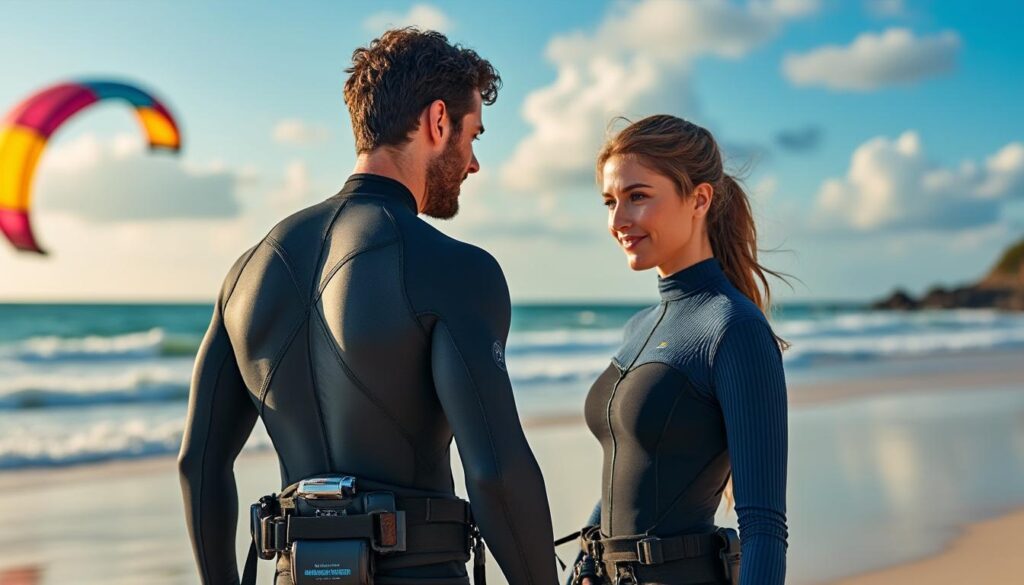
The wind hits steady, the water fizzes, the board floats in front of your feet and the kite pulls upward. Everything seems ready, but if even a single piece of your kitesurf equipment is not suited to your level or the type of wind, the session turns into a struggle instead of a dance. A well-thought-out complete kit allows beginners to learn kitesurf with fewer falls and more control, and lets advanced riders push their limits with more radical maneuvers, higher jumps and longer reaches, both in kitesurf Adriatico and on the Ionio when the Salento wind decides to fire up.
Between ready-made packages and sets built piece by piece, the Italian market is full of offers: kite, bar, twin tip or surfboard, harness, wetsuit, pump, leash, helmet, impact vest. The goal isn’t to fill the garage, but to create a complete kitesurf kit that matches your weight, your style, your spots and your budget. Those looking for kitesurf for beginners need stable wings, forgiving boards and a kitesurf school that guides them step by step; those who already ride for years on spots like kitesurf Lecce, kitesurf Taranto, Stagnone or Garda aim for more performance-oriented gear, perhaps dedicated to freeride, freestyle, waves or light wind.
In short
- A complete set of kitesurf equipment for beginners includes kite, bar, board, pump, harness, wetsuit, helmet and leash, chosen with safety and ease of use in mind.
- For advanced riders specialization matters: different wings for each wind range, boards suited to freeride, freestyle, wave or foil, setup tuned to the millimeter.
- The conditions of your usual spots (kitesurf Salento, Garda, Sicily, Sardinia…) should guide choices more than online catalogs.
- A good kitesurf course or a serious kitesurf school is the best way to test gear, avoid costly mistakes and build your tailored kit.
- Used gear, complete packages and progressive purchases are three different routes to equip yourself without burning through the budget for your kitesurf holidays.
Beginner kitesurf equipment: how to build a complete and safe kit
Imagine Luca, 32, arrives in Salento in June with the idea of starting kitesurf Italy during a week of vacation. He’s seen videos on social media, knows the word “water start” by heart, but has never held a bar. He enters an online shop, finds a “complete kitesurf kit” on a great sale and wonders: will it really be suitable to start learning kitesurf? This is where the difference between marketing and the reality of the water becomes enormous. A beginner needs gear that forgives mistakes, that depowers well and that doesn’t play tricks when a gust comes in hard, especially at windy spots like a typical spot kitesurf Puglia with a stiff Maestrale.
For those starting out, the heart of the kit is the inflatable leading edge kite (LEI) with bar and matched lines. The most used size in Italy for an average rider often ranges between 9 and 12 square meters, but the choice depends on weight and local wind. For this reason, in the first outings with a kitesurf school, smaller wings are generally used, between 6 and 9 meters, in order to reduce power and focus on control. An “allround” freeride kite, stable in the window, with easy water relaunch, is the smartest option for the first purchase. Avoid wings that are too radical or designed for pure freestyle: they require reaction times and precision a beginner doesn’t yet have.
The board, for those doing kitesurf for beginners, is almost always a generously sized twin tip. A larger size provides more flotation and makes getting up from the water easier, especially in the first days when body coordination is still clumsy. Many beginner-focused packages include a set with kite, bar, board and pump designed to get you on the water immediately, without having to choose every single accessory. These “kitesurf packages” are useful, provided you verify they aren’t just clearance stock but modern gear, with updated safety systems and built with good fabrics and reliable lines.
The harness is the other great ally to start with. A seat harness, which keeps the hook low, often helps prevent the harness from riding up on the chest and better transfers the pull to the hips. Those who prefer a waist harness from the start must pay attention to size and adjustment to avoid back discomfort. The wetsuit, finally, depends on season and spot: in Southern Italy from April to October a 3/2 mm often suffices, while at Garda or in the North, especially in spring, a 4/3 or 5/4 with booties is almost mandatory.
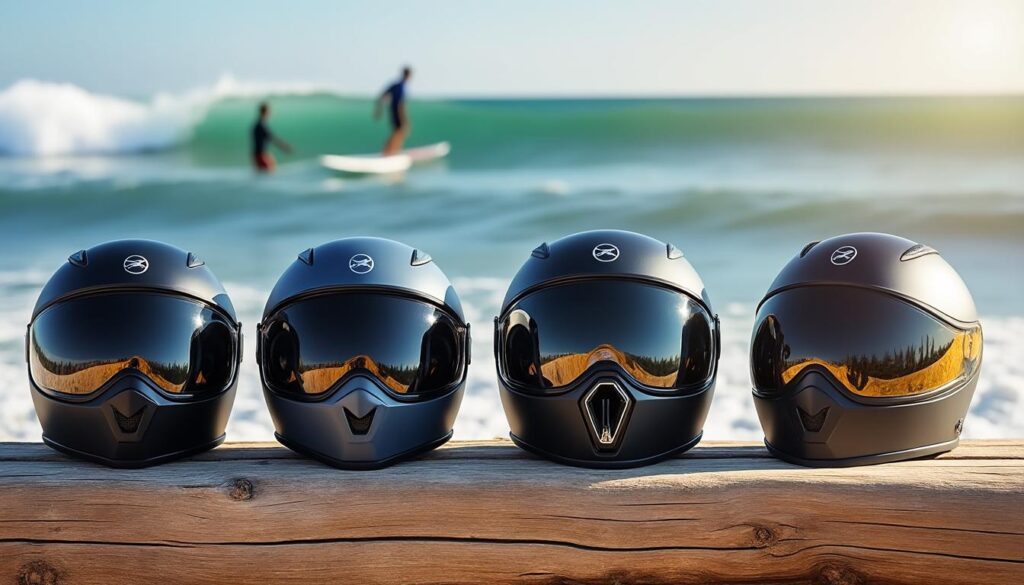
Safety: helmet, impact vest and leash are elements often underestimated by beginners, but they concretely reduce the risk of injury. At a windy spot like during a typical day of kitesurf Ionio with sustained Scirocco, high-speed falls are no joke. A lightweight certified helmet, an impact vest to protect the ribs and a safety leash for the kite connected to the bar’s quick release complete the ideal set. To deepen the general culture of this sport and understand why safety is a pillar, it can be useful to take a look at a piece dedicated to kitesurf as a sport, covering history, evolution and the discipline’s philosophy.
In the end, a complete kit for someone taking the first steps should be viewed as a tool to progress without fear, not as a technological trophy to show off on the beach. The real difference isn’t made by colors, but by how easily it helps you hold the bar, feel the power increase and get up on the board without fighting the gear.
Complete kitesurf kit: what cannot be missing in your first setup
When it comes time to sum up and understand what you really need to get on the water, it’s advisable to think of the kit in functional blocks. The first block is wind management: kite + bar + lines. These should always be bought compatible with each other, preferably from the same brand and model, so you have predictable behavior. The second block concerns contact with the water: board + pads + handle + fins. Even if they seem like details, pads that are too hard or incorrect fins make it harder to hold an edge and control direction.
Third block: body protection. This includes harness, wetsuit, helmet, impact vest, and possibly gloves and booties. It’s not only a matter of temperature: even in high summer, an impact vest and helmet save you from impacts with the board or from a kite crashing down. Fourth block, often forgotten: accessories and maintenance. Pump with pressure gauge, repair kit for small tears, safety knife to attach to the harness, breathable bag to dry the wetsuit, water-resistant sunscreen. All this makes the rider’s life much easier, both on the beach and while traveling.
Many Italian shops offer “kitesurf packages for all styles”: freeride, freestyle, wave, race and light wind. For beginners, the choice should fall on a freeride/allround set, with a versatile wing and an accessible board. Specialization comes later. In the meantime, the only real objective of the kit is to allow a safe water start, hold the upwind and finally complete that first long reach with the wind on the side, whether at a Puglian spot or on a northern lake.
Advanced kitesurf: how to optimize equipment for style, wind and spot
Those who are no longer in the kitesurf for beginners world enter a phase where the equipment becomes an extension of their body. Andrea, for example, after two years between kitesurf Salento and weekend trips to Garda, realized one kite is no longer enough. His sessions alternate between stiff Maestrale on the Adriatic side, gustier Scirocco on the Ionian side and regular thermals on lakes and lagoons. Here the evolved kit begins to take shape: at least two wings (often three), different boards, carefully tuned bars, maybe a surfboard for waves and a foil for light wind days.
For an intermediate/advanced rider who often travels among the spots of kitesurf Italia, from the Lago di Garda to Sicily, the key criterion is covering the wind range. A typical quiver might include, for example, a 7, a 9 and a 12 meter, depending on the rider’s weight. The 7 for strong days on the kitesurf Adriatico, the 9 for most outings, the 12 (or even 13-15, possibly foilable) for light Scirocco on the Ionio or for summer thermals. Each wing will have a specific character: more reactive for those who love big air, softer and more stable for wave riding, more pulled in the window for those pushing unhooked freestyle.
The board follows the same logic. The initial twin tip freeride, suitable for everything, gradually gives way to more targeted choices: a freestyle board with pronounced channels and a more marked rocker for those who love pop and jumps, a light wind board wider to get out when others stay ashore, a directional surfboard for those dreaming of surfing waves at spots like Punta Trettu, the Stagnone di Marsala or the Ionian Salento coast on swell days. Curious riders nowadays also start looking at foil, a special board that allows you to plane with very little wind and turn “dead” days into flying sessions.
Another level of optimization concerns the bar. The ability to adjust width, line length (24 meters standard, but 20 or 18 for faster maneuvers), depower position and trim affects overall handling. An advanced rider knows that moving the back line attachment a few centimeters can make the kite more progressive or more nervous, and adapts the setup to the type of session planned. Someone preparing for a day of mega loops in strong wind, for example, certainly won’t mount the same configuration as for an easy freeride session with friends.
Finally, evolved riders must consider transport. Traveling between the best kitesurf spots Italy and the Mediterranean scene with three wings, multiple boards and accessories requires compression bags, reinforced travel bags, pumps that are light yet sturdy. A well-organized kit allows you to move between Salento, Sardinia, Sicily and northern lakes without stressing the gear and always keeping the ideal setup ready for any condition. At this stage, the key phrase is: fewer compromises, more precision. Every piece of equipment has a precise role and should be chosen with awareness, not fashion.
Freeride, freestyle, wave, foil: adapting the kit to your style
Each kitesurfing style demands something different from the gear. Freeride, which represents most sessions for many Italian riders, is based on versatile kites with good depower, easy relaunch and a comfortable feel on the bar. Twin tip freeride boards, with medium flex, are perfect for long reaches, smooth direction changes and some controlled jumps. For those riding spots with flat water or light chop, like many stretches of kitesurf Ionio on medium wind days, this combination is often enough for years.
Freestyle completely changes the cards. Here you need more “angry” wings with strong pop, often used unhooked. Boards become stiffer, with channels and a pulled edge to hold the edge until the last moment before jumping. Boots often replace classic straps, turning the board into something akin to a wakeboard. Protections also become more serious: impact vest and helmet are practically mandatory, because aerial crashes are part of the game.
In wave riding, instead, the protagonist is the directional surfboard. Volume, shape and fins influence the ability to surf the wave in bottom and top turns. The kite for waves must be quick, with progressive depower and the ability to be “parked” well while the board works on the wave line. For those frequenting spots like Sardinia or Sicily, but also some lesser-known reefs of kitesurf Salento, a wave-dedicated kit opens a completely different world compared to the classic twin tip.
Foil, finally, has become the modern answer to light wind days. A short board with a hydrofoil underneath allows you to fly above the water already at 8-10 knots. This requires specific or at least lightweight kites, sometimes even foil kites (ram-air) to optimize drift. Helmet and impact vest are even more important here, because falling close to the foil mast, if used without awareness, can be risky. This style requires a dedicated learning curve, but rewards with long, quiet sessions in conditions that would be unusable with a classic setup.
Complete kitesurf packages vs custom kit: strategies to save without making mistakes
When it comes to money, many riders face a crossroads: buy a complete kitesurf package or build the kit piece by piece. Ready-made packages often promise an attractive saving, because a single brand or shop combines kite, bar, board, pump and sometimes harness at a lower overall price. They are designed for those who want to get on the water immediately without spending hours comparing technical specs. The risk is choosing a kit that is too generic or, worse, not suited to your style and the weather conditions of your main spots.
The more serious “turnkey” sets include updated-range wings and boards, quality materials and diversified offers: freeride, freeride/wave, light wind. Some are really calibrated for different levels: from the total beginner to the advanced rider who wants a second kit. Others, however, are simply combinations of clearance stock, perhaps with kites a few years old and safety systems no longer top-notch. For this reason it’s always worth checking with experienced riders or local instructors before clicking “buy”.
The custom kit, on the other hand, allows you to choose each piece based on your own progression. Maybe you start with just one kite and a twin tip freeride board, then add a larger wing for light wind, later a surfboard or a smaller board for strong wind. This approach is more flexible and adapts over time to the rider’s evolution. It generally costs more in the short term, since each piece is bought separately, but in the medium term reduces mistakes and superfluous purchases.
A middle way are modular packages offered by some schools and shops: start from a basic kit (kite + bar + board) and add only the elements you’re missing, like harness, wetsuit or accessories. Often these solutions come with the possibility to test the gear in the water before buying, especially in very active areas like kitesurf Lecce or spots in Rome and Lazio. Those who want a broader overview of available structures in the country can consult guides like the one on kitesurf schools in Italy, useful for finding instructors and reference shops near your spots.
Quick comparison: complete package or tailor-made kit?
To get a quick view of the main differences between the two solutions, a schematic summary can be useful. This does not replace on-site advice, but helps clarify the general pros and cons.
| Option | Main advantages | Main limits | Who it suits |
|---|---|---|---|
| Complete kitesurf package | Lower overall price, everything matched, ready for the water | Less customization, risk of outdated gear if not chosen well | Beginners who want to get on the water immediately with a balanced set |
| Custom kit piece by piece | Adapted to level, style and spots, upgradable over time | Higher initial investment, requires more technical knowledge | Intermediate and advanced riders, or beginners guided by trusted instructors |
| Modular package (with test) | Chance to try before buying, good flexibility, medium costs | Requires access to a school or shop with many test options | Riders of all levels who can use spots with active schools |
The key is understanding that equipment isn’t eternal. today’s ideal kit may not be so in two seasons, when your level has grown and you may want to push more on freestyle or waves. Choosing whether to start from a complete package or immediately build a bespoke set depends on budget, session frequency and access to serious schools and shops that can guide you in choices.
Schools, courses and tests: the role of field experience in choosing equipment
No article and no technical sheet replaces what you learn by putting your feet in the sand, feeling the vento Salento change direction and talking with those who spend more time in the water than in the office. Kitesurf schools have enormous value not only for teaching technique, but also for guiding you toward the right kitesurf equipment. A well-organized kitesurf course allows you to try different wing sizes, boards with varied shapes, different harnesses, and thus understand what works best for your body and your usual spots.
Take the example of someone choosing a course in a lagoon like the Stagnone, or on a lake like Garda: the flat water and the ability to stand up help focus on kite and board control. In these contexts, many instructors use wings specific for teaching, with great depower and excellent stability, paired with wide and soft boards. The next step, once the basics are acquired, is often to build your own kit that retains some of these easygoing characteristics but starts to reflect your style.
Those who start directly at a more exposed spot kitesurf Puglia, like some beaches on the Ionian or Adriatic coast, experience more “real” conditions from the outset: chop, gusts, current. Here it’s even more important to be guided by those who know every reaction of the local wind. Not surprisingly, many instructors insist that learning kitesurf doesn’t just mean knowing how to get up in a water start, but also knowing the limits of your equipment, recognizing when a wing is too big for the real wind, and spotting wear on bars and lines.
In Italy the network of schools grows year after year. There are detailed guides not only on national facilities but also on individual spots, like analyses dedicated to Garda, Sicily, Porto Pollo, Punta Trettu. This collective knowledge is precious to avoid classic mistakes, like buying a huge kite because “that way I always get out,” only to discover that on windy Salento days that kite is unmanageable. The balance between school support, comparative tests and listening to local riders’ advice is what turns your kit from simple equipment into a true travel companion.
Practical checklist: how to choose your equipment with the help of a school
To turn theory and stories into concrete action, here’s a list of practical steps to follow when you rely on a school or an instructor to choose your kit:
- Define your goal: do you just want relaxed freeride during holidays or aim for advanced maneuvers and big jumps?
- Analyze your main spots: average wind, water type (flat, chop, waves), beach space, presence of obstacles.
- Ask to try at least two kite sizes: one smaller and one larger, to feel the difference in pull.
- Test different boards: one larger and more forgiving, one shorter and stiffer, to see which fits your style best.
- Have the safety systems explained: quick release, leash, self rescue, periodic line checks.
- Set a realistic budget: also consider wetsuit, harness and protections, not just kite and board.
- Consider certified used gear: many schools sell the season’s test gear in great condition at more accessible prices.
Following such a checklist drastically reduces the risk of accumulating useless equipment. The combination of practical experience, guided tests and honest advice transforms the purchase moment from an online lottery into a conscious choice. In the end, the best criterion remains the same: if the gear makes you feel in control of the wind, it’s the right gear for you.
Maintenance, upgrades and long term: making your kit last and planning next steps
Once you’ve built your kit, a new phase begins: keeping it lasting, safe and planning future upgrades. A well-maintained kite can accompany several seasons of kitesurf holidays across Salento, lakes and Italian islands. Conversely, wings regularly left in the sun, sand in the valve, lines never checked, quickly shorten gear life. A healthy habit is to do a complete visual check at least every few sessions: seams, bridles, bar connections, condition of the safety line and the front and back lines.
The board also requires attention. Small impacts against rocks, the seabed or other boards on the beach can create micro-fractures that, over time, let water in. Always dry the board well, avoid leaving it for hours in the trunk under the summer sun, check fin attachment: these details greatly extend the life of the component most stressed in the kit along with the wing. The same applies to harness, wetsuit and protections: rinse with fresh water, dry in the shade, avoid prolonged exposure to intense heat sources.
As for upgrades, a simple rule can guide choices: replace first what limits your progression. For some it will be the main kite, perhaps too old with ineffective depower; for others the board, too big for new maneuvers, or the harness that no longer supports the back well. Many riders start with a single kite and, over time, add a second wing to better cover strong or light wind days. Others prefer to add a second type of board (surfboard, foil, smaller twin tip) to vary style and sensations.
There is also the “geographic” evolution: those who fall in love with specific spots, like the shallow bottoms and steady wind of Garda, or the Sicilian lagoons, end up optimizing part of their kit specifically for those conditions. In this sense, the kitesurf Italia scene offers a full playground: lake, open sea, lagoon, two seas in Salento. Planning your gear with these scenarios in mind means arriving at the spot already prepared, without having to improvise with whatever’s available.
Signs that it’s time to upgrade your gear
To understand when a kit component is no longer up to par, just watch for some clear signs:
- Kite: the fabric looks soft and “tired”, the wing flaps a lot in gusts, struggles to hold shape, bridles show wear signs, the inflation system leaks air.
- Bar and lines: the bar has deep grooves, the safety line is worn, the main lines have knots, frayed spots or are no longer uniform in length.
- Board: visible cracks, water ingress that doesn’t exit, delamination, strap inserts failing, damaged fins or stripped screws.
- Harness: flattened padding, pressure points on the back, rusty hook, elastic belts now loose.
- Wetsuit and protections: cracked neoprene, deep cuts, zippers that don’t close properly, impact gear no longer absorbs shocks.
Ignoring these signs means accepting unnecessary risk. In the water, especially when the wind rises, gear reliability is non-negotiable. Planning small, regular upgrades instead of having to replace everything at once allows you to always keep safety and fun levels high, spreading the financial investment over time. This way the kit remains a faithful ally, ready to follow you from your first tentative reach to the jump you’ve dreamed of for months.
What is the minimum equipment needed to start kitesurfing?
To start safely you need at least: a kite with bar and compatible lines, a board (usually a twin tip freeride), a harness suited to your body, a wetsuit appropriate for the water temperature, helmet, impact vest and a safety leash. A pump with a gauge and a small repair kit complete the basic setup.
Is it better to buy a complete kitesurf package or choose piece by piece?
A complete package is convenient and often more economical, ideal for beginners who want to get on the water immediately with a balanced set. The piece-by-piece kit offers more customization and suits those with some experience or who are guided by instructors in their choices. In many cases the best solution is a middle way: start from a basic package and add what’s missing over time.
How many wings are needed to cover a kitesurf season in Italy?
For an average rider who practices regularly in Italy, two well-chosen wings already cover many conditions (for example a 9 and a 12 meter). Those who ride frequently in windy spots like the Adriatic or Garda, or travel to multiple destinations, find it advantageous to have three wings to more precisely cover light, medium and strong wind. The choice always depends on the rider’s weight and the wind statistics of their spots.
Is used equipment a good idea for beginners?
Yes, if it’s in good condition and checked by someone experienced. Many schools sell test or rental gear at the end of the season that is still safe and up-to-date but at more accessible prices. Avoid, however, very old wings, bars with worn lines or boards with visible cracks: the initial saving isn’t worth the risk.
How often should the safety of the bar and lines be checked?
A quick check should be done before each session: verify that the quick release works, that the lines have no knots or obvious signs of wear and that the safety line runs freely. Every few weeks, especially if you go out often, it’s useful to perform a more thorough check and compare line lengths, replacing damaged ones. A well-maintained bar is one of the most important elements for your safety in the water.