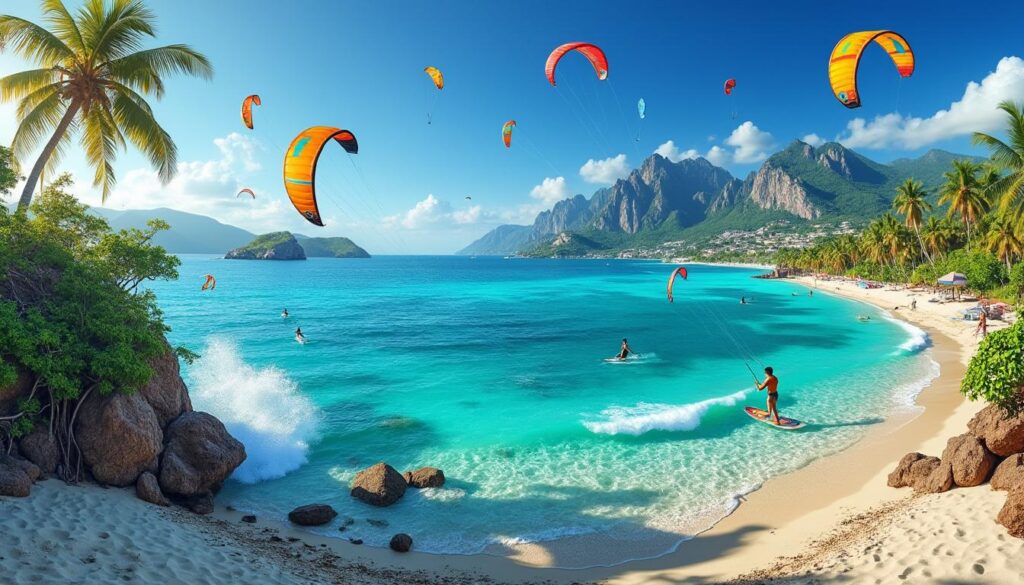
The Maestrale that comes in clean over northern Sardegna, the water shifting from turquoise to deep blue, the board that planes away while the kite builds power: Sardegna is one of those places where the wind is not argued with, it is listened to. Those looking for the best kitesurf spot in Italy often think of Salento or Sicilia, but as soon as they set foot on this island they understand that every bay can become a playground if you know how to read wind direction and strength. Far from glossy brochures, la réalité du terrain est simple : pick the right day, the right spot and the right gear, and every session becomes a step forward in your riding.
The strength of Sardegna is its variety. There is the north with its wind channels between islands, the south with regular thermals, the wilder west and the more sheltered east. For kitesurfing for beginners there are lagoons, flatwater areas and shallow bottoms, while those who push hard find waves, chop and channels perfect for freeride and big air. Italian, French and German kiters cross paths at the same spots, but the rule is always the same: respect right-of-way, maintain safety space and keep an eye on the forecast. Sardegna does not forgive those who enter the water without checking the weather properly.
In short
- Kitesurf Sardegna means wind from all directions: Maestrale, Scirocco, Ponente and local thermals shape every session.
- The main spots are concentrated between the north (Porto Pollo, Isola dei Gabbiani), the south (Poetto, Villasimius, Chia), the west (Funtana Meiga, Capo Mannu) and some more sheltered bays in the east.
- For those who want to learn kitesurfing, lagoons and flatwater bays are ideal; advanced riders will find serious waves and challenging chop.
- Choice of kite, board and wetsuit is crucial: checking wind, temperature and spot type before leaving will avoid nasty surprises.
- Sardegna pairs perfectly with other kitesurf Italy areas like Salento and Sicilia for a true wind road trip across the Mediterranean.
Kitesurf Sardegna: overview of the island’s spots and wind
To really understand kitesurfing in Sardegna you need to start from the wind. The island sits in the western Mediterranean, exposed to Atlantic disturbances and African currents. The Maestrale (NW) is the undisputed king: it comes in strong, often above 25 knots, especially on the north and west, gifting perfect days for freeride, big air and hard-charging jumps. When the Scirocco (SE) blows instead, the air warms, humidity rises and the best spots shift to the opposite side.
Many riders arrive with a postcard image in mind: white beach, flat water everywhere, wind always perfect. Reality is more interesting: some spots only work with specific directions, others become dangerous with too much onshore wind, others are fantastic in winter but too crowded in high season. Here you see the difference between those who pick a spot from social media and those who think like locals, evaluating gusts, orientation and safety before pumping the kite.
For those on kitesurfing holidays with the whole family, Sardegna is convenient because it offers options for both people in the water and those who stay on the beach. Equipped beaches, beach clubs, bars, but also wild stretches where the loudest sound is the wind rustling the sand. The trick is to line up the key wind days with small inland explorations, so you don’t risk being disappointed if a front misses or the thermal doesn’t come in.
From a teaching perspective, several spots host kitesurf schools with support RIBs, helmet radios and areas dedicated to lessons. Those coming from routes in other kitesurf Italy areas, like kitesurf Salento and spots with structured schools, will find a similar environment but often with wind that’s more intense. Sardegna thus becomes a natural next step for those who have already tackled the water start and want to consolidate their independence.
There’s also the equipment choice aspect. With days that can swing from 15 to 30 knots in a few hours, a flexible quiver is essential. A 9m and a 12m are a classic combination, but lighter riders or those pushing jumps often bring a 7m as well. The twintip board remains the most versatile solution; those who love foil and light wind will find quieter spots away from school areas, following the same logic as the best spots in the kitesurf Adriatico and Ionio.
In summary, Sardegna is an island that demands respect: so much potential, but to be managed with common sense, wind reading and smart spot choice. The wind here is the real instructor.
Porto Pollo and northern Sardegna: the Mediterranean kitesurf classic
When talking about kitesurf Sardegna, the Porto Pollo and Isola dei Gabbiani area is often the first name that comes up. Here the wind funnels between Corsica and Sardegna creating a natural venturi effect. Result: many rideable days throughout the year, with Maestrale almost at home. The bay is wide, organized, with zones reserved for kite and a more sheltered section for windsurfing. Those coming from kitesurfing for beginners spots that are calmer are often surprised by the intensity of gusts, but also by the number of schools and services available.
Imagine Marco, an intermediate rider who took his first steps in Puglia on an kitesurf spot in Puglia on the Adriatic with flat water. He arrives at Porto Pollo confident he already handles the board well. As soon as he gets on the water with 25 knots of Maestrale he realizes everything is amplified here: shorter chop, the kite accelerating quickly, landings requiring precise bar control. After a couple of legs he understands the main lesson of northern Sardegna: lower your ego a bit and raise your concentration level.
Technically, the area offers different setups. On one side, more sheltered, you find conditions better suited for working on upwind riding, transitions and first hooked maneuvers. On the other side, where more wind swell comes in, the chop increases and it becomes a good training ground for those dreaming of the big jumps seen in big air videos. Managing landings in rough water is a skill that pays off everywhere, from kitesurf Ionio on windy days to the more exposed channels of Salento.
For those wanting to really invest in their riding, Porto Pollo is the right place to test gear. Twintip freeride boards, big air boards and even some foil boards are increasingly common, confirming a trend seen across many kitesurf Italy areas. Those curious about foil can deepen the topic with technical guides like the one on foil boards for kitesurf, useful to avoid selection mistakes.
The area around is very active from a kite lifestyle perspective: campers, vans, small apartments, evenings among riders discussing the day’s gusts. You do need to pay attention to local rules, summer bathing areas and launch/landing spaces, which can shrink during the tourist high season. In those weeks it’s wise to choose less crowded time slots, like early morning or late afternoon, to maintain safety and respect among all beach users.
Porto Pollo therefore remains a Mediterranean reference: historic spot, reliable wind, full kite atmosphere. It’s the kind of place that teaches you to zip up your wetsuit properly, tighten the harness and set a decisive start, no half measures.
Watching a few local videos before leaving helps understand setup, wind direction and the real intensity of gusts at the spot, so when you arrive at the beach you already know what to expect.
South Sardegna: Poetto, Villasimius and Chia for all levels
Moving south, kitesurfing in Sardegna changes face. The Cagliari, Villasimius and Chia area offers very different spots, with conditions that can range from nearly lagoon-like flat water to long, soft waves. Here Scirocco plays a key role, but summer thermals and western disturbances also contribute to a very full session calendar. For those combining kite and urban life, Cagliari with its Poetto is often the perfect base.
The Poetto is a long city beach, with kite-designated areas at certain times of the year. The advantage is obvious: you’re minutes away from bars, restaurants and accommodation, yet you still have room on the water to train upwind riding, transitions and first jumps. Those coming from kitesurf courses in other parts of Italy will find a familiar environment, with schools and instructors well aware of the local wind peculiarities. Poetto is ideal for regular sessions, especially when thermals play in your favor.
Move a bit towards Villasimius and the scenery changes: more enclosed bays, incredibly clear water, postcard settings but with wind that must be interpreted more carefully. Some spots work better with Maestrale, others with Scirocco; understanding the coastline geometry is essential to avoid ending up with too-strong onshore wind or annoying shorebreak. Here many intermediate riders refine board control in chop and learn to manage jump landings in less “easy” water.
The Chia area and surroundings push the conversation further toward wave. When wave comes in, those who have practiced at places like Capo Mannu or some stretches of winter kitesurf Adriatico find plenty to work on. You work on set reading, wave selection and timing for bottom and top turns. Here the kite is not just a tow, it becomes a partner in the dance with the water wall. For a beginner these conditions can be too intense, but for an advanced rider they represent ideal ground for growth.
An often underestimated aspect in south Sardegna is water and air temperature in the shoulder seasons. Those coming from milder situations like kitesurf Salento in late spring will still find a few degrees less, especially with strong wind. Choosing the right kitesurf wetsuit really makes the difference between a pulled session and one where you can stay in the water long enough to try, fail and try again.
If northern Sardegna is the gym of strong wind, the south is the lab of variety: wave, thermal, warm Scirocco, crystal water. It’s the ideal place for those who want to combine technical progression with a pleasant context off the water as well.
How to choose the right spot in south Sardegna based on your level
Those unfamiliar with the area risk always aiming for the most “instagrammable” spot, but to progress you need a clearer choice. An effective rule is to classify south Sardegna spots based on three elements: water type (flat, chop, wave), most frequent wind direction and minimum recommended level. In summer, for example, some thermal spots are perfect for those consolidating the water start, while other bays with waves and shorebreak are only suitable for those already confident in restarting in rough sea.
A short table can help you visualize it better:
| Area | Water type | Ideal wind | Recommended level |
|---|---|---|---|
| Poetto (Cagliari) | Light chop, sandy bottom | Thermal, moderate Maestrale | Beginner–Intermediate |
| Villasimius (some bays) | Flat water–chop, mixed bottom | Maestrale, Scirocco | Intermediate |
| Chia and surroundings | Wave and shorebreak | Ponente, Maestrale | Advanced |
Using this logic helps you avoid the “I’ll go anywhere” trap typical of those who underestimate the sea. In Sardegna, as in Salento or other regions of kitesurf Italy, every bay has a precise character. Knowing how to read it before rigging the kite is already half the progression.
A good habit is also to listen to local advice or instructors on site: those who live with the wind every week know well when a spot is ok for a beginner and when it is not.
West and waves: Capo Mannu, Funtana Meiga and riders seeking power
If your goal is to face real waves, west Sardegna is the area that calls the loudest. Capo Mannu is a name respected by both surfers and kitesurfers: here, when the right swells come in, waves can reach significant sizes, with an energy you feel from the parking lot. It is not an environment for someone who has just finished a kitesurf course; it’s playground for those with a solid foundation in board control, kite relaunches in rough water and safety management.
Further south you find Funtana Meiga and other spots that work well with swell from the west and northwest. Conditions change quickly, so the ability to read sea and wind reports is fundamental. Details such as line length, kite choice (more stability than aggressive loops) and especially the timing of your position relative to the wave peak matter a lot. It’s a type of riding that approaches Salento wave days when serious, but with the power of the open sea pressing on you.
For those coming from a classic freeride–big air background, entering the wave world requires a mindset change. Less focus on the highest jump, more attention to precise turns and speed control on the face. A timing mistake can mean a long washing machine, with the kite falling exactly where the lip hits. That’s why many riders choose to invest in a serious kitesurf helmet and an impact vest, as updated technical guides like those on the new kitesurf helmets suggest. It’s not about fashion but about clarity after many hours in the water.
Looking at the broader picture of kitesurf Italy, west Sardegna ranks among the most “raw” and authentic areas, on par with some Tyrrhenian winter spots. Fewer umbrellas, more rocks, stronger winds and choppier seas. It is also a mental gym: you learn to respect weather checks, exit plans and the ability to walk away if conditions exceed your current level.
For a rider like Sara, used to years of kitesurf Lecce and Taranto on the Ionio side, a stay at Capo Mannu in autumn can become the season’s key moment. After a few days of adaptation, every well-placed bottom turn, every section surfed to the final foam, stays in the body’s memory. Returning to easier spots everything feels slower and more manageable. West Sardegna thus becomes an accelerator of awareness.
In the end, those seeking real power find it here: waves, wind, rocks, little glamour. Just sea, sail and a cool head. It’s one of those places where you understand why the sea must be studied, not just photographed.
Practical tips: gear, safety and comparison with Salento and other Italian areas
Once you’ve picked the spots, there remains a often underrated topic: how to truly gear up for kitesurfing in Sardegna and how to compare these choices with other areas like kitesurf Salento, Sicilia or northern lakes. The starting point is always the forecasted wind: in Sardegna the active knot window is wide, so traveling with only one kite risks wasting great days. A thought-out set usually includes at least two sizes, typically one freeride and one oriented toward strong wind.
The board makes a difference on borderline days. A twintip kiteboard freeride with good pop and upwind ability is still the most versatile choice to combine different spots and variable conditions. To navigate shapes, flex and size, a technical guide like the one on the best twintip boards currently is useful, so you don’t arrive in Sardegna with a board that’s too technical or too limiting. Light-wind lovers can consider a foil setup for lighter days, following the same logic explained in guides dedicated to kitefoil.
On the safety front, the key is combining gear and habits. A comfortable harness, properly set leash, wetsuit appropriate to the season and, above all, the habit of checking equipment twice before entering the water. On strong wind days, a simple defect in the quick release or wear on the chicken loop can turn into serious problems, especially at spots with shorebreak or nearby rocks. It’s not enough to trust the gear “because it’s always worked”: the sea of Sardegna teaches concrete caution.
Comparing Sardegna and Salento reveals interesting differences. The Salento wind often offers very didactic conditions, with flatter water on many Ionio and Adriatico spots, ideal for those who want to learn kitesurfing from scratch or consolidate intermediate level. Sardegna, on the other hand, tends to push more on performance and wave variety. A good path could be to start with a kitesurf course in Salento, perhaps relying on a local kitesurf school, and then plan one or two trips to Sardegna to test what you’ve learned.
In the end, the throughline is the same everywhere: understand the wind, choose the spot with a clear head and bring only what you truly need into the water. Whether you rig at Torre Mozza in Salento or at Porto Pollo in Sardegna, the bar in your hands is always the same. The difference is how you decide to use it.
What is the best time to kitesurf in Sardegna?
Late spring and autumn are often the most balanced periods for kitesurfing in Sardegna: less beach crowding, Maestrale active especially in the north and west, and interesting thermals in the south. Summer still has many rideable days, but some spots become more complicated due to bathing areas. Winter can offer spectacular waves, but it is mainly suitable for experienced riders.
Is Sardegna suitable for kitesurfing beginners?
Yes, there are bays and lagoons with relatively flat water and sandy bottoms ideal for beginners, especially at some spots in the south and north with structured schools. However, it’s important to choose days with moderate wind and rely on a local kitesurf school, because some areas of the island have currents, waves or gusts not suitable for first sessions.
What gear do you need for a kite trip to Sardegna?
To cover most conditions it’s recommended to have at least two kites (for example 9m and 12m for an average rider), a twintip freeride board, a wetsuit appropriate to the season, a comfortable harness, helmet and impact vest if you expect wave or strong wind sessions. Those wanting to take advantage of light wind days can add a foil setup or a larger board.
Is north or south Sardegna better for kitesurfing?
North and south offer different and complementary characteristics. The north, with spots like Porto Pollo, is known for strong and frequent Maestrale, suitable for those seeking many days on the water and often more technical conditions. The south, with areas like Poetto, Villasimius and Chia, offers greater variety of conditions between flat, chop and waves, making it very interesting for those who want to combine progression and a more relaxed holiday.
How does Sardegna compare with Salento for kitesurfing?
Both areas are excellent for kitesurfing but with different nuances. Salento, between the Adriatico and Ionio, offers many didactic spots with flatter water and winds often ideal for learning or progressing from beginner to intermediate levels. Sardegna, instead, leans more toward wave variety and stronger winds, perfect for consolidating advanced maneuvers, big air and wave riding. A smart approach can be to start in Salento and then move to Sardegna to raise the bar.