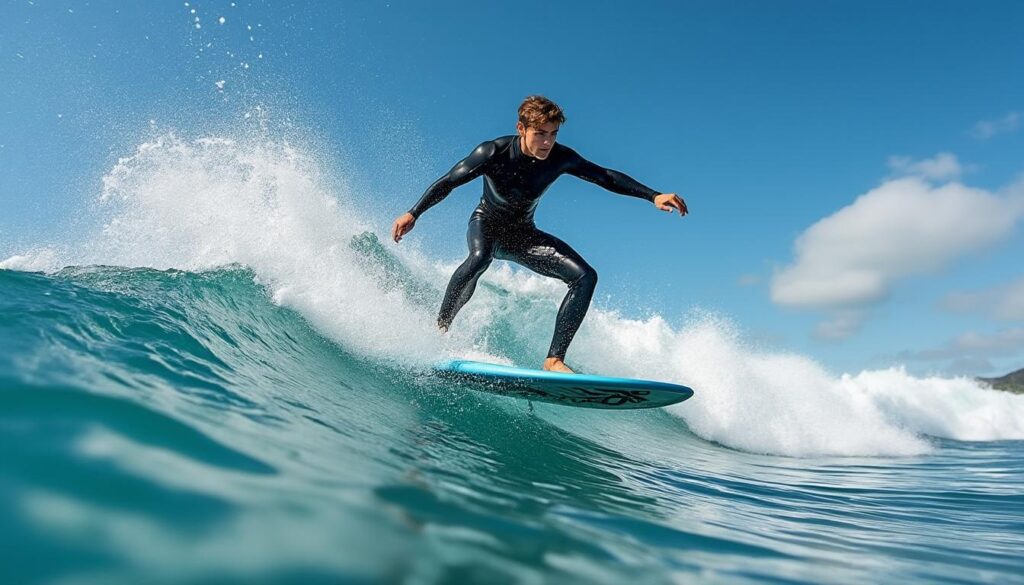
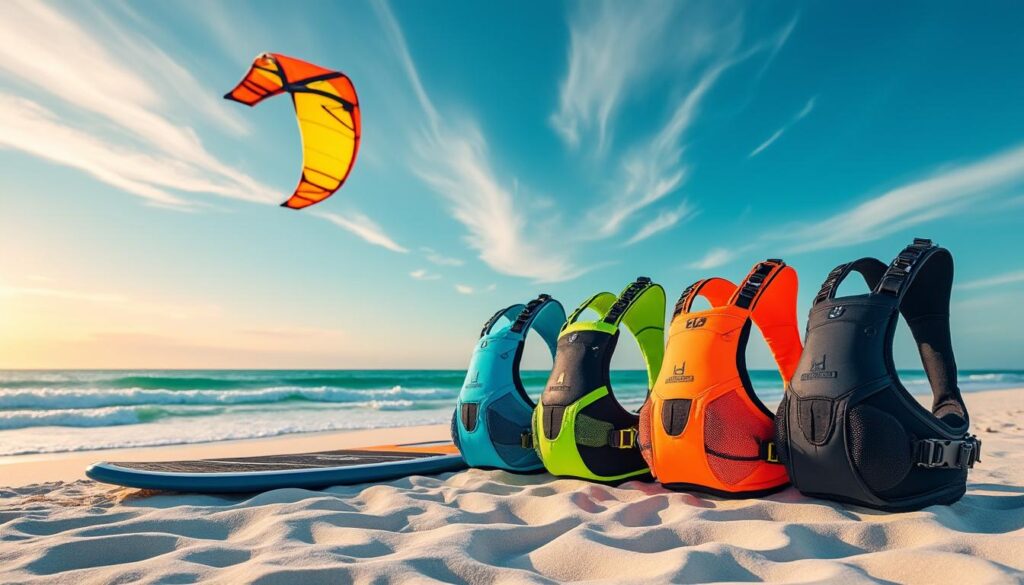
The term kitesurfing seems simple: a board, a kite, the wind that pushes and the water under your feet. But when you move from English to Italian, the nuances matter: kitesurf, kite surf, kiteboarding, “fare kite”, “andare a kite”. Understanding the translation, the real meaning and the glossary helps not only with the language, but above all with practice at the spot. Someone searching “kitesurf Italia” on search engines doesn’t just want a dictionary definition: they want to know how it’s said, what you do and how this sport is lived between the Adriatic and the Ionian, between Salento, Sardinia, Sicily and the lakes of the North. On the beach, during a kitesurf course, terms fly by: water start, power stroke, downwind, leash. Translating them well also means performing them well, and that makes the difference between a successful session and a few too many spectacular flights.
Behind a word like kitesurfing there’s an entire culture: schools, spots, wind, gear, mistakes, progress. In Italy, every area has its own way of talking about kite. In kitesurf Salento you often hear “oggi si kitea sullo Ionio” (today people kite on the Ionian), in Sardinia “si va a fare kite in laguna” (we go kiting in the lagoon), at Garda “uscita di termico all’alba” (thermal outing at dawn). This article puts things in order: from the translation of kitesurfing into Italian to the differences between kitesurf, kite surf and kiteboarding, up to a complete glossary for those who want to learn kitesurf with more awareness. The point is not just knowing how to pronounce a word, but using it in the right context: booking a kitesurf course, talking with an instructor, reading a wind forecast or choosing the right kitesurf school based on your level. All with clear, concrete, beach language that helps move from theory to the next departure on the water.
- Kitesurfing in Italian is mainly translated as kitesurf or kite surf, also used as a verb: “fare kitesurf” (to kitesurf).
- The language of kite in Italy is a mix of English and Italian: understanding technical terms speeds up progression, especially for kitesurf for beginners.
- Knowing the kitesurf glossary helps communicate better with instructors and schools at spots like kitesurf Lecce, Taranto, Garda, Sardinia and Sicily.
- The differences between kitesurf, kiteboarding and kite surf are more cultural than technical, but they matter when reading articles, manuals or spot guides.
Kitesurfing in Italian: translation, everyday use and differences between kitesurf, kite surf and kiteboarding
When you talk about kitesurfing, the first question is simple: how is it translated into Italian? In English-Italian dictionaries the most frequent answer is kitesurf or kite surf, masculine noun. So people talk about “fare kitesurf” (to kitesurf), “praticare il kitesurf” (to practice kitesurf), “un corso di kitesurf” (a kitesurf course). In conversations among riders, however, it gets even shorter: “oggi si fa kite” (today we go kite), “domani vado a kite” (tomorrow I go kite). This shortened form, kite, is now widespread throughout Italy, from the lakes of the North to the beaches of Puglia.
The English term kitesurfing was coined to describe a water sport in which a rider stands on a board, similar to a surfboard or a wakeboard, towed by a power kite controlled via a bar connected by thin lines. In Italian, the explanation remains identical: “a sailing sport in which a kite uses the wind to tow a rider on a board”. But in the reality of the spots you never repeat this whole definition: people simply use “kitesurf”.
There is also the term kiteboarding, which dictionaries often list alongside kitesurfing as a synonym. In practice, in the 2000s some American and Caribbean brands pushed the word kiteboarding more, while in Europe, and particularly in the context of kitesurf Italy, “kitesurf” almost everywhere prevailed. Yet some subtle differences remain: those who use kiteboarding usually emphasize the more freestyle aspect, with aerial tricks, boots, twin-tip boards and a feeling halfway between wakeboard and snowboard.
In Italy, the average rider who looks up an article dedicated to kitesurf as a sport will almost always find the term “kitesurf” even when the content mentions disciplines like freestyle, wave or foil. This is because the language spoken by practitioners is pragmatic: people look for a short, clear, immediately recognizable expression. “Andiamo a fare kite?” (Shall we go kite?) is a phrase you hear at any kitesurf spot Puglia, on the Lazio coast or at the Stagnone.
Also not to be forgotten is the written form “kite surf” with a space. Many online dictionaries and translation portals report it as the literal translation of “kitesurfing”, and it often appears in example sentences: “Bungee-jumping, parapendio, escursioni, kite surf”. In riders’ language, however, the more fluid form remains “kitesurf”, all one word. Knowing how to recognize all these variants is useful when searching for information on “kitesurf schools Italy” or when filling in a form for sports insurance or an amateur competition.
Also grammatically, “kitesurf” works both as a noun and as a verb. You hear “il kitesurf è impegnativo” (kitesurfing is demanding), but also “ho iniziato a kitesurfare l’anno scorso” (I started kitesurfing last year). Numerous derived verbs exist: “kiteare”, “kittare”, “fare kite”. These are not academic dictionary forms, but they are what you will hear in every kitesurf school during a wind-check briefing or a theory lesson on the beach. It is that living language that allows someone who arrives for the first time in Salento, Sardinia or at the lake to immediately understand they are in the right place.
In summary, when you look for the translation of kitesurfing in Italian, keep a practical rule in mind: in dictionaries you will find “kitesurf” and “kite surf”; among riders you will hear “fare kite”. Knowing all these forms helps you avoid getting lost between a technical text and a chat on the shoreline before a session with the Maestrale.
When to use kitesurf, kite surf, kitesurfing and kiteboarding
Understanding when to use one form or another avoids misunderstandings, especially if you move between English material and Italian content. In international technical texts and instructional videos, “kitesurfing” remains the standard term for the sport in general. On Italian sites dedicated to kitesurf holidays or spot guides, however, “kitesurf” dominates. When you read a race regulation or a multilingual insurance form, you may find both: “kitesurfing (kite surf)”. These are stylistic choices, but they tell a simple story: the language of kite is hybrid by nature.
A concrete example? Imagine Marco, a beginner who lives in Milan. He searches “learn kitesurf” and finds a page that talks about “kiteboarding for beginners” on Garda. Initially he thinks it’s a different sport, maybe closer to wakeboarding. Then, reading carefully, he discovers that the program, the board and the kite are identical. The only difference is in the marketing language of the center: it uses “kiteboarding” to distinguish itself. Once at the spot, however, instructors and riders simply talk about “kitesurf”.
For those who also like studying the linguistic side, it’s interesting to note that almost no one translates “kitesurfing” as “aquilonismo da tavola” or similar. The reason is clear: on the beach what matters is understanding each other at a glance, not searching for an overly literal translation. The Italian choice was to adopt the English term and adapt it, adding native grammatical rules: “il kitesurf”, “un kiter”, “kiteare”, “session di kite”. This is exactly how a sport truly becomes part of a country’s culture.
Deep meaning of kitesurfing: sport, wind and culture in Italy
Reducing kitesurfing to the mere definition “water sport with board and kite” is like describing Salento only as a “beach area”: technically correct, but far from the lived reality. The meaning of kitesurf in Italy today touches multiple levels: physical, mental, cultural. It is a sailing sport that requires attention to wind and currents, but it is also a way to organize days, holidays, even friendships. Someone starting a kitesurf course on the Adriatic coast often discovers not only a new activity but a different rhythm made of weather forecasts, WhatsApp groups dedicated to wind “callings”, and quick trips to the right spot.
On the technical level, the meaning of kitesurfing remains clear: it’s about riding the water using the energy of the wind through a traction kite, with a bar and four (or five) Dyneema or Spectra lines. The rider controls the kite’s power, adjusts the board angle and uses their body to turn gusts into speed, glides, jumps. But just look at a bay between kitesurf Adriatico and kitesurf Ionio to realize that behind every colorful sail there’s a personal story: someone fighting fear of water, someone seeking pure adrenaline, someone finding the wind a form of meditation.
In Italy, kitesurf has taken a very particular turn compared to other countries. The combination of two seas in the South, windy lakes in the North and islands exposed to the Maestrale has created a map of spots that is extremely varied. Talking about kitesurf Italy today means putting together Salento, Garda, Sicily, Sardinia, Lazio, Tuscany, Liguria. Each area gives the term kitesurfing a different flavor: morning thermal, Maestrale in a channel, warm Scirocco, nervous Ponente.
Take the example of a typical day in kitesurf Salento. The morning starts with checking forecasts: “is a northwest coming in today? Better aim for the Ionian side.” Someone who has booked a kitesurf course for beginners quickly finds that the meaning of kitesurfing here is tied to the Salento wind, unpredictable but honest. If the Maestrale clears the air and flattens the chop, the afternoon becomes a race not to miss the best window for riding. In this context, the term “kitesurfing” is no longer just an English word: it is the code that unites locals and tourists in the same ritual.
The kite culture in Italy also has a strong social side. Telegram groups and spot chats don’t talk only about knots and headings, but organize car shares, quick lunches between sessions and trips to new spots. A concrete example is riders leaving the North to try Sardinian lagoons or the Stagnone in Sicily, often guided by articles like the guides dedicated to Punta Trettu or other iconic spots. On these trips, “to kitesurf” also means discovering new dialects, cuisines, habits. The glossary expands: not only “water start” and “edge”, but also “a sandwich on the fly between gusts”.
In the end, the meaning of kitesurfing in Italian is the sum of all this: a literal translation fused with concrete practice. Anyone who sets foot in an Italian kitesurf school perceives this immediately. English words are present, of course, but anchored to a very Mediterranean way of life, made of laughs on the beach, waits for the wind, postponed sessions and other explosive moments. It is this weave of language and daily life that makes kitesurf something more than just a dictionary sport.
Kitesurf as a lifestyle: from the dictionary to the beach
Those who think of kitesurf holidays often imagine only the hours in the water. In reality, the deep meaning of kitesurfing in Italy is linked to everything that happens around those hours: the beach briefing, the smell of neoprene, the sound of the wind on the lines, the sand that sticks to your feet while you coil the lines. It is a sensory language that no dictionary can ever fully return, but it starts precisely with the right words: “side on wind”, “cross-on wave”, “dirty gust”.
Anyone who enters the kite world quickly discovers that the conversation changes. You no longer ask “how is the sea?”, but “how’s the wind?”, “are there waves or flat water?”, “does the thermal hold until sunset?”. It is in this context that terms like “kitesurfing” stop being foreign and become a piece of the everyday vocabulary, on par with “coffee” or “aperitif”. When you start to spontaneously say phrases like “this afternoon I’m going kite” you understand that this sport has truly started to be part of your way of living.
Kitesurfing Italian glossary: basic terms to learn kitesurf
For those who really want to learn kitesurf, knowing the essential glossary is almost as important as wearing a helmet. During a kitesurf course, instructors use a mix of English and Italian terms. Understanding them at a glance allows you to focus on technique instead of wondering what each word means. This is particularly true for kitesurf for beginners, where attention is often split between initial fear, curiosity and a thousand new pieces of information.
Imagine a character, Laura, who arrives at a kitesurf Lecce spot for her first lesson. In the briefing she hears: “today side-on wind, we’ll use a smaller kite because there’s some gusting. We’ll start with body drag, then if all goes well we’ll try the water start.” If no one has explained beforehand what “side-on”, “body drag”, “water start” mean, her head fills with doubts even before entering the water. A clear glossary, explained with simple examples, clears that fog.
| Term | Translation / Meaning in Italian | When you need it at the spot |
|---|---|---|
| Kitesurf / Kite surf | Sport with a board and a kite towed by the wind. | To describe the activity in general or to sign up for a course. |
| Kiter | Someone who practices kitesurf (rider). | When talking about practitioners: “there are many kiters in the water”. |
| Bar (control bar) | The bar with which you control the kite via the lines. | Essential for any explanation about braking, power and safety. |
| Leash | Safety line that connects you to the quick-release system. | When talking about safety and emergency procedures. |
| Water start | Start from the water, the moment when you get up on the board. | Key step in kitesurfing for beginners. |
| Body drag | Dragging the body in the water without the board, to learn kite control. | In the first lessons, before using the board. |
| Upwind / Bolina | Going against the wind, climbing upwind. | Next step after basic control, the goal for every beginner. |
Beyond these terms, there are many others that soon enter the vocabulary of those who attend kitesurf schools Italy in places like Taranto, Rome, Garda or Sicily. Words like “downloop”, “sinusoidale”, “trim”, “depower” become increasingly familiar as technique improves. The important thing is not to be scared by English: every word has a practical counterpart, a concrete gesture that the instructor will show you in the water.
A good way to fix this glossary is to take five minutes after each lesson to write down the terms heard, with a practical explanation of what happened in the session. For example: “today I understood that to go upwind I have to load the board’s edge and keep the kite higher.” This association between word and physical sensation is the quickest way to turn technical language into an automatic response at the spot.
Wind and spot lexicon: Adriatic, Ionian, lakes and islands
Each area of Italy adds nuances to the kitesurfing glossary. On the kitesurf Adriatic you’ll hear talk of “Bora”, “Grecale”, “Scirocco that pushes long waves”, while on the kitesurf Ionian the key words become “clean Maestrale”, “afternoon thermal”, “flat day for freestyle”. In the North, in the world of kitesurf lake Garda, terms like “Peler” and “Ora” are essential: two thermal winds that dictate session times and intensity.
This local lexicon is as important as technical terms. Someone arriving at Garda for the first time, for example, discovers that it’s normal to organize the day based on these winds, as you can also read in specific guides about the main kitesurf spots on Lake Garda. The same applies to Sardinia, where Maestrale, Ponente and Scirocco define good days for lagoons like Punta Trettu or for wavy northern bays.
Kitesurf for beginners: how to use the glossary to progress faster
Those starting kitesurf for beginners often fear two things: the power of the wind and the amount of new information. A clear, repeated and applied glossary becomes a powerful tool to manage both. If you know that “depower” means to remove power from the kite, while “sheet-in” is the action that increases it, you can react better when the instructor shouts a command from the water. Language is no longer an obstacle, but a lever for progress.
In the most attentive kitesurf schools Italy, the first lessons start exactly from here: on-land explanations of key words, with concrete demonstrations. “This is the wind window”, “this is the power zone”, “this is the zenith”. Seeing the kite move into each position while you hear these terms creates a mental map you will then use in the water. Without this map, everything seems chaotic; with the glossary in your head, you begin to read the sky like an organized board.
Imagine Laura again, on the second day of a course in Salento. This time she arrives knowing what “water start” means. When the instructor says “now we’ll try a start from the water, do you remember the L movement of the board?”, she is no longer disoriented by the name of the exercise. She focuses on her body, on line tension, on internal timing. The term “water start” is no longer a foreign sound, but a clear label for a movement she has rehearsed on land.
For beginners, some terms deserve emphasis because they recur at every spot, whether it’s kitesurf Taranto, Rome or Garda:
- Side shore / Side-on: wind blowing sideways relative to the shore (ideal for many spots, safer).
- Off shore: wind blowing out to sea (dangerous without a support boat).
- Downwind: downwind direction, the way you move if you lose control.
- Spot: specific place where kite is practiced, with precise wind and seabed characteristics.
- Safety: set of safety procedures, including quick releases and beach respect zones.
Using these words consciously from the first lessons also helps to communicate with other riders, not only the instructor. Asking “how was the wind, more side or more on?” is very different from a generic “was it windy?”. This type of question makes you enter the kite community as someone who is truly learning the language of the sea, not just trying out an activity briefly.
From theory to practice: linking words, body and wind
The real leap in quality happens when the glossary is no longer kept only in the head, but is linked to bodily sensations. Each time you hear someone say “you’re going too downwind”, try to memorize your posture, the board angle, the kite’s position. In a short time, terms like “upwind”, “edge”, “power” stop being abstract concepts and become immediate feedback for your riding.
A practical tip for beginners: after each session, mentally review three clear moments in which a technical term became real. For example: “today I finally felt what it means to depower”, “today I understood what it means to be too flat on the board”. This small ritual consolidates the link between language and practice, making each new word a step toward smoother and more controlled sessions.
Kitesurf Italy: how the language changes between Salento, Sardinia, Sicily, Rome and Garda
Talking about kitesurf Italy means entering a mosaic of spots, accents and expressions. The basic glossary is the same everywhere, but each area adds its own signature. In kitesurf Salento, for example, “vento Salento” is almost a word in itself: it includes Maestrale, Tramontana, Scirocco, but also local micro-effects due to the two coasts, Adriatic and Ionian. Outsiders quickly learn expressions like “oggi gira lato Ionio” (today it turns to the Ionian side), “oggi l’Adriatico è troppo corto, meglio andare giù più a sud” (today the Adriatic is too short, better go further south).
In Rome and along the Lazio coast, the kite language mixes with surf and windsurf jargon. It’s not uncommon to hear phrases like “oggi onda sporca per surf, meglio kite strapless” (today messy wave for surf, better strapless kite) or “Ponentino giusto per twin-tip da freeride” (Ponentino just right for twin-tip freeride). Guides dedicated to kitesurf in Rome and surroundings tell well how the same word “spot” takes on different nuances depending on tide, currents and local habits. Here the glossary often includes the names of cliffs, breakwaters, exit channels.
On Lake Garda, terminology becomes even more specific: “outing at dawn with the Peler”, “long session with the Ora”, “foil spot-friendly”. Those who read content about kitesurf courses Garda or places like Malcesine notice that terms like “thermal”, “storm”, “gust” are used with great precision. That’s because on lakes the margin for error is smaller: limited spaces, variable conditions and many riders in the water. The glossary here is not a detail: it’s a safety tool.
Moving to Sicily and Sardinia, the kite language soaks up the open sea. In the Stagnone lagoon or at Punta Trettu, the mix of Italian and foreign riders creates a mixed vocabulary: “lightwind session in the lagoon”, “long downwinder along the coast”, “flat perfect to try new tricks”. Many articles dedicated to iconic spots like the Stagnone in Marsala show how words like “lagoon”, “tide”, “shallow bottom” weave together with the purely anglofone vocabulary of freestyle.
Throughout all this, the best kitesurf spot in Italy doesn’t exist in absolute terms: every rider has their own, tied to memories, first glides, successful jumps. But there is one common thing: the feeling that the language of kitesurf, with its mix of English and Italian, is the thread that connects all these places. Being able to talk about “clean side-on”, “flat water for freestyle”, “tight but steady wind” in any region means feeling at home wherever you launch a kite.
Salento wind and beyond: words worth a trip
There are expressions that alone make you want to pack and leave. “Strong Maestrale on the Ionian”, “perfect thermal at Garda”, “flat lagoon with big wind in Sardinia”. In each of these phrases, the kitesurfing glossary in Italian intertwines with geography and the character of the places. It’s no coincidence that those who know the Salento wind well speak of it almost like a person: “today it’s nervous”, “today it’s steady”, “today it’s lazy”.
In the end, learning kitesurf terms in Italian is not only a matter of translations. It’s a way to better read each spot, choose the right sessions and feel part of a community that speaks a common language, even if with different accents. Each time you learn a new word related to wind, board or sea, you add a piece to your personal map of kitesurf in Italy.
How is kitesurfing exactly translated into Italian?
The most used translation of kitesurfing in Italian is kitesurf or kite surf, a masculine noun. In everyday use people often simply say kite, for example: “today I’m going kiting”. The terms kiteboarding and kitesurfing indicate the same sport; in Italy, however, almost everyone uses kitesurf.
What is the difference between kitesurf, kite surf and kiteboarding?
Kitesurf and kite surf are essentially the same thing: a sport with a board and a kite towed by the wind. Kiteboarding is an English synonym, sometimes used to emphasize the more freestyle or “wakeboard-like” aspect of the discipline. In Italy, in spoken language, the term kitesurf dominates and riders mainly say “fare kite” (to go kite).
Do I need to know English terms to learn kitesurf?
Knowing the basic terms in English helps a lot because almost all schools and instructional videos use them: water start, body drag, upwind, downwind, depower. However, a good instructor always explains the meaning in Italian and links it to practice. The important thing is to understand what these terms indicate on the physical level: the position of the kite, the board and the body.
Is the kitesurf glossary the same across all of Italy?
The basic technical glossary is the same: bar, leash, water start, spot, side shore. However, local expressions related to wind and places change: at Garda you hear about Peler and Ora, in Puglia about Maestrale and Scirocco on the Adriatic or Ionian sides, in Sardinia about Maestrale and Ponente for lagoon spots. Knowing these local terms helps choose the sessions best suited to your level.
How can I better memorize kitesurf terms?
An effective method is to link each term to a specific sensation felt in the water. After each lesson, note three key words (for example “upwind”, “depower”, “water start”) and write what you felt in your body when the instructor used them. In this way, the glossary ceases to be theory and becomes a practical map to read the wind and better control your board.