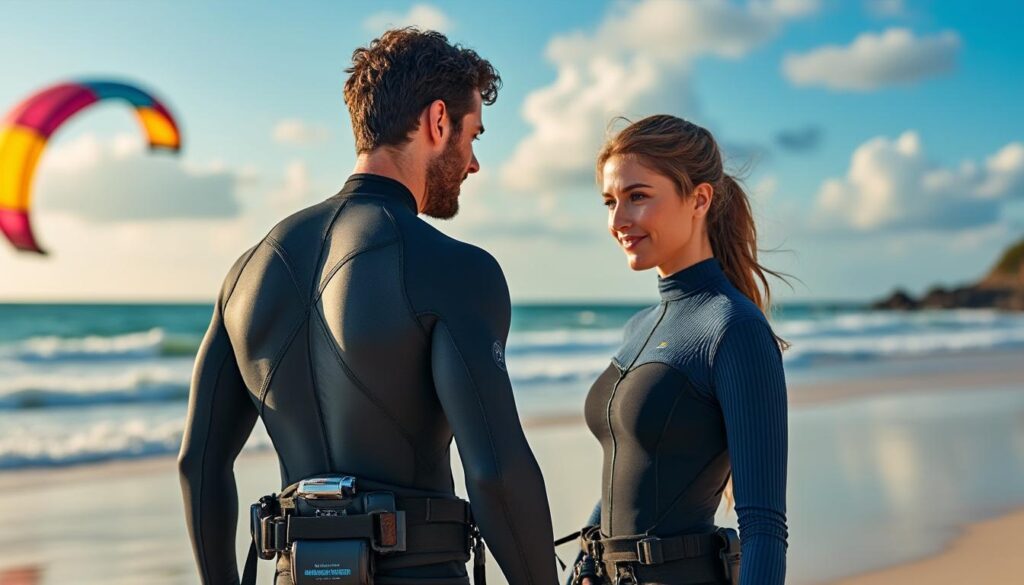
When you think about surfing in 2026, you don’t just grab a board and a leash. You build a complete setup: technical wetsuits, boardshorts that dry in a flash, lycras that don’t chafe even after hours of water starts, and surf streetwear that takes you from the spot to the bar without changing. The new generation of surf sportswear mixes sustainable materials, functional cuts and urban style. The big historic brands like Billabong, Quiksilver, Rip Curl, O’Neill continue to set the rules in the water, while younger brands like Vissla, Outerknown, Roark Revival, Deus Ex Machina, Saturdays NYC push aesthetics and sustainability, creating a runway that goes from the ocean to the streets of Milan, Rome or Lecce.
Those planning a kitesurf Italy trip or a week of waves in the kitesurf Salento today ask for two things: performance in the water and clothing that “speaks” of the sea even on land. Surf clothing in 2026 is not just fashion, it’s a tribal language. A long-sleeve rash guard with UV protection on the kitesurf Adriatic, an oversized sweatshirt after sunset on the Ionian, a technical linen shirt for dinner in Otranto after the session. The goal? To make you feel comfortable, dry, free in your movements and, above all, ready to jump on a new gust as soon as the wind shifts. Because one thing is certain: if you understand how to choose the right brands and garments, every session — from the first kitesurf for beginners to big air in competition — becomes smoother, safer and more enjoyable.
In short
- Surf sportswear 2026: a powerful mix of technical performance, urban style and eco materials, designed to feel good in the water and in the city.
- The best surf brands combine performance wetsuits, advanced boardshorts, functional surf bikinis and streetwear with relaxed cuts.
- Sustainability at the center: brands like Vissla, Patagonia, Outerknown push recycled fabrics, green neoprene and transparent supply chains.
- For those doing kitesurf Italy and looking for spots from north to south, the right clothing is an ally, especially in strong winds like vento Salento.
- The correct choice depends on: level (beginner course or pro), water (cold or warm), type of session (wave, freeride, foil, surfskate, street).
Surf Sportswear 2026: how to choose the right clothing for spot and session
Imagine a typical day of kitesurf Lecce. Early in the morning there’s a light thermal on the Ionian, flat water, perfect for a kitesurf course or for those still in the “body drag and first water starts” phase. In the early afternoon more wind comes in, chop and small waves begin to appear, someone rigs a strapless surfboard. In the evening the temperature drops, your skin is salty, but the desire to stay on the beach is still high. If your clothing isn’t designed to keep you warm when needed, free when you push, protected from the sun when it’s strong, you lose half a day of fun.
The heart of surf sportswear 2026 is the ability to adapt quickly to these scene changes. Brands work on three fronts: water functionality, off-water comfort, long-term durability. For the beginner who comes to Puglia for kitesurf holidays, all this translates into very concrete choices: wetsuit thickness, type of seams, how fast the lycra dries, what UV protection the materials offer, how much a swimsuit tightens or limits movement when you try to land a jump.
Take a guy coming from Milan to learn kitesurfing in Porto Cesareo. He booked a kitesurf school, a three-day beginner course. If he arrives with a pool swimsuit and a cotton t-shirt he immediately finds himself in trouble: the t-shirt gets heavy, cools the body, rubs under the armpits. A technical lycra with UPF 50+ protection, flat anti-irritation seams and a boardshort with 4-way stretch fabric are enough to completely change his experience. Fewer annoyances, more energy to focus on the bar, the wind window and the timing to get up on plane.
The same happens in the classic surf world. A longboarder who spends winter on the kitesurf Adriatic or among the waves of Gargano needs a wetsuit with an anatomical cut, a zipper designed to keep cold water out, reinforced knees. Those who in August move between spot kitesurf Puglia on the Ionian often get by with a shorty or super light neoprene, perhaps paired with a long-sleeve top for the sun. There is no “perfect garment for everyone”, there is the garment calibrated to spot, wind, season and level.
A question always worth asking is: “Is this product really designed for people who spend hours in the water, or just for showing off on Instagram?”. Details make the difference. Draining pockets on boardshorts, soft velcro closures that don’t scratch, drawcords that don’t come undone at every wipeout, mesh panels to let water out. When you look at these details, you immediately understand whether a brand breathes surf or just rides the trend.
For those who often frequent the kitesurf Salento, a good base set in 2026 includes:
- Technical boardshort with stretch fabric, quick drying and flat seams.
- UV lycra long-sleeve to protect the skin during the central hours.
- Wetsuit adapted to the season (full 3/2 or 4/3 for shoulder season, shorty for high summer).
- Sweatshirt or lightweight jacket in technical fabric for the post-session with strong wind.
- Sandals or reef shoes for spots with rocky bottoms.
This base, modulated with a few surf streetwear pieces, lets you jump from the parking lot to the water start without stress, whatever spot you choose that day.
Functionality vs style: finding the balance in surf streetwear
Many brands today focus heavily on surf streetwear, that clothing line born from surf but that lives very well in the city. Here the balance is delicate: if the garment thinks only about style, it risks becoming bulky on trips, heavy when wet and uncomfortable on trains or planes. If it thinks only about performance, you’ll never wear it out at night after a session on the Ionian coast.
Brands that nail this mix focus on lightweight, breathable fabrics, relaxed but clean cuts, wave-inspired graphics that aren’t overloaded. Think of an oversized sweatshirt in organic cotton, with a discreet chest print, that dries quickly and keeps you warm when the vento Salento picks up at sunset. Or jogger pants with a soft drawcord, designed to travel comfortably to kitesurf Taranto, but suitable also for an evening stroll along the promenade.
Good surf streetwear becomes a “second skin” in all those dead times between sessions: while you wait for the wind to turn side shore, while you recharge after a kitesurf beginners course, or when you move from one spot to another along the Apulian coast. The key is this: bringing the beach spirit into the city without dressing like a tourist every day of the year.
In short, surf clothing in 2026 works when it accompanies you throughout the day: prepares, protects, warms, tells who you are. If it asks too many compromises, it’s not the right garment for you.
The big historic surf sportswear brands: Billabong, Quiksilver, Rip Curl, O’Neill and co.
Before surf became an Instagram icon, there were the OG surf brands, the ones that literally dressed the first generations of surfers and later, gradually, kiters, windsurfers and foil riders. We’re talking about names you already know: Billabong, Quiksilver, Rip Curl, O’Neill, Hurley, RVCA, Volcom, Reef. If today you can choose among dozens of performing wetsuits and technical boardshorts, it’s also thanks to the innovations these brands pushed in past decades.
O’Neill revolutionized surf by inventing the modern neoprene wetsuit, making it possible to surf in cold waters. Rip Curl built its reputation on the motto “Live The Search”, pushing surfers and kiters to chase swell and wind everywhere, with wetsuits and accessories designed for long trips and tough conditions. Billabong raised the bar for boardshorts, bringing more durable and lightweight fabrics, perfect also for kitesurf Adriatic marathons in strong wind. Quiksilver, beyond wetsuits, pushed a lot on global surf culture, from competitions to streetwear collections that inspired generations of kids.
In 2026, these brands haven’t stood still. They had to respond to strong new needs: real sustainability, lines dedicated to women riders, more technical kids ranges, integration between surf clothing and snowboard, skate, outdoor. Today it’s easy to find, for example, a Rip Curl wetsuit with more eco-friendly neoprene, or an O’Neill jacket you can use both on snow and on the beach in winter. Hurley continues to work on ultra-light boardshorts, designed both for waves and for big air in kite.
One aspect not to underestimate is how these historic brands helped grow surf and kite in Italy. Many kitesurf schools operating between Puglia, Sicily and Sardinia have over the years relied on products from these brands to equip students and instructors. If you’ve ever rented a wetsuit in a kitesurf course in Porto Cesareo or Torre Mozza, it was probably signed by one of these giants.
To help you orient among some of the names most present on the market, here’s a useful summary:
| Brand | Main strength | Ideal for | Indicative price range |
|---|---|---|---|
| O’Neill | Technical wetsuits and neoprene innovation | Those who do many sessions in cool/cold water | Mid–high |
| Rip Curl | Performing wetsuits and travel focus | Riders who move between multiple spots and climates | Mid–high |
| Billabong | Boardshorts and global surf lifestyle | Those seeking a balance between water and streetwear | Mid |
| Quiksilver | History in surf performance + street | Surfers and kiters who want an industry icon | Mid |
| Hurley | Lightweight boardshorts, youthful style | Freeriders, wave riders, those who love explosive tricks | Mid |
| RVCA | Mix of surf, art, street culture | Those who want technical garments with a creative aesthetic | Mid |
A guy starting kitesurf for beginners might aim for an entry-level wetsuit from a historic brand: more affordable price, controlled quality and retailers everywhere. Someone who already does long downwinds on the kitesurf Ionian or plans trips between Portugal and Puglia looks for top-of-the-line gear with zips designed to reduce leaks, neoprene panels differentiated for each body area and inner linings that dry quickly between sessions.
The strength of historic brands is that they’ve gathered decades of real feedback from surfers, kiters and windsurfers. Every seam, pocket, zip has hours of heads in the water behind it. If you’re looking for a safe purchase, starting with them is always a good idea.
How to read labels and understand if a garment is truly technical
Have you ever bought a wetsuit “on sale” online and, once it arrived, realized it felt more like a stiff sponge than a serious neoprene? To avoid these traps you need two extra minutes to read labels and the technical description well. Serious brands specify wetsuit thickness (3/2, 4/3, 5/4), seam type (flatlock, GBS, taped), zip type (front zip, back zip, zipless), internal materials (lined, thermal, etc.).
The same goes for boardshorts and lycras. If you don’t find clear indications about elastane percentage, fabric type, UV protection, the garment is likely aiming more to be photographed than to last. A good trick for those who often move among the best kitesurf spots Italy is to choose a few garments but mid–high range: less volume in the backpack, more reliability in the water.
In conclusion, historic brands remain a cornerstone of your surf wardrobe. Then, on that base, you can start playing with newer, more “research” labels.
New surf streetwear brands 2026: Vissla, Deus, Roark, Saturdays NYC and others
In recent years, alongside the surf giants, brands have exploded that took the best of wave culture and mixed it with design, art and urban lifestyle. Brands like Vissla, Deus Ex Machina, Roark Revival, Saturdays NYC, Rhythm, Howler Brothers, Banks Journal, Stockholm Surfboard Club have brought a breath of fresh air to surf sportswear. Here the line between technical clothing and streetwear is thin: you can wear the same shirt for an aperitif in Lecce and, a few hours later, use it as a light layer over your lycra while preparing the kite wing.
Vissla is the perfect example of this approach. Born with the idea of “ride everything,” the brand pushes creativity, technicality and sustainability. It uses more ecological neoprene, fabrics made from waste materials like coconut fibers, without giving up modern cuts and interesting prints. For those alternating surf, kite and maybe foil between the Adriatic and the Ionian, Vissla offers dynamic wetsuits, lightweight boardshorts and lifestyle pieces that work on the road, from the van to the B&B.
Deus Ex Machina, on the other hand, was born from the custom motorcycle world but decisively enters wave culture. Their surf collections evoke wooden taverns, single-fin longboards, soft sunset waves. Light shirts, graphic t-shirts, wetsuits with a retro flavor: everything communicates the idea of taking the board, the motorcycle and disappearing for a few days. Ideal for those who see kitesurf holidays not just as sport, but as a slow trip through small towns, trattorias and discreet spots.
Roark Revival builds each collection as if it were a chapter of a travel novel. Each season revolves around a place and a story, and the garments reflect this narrative: sturdy jackets for the evening, short-sleeve shirts with map-inspired prints, durable pants for long walks to remote spots. For a rider who leaves from kitesurf Italy and then explores Morocco, the Canaries, Greece, this kind of clothing makes a lot of sense.
Saturdays NYC and Banks Journal aim for a more minimal and clean aesthetic. Simple cuts, neutral colors, discreet logos. Perfect if you love the sea but don’t want to be an advertising billboard 24/7. A Saturdays NYC sweatshirt, for example, is perfect both for boarding the Frecciarossa train and for stretching on the grass before entering the water.
Another interesting name is Rhythm, born in Australia with the goal of connecting surf, music and art. Their collections bring that “endless summer” vibe, with wide shorts, light shirts, retro-style bikinis built with modern materials. Those who often frequent the spot kitesurf Puglia or move between Salento and Sicily find in these brands a natural way to dress “for the sea” without always looking like they just came from the beach.
When choosing a niche brand can make the difference
A rider who comes to kitesurf Salento for two weeks can make do with a standard wetsuit and a couple of generic boardshorts. But someone who lives by the sea all year, who alternates winter surf in Bari and kite in Santa Maria al Bagno in summer, begins to perceive how important details are. This is where niche brands make the difference.
They are often quicker to experiment with new materials, to collaborate with shapers, photographers, musicians. You see capsule collections born from a real trip, from entire seasons spent on a single spot. The result is garments with a true story behind them, not just a trendy moodboard.
If you identify with this approach, it can make sense to build your surf wardrobe with a base of “safe” pieces from big brands, and then gradually add special items from brands like Vissla, Roark, Deus, Saturdays NYC. A cap with the perfect visor to watch the gusts on kitesurf Taranto, a light shirt you fold tiny in your backpack, a windproof jacket that saves you when you get out of the water in a full maestrale.
The bottom line is that these brands help you tell how you live waves and wind, not just cover you.
Sustainability and materials: Outerknown, Patagonia, Vissla and other conscious brands
Those who live the sea every day know: talking about surf, kite or wind without talking about environmental impact makes no sense. Every session is a reminder of how the water is changing: plastic on the shore, strange tides, periods of abnormal heat. It’s not surprising that sustainability in surf sportswear has become central, with brands seriously trying to change supply chains and materials.
Outerknown, born with Kelly Slater, is among the symbols of this shift. The idea was clear: show that you can produce high-level surf clothing using recycled fabrics, cleaner processes and transparent supply chains. Their famous “blanket shirt” showed the world that a resistant, warm and stylish garment can be born from carefully chosen materials. Those who move among the best kitesurf spots Italy, from Salento to Sardinia, and want a single shirt-jacket for temperature changes, find in this type of product a solid ally.
Patagonia was a forerunner even earlier, starting from mountaineering but entering surf decisively. Their work on alternative neoprene (like Yulex) and on environmental certifications has forced the industry to ask more uncomfortable questions. It’s not just about using recycled plastic here and there, but about rethinking everything: from garment durability, to repair services, to choosing colors and treatments that are less impactful.
Vissla has taken a similar path on wetsuits and boardshorts, using coconut waste, greener neoprene, reduced packaging. And brands like Slowtide, specializing in beach towels and technical blankets, show how even accessories can be born from recycled fibers and more ethical processes.
For you who maybe are choosing gear for an entire summer of kitesurf holidays between Salento and other Italian coasts, this discussion is doubled: not only does buying a sustainable garment reduce impact, it often leads you to choose more durable products. Better a wetsuit that lasts three seasons of kitesurf Italy than two poor wetsuits thrown away every year.
How to understand if a brand is truly sustainable or just “greenwashed”
The word “eco” is unfortunately used everywhere. To understand if a brand is really committed you have to look beyond the slogan. Some useful signs:
- Transparency: does the site clearly explain where materials come from, where the collection is produced, which certifications it has?
- Durability: does the brand encourage repair? Offer fix services? Talk openly about how long a garment should last?
- Specific materials: are concrete fabrics mentioned (Yulex, recycled nylon, recycled polyester, organic cotton) or only generic “eco-friendly material”?
- Concrete initiatives: collaborations with environmental associations, beach clean projects, buyback or recycling programs.
In the context of kitesurf Salento, choosing conscious brands isn’t just about image. It means minimally contributing to protecting the very spots that make your heart beat: from the white beaches of the Ionian to the cliffs on the Adriatic.
The key phrase to keep in mind is simple: fewer garments, better garments. A compact, well-chosen and cared-for surf wardrobe is worth more than a pile of disposable products.
Complete outfits for kitesurf and surf in Italy: from beginner course to expert shredder
Okay, let’s be clear: in the end what matters is what you pack when you leave for a weekend of kitesurf Lecce or to chase waves in the North. Brands are important, but even more important is knowing how to combine the right pieces based on your level and the type of session you’re after.
Imagine three characters: Luca, who arrives at his first kitesurf for beginners lesson on the Ionian; Marta, who has been strapless wave riding for a few years and moves between kitesurf Taranto and Sicily; Stefano, who spends half the year between remote work and surf trips, with a backpack and board in tow. Each needs a different kit.
For Luca, priority is protection, comfort and no complications. A full wetsuit of appropriate thickness for the season, a lycra underneath if his skin is delicate, simple but well-cut boardshorts. Historic brands like O’Neill, Rip Curl, Billabong offer him all this at the right price. Add a heavy sweatshirt for the post-session and a cap, and he’s set.
Marta, who pushes hard in the waves, chooses more flexible wetsuits, boardshorts or surf leggings that stay in place even in wipeouts, a technical top to protect back and shoulders from the sun. Her options range from top-tier products by Rip Curl or Patagonia to more eco-friendly Vissla wetsuits. Off the water, she prefers sober but decisive surf streetwear: maybe a Banks Journal shirt and soft pants to drive to the next spot kitesurf Puglia.
Stefano, the nomad, focuses on versatility and low weight. A wetsuit that covers the shoulder season and can also be used in Portugal, a pair of boardshorts suitable for surf, kite and even running, three technical t-shirts, a sweatshirt and a lightweight windproof jacket. Here the experience of brands like Roark Revival, Outerknown, Patagonia, Howler Brothers comes into play, thinking of garments as travel companions and not just “beach outfits”.
Practical checklist to prepare your surf wardrobe 2026
If you want a solid base to face sessions across kitesurf Italy, use this list as a reference and adapt it to your usual spots:
- Two well-chosen wetsuits: one warmer (3/2 or 4/3) and one lighter or a shorty for high summer.
- 1–2 technical boardshorts or surf leggings: quick drying, elastic, flat seams.
- 2 UV lycras (one short-sleeve, one long-sleeve) for serious sun protection.
- Sweatshirt and/or technical jacket for strong wind and cooler evenings.
- Technical beach towel like Slowtide, that dries fast and takes little space.
- Cap, sunglasses and, if needed, reef shoes.
Once this base is covered, the fun begins: adding pieces of personal style, maybe a Deus shirt, a Vissla t-shirt, a Roark backpack designed for travel. The goal isn’t to look like you just stepped out of a catalog, but to build a mix that allows you to react to the wind at the last moment. Because you know well that a perfect day on the kitesurf Ionian often starts with a decision made on the fly, checking the forecast and closing the backpack in ten minutes.
If everything you wear follows you without getting in the way, you arrive at the beach already with a clear head. And there, yes, you can finally think only about what really matters: reading the wind and grabbing the bar.
What are the best surf sportswear brands to start kitesurfing in Italy?
For those doing kitesurf for beginners in Italy, historic brands like O’Neill, Rip Curl, Billabong, Quiksilver and Hurley are a solid choice: they offer reliable wetsuits, comfortable boardshorts and lycras with good UV protection, with a widespread network of retailers. If you want to add a touch of style and sustainability, you can include pieces from Vissla, Patagonia or Outerknown, especially for sweatshirts, light jackets and lifestyle clothing to wear off the water as well.
What type of wetsuit is needed for kitesurf Salento between the Adriatic and the Ionian?
In Salento, between kitesurf Adriatic and the Ionian, in summer often a shorty or even just a UV lycra and boardshorts are enough; in spring and autumn a full 3/2 or 4/3 is recommended, especially if you stay long in the water or the wind is strong. Brands like Rip Curl, O’Neill, Vissla and Patagonia offer wetsuits with flexible neoprene and sealed seams that keep you warm even when vento Salento rises suddenly.
How to recognize a good technical boardshort compared to a normal swimsuit?
A technical boardshort for surf and kitesurf uses 2- or 4-way stretch fabric, dries very quickly, has flat seams that don’t irritate and a secure front closure with a drawcord; it often includes draining pockets. A normal swimsuit is heavier when wet, dries slowly and can rub during wide leg movements. Brands like Billabong, Hurley, Quiksilver, Vissla and RVCA care about these details precisely for those who spend hours in the water.
Is it worth investing in sustainable brands like Patagonia or Outerknown?
Yes, especially if you often practice kitesurf or surf and truly use the garments season after season. Brands like Patagonia, Outerknown and Vissla use recycled materials, more eco-friendly neoprene and controlled supply chains, and generally focus on more durable and repairable products. The initial price is higher, but it pays off over time, you reduce environmental impact and support companies that have a more responsible vision toward the sea you live every day.
How many garments do you really need for a complete surf wardrobe?
For most riders two wetsuits (one warm, one light), two boardshorts or surf leggings, two UV lycras, a sweatshirt or technical jacket, a good beach towel and some surf streetwear pieces (comfortable pants, 2–3 t-shirts, a light shirt) are enough. With this set you’re covered from the first lesson of a kitesurf course to longer sessions at the main spot kitesurf Puglia and the rest of Italy, without filling your closet with garments you’ll wear only once.