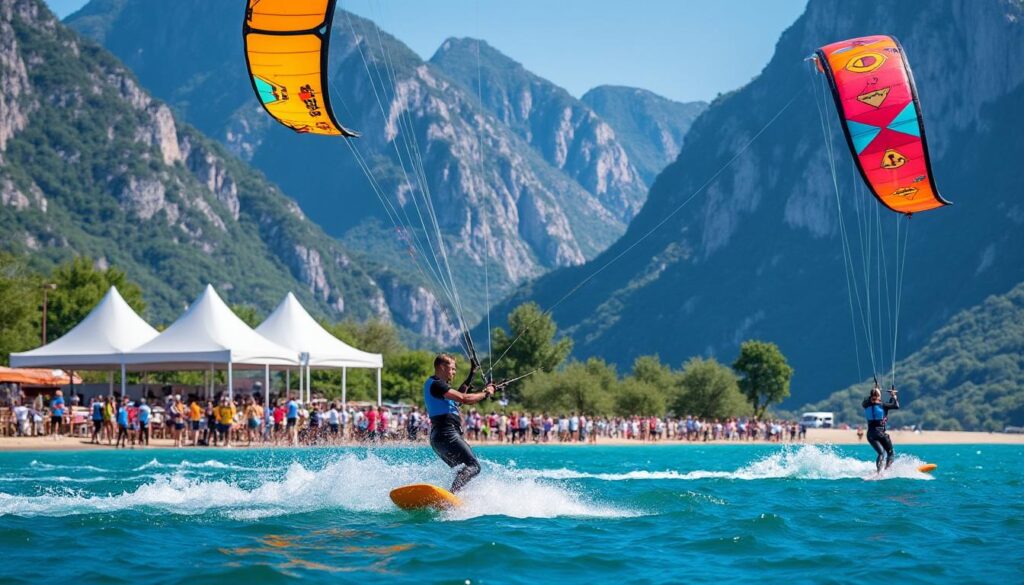
The wind of Salento calls you, the board is ready, the kite trembles in the trunk: only the right wetsuit is missing to launch yourself into the water between the Ionian and the Adriatic. Here, a wrong choice can ruin the session or, on the contrary, turn every outing into a continuous dance of comfort, warmth and freedom. The wetsuit is not a simple protection: it is what allows you to ride waves in complete safety, even when the tramontana blows hard or the water stays cold despite the sun of the best kitesurf spots in Italy. Let’s see how to choose the kitesurf wetsuit that’s perfect for you, distinguishing between men’s and women’s models, materials, sizes and technical details that make the difference between quitting the session after ten minutes or progressing steadily to the last knot. Don’t settle: a well-fitted wetsuit is your best ally among the winds of Salento, Lecce, Taranto and beyond.
Kitesurf wetsuit: why it’s essential and what its functions are
In Italy, and especially at the best kitesurf spots in Puglia like Torre San Giovanni or Porto Cesareo, the wetsuit is not just a detail but a vital piece of kitesurf equipment. At our latitudes, far from the equator, the wetsuit is primarily used to protect the body from the cold – but there’s much more. Anyone aiming to improve their level, from the first kitesurf lessons for beginners to an evening water start with friends, soon discovers that the wetsuit is a second skin: it protects, warms and lets you move without hindrance.
The key features to consider:
- 🧊 Thermal protection: neoprene retains heat and limits energy loss in cold water.
- 💪 Freedom of movement: a good wetsuit follows the rider’s movements and makes handling the bar, sitting position during the water start, and the most dynamic phases between jumps and maneuvers easier.
- 🔒 Comfort and fit: when you wear a wetsuit that fits properly, you can stay in the water for hours without fatigue or discomfort.
- 🌪️ Wind resistance: kite-specific wetsuits have “windproof” panels, essential at spots exposed to strong winds (see kitesurf Adriatic or windsurf Salento).
- ⏳ Durability: reinforced seams, quality zips and resistant materials prevent scratches, cuts and punctures and make the wetsuit a long-lasting investment even with frequent use.
Not all wetsuits are the same and beware: a diving wetsuit, perhaps found on sale, is not suitable for kitesurfing. The reason is simple: a diving suit prioritizes insulation but blocks movement, while a kitesurf wetsuit (like a windsurf wetsuit) is designed for mobility without compromise. Choosing a wetsuit also means carefully assessing the conditions you’ll face: variable water temperatures, strong wind, prolonged sessions, flat or choppy water… every detail counts to avoid the risk of getting too cold – or even overheating on mild days!
Cold-water comfort does not belong only to accessories: it touches the quality, the internal finishing, the type of neoprene and the presence of thin but effective thermal linings. And in the “border” months (March, April, October, November), only a wetsuit truly designed for kite guarantees the performance you’re looking for at your best kitesurf spots in Italy.
Kitesurf, wetsuits and progression: comfort and safety above all
Practitioners of every level, from those excited about their first outings to those wanting to perfect their skills among the strong winds of Taranto, agree: when the wetsuit is wrong, you go out less willingly and risk tiring sooner. It’s not just a matter of cold: without the right fit and an elastic, well-calibrated wetsuit, every movement requires more energy and the feeling of stiffness quickly translates into technical errors. That’s why in the kitesurf school instructors for beginners insist: get the right wetsuit, neither too tight nor too loose, to learn kitesurfing with satisfaction.
The real benefits are also seen in the length of sessions: the more comfortable you are, the longer you stay in the water, the more you can progress without feeling the “scratch” of poor neoprene or fearing cramps and sudden muscle jolts caused by penetrating cold.
Materials and thickness: how to choose a kitesurf wetsuit for men and women for every season
There is no universal kitesurf wetsuit: everything revolves around the type of neoprene, accessory materials and thickness, key elements whether you’re looking for a men’s wetsuit or a women’s wetsuit designed for female anatomical specificities.
Neoprene is the main protagonist. In 2026, new generations of neoprene are ultra-elastic, light and high-performing: thin panels but extremely warm, with inner “pile” layers and technical coatings (titanium, water-repellent, soft-touch linings) that maximize warmth even with reduced thickness.
| 🌡️ Temperatura Acqua | 👗 Tipo di Muta Consigliata | 🧵 Spessore Indicativo |
|---|---|---|
| Oltre 23°C | Lycra e pantaloncini | 0-1 mm |
| 19-23°C | Muta estiva / Shorty | 2 mm |
| 15-20°C | Muta lunga primavera/autunno | 3/2 mm |
| 10-17°C | Muta invernale | 4/3 mm |
| 9-13°C | Muta invernale avanzata + accessori | 4/3 mm + guanti, scarpette, cappuccio |
| Sotto 9°C | Sessione da temerari | 5/4 mm o stagna |
Some practical examples: a girl from Lecce ready to ride in Salento in spring often prefers a 3/2 long-sleeve wetsuit, which protects from the brisk Adriatic air but leaves full freedom for the legs. A guy who wants to push his sessions in January in the bay of Taranto relies on a high-quality 4/3 wetsuit, adding boots and gloves to avoid cramps in hands and feet. In summer? Shorty, neoprene top or even lycra, but always pay attention to UV protection if the sun is strong.
Modern thermal wetsuits stand out for multi-layer construction. Beyond neoprene, the outer windproof coating and the inner lining in contact with the skin are decisive. Some models use “SL” (single lined) neoprene for the back and torso, perfect to withstand gusts typical of spots like the marinas of Melendugno. Others opt for “DL” (double lined), great for those who favor durability and quick drying after the session.
Choose a wetsuit by season: three quivers for the whole year
Organized rider, happy rider: that’s why many Salento Kiter kiters build a small wetsuit quiver, diversifying by season. It’s impossible to think of a single wetsuit for everything: better to have at least three key options in the bag:
- 🌞 Shorty wetsuit (June-September, water above 19°C).
- 🍂 3/2 wetsuit (spring/autumn, from 15 to 20°C).
- ❄️ 4/3 or thicker wetsuit for Salento winter and dedicated thermal accessories in the coldest months.
The board adapts to all sea conditions, the wetsuit does not: investing in the right neoprene is the strategy to not miss a single outing, even when the weather acts up.
Men’s and women’s kitesurf wetsuits: differences, fit and what to consider
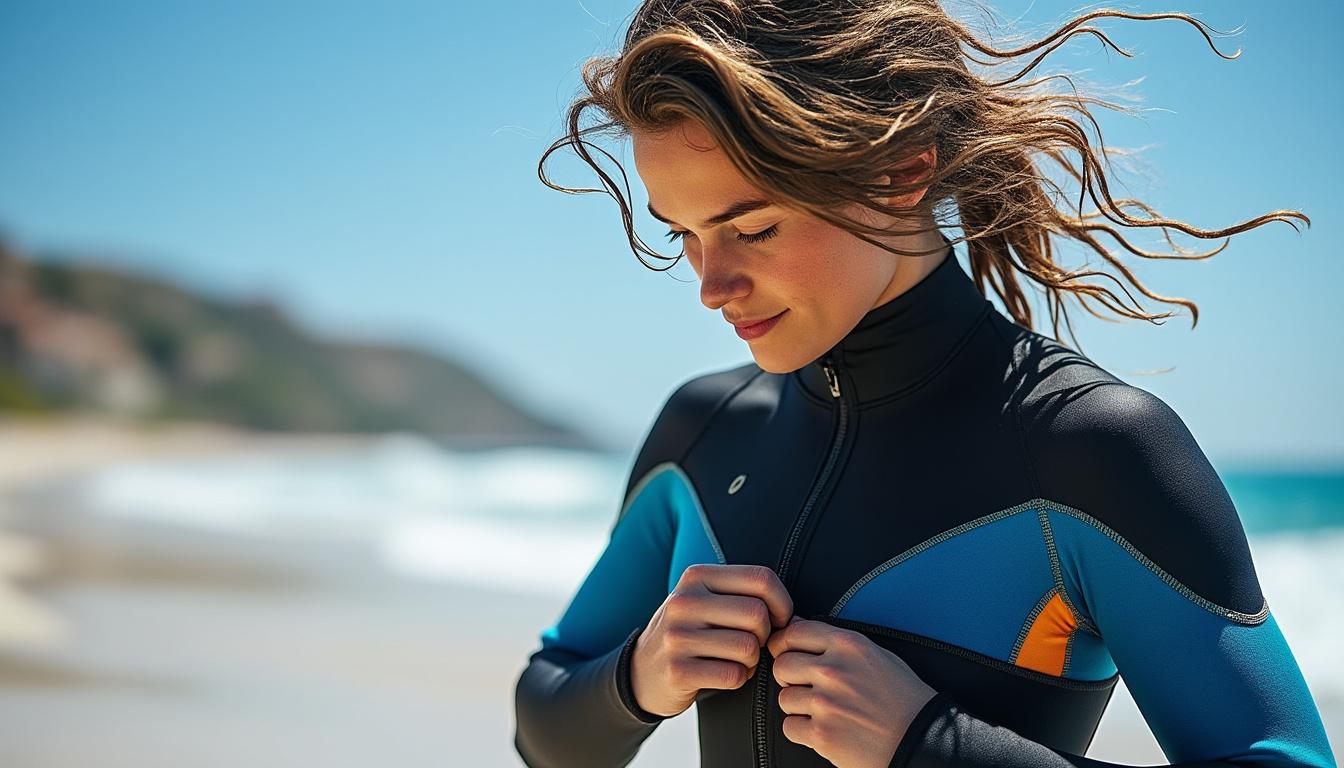
Those who make kitesurf clothing know that men and women have different morphological needs. The differences between men’s kitesurf wetsuits and women’s kitesurf wetsuits are not limited to color or aesthetic details: the cut, fit and some technical solutions are designed to adapt the wetsuit to different physiques.
For men, the wetsuit offers:
- 🦵 A wider cut on the shoulders, chest and hips
- 🔩 Reinforcements and linings in high-friction areas (back, knees, elbows)
- ⚙️ More zip options (back zip and chest zip, with a growing trend toward “no zip” wetsuits in pro models)
The women’s kitesurf wetsuit instead stands out for:
- 👙 A shaped waist cut, reworked chest area and narrower shoulders, to flatter and adapt to the female anatomy
- 💜 Elasticity in critical zones (bust, hips, legs) to offer performance and comfort without stressing the materials
- 🏄♀️ Specific models with shorter zips or concealed systems that simplify dressing without sacrificing waterproofing and wind resistance
The best wetsuit brands today offer well-differentiated “women fit” and “men fit” ranges. Experience shows that trying the wetsuit on, perhaps in a store, is the best way to choose a wetsuit with maximum confidence. Each brand (Rip Curl, Prolimit, O’Neill…) provides size charts, but beware of arm or torso lengths that can vary significantly from person to person.
Comfort is crucial: a wetsuit that’s too tight hinders the session, one that’s too loose fills with cold water as soon as you enter. The trick for online buyers? Check the size chart, measure chest, waist, hips (for women) and height/weight (for both), always choosing a fit that’s snug but never restrictive. Remember that the wetsuit softens slightly once wet: better to be “correctly tight” rather than baggy.
Focus on women: enhancing style on the water too
In 2026, women’s kitesurf wetsuit design follows not only functionality: increasingly smart collections alternate bright colors with details that prevent abrasion under the harness, with anti-UV materials and cuts that stay put during the most dynamic tricks. From a pastel pink shorty to a long thermal in turquoise, the market offers cool options even in high-performance models: so, between a session in Lecce and a jump in Marsala, not only do you feel protected but you bring your style to every outing.
Types of kitesurf wetsuits: which model to choose for each session
Each session has its ideal kitesurf clothing. There are different types of kitesurf wetsuits to best accommodate weather changes and spot specifics. A common mistake? Always using the same wetsuit in June as in December: the risk is suffering from the cold or, conversely, overheating and losing concentration. Refining wetsuit choice means adapting to the Salento wind, the Adriatic and the surprises of the Ionian or Tyrrhenian.
- ☀️ Shorty wetsuit: ideal for summer, short sleeves and legs, maximum freedom, perfect above 19°C.
- 🍁 3/2 full wetsuit: for spring/autumn, balance between warmth and mobility, typical for riders who want to make the most of every light-wind window.
- 🧣 4/3 or 5/3 full wetsuit: deep winter, thermal zones and inner linings to keep going even with water below 15°C.
- 🌊 Semi-dry suit: hate the cold? This model offers an extra antifreeze layer and taped seams, ideal for windy, wet days in January/February.
- 🧥 Neoprene jacket and trousers: perfect to complement the wetsuit for out-of-water phases or post-session moments, great for those changing spots late at night or early in the morning.
The wetsuit variants respond not only to water temperature, but also to personal sensitivity and habits: those who tend to fall often (typical when learning kitesurfing) prefer a thicker model, while clean riders can opt for minimal thicknesses without fear.
Accessories such as hoods, gloves and neoprene boots have become an integral part of winter kitesurf equipment at the best spots in Italy. In Salento kitesurf schools these accessories are often recommended for those who don’t want to pause their progression between October and March.
Special wetsuits: materials, zips and seams make the difference
Beyond the cut, how the wetsuit is made also matters:
- 🔗 Zip: the back zip is practical, the chest zip more waterproof, “no zip” wetsuits are super elastic but hard to get into (preferred by pro riders).
- 🧵 Seams: flatlock for summer suits, glued GBS for winter suits. They limit water entry and extend the wetsuit’s lifespan.
- 🏅 Linings: pile, quick-drying fabrics, aluminized and other high-tech materials to stay warm without increasing thickness too much.
Those who live with salt and wind every week know well that investing in these technical details means being able to extend the useful life of their wetsuit—and make the most of every session without surprises.
How to choose a wetsuit: size, technical details and maintenance care
The first real step to choose the perfect wetsuit is nailing the size. The most common mistake among beginners is buying online without comparing weight, height and circumferences with the chosen brand’s size chart. A simple oversight can turn the wetsuit into a “wet sack” that fills with icy water or, worse, into something you can’t get off at the end of the session. The rule: it must be snug, like a second skin, but never take your breath away or block movement.
- 📏 Always measure chest, waist, hips and height.
- 🎯 Check the charts and see whether the brand fits large or small (models and sizes differ between men’s and women’s wetsuits!).
- ⚖️ Consider the change between a new wetsuit (which “loosens” slightly after the first uses) and a wet wetsuit.
Technical details really make the difference in performance and longevity:
- 🔒 Reinforcements and protections: essential on knees, elbows and torso, especially when taking lessons among rocks and fine sand.
- 🧵 Taped seams: block water, designed for those who want to sail without limits even in the toughest months.
- 💡 Anti-abrasion inserts: prevent the classic wear marks from the harness or bar on women’s wetsuits (waist and chest area).
To extend the life of your kitesurf wetsuit, adopt some smart practices:
- 🚿 Rinse immediately with fresh water after each session, don’t leave salt or sand to attack the neoprene.
- 🧺 Always dry it in the shade, never in direct sunlight.
- 🫧 Occasionally wash it with neoprene-specific detergents to remove bad smells and bacteria.
- 🧼 Never store it closed or rolled up if it is not completely dry.
A well-maintained wetsuit can accompany you for 5, 6, even 10 seasons without losing elasticity or comfort. And at the best specialized shops for kitesurf in Lecce and Puglia you can ask for advice on products and accessories to keep your wetsuit like new.
Choose a wetsuit: also consider experience and how often you get in the water
One session occasionally? Go for entry-level models, practical and robust. Are you a serial kiter, between Salento, the Ionian and the best kitesurf spots in Italy? Invest in a high-tech wetsuit: greater cold-water comfort, smart details and technologies that perform best amid gusts and long waves. Attention: every mistake costs you minutes of lost session time and the feeling of being excluded from the top moments of the season.
What is the main difference between men’s and women’s kitesurf wetsuits?
The anatomical cut: women’s wetsuits are designed for more shaped hips, waist and chest, offering a better fit and support where needed. Men’s wetsuits provide more room in the shoulders and torso. Choose based on your body, not just the color or the brand!
How snug should a kitesurf wetsuit be?
The wetsuit should fit snugly without overly compressing: no gaps on the back or hips, no accumulation of water inside. If you can’t move your shoulders freely or bend your knees comfortably, it’s too tight! A wetsuit that’s too loose lets too much cold in and you get chilled very quickly.
When should I choose a shorty wetsuit and when a full suit?
Shorty above 19°C, full or semi-dry suits from 17°C downwards (especially with strong wind). Expert riders prefer to change model depending on the season and spot: the full suit offers protection and safety in every condition, the shorty is perfect for hot days and the mild waters of Salento.
What should I look at besides price when choosing a wetsuit?
Materials (neoprene, coatings), type of seams, quality of the zip, presence of reinforcements in key areas and checking reviews from those who have already tried it. The initial investment often translates into longer lasting comfort and better performance during each session.
How can I extend the life of my kitesurf wetsuit?
Always rinse it with fresh water after use, don’t leave it wet in the sun, store it only when completely dry. Avoid aggressive detergents and hang it to dry, never folded or compressed: the neoprene will thank you!