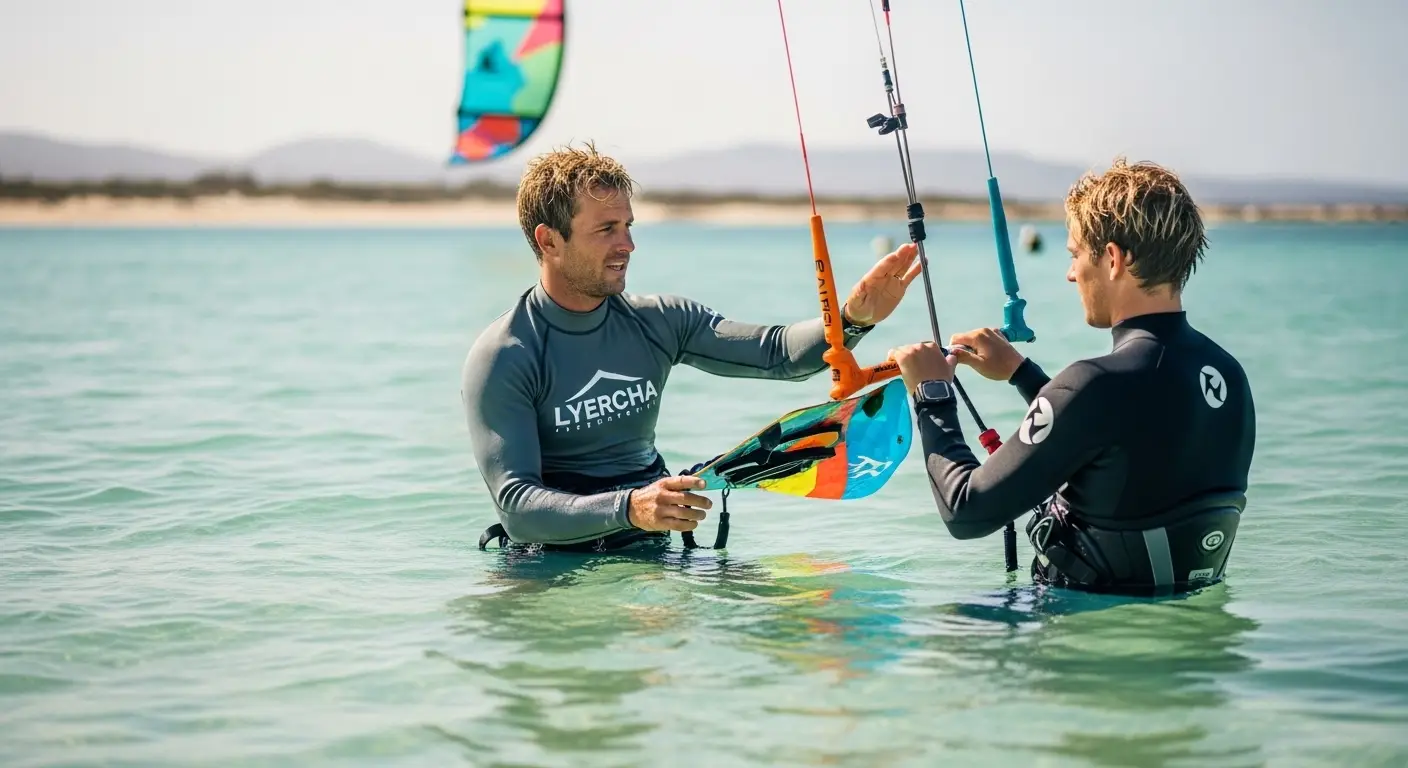
Take Flight in Total Safety
Master the basics of kitesurfing in Salento: from choosing your first equipment to essential safety protocols for a smooth progression in 2026.
Why preparation is the key to success?
Kitesurfing is a dance between human, wind and water. This harmony isn't improvised: it's built on solid foundations. From choosing your first gear to the latest 2026 safety techniques, this guide accompanies you step by step so that every session is a pleasure, never a risk.
Define Your Needs
Before buying anything, ask yourself the right questions.
Frequency and Type of Practice
Planning intensive sessions? Go for reinforced materials like quadruple-frame Ripstop, designed to withstand repeated stress. Occasional use allows prioritizing lightness.
Place of Practice
Salento offers two faces: the Ionian side (Porto Cesareo) with its flat waters ideal for starting, and the Adriatic side with its waves for progressing. <a href="/en/kitesurf-spots-salento/" class="text-primary hover:underline">Discover our spots</a>.
Ergonomics and Comfort
Your harness fit is crucial. A poorly adapted harness turns every session into an ordeal and increases the risk of back injuries. Always try it in-store before buying.
Versatility vs Specialization
For your beginnings, aim for a hybrid Freeride profile. This type of gear forgives errors and adapts to many conditions. Specialization will come naturally with experience.
Essential Gear
The four pillars of your kitesurfing equipment to start with confidence.
The Wing (The Kite)
The Delta-Hybrid shape is ideal for beginners: easy relaunch and predictable behavior. For a 75 kg rider in Salento, plan for two sizes:
- 12 m² for light winds (Scirocco, 10-18 knots)
- 9 m² for strong winds (Tramontana, 20-30 knots)
The Twin-Tip Board
Choose a wide board from 138 to 145 cm. The larger it is, the more buoyancy it offers and facilitates waterstarts.
- Large surface = better stability for learning
- Check that the fins are well secured before each session
The Harness
The harness is your direct link to the kite's power. Two types exist:
- Seat Harness — wraps the thighs, maximum comfort for beginners, doesn't ride up
- Waist Harness — more freedom of movement, preferred by advanced riders
The Bar and Leash
The control bar must be compatible with your kite. It's the interface between you and the kite: precision and reliability are non-negotiable.
- Check bar/kite compatibility (same brand recommended)
- Quick Release: test its dry triggering before each launch
Safety Rules
These rules are not optional. They protect your life and that of others.
Right-hand rule
The starboard tack rider (right hand forward, right side facing the wind) always has priority. If you are riding port tack, it's up to you to move away.
Priority to the outgoing
The one leaving the beach always has priority over the one returning. The launch zone is the most dangerous: leave the passage free for those heading out to sea.
Safety distance
Always maintain at least 50 meters distance from other riders and obstacles, which is about two line lengths. In case of a fall, your kite will sweep this zone.
Mandatory protective gear
- Helmet — mandatory for all beginners, highly recommended for everyone
- Flotation/impact vest — safety in case of fall and buoyancy aid
Equipment Maintenance
Well-maintained gear lasts longer and protects you better.
Post-Session Routine
- Rinse with fresh water — salt corrodes seams and weakens fabric. Systematically rinse kite, bar, harness and lines after each session.
- Never let the kite flap in the wind — a flapping kite gets damaged in minutes. Secure it immediately with sand or a dedicated bag.
Storage & Vigilance
- Dry place, away from light — UV rays degrade Ripstop and weaken lines. Store your gear in a cool, dark place.
- Check lines regularly — worn or asymmetrical lines alter piloting and can break during a session. Replace them at the slightest doubt.
Frequently Asked Questions
Answers to the questions all beginners ask.
Can I learn alone?
What is the best season to start?
What budget should I plan for a first pack?
Do I need to know how to swim?
How do I know if the wind is too strong?
What is "Self-Rescue"?
Is a board leash recommended?
How many hours to become autonomous?
Can I kite everywhere?
Which wetsuit for Puglia?
Ready to Tame the Puglia Wind?
Plan my stay