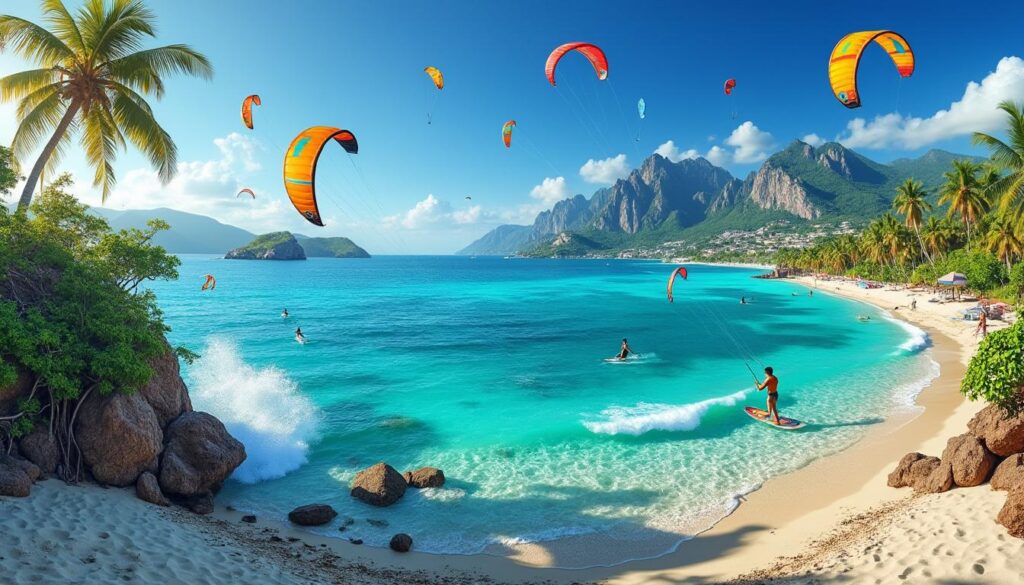
In Italy kitesurf is no longer a niche for a few insiders, but a real growing scene, with kitesurf schools active from the northern Adriatic to the islands. Those who want to learn kitesurf safely today can choose between specialized centers, certified instructors and structured courses, from kitesurf for beginners up to advanced hydrofoil. The result is that you no longer need to move for months to the Canaries: you can start, progress and refine your technique while staying in kitesurf Italy, choosing the kitesurf course right for your level and for the wind direction you prefer.
The difference is not made only by the spot and the equipment, but above all by the kitesurf school that accompanies you through the first legs. Structured centers like KITESURF ITALIA in Veneto, the schools of kitesurf Salento, the clubs in Sardinia or Sicily have refined teaching methods, helmet use and modern safety systems, and a clear approach: first you understand the wind and safety, then you begin to plane. At the same time, many Italian schools offer packages of kitesurf holidays in Greece or Brazil, so that progression does not stop at the end of summer. This article takes you inside the best realities, explaining how to choose, what to expect from a course and where to find the best kitesurf spot Italy based on your priorities.
In short
- Structured schools: certified instructors, modern safety systems and clear teaching paths for every level.
- Diverse Italian spots: Adriatic, Ionian, Tyrrhenian and the islands offer perfect conditions to learn and progress year-round.
- Tailored courses: from basic packages for complete beginners to private lessons in hydrofoil and wingsurf.
- Kite holidays: many schools combine courses in Italy with kite camps in Greece and Brazil to keep progression alive even in winter.
- Safety and equipment: helmet, harness, board and kite should be chosen carefully; reputable schools guide you step by step.
Kitesurf Schools in Italy: how to choose the right school for you
When it comes to kitesurf schools in Italy, the temptation is to look only at spectacular photos and flash offers. In reality, to choose well it’s best to start from three concrete elements: safety, instructor qualifications and spot. A good center does not limit itself to “getting you in the water”, but structures the path from wind analysis to the first controlled legs. In Italy today there are sports associations and private schools with high standards, which allow you to learn without skipping steps and without being pushed by haste.
A clear example comes from the Associazione Sportiva KITESURF ITALIA, active in Veneto between Sottomarina di Chioggia, Rosolina Mare, Isola di Albarella and Delta del Po. The centers work with qualified IKO instructors, including Senior Level 2 and 3, and offer kitesurf and hydrofoil lessons for all levels. This means standard procedures, tested progressions and the issuing of an international certification at the end of the course. The same approach is found in many schools along the kitesurf Adriatic, in the kitesurf Ionian and in the major Tyrrhenian spots.
A common mistake by those looking for a kitesurf school is focusing only on price. A “miracle” one-day package will hardly make you independent, while a structured course in several modules – introduction, basic, independent, advanced – raises your level in an orderly way. In several Italian schools, courses start at around 200 euros per person, including complete equipment, radio, wetsuit and insurance. The investment is not trivial, but it allows you to learn with recent gear and in managed spots, with areas dedicated only to kite.
To evaluate a school it’s also worth asking how it operates on difficult days. A serious structure will not put you in the water with offshore wind on the limits, but will postpone the session, change spot or work more on theory. An improvised center, instead, will tend to “do the lesson anyway”, because every additional hour is income. Here the advice of local riders comes into play: forums, communities and associations like the Associazione Kitesurf Italiana collect feedback on the most reliable centers, region by region.
There is also the issue of languages. If you move between Veneto, Puglia, Sardinia or Sicily, many kitesurf schools in Italy offer lessons also in English, French or German. This is useful if you travel with foreign friends or plan a mixed sea and kite tour. In any case, the most important language remains that of the wind: the school you choose must teach you to read it, not just to “suffer it”.
In summary, choosing the right school depends less on the logo on the sail and much more on how the center sets up your relationship with safety, the wind and the spot.
Kitesurf courses: levels, contents and real progression
Names change from one structure to another, but the logic is almost always similar. Courses are divided into modules that accompany the transition from total beginner to autonomous rider. For those who want to learn kitesurf without skipping steps, the key is to understand what each package really includes, and which concrete objectives it allows you to achieve in the water.
Many schools offer an initial block of familiarization, often a few hours long, focused on wind theory, kite assembly, the wind window and first maneuvers with the kite on land or with a trainer kite. Here you don’t yet get into the water with the board, but you build the basics of controlling the bar and safety systems. This is followed by the complete basic course, in which you move on to body drags, power management in the water and the first attempts at water start.
When you reach the level called “independent”, you start keeping the board at your feet, launching yourself alone and returning to the starting point. From here on, advanced lessons work on longer legs, windward return, transitions and first jumps. In several centers, including KITESURF ITALIA, there are also modules dedicated to hydrofoil and wingsurf, with specific teaching. The foil, for example, is approached with boards of generous volume, smaller kites and great attention to speed management.
For those who like to plan, this scheme simply summarizes the most common levels:
| Course level | Main objective | Typical contents |
|---|---|---|
| Familiarization | Understand wind and safety | Theory, kite setup, wind window, quick-release systems |
| Complete basic | Manage the kite in the water | Body drag, relaunch from the water, power control |
| Independent | Water start and first legs | Starting with the board, short legs, board retrieval |
| Advanced | Control and windward return | Longer legs, direction changes, first controlled jumps |
| Hydrofoil / Wingsurf | New disciplines | Foil management, balance, take-off into flight |
The difference between an effective course and a mediocre one lies in the instructor’s ability to adapt the schedule to your pace. Some learn to water start after two hours and others need an entire weekend: the important thing is that nobody pushes you to “skip a step” just to say you are advanced. At the end of a good course, you should feel confident mounting the equipment, evaluating the spot and deciding autonomously whether to enter the water or not.
One last element to consider is post-course support. Some schools offer assisted practice days, supervised rental or group outings. This bridge between “course finished” and true autonomy makes all the difference between those who give up after a few weeks and those who continue to progress, spot after spot.
The best spots and kitesurf schools in Italy: Adriatic, Ionian and islands
Once you understand how a kitesurf course works, the crucial question arrives: where to go to learn or improve? Italy is a mosaic of spots: kitesurf Adriatic with often flat water and thermal wind, kitesurf Ionian with its lagoons and light chop, Tyrrhenian coasts more exposed to disturbances, up to the large islands. Each area has schools and peculiarities, and knowing the differences helps you choose the ideal context for your level.
In the Northeast, the Associazione Sportiva KITESURF ITALIA oversees the upper Venetian Adriatic with centers in Sottomarina di Chioggia, Rosolina Mare, Isola di Albarella, Delta del Po and spots like Volano. This stretch of coast is perfect for those who like shallow bottoms and wide spaces: ideal conditions for first body drags, kite control and for those starting with hydrofoil. In summer, thermals and breezes allow regular sessions; in spring and autumn, stronger fronts come in for intermediate riders.
Moving south, kitesurf Lecce and kitesurf Taranto open the door to kitesurf Salento, land of two seas and capricious wind. Here the same rider can move from the Adriatic to the Ionian in less than an hour, choosing more wave-prone spots or almost flat water depending on the direction. Local schools know the Salento wind by heart and often organize daily transfers from one coast to the other to take advantage of the best conditions. If you want an idea of the best spots and the schools in the area, a guide like this overview of spots and schools in Salento can give you a concrete view of what to expect.
Among the destinations most mentioned by riders are also Sardinia and Sicily. Sardinia offers lagoons ideal for basic courses and windy bays for those who love waves; an in-depth piece like this guide to the best kitesurf spots in Sardinia shows how varied the island is in terms of spots and seasons. Sicily, for its part, alternates sheltered lagoons perfect for freestyle and stretches of coast with regular waves when the maestrale and scirocco winds kick in.
For those who like to travel beyond borders but stay in the Mediterranean, many Italian schools collaborate with centers in Greece. Even KITESURF ITALIA, for example, is present in Lefkada and other islands of the Ionian Sea with foil academy and summer camps. Windy but relatively easy spots, turquoise water and scenery different from Italian beaches create the perfect mix to combine holiday and technical progression.
Each area, from the Adriatic to the islands, hosts schools with different styles: there is the small family club with few students, and the larger center that offers courses, rentals and organized kite camps. The common thread, in the best realities, is always the same: respect for the spot, a culture of safety and the desire to grow new riders, not just attendance numbers.
Kitesurf Italy and kite holidays: when a course becomes a journey
Many kitesurf schools in Italy no longer limit themselves to the daily course, but build real kitesurf holiday packages. The idea is simple: gather a group of riders at the same level, choose a windy spot, combine lessons, accommodation and beach life, and turn a few days of vacation into a leap forward in progression. KITESURF ITALIA, for example, moves part of its activity abroad in autumn and winter, offering full immersion camps in Greece and Brazil.
From October to March, when temperatures fall in many Italian spots and conditions become more challenging for beginners, schools organize kite camps with daily outings, video analysis and targeted coaching. In the space of a week, someone stuck on the water start often unlocks the first longer legs; someone already sailing independently starts working on transitions and first controlled jumps. The secret is continuity: many consecutive days in the water allow you to cement movements into your body.
These trips are also ideal for those who want to live the kite lifestyle 360 degrees. You share the day with other riders, talk about wind and boards at breakfast, review fall videos in the evening. It’s not a “postcard” holiday, but a concrete way to enter the kitesurf Italy and Mediterranean community, with friendships that often continue later on home beaches.
Kitesurf for beginners: safety, fear and first legs
Those approaching kitesurf for beginners almost always bring two opposing thoughts: on one side the excitement of planing on the water, on the other the fear of the kite pulling too hard. A serious kitesurf school works precisely on this double track: it lets you discover the potential of the wind without turning it into something unmanageable. Safety, in this sense, is not a boring manual topic, but your ally to enjoy sessions without stress.
The tools are concrete. The helmet, for example, is not optional. If you want to understand how to choose the right model, updated to the latest standards and designed for kite, an in-depth piece like this guide to kitesurf helmets 2026 shows well why it’s worth investing in a good model. Serious schools provide helmets and impact vests in the first phases, getting you used to equipping yourself wisely even when, later on, you move to your personal gear.
Similarly, the choice of board greatly affects early progress. Many centers use twin-tip boards with a large surface and soft flex, ideal for starting to plane with less power in the kite. If you want to go beyond the basics, a read like this analysis of the best twin-tip boards 2026 helps understand the differences between an entry-level board and a more technical model. In basic courses, however, there’s no need to complicate things: the important thing is that the board forgives your mistakes.
During the first lessons, every small step counts: learning to hold the bar correctly, relaunch the kite from the water, manage traction without being lifted. The most attentive schools often use helmets with integrated radio, so the instructor talks to you directly while you are trying the water start. Hearing a calm voice that, in real time, reminds you to bend your knees or not to pull too much on the bar makes a big difference in mental control of the situation.
To face this path with the right mindset, it helps to adopt a small pre-lesson ritual. Observe the spot, see where other riders enter and exit, always identify a safe escape point in case of problems. There’s no need to dramatize, but getting used to this reading of the context transforms you from a passenger into the protagonist of your session. You can’t command the wind, but you can interpret it.
In the end, what scares most is not so much falling into the water, but losing control. A good school shows you that falls are part of the game, while control comes from the sum of small gestures repeated calmly. When you manage to do the first full leg and return to the starting point, fear turns into respect for the element, and from there progression becomes almost natural.
Checklist for your first kitesurf course
To avoid surprises, before signing up for a kitesurf course check these fundamental points with the school you have chosen:
- Certified instructors (IKO or equivalent) and maximum number of students per instructor.
- Recent equipment: kites with modern safety systems, bars in good condition, helmets and vests available.
- Dedicated spot for kite, with a clear take-off and landing area and no interference with swimmers.
- Teaching plan explained in advance, with objectives for each day.
- Insurance and liability coverage included or easily activatable.
- Post-course support: possibility of supervised rental or supervised practice days.
Ticking these items allows you to focus truly on the wind and the board, leaving logistics and safety to the school.
Hydrofoil and wingsurf courses: the natural evolution after the basics
After a few seasons on twintip, many riders begin to look with curiosity at those who glide silently on the foil or play on the water with the wingsurf. In several kitesurf schools in Italy, these disciplines are now a stable part of the offer. The Associazione KITESURF ITALIA, for example, has developed true foil academy programs between Veneto and Greece, with hydrofoil lessons both in Sottomarina di Chioggia and in Rosolina Mare, Delta del Po and Volano.
Hydrofoil requires a different approach compared to twintip. The body works more on balance than on pure kite traction, movements must be smoother, and the perception of speed changes radically. For this reason, courses often start with more stable boards, large foil wings and smaller kites. The goal is not “to go fast immediately”, but to find a clean, steady ride for a few dozen meters at a time.
The wingsurf, on the other hand, is becoming an interesting entry point for those who want something physical but intuitive. The wing is held in the hand, without lines or bar, and schools often structure courses on a combination of theory, on-land practice and water outings with high-volume boards. Many riders in Italy use it as a complementary discipline to kite, especially on days with gusty wind or when the spot is crowded.
Another advantage of hydrofoil and wingsurf is the possibility of using lighter winds. In many spots of the kitesurf Adriatic or the kitesurf Ionian, where the thermal may kick in only around 10–14 knots, the classic twintip struggles while the foil flies away smoothly. This extends the season and multiplies days on the water, without always having to wait for strong Maestrale or Scirocco.
Schools that know these disciplines well do not propose the foil “cold”. They first evaluate your kite control, your ability to relaunch from the water and your capacity to sail downwind and across the wind. Only when these elements are solid does it make sense to move on to speed management and the new balance required by the foil board. Those in a hurry risk turning the foil course into an endless series of falls, which are neither useful nor fun.
In this perspective, the natural evolution after a good twintip kitesurf base goes exactly through this choice: decide whether to focus on jumps and freestyle or explore the lightness of hydrofoil and the freedom of wingsurf. In both cases, the best prepared Italian schools now have dedicated programs and instructors who live these disciplines every day on the water.
Kitesurf Italy all year: Greece and Brazil with Italian schools
When autumn lowers the temperatures, the desire for warm water does not disappear. For this reason several kitesurf schools in Italy organize transfers to Greece and Brazil, bringing with them the same teaching method they use at home. KITESURF ITALIA, for example, moves part of the team to Greece during the warm season and to Brazil in winter, offering full-immersion kitesurf camps in windy and spacious spots.
These camps are not standard “tourist packages”. Each day follows a precise rhythm: wind analysis in the morning, group or private lessons depending on level, video sessions, evening debriefing. Those starting from zero have the advantage of being followed intensively for several consecutive days; those already autonomous take advantage of consistent conditions to work on technique, style and more complex maneuvers.
The interesting thing is that the link with Italy does not break: the same school that got you started in Rosolina Mare or Salento will then be the one to accompany you to Lefkada or to Brazilian lagoons. This continuous thread in teaching allows you to grow without starting from scratch each time with new instructors, new methods and new habits. In practice, you turn your desire to travel into the main engine of progression.
Equipment, kite culture and identity of Italian schools
Behind every kitesurf school there is much more than a container full of kites. There is a culture, a way of living the wind and interpreting the spot. In Italy, this is visible in the variety of schools: some focus on super modern setups and renew the kite fleet every season, others center community and club life, with post-session barbecues and beach days that continue well beyond sunset.
The issue of equipment, however, remains central. Knowing how to choose kitesurf kite, harness, board and accessories is a fundamental part of growing as a rider. For those who want to understand more without getting lost in endless catalogs, specific guides like those on how to choose the right kite or on the best kitesurf harnesses help connect theory and practice. Serious schools use precisely this kind of knowledge to advise you what to rent or buy based on your real needs.
Italian kite culture is also a matter of language. People talk about session, “a water start that won’t come”, “a reach to return to the beach”, but they also talk about respect for those who share the spot. Schools teach right-of-way rules, management of distance on the water, common sense in using the launch and landing area. It’s not bureaucracy, it’s what keeps spots open and safe for everyone.
An interesting aspect that many schools are valuing is the history of kitesurf as a sport. Not only maneuvers and gear, but also why this sport took hold precisely in certain areas of Italy, like Salento or Sardinia. In-depth articles such as those on the meaning and history of kitesurf show how a discipline born among surfers and snowkiters evolved into the water sport now seen on all Mediterranean coasts.
In parallel, the more “physical” component of kitesurf is not ignored: many schools organize warm-ups, short stretching sessions and offer advice on how to prepare the body for the season. Articles and content on kitesurf as a complete sport remind that it’s not just about doing a few legs, but a sport that involves core, legs, shoulders and the mind. Schools that care about this aspect push you to see kite as part of a broader balance, between sea, well-being and time for yourself.
Finally, there is territorial identity. Schools in kitesurf Puglia, those of the Upper Adriatic, the centers of Sardinia, Sicily or the large northern lakes build over time an almost affectionate relationship with their spot. When you rely on them, you are not just learning a technique, you are entering a small community that lives by the breath of the local wind. That is what ultimately makes kitesurf schools in Italy more than a simple service: they are wide open doors to a different way of living the sea.
How long on average does a kitesurf course for beginners in Italy last?
Most kitesurf schools in Italy offer basic paths between 6 and 12 hours spread over several days. In regular wind conditions, after such a course a beginner usually reaches the first water starts and the first short independent legs. To feel truly confident, however, additional assisted sessions or supervised rental are needed.
Is certification required to practice kitesurf in Italy after the course?
There is no mandatory national license, but many schools issue an international IKO certification or equivalent at the end of the course. This card certifies your level and is often required to rent equipment or participate in kite camps abroad. It is also a good way to know where you really stand in your progression.
What is the best period to attend a kitesurf course in Italy?
Spring and summer are the most chosen seasons for kitesurf in Italy, because they combine milder temperatures and regular thermal winds, especially on the Adriatic, Ionian and the islands. In many southern areas, such as Salento or Sicily, you can learn and progress also in autumn, while in winter many schools move the main courses to Greece or Brazil through organized kite camps.
How much does a basic kitesurf course cost?
Prices vary depending on the area and the format, but many Italian centers offer familiarization courses or complete basic packages starting from around 200 euros per person, with equipment included. Longer or more personalized programs, with private lessons and video analysis, can cost more but allow faster and more targeted progression.
Can I learn kitesurf even if I don’t have experience in other water sports?
Yes, kitesurf for beginners is designed precisely for those starting from zero. You do not need to know how to surf or windsurf, but it is important to be able to swim and feel comfortable in the water. A good school will accompany you step by step, starting from wind theory and kite control on land, up to the first legs in the water, without rushing and with great attention to safety.