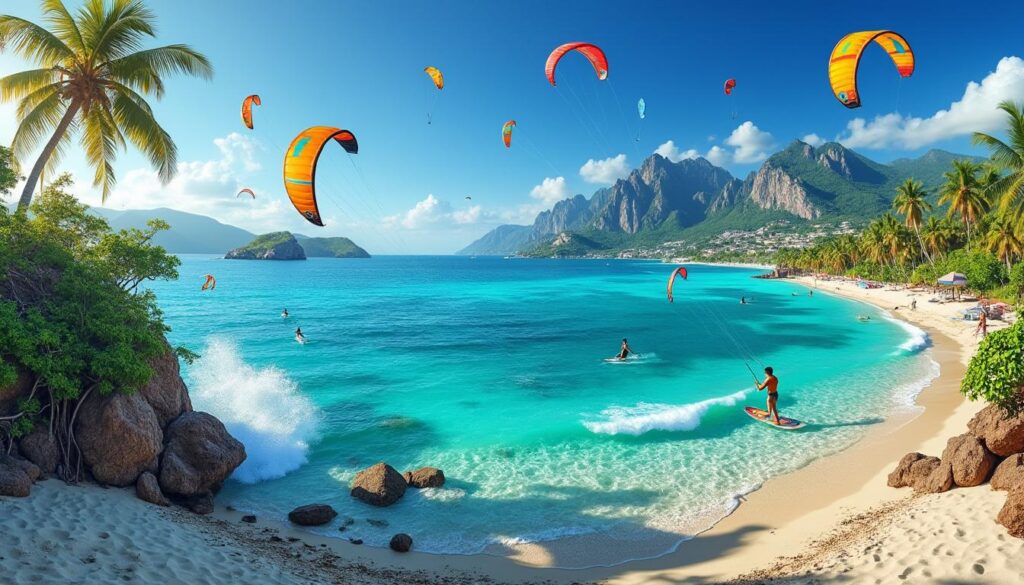
The Red Sea is not just corals and diving. It’s steady wind, turquoise lagoons and flat islands where the breeze pulls strong from early morning. Those looking for a kitesurf trip in Egypt discover spots like Hurghada, Sharm El Sheikh, El Gouna and Soma Bay, where the thermal wind comes in on time and the water stays warm almost all year. Here kitesurfing isn’t a sideshow to the holidays: it’s the center of the day, with boats that take you to the islands, schools active from dawn to dusk and an increasingly present international community.
For those arriving from Italy, used to the Salento wind, kitesurfing on the Adriatic or Ionian, Egypt is the perfect “big gym” to cover kilometers of board under your feet in a few days. Average winds of 18–25 knots, flat water and shallow bottoms make kitesurfing for beginners much easier, especially if you combine a good kitesurf school with forgiving conditions. At the same time, those already comfortable with the water start can take advantage of long downwinds, boat kite safaris and butter-flat lagoons to improve maneuvers, jumps and speed control.
In short
- Red Sea: reliable wind, warm water and shallow lagoons ideal for learning kitesurf and progressing quickly.
- Hurghada: a perfect base for kite safaris to islands like Tawila and Geisum, with a long season from March to November.
- Sharm and Dahab: a windy Sinai almost all year, spots that vary from freestyle to relaxed freeride.
- Kite cruise: a week on a boat among the most remote Red Sea spots, with coaches and instructors on board.
- Italy–Egypt connection: direct flights, affordable packages and many schools used to European riders.
Kitesurf Egypt Red Sea: why this stretch of coast drives riders crazy
Those looking for the best kitesurf spot in Italy often talk about kitesurf Salento, kitesurf spots in Puglia or Sardinia. Then they arrive in Egypt, hear the wind starting to push as early as 9 a.m. and immediately understand why the Red Sea has become one of the top destinations for those who really want to log sessions. The sea here is the warmest on the planet, with an annual average around 22°C, and the air stays between 20 and 35 degrees: translated, many days in lycra and boardshorts, and only in mid-winter do you need a thin full wetsuit.
The secret of the Red Sea lies in a combination of factors: thermal and katabatic winds that channel along the coast, sandy bottoms that create immense shallow lagoons and a number of different spots within a few hours’ travel. For those coming from a recently completed kitesurf course in Italy, it’s the perfect playground: you can go from pool-style flat water, excellent for perfecting bar control, to stretches with chop and long waves ideal to start freer runs.
More experienced riders choose Egypt not only for wind consistency but for the trip format. Here boat kite safaris are a true institution: a week on board, 15–20 kiters, experienced skippers who know the sandbanks meter by meter, and a sequence of deserted spots where the only sound is the whistle of the kite. The concept is simple: less time in the car, more time with the board on your feet. In every bay you can expect crystal-clear water up to waist height, wind around 20–25 knots and support boats ready to pick you up if the session takes you too far.
Another aspect that makes kitesurfing in Egypt so appealing for those coming from the Mediterranean is the ability to plan holidays with a much lower weather risk margin. In places like Soma Bay or Ras Sudr you easily talk about over 250–300 windy days a year. That means organizing a week between March and November almost always guarantees 5–6 days on the water. If you think about the wind uncertainties in many areas of Europe, you understand why many Italian riders start planning a fixed “Egypt block” each season.
To get a broader idea of how Egypt fits into the global destination picture, just compare it with ocean spots like Jericoacoara in Brazil or the large African lagoons. The Red Sea offers the same wind reliability, but with a shorter trip, lower costs and a tourist infrastructure suitable even for those traveling with family or non-kiter friends. The result is a rare balance: you can have intense riding days and, in a few hours, switch to cultural visits among temples and historic sites.
For those coming out of a winter of kitesurfing on the Ionian or sporadic sessions in Taranto, taking advantage of the Red Sea means accelerating your progression. Every run counts, every decisive beat of the wind turns into confidence. When you return to Italy, the Salento wind or the thermals of Garda will seem almost easier to read. And that is perhaps the true strength of this coast: it’s not just a holiday destination, it’s continuous training disguised as a trip.
Climate, wind and seasons of the Red Sea to plan your sessions
Organizing a kitesurf holiday trip to Egypt without looking at the calendar is almost possible, but knowing the best periods helps you choose the right spot. In general, from March to November the wind is stronger and more consistent across almost the entire coast, with averages around 18–25 knots and stronger peaks in September. Winter is not off, you just change the sails in play: more days with 12–14m kites, some extra sessions with 9m when perturbations come in.
The water temperature stays surprisingly high: in summer it can exceed 28–29°C, while in winter it drops toward 20°C, never truly cold. This allows long sessions without the classic fatigue from icy water, and makes kitesurfing for beginners much less traumatic: falling into the warm water of the Red Sea is very different from the first impact in the Adriatic in March.
The regularity of the wind also helps those who want to try more intense formats, like a multi-day full-immersion kitesurf course. Being able to trust forecasts means planning focused technical modules: two days dedicated to body dragging and kite control, two to the water start and first runs, the last ones to beating and transitions. All with the near-certainty of not being stuck onshore waiting for a breeze that never comes up.
In practice, the Red Sea gives one thing that many European spots lack: predictability. And for any rider, from beginner to advanced, knowing that the wind will arrive is the foundation to build progression and confidence with every session.
Hurghada kitesurf: lagoons, islands and kite safaris in the heart of the Red Sea
Hurghada is the major hub for kitesurfing in Egypt. The international airport receives flights from across Europe, and in less than an hour from landing you can have your feet in the sand assembling your kite. The city itself is a mix of resorts, shops and tourist venues, but Hurghada’s real treasure is just offshore: a constellation of islands and sandbanks that, with the right wind, become postcard-perfect spots.
The main wind season runs from March to November, with averages around 20 knots and days that easily climb to 30–35 knots, especially in late summer. In winter the wind is present but milder: often 14–16 knots, perfect for large kites, foil or relaxed twin-tip sessions. For someone who has just finished a kitesurf course in Italy, Hurghada is the natural “second stop”: the same level of safety, but with much more wind and warmer water.
One of the most popular formats here is the boat kite safari. Imagine the typical reference character, Luca, an intermediate rider from kitesurf Lecce: used to choosing between the Ionian and Adriatic depending on the Salento wind. He leaves from Bari, lands in Hurghada and, after a night in town, boards a boat with 15 other kiters. For a week, his “hotel” is a large yacht that every morning moves to a different island: Tawila, Geisum, Abu Minqar and other sandbanks where the water is waist-deep for hundreds of meters.
The routine is simple: a light breakfast, the first run in the morning with cooler wind, a lunch break on board, a second session in the afternoon when the thermal picks up. On land there are no beach clubs, only sand and water. The kite center is the boat itself: compressors, pumps, racks for kites and boards, instructors or coaches watching maneuvers and giving feedback between sessions. For those who really want to progress, this type of trip is worth months of sporadic outings in Italy.
Hurghada also offers “base” spots directly connected to resorts, with wide lagoons and centers overlooking the water. They are perfect if you travel with non-kiting companions and want to combine pool time, snorkeling and a few hours on the water each day. The schools are used to working with European kiters, so booking, rental and courses are easily organized online, often in all-inclusive packages.
For those undecided between the Red Sea and other destinations, a good comparison is with Eastern Mediterranean spots, like those described in the focus on kitesurf Greece and islands. The Greek archipelagos win for village charm and cultural proximity, but Hurghada remains unbeatable for the number of windy days and the possibility of affordable kite cruises. And when you return to Italy, your confidence on the board will have jumped up a full notch.
Typical conditions and logistics for a kite trip to Hurghada
Practically speaking, Hurghada is a convenient choice. Transfers from the airport to hotels often take less than 30 minutes, and many schools organize direct pick-ups. Kite packages often include accommodation, meals, transfers to spots and, in the case of safaris, all the permits to navigate among protected islands.
Water conditions change depending on distance from the shore. Near the resorts you’ll find lagoons with sandy bottoms and calm water, excellent for learning and for those consolidating their upwind riding. Around the islands, however, you can find stretches of butter-flat water behind sandbanks, where the wind flows clean and the surface is so smooth it looks like glass. Perfect for working on jumps, backrolls or first rotations, without the disturbance of chop.
Safety is well handled: rescue RIBs, radios between instructors, daily weather briefings. Of course, as everywhere, personal responsibility remains fundamental. Knowing how to read the wind, recognizing side-shore from side-off and choosing kite and board sensibly is what separates the rider who has fun from the one who complicates things for themselves and others.
The beauty of Hurghada, ultimately, is that it offers many combinations: a soft holiday with a couple of hours of kite per day, a full-immersion boat experience, or a mix of both. It’s up to you to decide how intensely you want to live the Red Sea.
Sharm El Sheikh kitesurf: Nabq Bay, Dahab and the winds of the Sinai
Moving north to the Sinai, kitesurfing in Egypt takes on a slightly different face. Sharm El Sheikh is synonymous with resorts, nightlife and diving, but its Nabq Bay is also one of the most reliable spots for those who want to combine wind and a bit of evening life. Here you find wide lagoons, relatively flat water and a wind that comes in regularly for much of the year, with frequency peaks between spring and autumn.
The kite scene is organized around resorts that host schools directly on the beach. A typical example: four- or five-star hotels with direct access to the spot, a center with equipment storage, shaded areas to rig the kite and a rescue RIB. For those coming from more “rustic” realities like some kitesurf spots in Puglia, it’s almost disorienting to have so many services at hand. But the advantage is clear: more time on the water, less time worrying about logistics and transfers.
From Sharm you can easily reach Dahab, a Bedouin town with a more alternative flavor. In about an hour’s drive you find yourself in a totally different place: a seaside promenade, simple restaurants, more spartan but authentic accommodations. For kitesurfing, Dahab offers several spots, from the inland lagoon with flat water to deeper areas in the Gulf of Aqaba. The wind here is famous for its consistency: more than six days out of seven between March and November, and still present during the rest of the year.
The Blue Lagoon, just north of Dahab, is the place that makes the eyes of those who love a “complete break” kitesurf holiday shine. No big hotels, just simple camps, beach huts, limited electricity. In return you get a wide, shallow lagoon, crystal-clear water and wind channeled along the gulf. Dahab’s schools organize transfers by sea or land, also providing equipment for those who do not want to travel with board and kite.
For those coming from Italy, used to routes to Greece, Corsica or islands like those described in kitesurf Paros and the Mediterranean, the Sinai offers something different. The coastline is wilder, mountains drop steeply into the sea, and the feeling is of being in a wind corridor that doesn’t stop. It’s an excellent choice if you seek technical progression, but also if you simply want to log kilometers in a unique landscape, halfway between desert and bright water.
Practical differences between Sharm and Hurghada for the Italian kiter
Sharm and Hurghada share the same great resource, the Red Sea, but are two different worlds in atmosphere. Sharm is more compact, with many resorts close to each other and a livelier evening offer. This appeals to those who want to alternate intense sessions with nights out in bars and clubs. Nabq Bay is the main spot: here you can find schools offering complete kitesurf course packages, often aimed at those who have never touched a bar.
Hurghada, by contrast, is the ideal starting point for kite safaris. The city is more spread out, less “closed” in resorts, with a mix of modern neighborhoods and more local areas. For many riders, the choice comes down to a simple question: do you prefer a fixed base with a spot in front of the hotel, or do you want to try the boat format, moving from island to island? Both options work; it only depends on how much you want the trip to revolve 100% around the kite.
In terms of wind, the Sinai benefits from the “funnel” effect of the Gulf of Aqaba, with a very regular flow. The Hurghada and Soma Bay area, instead, takes advantage of the Red Sea’s large extension and the thermals generated between desert and sea. In practice, the mid-level rider finds what they need everywhere: reliable wind, lagoons and schools ready to support every phase of progression.
Soma Bay, Safaga, Ras Sudr and Wadi Lahami: the other jewels of kitesurfing on the Red Sea
When talking about kitesurfing in Egypt, the conversation often stops at Hurghada and Sharm. But along the coast a series of spots worth attention are hidden, especially if you seek a mix of technical progression, tranquility and nature. Soma Bay, for example, is a peninsula that points straight into the Red Sea, exposed to wind on three sides. Here you easily talk about over 300 windy days a year, with an inner bay of warm, shallow water that seems designed for beginner kitesurfing.
The area is less crowded compared to other tourist centers: few resorts, all fairly spaced, and well-organized kite centers integrated into the structures. Some provide daily transfers to Tobia Island, a small islet offshore with butter-flat water and clean wind, perfect for those wanting to work on hooked and unhooked jumps without fighting the chop. For a rider coming from spots like Taranto or other areas of kitesurf Italy, suddenly finding yourself in a space this wide and regular is almost disorienting.
Further south is Safaga, a port with a millenary past now known for diving and watersports. Its wide beaches and shallow lagoons offer an accessible environment for novices, but also spaces for those who love long runs, with wind that grows during the day. Travelers with family appreciate the combination of calm sea at the shore and gently sloping bottoms, allowing non-kiting companions to enjoy swimming while others are out on the water with the kite.
Going north along the Gulf of Suez, Ras Sudr is the reference point for many Egyptian riders coming from Cairo. Here the coast develops for tens of kilometers, with a sequence of flat lagoons, light sand and minimal facilities directly on the spot. Average wind ranges between 16 and 25 knots, with stronger peaks in September. The atmosphere is relaxed, less built-up: beach camps, kite centers that at night become small beach bars, no large shopping centers.
Last on the list, but not in importance, is Wadi Lahami, in the Deep South. It’s the kind of place chosen by those who want to truly switch off: ecolodges between sea and mountains, direct access to a sandy lagoon, zero artificial noise. The wind arrives channeled along the coast, and you kite practically year-round. In winter a thin wetsuit is enough, otherwise it’s swimwear and lycra. At the end of the day, the ritual is always the same: pack the kite, sit at the center’s beach bar and watch the sun set behind the desert.
Compared to classic kitesurf spots in Italy, these places offer a different dimension: fewer cars, fewer roads, more horizon. They are perfect for those coming from intensive learn-to-kite paths who want to consolidate the basics away from the chaos. No distractions: just you, the wind and the sea that asks only to be read and respected.
Comparative table of the main Red Sea spots
To help you choose where to set your next kite holiday between the Red Sea, Sharm and Hurghada, here is a concise overview of the key characteristics of the main spots.
| Spot | Type of water | Recommended level | Top months | Highlights |
|---|---|---|---|---|
| Hurghada + islands | Flat lagoons, reefs, butter flat behind the banks | From beginner to advanced | April–October | Kite safaris by boat, wide choice of schools and resorts |
| Sharm (Nabq Bay) | Lagoon, slight chop at high tide | Beginner / intermediate | May–September | Evening life, resorts directly on the spot |
| Dahab / Blue Lagoon | Flat and deep water, shallow lagoons | Intermediate / advanced | March–November | Very regular wind, bohemian atmosphere |
| Soma Bay | Warm, shallow lagoon | Beginner / intermediate | March–October | Over 300 windy days, quiet spot |
| Ras Sudr | Flat lagoons, sand | From beginner to freestyle | April–November | Chilled atmosphere, low crowd, budget friendly |
| Wadi Lahami | Sandy lagoon, outer reef | Intermediate | March–June / September–November | Untouched nature, zero stress, ecolodge format |
This overview does not replace local riders’ accounts, but gives you an initial compass to understand where your urge for wind best fits your level and travel style.
How to connect kitesurf Italy and the Red Sea: progression, schools and safety
For many Italian riders, Egypt has become the natural extension of the season. Spring and autumn in the waters of kitesurf Salento, with kitesurf spots in Puglia alternating between the Adriatic and Ionian depending on the wind. Then, when the window closes or when a step up is needed, you head to the Red Sea. The common thread between these two worlds is progression: using every session, whether between Lecce and Taranto or between Hurghada and Sharm, to learn to read the wind better and control your body on the board.
Those who leave Italy without a solid base would do well to first enroll in a local kitesurf school and complete at least a beginner module. Understanding how to handle the kite on land, perform safety body drags and learn the water start in known conditions makes the arrival in Egypt much smoother. There, with more consistent wind and flat water, you work on beating, transitions and first maneuvers without having to fight inconsistent conditions.
Another option is to plan a course directly in the Red Sea, choosing centers with certified instructors and support boats. In that case, it’s essential to thoroughly check the structure: number of instructors, student/teacher ratio, presence of rescue means, language spoken. The best schools don’t promise “you’ll become pro in three days,” but speak clearly about steps, limits and realistic objectives.
On the safety front, the Red Sea is now monitored by many international tour operators. The sea areas dedicated to kitesurfing like Hurghada, Sharm, Soma Bay and Dahab are considered well-established tourist zones, but it’s always fundamental to check official guidance before leaving. The kite community has learned to act sensibly: choose reliable facilities, avoid discouraged areas and respect local rules.
From the kite culture point of view, connecting sessions in Egypt with those in the Mediterranean creates a unique baggage. Each spot, from kitesurf Lecce to Soma Bay’s lagoon, teaches something different: in Paros you work on control between chop and gusts, in Dahab you refine the feeling with the powerful side-shore, at home in Salento you learn to dance between grecale and scirocco. But the mantra remains the same everywhere: the wind is not negotiated, it is understood. And the Red Sea is one of the best places to learn to do that consistently.
Essential checklist for a kite trip to Egypt
For those considering a kitesurf holiday package between Hurghada and Sharm, having a mental list of what really matters helps avoid surprises and focus on what counts: being on the water. A thoughtful checklist reduces unforeseen issues and lets you make the most of every windy day.
- Wind and season: check statistics and forecasts (Windguru, Windy) for your period.
- Level: choose spot and format (hotel vs boat) in line with your real experience.
- Kitesurf school: verify certifications, number of instructors and safety equipment.
- Equipment: bring at least two kite sizes or check rental quality.
- Insurance: a policy covering water sports and third-party liability.
- Logistics: transfers included, island permits, airline sports baggage policy.
- Personal condition: basic fitness, swimming ability, respect for your own limits.
Once these points are sorted, the rest flows. You’ll find yourself on the shoreline, looking at that mix of wind, sand and turquoise water, hooking the leash and realizing the trip was worth every minute of planning.
What is the best period to kitesurf in Egypt between the Red Sea, Sharm and Hurghada?
The most reliable window runs from March to November, with average winds of about 18–25 knots across almost all Red Sea areas. Hurghada, Soma Bay and Ras Sudr perform very well in spring and autumn, while Sharm and Dahab take advantage of consistent winds from March until the end of October. In winter you can still kite, but with larger kites and a few fewer strong wind days.
Hurghada or Sharm: which to choose for a first kite trip to Egypt?
If you want to focus almost exclusively on kite and maybe try a boat kite safari to islands like Tawila and Geisum, Hurghada is the most logical choice. If you prefer structured resorts, evening life and spots directly in front of the hotel, Sharm El Sheikh (Nabq Bay) is more suitable. In both cases you’ll find schools for beginners, equipment rental and sea assistance.
Is the Red Sea suitable for absolute kitesurfing beginners?
Yes, many Red Sea lagoons are ideal for those starting from zero. Sandy bottoms, waist-deep water for dozens of meters and regular wind greatly reduce the typical difficulties of the first lessons. The important thing is to rely on a kitesurf school with certified instructors, use radios or appropriate support and not overestimate your limits in the first outings.
Should I bring my own equipment or is everything available for rent?
Most centers in Hurghada, Sharm, Soma Bay and Dahab offer full rental of kites, boards and harnesses. Bringing your own gear makes sense if you already have a quiver you know well and want to save on rental, but consider the airline sports baggage costs. Beginners often prefer to use school equipment, which is updated and sized according to the day’s wind.
How does the experience in Egypt connect with progression at my spots in Italy?
Sessions in Egypt allow you to accumulate many more runs in a few days compared to what often happens in Italy. This accelerates confidence with board and kite. Returning to spots like kitesurf Salento, the Adriatic or Ionian, you’ll feel more secure in starts, beating and transitions. The ideal approach is to alternate intensive practice periods on the Red Sea with regular outings at your home spots, so every kilometer done in Egypt turns into consolidated skills at home.