The wind comes in through the window, your head is already in the water, but one essential detail is missing: the right equipment. Anyone looking for a windsurf shop today doesn’t just want to buy a board or a kite; they want to know where to find reliable gear, how to choose between new and used, which brands to follow and how not to blow the budget on the first purchase. Between flash deals, aggressive promotions and “bargains” that aren’t really bargains, finding your way among windsurf and kitesurf shops in Italy can feel more complicated than a water start in chop and gusts. This content is designed to help you choose the shop, online or physical, that truly supports you in your sessions.
In the world of kitesurf in Italy and windsurf, the difference isn’t made only by the board under your feet, but also by who sold it to you and how they advised you. A good surf shop doesn’t push the most expensive product, but the one best suited to your level, your spot, your weight and the kind of wind you most often find, whether it’s Salento wind, Garda thermals or the maestrale in Sardinia. In these pages you’ll find concrete examples of price ranges, tricks to take advantage of the used market (including high trade-in valuations for gear you no longer use), advice on choosing between a kitesurf school with an internal shop and large specialized e‑commerce stores. The goal is clear: to get you out of the shop — real or digital — wanting to get in the water, not doubting you made the wrong purchase.
In short
- Where to buy: an overview of the best channels to purchase windsurf and kitesurf equipment in Italy, from local shops to large e‑commerce retailers.
- New, used or mixed: how to combine offers, discounts and high trade‑in valuations to build a complete quiver without breaking the bank.
- Windsurf shop & kitesurf shop: what a serious shop should offer in terms of advice, after‑sales service and safety, especially for kitesurf for beginners.
- Connection with your spots: choose the shop also based on where you ride – kitesurf Salento, Garda, Sardinia, Sicily, Ionian or Adriatic.
- Practical checklist: mistakes to avoid, questions to ask the shopkeeper, signs to understand if you’re in the right place.
Windsurf shop and kite shop in Italy: how to choose the right shop
Before clicking “buy now” on a sail or a kite, it’s worth asking a simple question: does this shop understand the sea and the wind the way you experience them? In Italy there are historic surf shops, born right on the beach, and large, well‑stocked e‑commerce stores that ship across Europe 24/7. The difference isn’t only in the warehouse, but in the ability to listen to you, to understand if you’re a beginner, if you’re aiming for the best kitesurf spot in Italy for your holiday, or if you’re only looking for targeted upgrades for your quiver.
Large shops specializing in windsurf, wingsurf, wingfoil, kitesurf and SUP offer thousands of items: freeride boards, wave, freestyle, foil, sails of every size, harnesses, wetsuits, accessories. Some work with iconic brands like Duotone, RRD, Fanatic, Ion and guarantee fast shipping across Europe. Others are more focused on the national market, with a “trusted shop” style translated online, maybe with a WhatsApp number always active to ask for advice or report that you’ve seen a better price elsewhere, so you can try a quick negotiation.
Alongside these giants, a network of local surf shops persists across the Adriatic, Ionian, lakes and islands. Often the shop is integrated with the local kitesurf school or windsurf school: they see you in the water, assess your level and then advise you on the right board, sail or kite with real knowledge. If you ride in areas like kitesurf Lecce, kitesurf Taranto, northern Sardinia or southern Sicily, you’ll likely find at least one surf shop near your usual spot, connected to the instructors and the locals.
To get a broader idea of the specialized shop scene and the role they play in Italian kite culture, you can take a look at this deep dive on surf shops in Italy, focusing on what to look for in terms of competence and reliability. It’s a good starting point to understand whether the shop you have in mind is on the riders’ side or just about the stock.
Another important indicator is clarity of information: detailed product pages, explanations of differences between lines (freeride, wave, slalom, beginner), size charts for wetsuits and harnesses, guidelines on choosing volume and liters for windsurf and SUP boards. When you only find vague descriptions and copy‑pasted manufacturer text, that’s a sign: the priority isn’t you, it’s making sales volume.
In the era when kitesurf holidays are booming across Salento, Garda and Sardinia, the right shop is the one that helps you avoid gross mistakes: a sail too large for your weight, a board unsuitable for the chop at your home spot, a strapless kite bought “because it’s trendy” but unmanageable for your level. A good windsurf shop doesn’t sell dreams, but gear consistent with the reality of the water and the wind.
Signs you’re in a reliable windsurf shop
How do you tell if you’re dealing with a true riders’ shop or just an outlet disguised as a surf shop? A first sign is their attitude: they ask questions about weight, height, level, usual spot, and goals for the season. If you say “I need a 10 m² kite,” they don’t just answer with the price, but ask “where do you usually ride, what wind do you find, what board do you use?”.
Another strong parameter is how they handle used gear. Many serious shops today offer high trade‑in values for your used gear when you buy new, especially for kites, sails and recent boards. This helps lower the entry cost for someone advancing levels and needing to change their set completely, or for someone moving from windsurf to kite. If the shop only displays full prices and never asks if you have gear to trade in, it might not be as “rider friendly” as it claims.
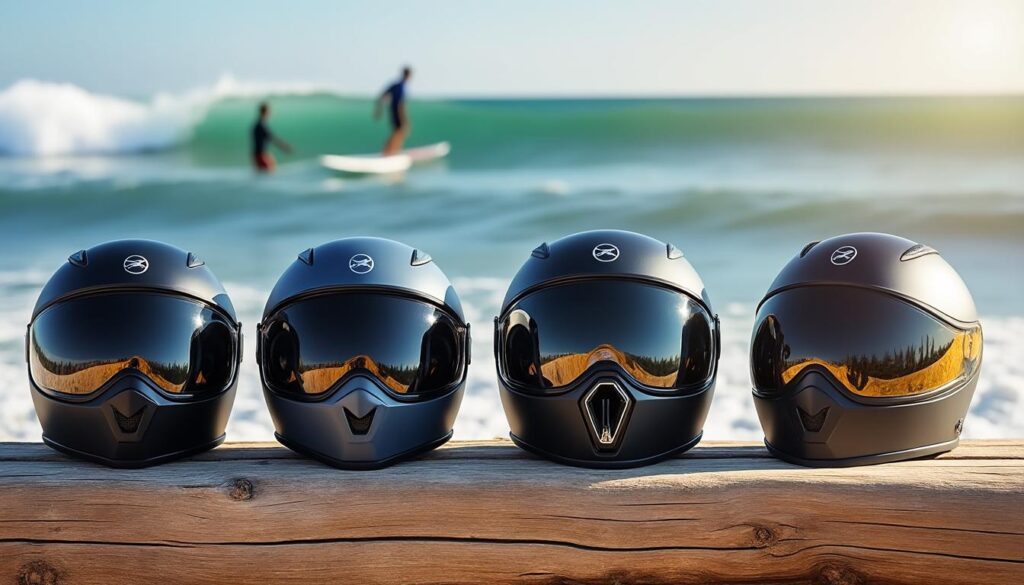
Finally, look at how they talk about safety. For kitesurf for beginners, a serious shop insists on helmets, impact vests, updated quick releases, tidy lines and bars. If someone tells you “a helmet isn’t necessary, it’s just extra weight,” walk out immediately. Freedom on the board always comes from good protection.
Buying windsurf equipment: new, used and realistic price ranges
Those who are starting or updating their windsurf quiver often face a wall of numbers. You see freeride boards at hundreds of euros, sails with official price lists exceeding a month’s salary, then suddenly discounts of 40–60% on two‑seasons‑old gear. The trick is to understand where it makes sense to save and where it’s worth investing.
In many windsurf shops, especially online, it’s normal to find items dropped from €379 to €219, or sails reduced from €310 to €199. Other times a high‑end board can drop from €449 to €250, or you find accessories and complete rigs in the €70–95 range for those who need a basic but decent setup. There are also extreme deals, with equipment falling from €199 to €79, often end‑of‑line or particular sizes. Conversely, the newest materials remain at “full” ranges, like €599–669, €805–921, €549–739, depending on sizes and constructions.
To help you orient yourself, here’s a simplified guide to indicative ranges commonly found in major Italian surf shops in 2026:
| Type of windsurf equipment | Base price range | Discounted/used price range | Recommended for |
|---|---|---|---|
| Entry‑level / school freeride board | 432–652 € | 250–450 € | Beginners taking their first tacks |
| Freeride / all‑round sail | 310–449 € | 199–250 € | Beginner–intermediate riders wanting a single versatile sail |
| Wave / freestyle‑wave board | 742–969 € | 550–750 € | Intermediate and advanced riders frequenting wave spots |
| Complete rig set (mast, boom, sail) | 805–1081 € | 600–850 € | Those moving from school gear to a personal setup |
| Accessories (harness, poncho, small gear) | 70–319 € | 79–200 € | All levels, to complete the kit |
These ranges aren’t fixed price lists, but give you an order of magnitude. If a shop offers a school board well above €700 without a real technical reason, it’s fair to ask questions. Likewise, if you see a new wave sail pushed to €150, it might really be end‑of‑line stock from too many seasons ago, with heavier materials and outdated design.
Another interesting aspect of advanced windsurf shops is handling tiered price ranges: for top‑of‑the‑line boards it’s not uncommon to find ranges like €931–1081, €809–969 or €882–1111. You might see the same product line in different constructions (wood, carbon, limited edition) with marked price jumps. Here the key question arises: do you really need the lightest, stiffest version, or is a standard construction — more resistant to impacts and less delicate — sufficient?
Finally, don’t underestimate guaranteed used gear from physical shops. They often offer boards and sails with thorough checks, professional repairs and sometimes a minimum warranty of a few months. That’s very different from blind purchases on a random marketplace where the sail might arrive with warped battens and monofilm cooked by the sun. In windsurfing, a few scratches are forgivable; a frayed boom or a cracked mast, however, are a one‑way ticket to failure mid‑tack.
Smart accessories: ponchos, harnesses and small details that change the session
A serious windsurf shop’s cart doesn’t just include boards and sails. There are accessories that seem secondary but actually can save your day. One example above all is the poncho. Born as a simple changing robe to shield from the wind, today it’s a must like wetsuits and harnesses. The best shops offer ponchos from reliable brands, with very soft, warm fabrics that feel pleasant against the skin.
Why is it so important? Because between sessions you don’t want to be shivering in your swimsuit behind the car, maybe in a full December maestrale or in an unsettled spring thermal. The poncho becomes a mobile changing room, protects you from the wind and lets you change anywhere without feeling uncomfortable. And, let’s be honest, some models are genuinely stylish. Here style isn’t just aesthetics: feeling good before and after the session is part of the energy with which you get on the water.
Kitesurf equipment: where to buy safely between courses, schools and online shops
While in windsurf the risk of a wrong purchase is “only” working harder on the water, in kite the issue directly affects safety. That’s why anyone looking for a kite shop kitesurf must be even more careful. Kitesurf gear shouldn’t be chosen solely for looks, price or quick reviews: you need an updated bar and safety system, kites with progressive depower, new lines, a harness suited to your body and the kind of riding you want to develop.
An intelligent approach is to link the purchase of gear to a kitesurf course. Many schools in Italy have a small in‑house shop or collaborate with a reference online store. That way, after practicing with school equipment, you can buy a similar kite (maybe a different size) already knowing how it responds to wind, how it relaunches from the water and what flight window it prefers. For someone about to learn kitesurfing, it’s a huge shortcut compared to buying blindly.
If you want to delve into the school side and understand which realities in Italy truly offer a mix of teaching and gear support, you can check this overview of kitesurf schools in Italy. It’s useful to know where instructors speak your language (also in technical terms) and can advise a suitable quiver, whether you ride kitesurf Adriatic, kitesurf Ionian or on the northern lakes.
Another typical aspect of modern kite shops is the “found a better price? Contact us on WhatsApp” policy. It’s not just marketing: it often means the shop is willing to shave their margin to keep you as a long‑term customer, knowing you’ll come back for spare lines, cleats, impact vests, foils, surfino boards. In practice, they choose to invest in the relationship with you rather than the single sale.
When choosing between new and used, in kitesurf you must be more cautious than in windsurf. A very recent kite, dropped from €775 to €379, can be a bargain if it comes from demo centers or riders who change quivers every season and the shop certifies its condition. But a heavily used kite, with fabric as soft as tissue paper or crude repairs on the trailing edge, becomes a dangerous variable in the air—especially if you ride in the strong wind ranges typical of spots like kitesurf Salento, Sardinia or Lake Garda.
Kitesurf for beginners: ideal combo between school and shop
When it comes to kitesurf for beginners, the winning combination is often: school + shop that collaborates with the school. In the first 10–15 hours on the water you learn to handle the kite, do body drags and start the first water starts. At this stage it’s pointless to buy gear at random. Better to listen to the instructors who see how you react to the wind, whether you’re afraid, whether you tend to hold it too much in the power zone, or if you still lack a bit of sensitivity on the bar.
Only after passing the “survival” phase and starting to ride upwind and downwind with some control does it make sense to define a personal setup. Typically, an all‑round kite between 9 and 12 m², a twin‑tip board 135–140 for an average weight, a harness suited to your pelvis and mandatory helmet/impact vest—especially in the first months. A shop linked to a good kitesurf school will offer a package coherent with this progression, often with discounts if you took the course with them.
Many riders who now fly at iconic spots like Porto Pollo or Punta Trettu say they started exactly this way: a few days of kitesurf course, then an entry‑level gear package recommended by the school, with the option to trade in after a season. Properly managed, this path saves you from shelves full of randomly bought kites resold at half price after three outings.
Surf shop and connection with spots: Salento, Garda, Sardinia and beyond
A windsurf shop or a kite shop doesn’t exist in a vacuum. It’s always connected to specific spots. And you should choose the shop also based on where you plan to spend most of your sessions. If you ride mostly on flat water, like kitesurf Lake Garda or certain stretches of the Ionian Sea, you’ll need different boards and sails than someone who lives among shore break and maestrale waves. Shops that truly know their spots tailor their assortment accordingly, and you benefit directly.
Take Garda as an example: spots like Malcesine and Navene are open‑air laboratories for equipment, with the famous Ora and the Peler that set the rules. It’s no coincidence that there are dedicated guides like those on kitesurf on Lake Garda or Malcesine. Anyone running a surf shop in that area knows exactly which sails and boards work best in their thermals, what to offer beginners and what to offer big‑air fans.
Heading south, between kitesurf Ionian and kitesurf Adriatic, the story changes again. In Salento, the double coast lets you play with different winds: tramontana on the Adriatic side with chop and waves, scirocco and filtered maestrale on the Ionian side, sometimes with almost flat water. Shops and schools in the kitesurf Lecce and kitesurf Taranto areas know that a flexible quiver is needed here: freeride boards and strapless surfinos, kites generally leaning toward wave/freeride rather than pure freestyle wakestyle.
In Sardinia, think of the culture around places like Porto Pollo or Punta Trettu, often covered in dedicated guides. Here surf shops revolve around strong winds, shallow lagoon water or more open sea and, above all, a season that isn’t limited to summer months. Riders coming from elsewhere should know what type of gear they rent or buy: boards must withstand chop and gusts, kites must have effective depower for winds that can jump from 18 to 30 knots in moments.
A guiding character: Luca and choosing his first quiver
To make things more concrete, let’s imagine Luca. He lives in Milan, did a week of kitesurf holidays in Salento and fell in love with kite. Now he wants to buy his first quiver but doesn’t know whether to turn to a large online shop, a school on Garda or a local shop in Puglia. He has a limited budget but dreams of riding across kitesurf spots in Puglia, Garda and, eventually, Sardinia.
Luca contacts a school on Garda that also sells equipment. They suggest starting with a full kitesurf course there, where conditions are regular and controlled. After about ten hours, his instructor puts him in touch with a partner kite shop: they offer him a recent used kite, reduced from €775 to €379, plus a medium‑range twin‑tip board at a discounted price, and they offer to give a high trade‑in value for the set after a season if he wants to upgrade.
At the same time, Luca subscribes to newsletters from several large windsurf and kitesurf online shops, monitors price ranges €599–669, €742–866, €852–1122 and learns to recognize when a discount is genuinely advantageous. The result? Within a year he manages to build a balanced quiver, without filling his garage with useless “junk.” The key wasn’t only price, but choosing shops linked to real spots and schools, not just virtual catalogs.
Practical checklist: how to use the windsurf shop to accelerate your progression
A windsurf shop or a kite shop isn’t just a place where you hand over your credit card. It can become a direct ally for your progression if you learn to make it work for you. That means arriving prepared, asking the right questions and using offers strategically, without being guided only by sail color or the marketing of the latest collection.
To help you, here’s a checklist designed for those who want a more mature relationship with their trusted shop:
- Clarify your real level: absolute beginner, intermediate who can beat upwind, advanced who jumps. The more honest you are, the more accurate the advice will be.
- Define 2–3 main spots where you ride: Salento, Garda, Sardinia, Sicily, lake or open sea. Each spot “calls” for a certain type of gear.
- Set a maximum budget for the season, including accessories like a poncho, harness, helmet and impact vest.
- Always ask if there’s guaranteed used gear or the possibility to get a high trade‑in value for your used equipment to move to more recent gear.
- Check the after‑sales assistance policy: turnaround times for repairs, availability of spare parts, handling of hidden defects.
- Ask for a consultation on the complete quiver, not just a single piece. A perfect board with the wrong sail won’t make you progress.
If you want to go deeper into the technical language used in shops and on the beaches, this glossary on kitesurfing in Italian can be useful, where words like depower, water start, foil, pop and downwind stop being strange sounds and become tools to communicate better with the person advising your next board.
Used this way, the shop stops being just a “place where you spend money” and becomes part of your crew. It follows you from the first gusts to your first jumps, helps correct gear mistakes that slow progression and, above all, accompanies you as you move from the idea of learning to surf the wind to the reality of regular sessions, safely and with gear that really feels like yours.
Is it better to buy windsurf and kitesurf equipment new or used?
It depends on your level and the type of equipment. For beginners, the ideal solution is often a combination: a board or kite that’s recent but not the latest season (possibly discounted), paired with used accessories guaranteed by the shop. Used gear makes sense if it comes from a shop that really checks the condition of boards, sails and kites; avoid gear that is too old or visibly stressed, especially kites, where safety comes before savings.
How much should I spend on a first complete kitesurf set for beginners?
For a basic but safe setup (an all‑round kite, a twin‑tip board, harness, helmet, impact vest and pump) it’s realistic to consider a range between €1,200 and €2,000, combining new and recent used gear. You can lower the budget by taking advantage of high trade‑in valuations for your future used gear and buying equipment from 1–2 seasons ago, still modern but already discounted compared to the original price.
Are large e‑commerce stores more convenient than small local surf shops?
Large e‑commerce stores often offer more choice and aggressive discounts, while local surf shops give you personalized advice and direct knowledge of the spots. The best solution is often hybrid: use large shops to compare prices and models, but rely on shops connected to the schools and spots you frequent for the final choice, especially if you’re a beginner.
Can I start kitesurfing by buying all the gear before the course?
It’s not recommended. First take a kitesurf course with a recognized school, try different kites and boards and figure out what style of riding you like. Only after that does it make sense to invest in your personal quiver, ideally with the support of the school or a kite shop that knows your level. Buying everything before the course often leads to choosing the wrong sizes and models.
Which accessories should I never forget when buying windsurf or kitesurf equipment?
Besides the board, sail or kite, the essentials are: a harness in the right size, a wetsuit suited to the water temperature, a helmet, an impact vest (especially for kite), a leash where necessary, a poncho for changing sheltered from the wind and a basic repair kit. These details improve comfort, safety and the longevity of your sessions much more than they might seem at first glance.