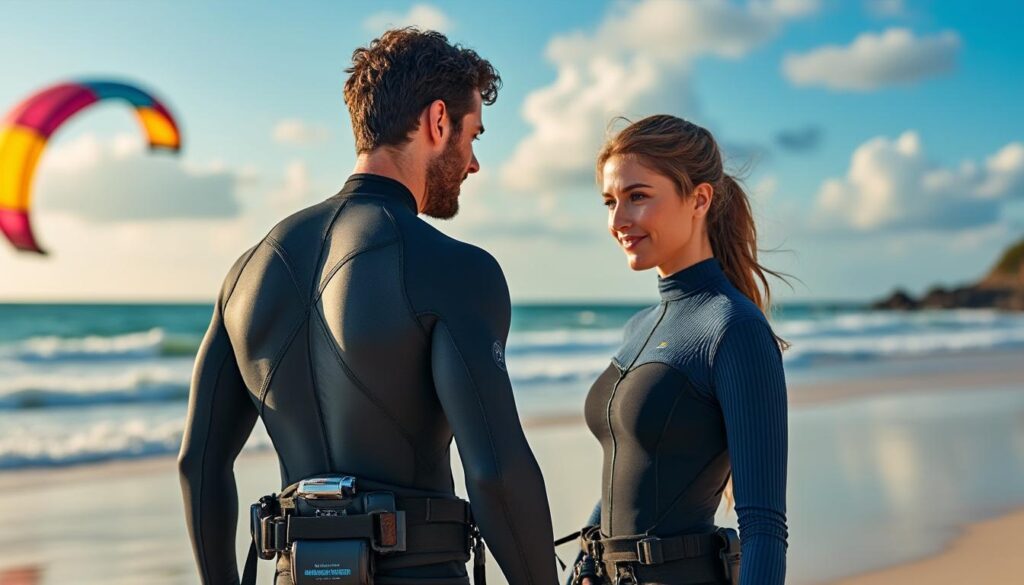
Foiling in kitesurfing is that moment when the water stops making noise and everything becomes silent. The board lifts, glides on a fin with a wing at the bottom and the sea of Salento, the Adriatic or the Ionian seems to turn into an endless track. It’s not just technique: it’s understanding the wind, choosing the right equipment, respecting the sea and learning to dose every centimeter of the bar. Whether you come from twin‑tip, from surf, or are looking for a new way to experience kitesurfing in Italy, foil is today the key to multiply your sessions, especially with light wind and almost flat water.
To get to stable flight on a hydrofoil you need some clear ingredients: a good base of kite control, a set‑up designed for beginner kitesurfers approaching foil, the ability to read wind directions and chop, and above all patience. Foil isn’t “difficult” per se, but it doesn’t forgive haste. In the next paragraphs we get concrete: how foil lift works, which board to choose to start, how to adapt your water start technique, and how kitesurf spots in Puglia – from Lecce to Taranto – can become your perfect laboratory to learn. The goal is simple: to give you an authentic guide, rider to rider, that takes you from “I’m curious” to “okay, when do I book my first foil course?”.
In short
- Foil in kitesurfing is a board with a mast and wing that generates lift and makes the board “fly” above the water, reducing drag to almost zero.
- To learn kitefoil you need a solid base of kite control, preferably after good experience with twin‑tip or surf strapless.
- Beginner kitefoil gear favors shorter masts, large front wings and voluminous, stable boards, with optional straps.
- Wind management is crucial: ideal range 10–18 knots, side or side‑on wind, avoid off or side‑off without a support boat.
- Kitesurf school and a dedicated foil course shorten learning time and limit “bad” falls. This is not a sport to improvise.
- Kitesurf Salento, with two seas Adriatic/Ionian and often light, clean wind, is one of the best contexts to train foil year‑round.
Kitefoil explained simply: how the hydrofoil works in kitesurfing
To understand kitefoil you must start from a clear idea: under the board you don’t just have a longer fin, but a true “upside‑down airplane” that flies in water instead of air. The mast connects the board to a front wing and a rear stabilizer. When you gain speed, the water flowing over the wing creates a pressure difference between above and below and generates lift. Result: the board rises, you reduce drag and start to glide almost silently.
The principle is the same as the lift that makes a kite fly: on the airfoil the flow is faster over the upper surface and slower under the lower surface, the sum of pressures creates an upward thrust. In the case of the hydrofoil, this thrust lifts your entire weight out of the water. That’s why with a foil you can move with 10–12 knots of wind where many twin‑tip riders stay watching from the beach.
Imagine a rider who launches with a 12‑knot Mistral on the Ionian, almost flat water and a 12 m² freeride kite. With a twin‑tip they struggle to plane, stalling at every small wave. With a foil, after the first meters of acceleration, the board comes out of the water, drag collapses and the apparent wind increases. More speed, more lift on the foil and more “perceived” power on the kite: a virtuous circle that gives kitefoil that infinite flying feeling.
Also at play here is the angle of incidence of the foil wing, that is how the wing meets the water flow. If you lift the nose too much and load the heel, the angle increases, lift explodes and the foil tends to make the board pitch up, with the classic “porpoising” and a forward fall. If you keep a too flat posture, lift decreases and you stay stuck to the water. The trick is to find the right point where the foil flies stably and you can focus on the kite.
Another variable is the aspect ratio of the foil wing: long, narrow wings are fast and efficient, ideal for race or long distance; shorter, wider wings are slower but very stable, perfect for beginners. The same goes for mast length: a short one (60–75 cm) forgives more, a long one (85–95 cm) allows more extreme angles and higher flight, but requires refined technique.
In kitefoil, the kite itself works slightly differently compared to twin‑tip. You often use slightly larger kites but more depowered, exploiting the apparent wind generated by your forward speed. Many prefer freeride/foil kites with good de‑power and a wide range, allowing you to go from 10 to 18 knots without changing kite, especially during typical Salento wind afternoons that rise in steps.
In practice, the foil transforms an “on the edge” outing in flat water into a full session, where you fine‑tune bar and body weight. That’s why many riders in Italy, after a few years of twin‑tip, choose it as a natural upgrade: more days on the water, less strain on the knees and a totally new feeling with the wind.
Understanding these dynamics is the basis for choosing the right equipment, a topic that goes into detail in the next section, where you’ll see how to build a foil‑friendly set without wasting money on the wrong parts.
Equipment for kitefoil: board, mast, kite and accessories not to get wrong
In foil kitesurfing the difference between a fun session and a day of frustration is often decided in front of the shop shelf. A set‑up designed for race or big air is not suitable for someone who just wants to learn to fly stably at 15 knots on a kitesurf spot in Puglia. For this reason it’s worth reasoning by components: board, foil, kite and safety.
Foil board: voluminous and friendly for water starts
To start foiling it’s essential to have a directional board with sufficient volume and good buoyancy. The easiest foil boards have a wide nose, soft rails and a volume distribution that allows you to stay balanced even stationary, while you set your feet and the kite. Ultra‑thin race boards are perfect for those who already have technique, but for a first approach they are just a fall generator.
Those coming from strapless surf often appreciate hybrid surf/foil boards: surfboard‑type shapes, with a box for the mast. They allow alternating sessions with and without foil and are very intuitive in handling direction changes. You can use them with one, two or three straps, or completely strapless when you start to feel really confident.
Foil: front wing, stabilizer and mast
For those approaching kitefoil, the ideal is an aluminum mast of 60–75 cm with a large front wing (1200–1500 cm²) and a relatively thick profile. More surface means lift at low speeds, so you take off earlier and have time to correct your posture. A generous rear stabilizer adds pitch stability (up and down) and prevents the classic continuous “porpoising”.
To have a concise overview, a summary table of typical choices for those who want to learn can help:
| Component | Recommended config for foil beginners | Main advantages |
|---|---|---|
| Mast | 60–75 cm, aluminum | Easier in falls, lower impact height, quick control |
| Front wing | 1200–1500 cm², thick profile | Takeoff at low speed, stability, forgiving of mistakes |
| Stabilizer | Medium‑large surface | Greater control in pitch, less “porpoising” |
| Board | Voluminous, wide nose, 120–140 cm | Ease of water start, buoyancy when restarting |
| Strap | 1–2 front straps optional | Help find foot position without locking it too much |
As you progress, you can move to longer masts and smaller, faster wings, perfect if you start targeting long upwind legs on the Adriatic or Formula Kite racing.
Kite for foil: you don’t need an extreme canopy
For kitefoil you don’t need particularly radical kites. A good hybrid freeride, with medium aspect ratio, effective de‑power and easy relaunch from the water is the most sensible choice. Many use single sizes (10–12 m²) with wind between 10 and 18 knots, taking advantage of the apparent wind created by the foil’s speed.
Foil kites with ram‑air cells, widely used in Formula Kite, are a top choice in terms of aerodynamic efficiency and low‑end power, but require refined handling and attention to relaunch. For most riders who want to learn foil in kitesurfing in Italy, a good inflatable SLE/hybrid kite is more than sufficient.
To deepen the world of sails, materials and differences between inflatables and foil kites, a useful read is the analysis on equipment published on Salento Kiter dedicated to windsurf and kitesurf equipment, where the different kite families are compared in a very practical way.
Essential accessories: safety and comfort
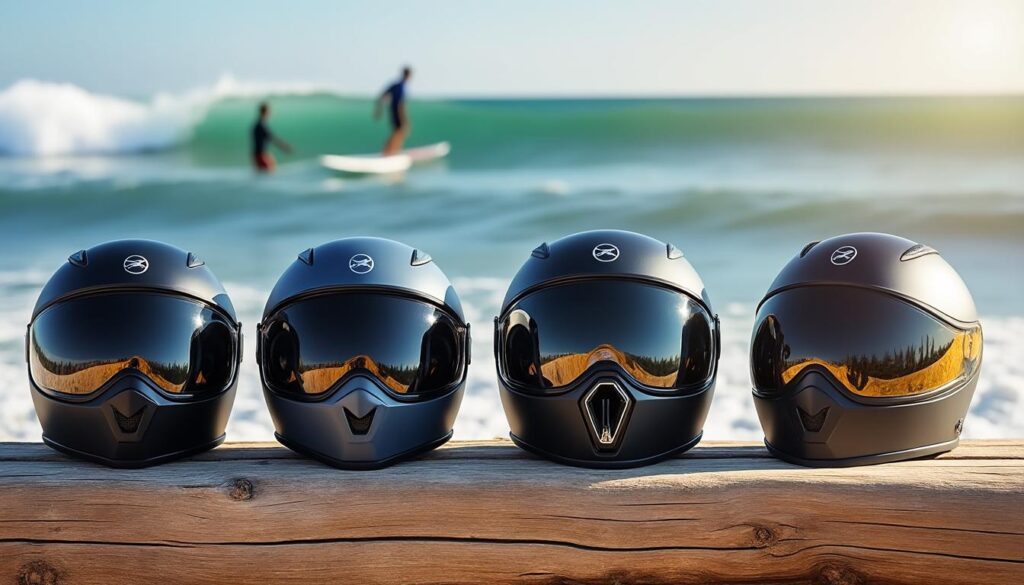
In foil, every fall is a dive near a metal or carbon mast. That’s why some accessories are non‑negotiable: helmet, impact vest or flotation vest, safety leash for the kite and a wetsuit suitable for the season. In winter months you need a full 4/3 or 5/4 suit, in milder periods an over‑knee suit or a shorty is enough, but in kitesurf Salento a minimal neoprene protection almost always makes sense, so you don’t freeze when you stay in the water correcting mistakes.
To complete the set‑up, many riders choose a bar with smooth depower and clearly distinct colors for right and left, to avoid mistakes when coming back up after a fall. Precise management of the kite’s angle of incidence, via bar and trim, is in fact the key to keep power manageable while the foil rises.
A good choice of equipment already does half the job: the rest comes with the first guided outings with a kitesurf school whose instructors really know foil, a topic of the next block.
How to learn kitefoil: pathway, exercises and mistakes to avoid
Those who approach foil from scratch often underestimate one thing: it’s not “a new type of board”, but a discipline within kitesurfing with its own logic. For this reason a specific foil kitesurf course, run in a school with real on‑field experience, is the shortest and safest route. The ideal path always starts from a question: how solid are you on twin‑tip or surf?
Starting level and minimum requirements
To enter the world of kitefoil it is essential to be able to ride safely on a twin‑tip: steady upwind sailing, kite control even in gusts, water start without thinking too much and the ability to self‑rescue in case of problems. If you are still struggling to hold direction or you find yourself 200 meters downwind every time, it’s better to postpone foil and work more on basics and safety.
In many kitesurf spots in Lecce and kitesurf spots in Taranto local schools require at least these skills before accepting a student in a foil course. It’s not snobbery: it’s pure safety, especially when you sail in areas where the seabed drops quickly from shallow to deep and with boats moving around.
Typical progression in a foil course
A good foil kitesurf course usually follows these steps:
- Briefing on land: explanation of how the foil works, dangerous zones (especially around the mast), how to fall and how to manage the board leash.
- First tow tests: some instructors use a boat to let you feel the foil’s lift without a kite, so you can focus only on balance and body position.
- Water start with kite: start with the board still in the water, foil downwind, kite at zenith or slightly in the window. Goal: stand up for short stretches with the foil still immersed.
- First controlled flight: small “takeoffs” from the water, few seconds of flight, trying not to let the board rise too much.
- Maintaining flight: once you understand the balance point, work on long flown stretches, paying attention to direction and speed control.
- First maneuvers: change tacks by planing again on the surface, then attempt the first jibes in flight.
Each step requires time, and there is no magic number of hours. Some riders with a good background in surf or snowboard immediately find a feel, others need more outings to stop “locking” on the wing.
Typical mistakes of beginners
There are mistakes everyone makes sooner or later. The most frequent:
Loading the back foot too much: it’s the twin‑tip reflex to trigger planing, but with a foil it only gives the wing too much angle and causes a violent nose‑up. The solution is to distribute weight more centrally, almost neutral, letting speed lift the board.
Bar too low: pulling the bar “hard” to feel safer only creates excess power and pulls the rider forward. Better to work with less traction, kite high, entry edge of the wing gaining speed progressively.
Looking at your feet: classic. If you look down, the body follows and balance disappears. You must get used to keeping your gaze on the horizon, reading the chop and the direction to hold, just like when you surf waves in the Ionian.
Choosing the wrong spot and conditions: gusty side‑off wind, chaotic chop and strong currents are not the perfect set for first outings. Better a steady wind 10–16 knots, side or side‑on, with the water as clean as possible.
To get a broader picture of terminology and maneuvers, it’s also useful to dive into the kitesurfing glossary in Italian, where terms like water start, foil, lift and upwind are explained with a very practical approach.
When you start flying for 50–100 meters under control, with steady pace and without violent falls, it means you’ve joined the “foil” club. The next step is to choose spots and conditions that enhance this new toy, which leads directly to the topic of the best places in Italy to make your hydrofoil sing.
Where to do kitefoil in Italy and Salento: spots, wind and ideal seasons
Foil changes the way you read a kitesurf map of Italy. Where before you only looked for 20+ knots and fun chop for jumps, you now start looking at sheltered gulfs, lagoons, seabeds that drop evenly and constant thermal winds. And here Kitesurf Salento, with two seas Adriatic/Ionian, becomes a natural laboratory.
On the Ionian side, days with regular thermals of 10–15 knots and flat water are pure gold for kitefoil. When many pack up after lunch because “the 9 no longer holds”, those with a foil take advantage of the afternoon, enter the water with an 11–12 freeride and do two hours of silent flight. On the Adriatic side, medium Mistral days and long waves instead allow you to experiment with foil‑wave, surfing water walls at insane speeds.
It’s not only a Salento matter, though. The whole of Italy offers incredible options: northern lagoons, lakes with thermal wind, sheltered bays in Sicily and Sardinia. In all these contexts, the rule is the same: steady wind, space, absence of downwind obstacles and sufficient minimum depth for your mast.
For those also looking for an urban base and wanting to alternate work and water, there are dedicated guides such as the one on spots and schools about kitesurf in the Rome area, useful for planning foil weekends without crossing half the peninsula.
Choosing the ideal spot for foil is never random: studying wind, seabed and local rules beforehand saves you nasty surprises and allows you to enjoy the foil for what it really is – a tool to lengthen sessions and discover the more refined side of the wind.
Managing wind, safety and progression: from the first meter flown to advanced riding
Foil is freedom but only if safety is under control. The fact that you can go out with little wind doesn’t mean you can let your guard down. Instead you must sharpen, even more than on twin‑tip, the ability to read the wind and its variations, especially when you’re far from shore and at high speeds.
The ideal range for kitefoil is often between 10 and 18 knots. Below 7–8 knots, even with very large wings, it becomes difficult to keep the kite in the air unless you have very efficient ram‑air foil kites. Above 20 knots, the foil becomes nervous, every bar mistake is amplified, and falls are more violent. Here the line between an evolutionary session and unnecessary risk is thin, especially for those who have just started.
The wind direction relative to the coast plays a huge role. Onshore and side‑on winds bring you toward the shore in case of trouble: if you lose the board or the kite drops and doesn’t relaunch, sooner or later you touch land. Pure side is fun but must be monitored, especially if the wind slowly shifts to side‑off. Off and side‑off should be avoided if you are not supported by boats ready to intervene; with foil, the drift offshore can be very quick.
Another characteristic of the foil is the higher average speed. This means the apparent wind you feel is often higher than the real wind. It’s the same feeling you get cycling hard on a nearly windless day but still feeling air in your face. On the water, it means that a gust that seems harmless on the beach can become an abrupt boost on foil and hard to handle if the kite is too big or poorly depowered.
As priorities, all classic kitesurf rules apply: sailboats have right of way over motorboats, choose right‑of‑way tacks, respect safety distances, kite high for those upwind and low for those downwind. But with foil it is important to add an extra mental distance, because a rider in flight can change direction much more quickly than a traditional twin‑tip.
The progression from the first flight to advanced riding goes through clear steps: stability in a straight line, speed control (knowing when to drop the board to slow down), then start working on planing turns and only afterwards think about jibes in flight, 360s and creative maneuvers. There’s no rush: every day on the foil is training for legs, balance and wind reading, even without doing tricks.
Those who feel the call of the foil as part of a broader kitesurf holiday path often decide to organize whole weeks in foil‑friendly spots, combining twin‑tip, surf and hydrofoil in the same trip. It’s an intelligent way to grow your technique year‑round, making the most of every windy day, light or strong.
How long does it take to learn kitefoil if I already know how to ride a twin-tip?
If you sail confidently on a twin‑tip (steady upwind, water start without problems, good kite control), many riders start doing their first controlled flights in 3–5 sessions guided by an instructor. To reach a relaxed ride on both tacks, with long flown legs, it usually takes between 8 and 15 outings, depending on consistency, wind conditions and equipment quality.
Is kitefoil suitable for absolute beginners in kitesurfing?
No. Foil is not intended for someone who has never kitesurfed. First you must learn to manage the kite, safety rules, body drag, water start and basic navigation with a twin‑tip. Only when these aspects are automatic does it make sense to move to foil, because it adds an extra dimension of balance and speed that can become dangerous if uncontrolled.
What kite size should I use for foil compared to twin‑tip?
As a general rule, with foil you can use a kite 2–3 meters smaller than what you would use on a twin‑tip in the same wind conditions, or keep the same size but sail with less power thanks to strong depower. Much depends on the kite model, your weight and the size of the foil wing. It’s always better to start slightly under‑canvassed when learning.
Is it mandatory to wear a helmet and impact vest for kitefoil?
In many spots it is not yet a formal obligation, but it is strongly recommended. In foil there are falls close to a rigid mast and a board with sharp edges, so helmet and impact vest greatly reduce the risk of head and torso trauma. In several Italian spots instructors do not accept foil students without these two safety elements.
Can I foil in choppy water and waves?
Yes, but it is an advanced step. Learning with relatively flat water makes it much easier to control the foil’s pitch. Once you find the balance, foil in waves can become a wonderful discipline, especially on long, regular swell. To start, however, it’s better to choose days with reduced chop and steady wind, then gradually move to more challenging conditions.