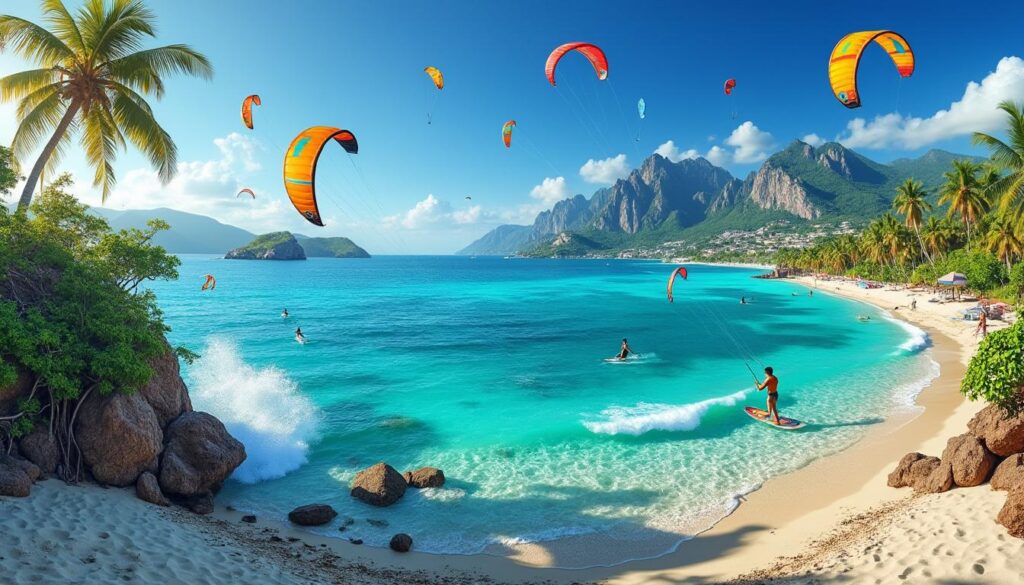
Anyone who hears about kitesurf Puglia immediately imagines clear water, shallow seabeds and wind that comes in strongly from two different seas. Here, between the Adriatic and the Ionian, every wind direction has its spot, any day can become a session and every level – from the curious person watching from the beach to the advanced rider – finds its own space. From the coast of Porto Cesareo and Torre Lapillo up to Torre Mozza, via Campomarino di Maruggio and the Gargano, the region has become a stable point of reference in the kitesurf Italy scene. The point is not only “where to go”, but knowing how to read the Salento wind, choose the right orientation and decide whether to aim for flatwater, the waves or a long freeride session.
This journey through the best kitesurf spots Puglia follows the logic of local riders: first the wind, then the beach, finally the photos. It starts from the Ionian, kingdom of freeride and kitesurf for beginners, goes up toward Taranto and the Gargano, turns onto the Adriatic between Otranto and Frassanito, and arrives at practical advice on schools, equipment and the best periods to plan your kitesurf holidays in the Heel of Italy. The goal is simple: to give you the keys to choose your sea in every condition, understand when to change side and how to turn an “ordinary day” into a clean, safe and fun session.
- Two seas, double spots: the Adriatic for waves and winter swell, the Ionian for flatwater, freeride and fast progression.
- Spots for every level: from Porto Cesareo and Torre Mozza ideal for learning, up to Frassanito and Otranto for more experienced wave riders.
- Wind almost year-round: reliable thermals from spring to autumn, stronger disturbances in winter.
- Schools and courses: a growing network of kitesurf schools around Lecce, Taranto and the Gargano to learn kitesurf safely.
- Mobile strategy: if the Salento spot doesn’t work, it’s easy to move to other national hotspots like the Stagnone or Garda.
Kitesurf Puglia on the Ionian: Salento between Porto Cesareo, Torre Lapillo and Campomarino
When talking about kitesurf Salento, the Ionian coast is the first name that comes up in riders’ conversations. The Ionian here is a natural playground: shallow seabeds, water often flat or with light chop, colors ranging from turquoise to deep blue a few meters from the shore. The main winds are Maestrale and Scirocco, two leading actors that, depending on the day, can turn the same spot into a perfect school area or into an ideal carpet for jumps and complex maneuvers. The rule is simple: Maestrale is fresher and cleaner, Scirocco warmer and steadier, often with less rough water in some sheltered bays.
The area of Porto Cesareo and Torre Lapillo is considered by many the heart of kitesurf Lecce. Here the seabed stays shallow for tens of meters, a condition that offers a huge margin for error when you start working on water starts, first upwinds and board recoveries. The Scirocco wind often comes in steadily, with intensity ideal for those taking a kitesurf course or wanting to consolidate basic maneuvers: getting up, stopping, sailing upwind without anxiety. The presence of authorized schools and organized launch corridors reduces chaos on the water and makes everything more legible, especially in the busiest months.
Moving north, in the area of Campomarino di Maruggio (province of Taranto), the story becomes more interesting for intermediate riders. Here kitesurf Taranto shows its best with Scirocco that comes in strongly: manageable waves, not huge, but formed enough to allow more aggressive jumps and some wave touches for those confident with the board. The spot is appreciated by those who want to “step up” from the flat waters of Torre Lapillo, but without finding themselves in a disordered and unmanageable sea. It’s not uncommon to meet groups of riders alternating classic freeride and early strapless attempts, taking advantage of the wide space in front of the beach.
Further south, toward Ugento, spots like Torre San Giovanni and Torre Mozza appear. Here Salento offers one of the most accessible contexts in kitesurf Italy: wide bays, water often shallow and conditions suitable both for those taking their first steps and for those wanting to work on transitions, toeside and first jumps. The combination of sandy seabed + slightly rippled sea reduces stress in case of a fall and makes it easier to focus on kite and board control. It’s the kind of place where a beginner, after a few days of targeted training, really begins to “plane alone” without feeling out of place or observed.
One important thing about the Ionian: during the high bathing season, many beaches are occupied by umbrellas and beach establishments, and kitesurfing is often limited to specific hours or authorized corridors. For this reason local knowledge and contact with a kitesurf school in the area become essential to avoid fines, arguments with bathers or improvised sessions in unsafe conditions. Off-season, these same beaches turn into vast fields of freedom: the same clear water, but without the crowds.
For those aiming for rapid progression, the Salento Ionian is a logical choice: wind often manageable, “friendly” water and simple logistics between Lecce, Gallipoli and Taranto. It’s the area where kitesurf for beginners perhaps finds one of the most effective combinations in Italy between climate, thermal winds and seabeds. The summary? On the Ionian you learn to understand the bar and the wind, laughing at the first falls, without unnecessary fights with waves that are too aggressive.
Gallipoli, Lido Pizzo and strategy with the Tramontana
In the Gallipoli area the conversation changes, because one of the most particular combinations in the zone comes into play: Lido Pizzo, practically the most reliable kitesurf Puglia spot on the Ionian coast when Tramontana blows. The local riders’ practical rule is clear: if elsewhere the Tramontana creates disordered sea and annoying chop, here it can instead deliver clean and linear sessions. Lido Pizzo thus becomes a sort of “wind refuge” for those who don’t want to move to the Adriatic but still demand decisive planing and controlled upwind runs. This makes the area a key piece for anyone organizing a week of kite in Salento and not wanting to run dry.
During summer, however, Gallipoli and surroundings are literally invaded by bathers. Some beaches become almost off-limits for kite in broad daylight, especially in July and August. Local riders then choose strategic times (early mornings or late afternoons) or move to less crowded stretches of coast. Here you see the difference between those who choose a spot by looking at a photo online and those who think based on wind, regulations and tourist flows. Want to avoid frustrations? First check local ordinances and available launch corridors, then rig the kite.
In short, the Ionian is Salento’s “open-air school” all year round: it accompanies you from the first plane to your first real jumps, always leaving you an escape route to the opposite side if the wind decides to change at the last minute.
Adriatic and kitesurf Salento: Frassanito, San Foca, Otranto and the waves
If the Ionian is synonymous with flat water and freeride, the Adriatic Salento is the wilder side of kitesurf Puglia. Here Scirocco and Grecale come into play, winds that can push significant swell and catch out those who underestimate the power of the Mediterranean on the right days. The coast between Otranto and Lecce alternates rocky stretches and sandy beaches, sheltered bays and fully exposed areas: anyone wanting to get in the water must carefully read forecasts, wind direction and swell type. The reward, however, is high: clean waves, less crowded beaches and conditions that really make your legs and technique work.
The name that makes wave riders’ eyes light up is Frassanito. This spot on the Adriatic side is considered one of the best in the region, but it’s not terrain for beginners. Where classic surfers look for winter waves, the more experienced kiters enter the water with well-formed Scirocco or Grecale, finding water faces perfect for bottom turns, cutbacks and high jumps. Mixed seabeds and currents require full control of the board and the kite: anyone still struggling with body drag or restarting in rough conditions would do better to watch from the shore and take notes for the future.
Further north, San Foca, Spiaggia Bella and Frigole offer a mosaic of different situations. In summer, from June to August, kitesurfing is strictly regulated: no free access everywhere, but dedicated launch corridors and set times to respect. In the less crowded months, these beaches become valid options to train with cross-on or side-on wind, especially if you’re looking for an intermediate step between total flatwater and truly formed seas. The key point is never to arrive improvising: checking rules, access and the presence of schools is the minimum to avoid problems.
Around Otranto and further down toward Porto Badisco, the Scirocco–Grecale combination can generate interesting swell. Scirocco pushes longer, heavier waves, Grecale brings faster, more closely spaced sets. Those kitesurfing with a wave focus find a valuable training ground here: you learn to pick the right set, manage closures and calculate a safe exit even when the coast becomes rocky. It’s the kind of sea that really builds the instinct for reading conditions: if you learn to handle the pulled Adriatic Salento, any other Mediterranean spot will seem more readable.
For those still consolidating the basics, the advice is clear: use the Adriatic only on the “softer” days, with moderate wind and low waves. The ideal progression? First flatwater on the Ionian, then medium chop, finally the real waves of the Adriatic. Skipping the steps often means ending up fighting the board rather than the wind, and losing confidence. A Salento rider is not in a hurry: they know the season is long and the wind will come back.
Gargano, Vieste and Marina di Lesina: the North of Puglia that pulls strong
Heading to the far north of the region, the Gargano appears as a true “factory” of thermal wind. Here the landscape changes: high promontory, deep gulfs, long beaches facing the open Adriatic. Vieste has historically been the capital of windsurfing, but more and more kiters choose the area for the variety of conditions and the percentage of navigable days in high season. The Maestro, filtered by the coast’s morphology, often creates short, fun waves that appeal both to windsurfers and to kiters who enjoy jumps.
The beach of Baia di Scialmarino is one of the local references: when the Mistral ignites the afternoon thermal breeze, the water surface livens up. Here advanced courses and dedicated training for jumps, rotations and on-board technique make sense. The wind almost never arrives “by surprise”: thermal dynamics are fairly regular, allowing you to plan your days without wasting time waiting on the beach with a deflated sail. It’s an area that speaks strongly to riders who want to combine sea and mountains, sessions and trekking, beaches and historic villages.
Nearby, Marina di Lesina becomes a flatwater paradise. Proximity to the homonymous lake stabilizes the winds and dampens wave motion, creating an almost perfect mirror of water for freestyle. Kiters who work on raley, backroll, controlled kiteloops or first steps in foil love to train here. The almost total absence of waves allows focus on pure technique, bar timing and edge precision. It’s the kind of place where one well-planned day is worth a week of disorganized training elsewhere.
The Gargano, overall, completes the picture of the best kitesurf spots Italy facing the Adriatic. Where Salento alternates flatwater and waves, northern Puglia plays the card of thermals and wider wind exposure. For a rider planning several stops along the coast, combining Salento and Gargano in the same trip means exploring two different faces of the same region, with the constant common thread of wind pushing the board.
In a few words, the Apulian Adriatic – from the heel up to the Gargano promontory – is the right gym for those who want to move beyond pure freeride and start playing with the “wave & wind” dimension, growing awareness and respect for a sea that changes face from one bay to another.
When to come kitesurfing in Puglia: seasons, Salento wind and strategy
One of the most repeated questions from those dreaming of a week of kitesurf holidays in Salento is always the same: “When is the best period?”. The truth is that Puglia can be kited almost year-round, but each season has a distinct character. Those who arrive prepared use the advantage of the two seas; those who improvise risk spending days watching the wind shift without knowing where to go. The secret is understanding how thermals, disturbances and main directions work, and building your plan based on that, not on glossy brochures.
From April to November, the climate is generally mild, with water warming progressively and thermal winds reliable especially from late spring to early autumn. In this period, the Ionian is a very strong choice to learn kitesurf or for those still consolidating basic technique: long days, comfortable temperatures, light wetsuits and wind often between 14 and 22 knots, ideal for most freeride kites. The Adriatic in these months alternates super-smooth days with more decisive entries of Scirocco or Grecale, interesting for those who want to start playing with waves that are not yet “winter” level.
Between December and March, the scenario changes. Temperatures drop, thermals slow down and disturbances dominate. Those who don’t mind putting on a 5/4 with hood often find important swells on the Adriatic and stronger winds on both coasts. It’s the season for wave riders, for those seeking more serious swell and who do not fear cold and rain. For many beginners, however, these months are the right opportunity to work on theory, safety, equipment or perhaps plan trips further south, like a week of kitesurf at the Stagnone of Marsala, where the Sicilian lagoon offers extreme flatwater and schools open year-round.
An often underrated point is the possibility of quickly moving from one coast to the other. With an hour – an hour and a half by car, switching from kitesurf Adriatic to kitesurf Ionian is routine for local riders. If the wind comes better from the east, you head to Otranto, San Foca or, for the more experienced, Frassanito. If the synoptic chart instead promises clean Maestrale or Scirocco well oriented over the Gulf of Taranto, the direction becomes Porto Cesareo, Torre Lapillo, Campomarino or the beaches south of Gallipoli. Thinking “a single fixed spot” in Puglia is a mistake: here the game is to follow the wind, not the convenience of the parking.
To clarify the picture, here is a practical outline of seasons and main trends.
| Period | Main characteristics | Recommended spots | Ideal level |
|---|---|---|---|
| April – June | Growing thermal winds, warming water, beaches still livable. | Porto Cesareo, Torre Lapillo, Torre Mozza, Marina di Lesina. | Beginners and intermediates |
| July – August | Many bathers, reliable thermals but strong time restrictions. | Lido Pizzo, launch corridors at San Foca/Frigole, Campomarino. | Intermediates who can handle crowds |
| September – November | Warm sea, fewer crowds, first more serious disturbances. | Porto Cesareo, Otranto, Frassanito (experts only). | From beginner to advanced |
| December – March | Disturbances, swells, cold water, often strong wind. | Otranto, Porto Badisco, Gargano for waves, trips to the Stagnone. | Solid intermediates and advanced |
Those who plan their kite trip with this mental map find many more sessions and less frustration. A useful trick is to always have a “plan B” out of the region: if a week in Puglia looks too unstable, it’s easy to head to Sicily or go north and combine a kitesurf course on Garda with the windier days. The whole of Italy has become a true network of connected spots; Salento is just one of the most generous wind nodes.
In conclusion, Puglia is not a static postcard but a dynamic puzzle of seasons, seas and winds. Those who live it with a rider’s mindset – forecasts, maps, alternative plans – discover that the number of “good days” is much higher than generic rankings suggest.
Learning kitesurf in Puglia: schools, safety and progression for beginners
Talking about kitesurf Puglia without addressing the learning aspect would be incomplete. More and more people arrive in Salento with a clear idea: they want to go from spectator to rider, perhaps during a week of vacation. The good news is that the region is one of the best places in kitesurf Italy to really start: shallow water in many Ionian spots, often regular winds and a growing network of certified instructors. The bad news? DIY improvisation without a school is still too widespread, and the sea makes no concessions to those who underestimate currents, obstacles or sudden gusts.
A proper kitesurf course always starts on land: wind theory, correct kite rigging, use of the safety leash, quick release. Only after that do you move to body drag in the water and finally to the first attempts with the board on your feet. The beaches between Porto Cesareo, Torre Lapillo, Torre San Giovanni and Torre Mozza offer exactly what is needed in the first days: space, progressively deep water and few waves. Here a beginner can get direction wrong, lose the board, fall backward and climb back onto it without endangering themselves or others, provided they follow the guidance of an instructor who knows the area well.
For those who want to arrive equipped, it’s useful to study the basics first. A good online starting point is a glossary of technical terms, like those analyzed in detail in guides dedicated to the kitesurf glossary in Italian, which immediately clarify what words like depower, edging, loop, upwind or pop mean. Knowing what is being talked about speeds up the dialogue with the instructor and saves precious time on the beach.
Safety equipment is not optional. Helmet, impact vest or buoyancy vest, wetsuit appropriate to the season, line knife integrated into the harness: every element has a precise function. In Puglia many beginners start the spring season with a 4/3 wetsuit, switch to a shorty in July and August and return to thicker neoprene at the end of October. The wind can change quickly, and with it the perceived temperature in the water. It’s better to always have a margin, especially if you plan long sessions or are still in the learning phase and will spend a lot of time immersed.
A balanced progression in Puglia might follow a line like this:
- Day 1–2: wind and safety theory, rigging equipment, kite control on land.
- Day 3–4: body drag in the water, kite relaunch exercises, first attempts with the board on your feet.
- Day 5–6: water start, short runs, learning speed control.
- Following weeks: steady upwind, first turning and transition maneuvers, beginning small jumps.
Local riders often tell stories of people like Marco, a thirty-five-year-old who arrived “to try” a single lesson at Torre Lapillo and stayed for two whole weeks, finishing the holiday able to sail upwind independently. Stories like these are not miraculous exceptions, but the result of a clear mix: suitable spots, a serious instructor, high motivation and respect for learning times. Those who rush to “jump before their friend” almost always end up back at square one, perhaps after a scare that could have been avoided.
For many, Puglia is just the first chapter. After learning to handle board and kite in flat water, many choose to explore other Italian spots, from Lake Garda to the Sicilian lagoons, perhaps relying on specific guides to places like Malcesine or Porto Pollo. But the foundation built among the bays of Salento often remains the most solid: there you first felt what it really means to “take the bar” and let the wind do the rest.
Equipment, lifestyle and next destinations after kitesurfing in Puglia
Once you’ve discovered kitesurf Puglia, many riders start thinking big: a new board, a complete kite set, perhaps a foil, and then new destinations from Sardinia to Sicily. Before filling the trunk, however, it makes sense to understand what is really needed to make the most of Apulian spots and how to connect them to the rest of the kitesurf Italy scene. The goal is not to have as much gear as possible, but to build a thoughtful quiver adapted to average wind, sea conditions and personal style.
For Puglia, a typical quiver might include two main kites (for example a 9 and a 12 meter for a rider around 75–80 kg) and a medium-wide twin-tip freeride board to ease starts in light wind. Beginners can orient themselves with technical guides dedicated to essential kitesurf equipment, which explain differences between board shapes, kite types, harnesses and safety systems. In a region where wind can swing several times in a day, knowing which kite to choose without wasting time often makes the difference between a great session and a day of useless waiting on the beach.
Among enthusiasts interest is also growing for the kite foil, perfect for making the most of light thermals in the morning or evening. Foil demands a longer learning curve, but here too Puglia offers ideal conditions: calm Ionian waters, wide spaces and progressive seabeds. Before launching into this discipline, it’s useful to study the specific technique with resources dedicated to kitesurfing foil and its basic techniques, so you arrive at the spot with clear ideas on foot placement, managing lift and safety.
The rider lifestyle in Puglia is not just about outings on the water. Quick breakfasts in seafront bars, light lunches to avoid weighing down afternoon sessions, constant attention to hydration in summer and sun protection are integral parts of the day. Those who truly live the kite here know that good nutrition, sleep and post-session stretching matter as much as changing kite at the right moment. The body is the number one piece of equipment: if it fails, no high-performance board will save you.
Those who have consolidated their skills between Ionian and Adriatic often start looking further afield. Some choose to head up the boot and exploit Garda’s thermal winds, also to combine sessions and intensive courses in a completely different, mountainous and lacustrine environment. Others head west, dreaming of the windy spots of Sardinia and iconic places like Porto Pollo. Some prefer to keep touring the south, linking Salento, Calabria and Sicilian lagoons in a single Mediterranean itinerary.
On this journey, however, Puglia remains a natural base, a place to return to in order to find that unique combination of climate, wind and culture that makes kitesurfing more than just a sport. Here you learn that it’s not only about who jumps the highest, but who reads the right cloud first, who arrives at the beach respecting other riders, who is ready to help unclip a leash or recover a board after a gust. It’s this spirit, more than any technical data, that turns Salento into much more than a simple destination on the kite map.
What is the best spot in Puglia for those starting with kitesurfing?
For kitesurf beginners in Puglia the most indicated spots are Porto Cesareo, Torre Lapillo, Torre San Giovanni and Torre Mozza on the Ionian side. They offer shallow seabeds for many meters, often calm water and manageable winds, ideal conditions to take a kitesurf course safely and focus on water starts, board control and first upwinds.
What time of year is best to come to Salento for kitesurfing?
The most balanced period for kitesurfing in Salento is from April to June and from September to early November: reliable thermal wind, less crowding on the beaches and pleasant water temperatures. July and August are rideable but with many restrictions due to bathing, while winter offers the best swells on the Adriatic and Gargano, suitable for intermediate and expert riders who don’t fear the cold.
Do I need a kitesurf school or can I learn by myself?
Learning kitesurfing by yourself is strongly discouraged, especially in Puglia where winds and currents change quickly between the Ionian and the Adriatic. Relying on a kitesurf school with certified instructors allows you to learn in a structured way, use appropriate equipment, know local regulations and drastically reduce the risk of accidents for yourself and others. After the course you will be able to progress independently with solid foundations.
What equipment is recommended for kitesurfing in Puglia?
For Puglia a freeride setup with two kites works well (for example 9 and 12 m for a rider around 80 kg), a medium-sized twin-tip board, a sit or waist harness depending on preferences and a wetsuit adapted to the season: 4/3 in spring and autumn, shorty or lycra in midsummer, 5/4 with hood in winter. Helmet and buoyancy vest are highly recommended, especially in the early learning stages.
If I can’t find wind in Puglia, which other Italian destinations can I consider?
If the wind window in Puglia doesn’t cooperate, you can easily consider other Italian kitesurf hotspots. Many riders combine Salento with the Stagnone di Marsala in Sicily, famous for the ultra-flat and windy lagoon, or with Lake Garda and spots like Malcesine to exploit daytime thermal winds. The idea is to think in a mobile way: a network of connected spots guarantees more kited days and less useless waiting.