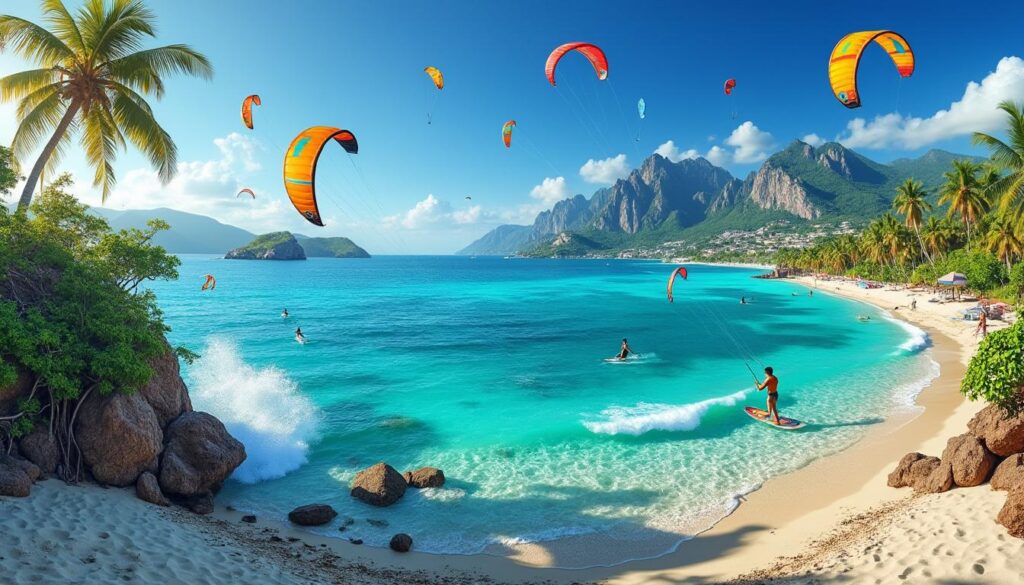
Lake Como is not just historic villas and postcard views. When the Breva comes in strongly from the South and the Tivano pushes from the North in the morning, this alpine basin turns into a true wind highway for kite lovers. Between Dervio, Cremia, Colico and Gera Lario the lake narrows, the famous “Venturi effect” intensifies the gusts and the water remains flat enough to launch into long, clean reaches. Those looking for the best kitesurf spot in Italy away from the sea are often surprised by how reliable the wind is here between spring and autumn.
In the northern part of the lake, a veiled sky towards the branch of Lecco, the Bellagio promontory disappearing into the haze, the first ripples on the water: these are all signs that the locals read like an open book. Those arriving from elsewhere often choose based on social photos, but those who live the wind every day look only at the direction and stability. Lake Como kitesurfing works exactly like this: if you understand the breath of the Lario, you can schedule sessions from March to October with a frequency that recalls certain Mediterranean sea spots.
In short
- Best period: from March to October, with maximum wind reliability between April and September.
- Main winds: Breva thermal from the South in the afternoon, Tivano from North/North-East at dawn.
- Top kite areas: Alto Lario (Dervio, Cremia, Colico, Gera Lario, Sorico), plus some wind-dependent areas toward Mandello.
- Recommended levels: Lake suitable from intermediate to advanced, but with schools and support boats that make kitesurfing for beginners manageable.
- Water: generally flat or slightly choppy, ideal for learning maneuvers and controlled jumps.
- Key insight: understanding the signals of the Breva and the Tivano is worth more than any weather app.
Kitesurf Lake Como: why Alto Lario is such a reliable wind spot
Those arriving at Alto Lario for the first time see vertical mountains dropping into the lake, little villages wedged between rock and water, and immediately think: “Okay, beautiful. But how can this be a kite spot?”. The answer lies precisely in this extreme orography, which creates unique wind corridors, with the Breva channeling between Dervio and Colico often reaching 20 knots consistently.
The local schools report rideable days in over 90% of the period between April and October. It’s not magic, it’s solid thermals fueled by the contrast between the Po Plain and alpine valleys like Valtellina and Valchiavenna. When the air in the valley warms and rises, the cooler air over the lake is “sucked” northward, giving life to the Breva: a steady, tense but not aggressive wind, perfect for learning kitesurfing safely with boat support.
The historically most active area for kite and windsurf is precisely the Alto Lario: Colico, Gera Lario, Dervio, Cremia, Sorico. Here the lake narrows and the Venturi effect amplifies the thermal. Riders like Luca, a student who started in Puglia and now organizes his annual kitesurf holidays on the Lario, recount almost daily sessions in late spring, with 15–20 knots constant and still-cold water that helps maintain the ideal thermal gradient.
During the high summer season the lake water warms and the thermal difference decreases. You might think the game is over, but another ally comes into play: a few days of North wind or a strong thunderstorm mix the water, bringing colder masses back to the surface. The result? New cycles of Breva that restart when everything seemed dead, often right on the weekends when riders planned their escape from work.
The key to reading it well is getting used to observing. Haze toward the Lecco branch in the morning, Bellagio promontory disappearing, clear skies over the valleys: these are indicators that a strong Breva could build up in the afternoon, especially along the Dervio–Colico axis. In the absence of haze, better have a plan B, maybe a training run or a foil session with a larger kite.
Those coming from kitesurf Salento, kitesurf Adriatic or the Ionian Sea immediately notice a difference: at Lake Como the wind almost never explodes violently from zero to thirty knots. It increases gradually, settles, and gives time to adapt kite size and setup. This makes the Lario an intelligent spot for those who want to progress from the “post-course” phase to a confident intermediate level.
Alto Lario is therefore recognized as one of the most balanced combinations between predictable wind, logistics of schools and support boats, and natural scenery. Those who learn here then carry this fine wind-reading to other kitesurf spots in Italy, from the Tyrrhenian to Puglia.
When to choose Lake Como instead of the sea
Many riders ask themselves: “If I can go to the sea, why should I go up to the lake?”. The answer lies in the regularity of the thermals and the possibility to concentrate many hours of navigation into a few days, often with relatively flat water.
For example, a three-day long weekend on the Lario in late spring can give you: Tivano in the morning to train edging and control with a cooler North wind, lunch on the shore and then full Breva in the afternoon, with a twin-tip setup ideal between 12 and 9 meters depending on weight. A near-school cycle, perfect for those who really want to progress, not just “take a holiday”.
If you like the idea of varying spots, you can compare Lake Como conditions with other windy basins by also visiting content like the focus on kitesurf in Liguria and its wind spots. You quickly understand how competitive the Lario is, especially if you like working on controlled jumps, clean transitions and first tricks.
The strong point of this area therefore remains balance: it is not an extreme storm spot, but an “advanced school field” where the thermal wind accompanies you step by step toward a higher level.
Spot kitesurf Lake Como: Dervio, Colico, Gera Lario, Mandello and surroundings
One thing must be made clear: not all beaches on Lake Como are suitable for kite. Many are narrow, full of buoys, piers, boats and bathers. For this reason schools have developed a very efficient water-assisted launching system with support boats, especially for those facing kitesurfing for beginners.
The most frequented spots lie between the Alto Lario and some strategic stretches of the Lecco branch. Let’s look at some of these places from the point of view of a rider who wants to maximize time on the water, like Martina, who prepares her intensive weeks alternating sea and lake to refine technique.
In the North stand out Colico and Gera Lario, with open landscapes, well-organized kitesurf schools and generous water spaces. When the Breva comes clean from the South, the surface remains relatively smooth, perfect for long, regular reaches. Moving toward Sorico, the “La Punta” area offers partially shallow water and thermals that spread well over the basin.
Further South, in the Dervio and Cremia area, the lake narrows and the Venturi effect can give a few extra knots, making these areas very interesting for riders who like full and progressive wind. Here, however, the launch logistics are even more delicate: often you start directly from the water with boat support, which for a beginner may seem complex but actually increases safety, avoiding crowded bathing areas.
Toward Mandello and the Lecco branch, the situation becomes more technical. The Tivano finds here one of its highest expressions in the early morning, with North/North-East winds sliding along the mountains. These areas are less immediate for beginners, but fascinating for those who already have good kite handling from water starts and gladly wake up at dawn to exploit 2–3 hours of clean wind.
To orient yourself among the various areas, a concise chart can be useful.
| Area / Spot | Main wind | Recommended level | Water characteristics | Strengths |
|---|---|---|---|---|
| Colico / Gera Lario | Breva from the South, light Tivano | Intermediate – Advanced, with support for beginners | Flat / light chop | Wide space, active schools, regular thermals |
| Dervio / Cremia | Reinforced Breva (Venturi effect) | Solid Intermediate – Advanced | Flat with localized gusts | Often stronger wind, ideal for jumps and tricks |
| Sorico – La Punta | Breva from the South | Intermediate | Partly shallow waters, moderate chop | Good depth management, relaxed atmosphere |
| Mandello / Lecco branch | Tivano from North/North-East | Intermediate – Advanced | More choppy with strong wind | Powerful morning sessions, spectacular scenery |
This distribution of spots makes Lake Como very versatile. Those coming from places like kitesurf Taranto or kitesurf Lecce find here a different but complementary environment: fewer waves, more focus on board control, edging, pop and clean landings.
If you’re planning a combined sea-lake trip in kitesurf Italy, you can also study what the Adriatic offers in parallel, for example through guides on kitesurf on the Adriatic and its main spots. The idea is to use the Lario as a technical gym and then transfer what you learned to the more demanding marine spots.
Elements to evaluate when choosing a spot on Lake Como
To avoid finding yourself in the wrong place at the wrong time, it’s useful to have a small mental checklist every time you plan a session:
- Predicted direction and strength: Strong Breva? Better Dervio/Colico. Decisive Tivano? Consider the Lecco branch.
- Time of arrival: if you arrive late, the thermal may already be fading, especially late in the season.
- Boat support: for beginners or uncertain wind days, better spots with rescue boats.
- Crowding: weekends and holidays can fill the spot, plan less popular times.
- Your level: windy spots with limited space are not the right place for the very first water start.
These details, if taken seriously, turn an ordinary day into a targeted training session, instead of a continuous struggle against unsuitable conditions.
Winds of Lake Como: Breva, Tivano, Garzeno and North winds explained for kite riders
Truly understanding the wind on Lake Como means stopping looking only at numbers on an app and starting to listen to what happens between the plain, the valleys and the lake surface. Here it’s not just about “strong wind” or “weak wind”, but about thermal dynamics that repeat almost like a ritual.
The main pair is Breva – Tivano. Both are thermal winds, generated by the temperature difference between the lake, the valley and the plain. The Tivano is the nighttime/morning wind that comes down from North/North-East, active especially in the Lecco branch and the Valmadrera area. It starts about three hours after sunset, increases in the early morning hours and then drops around 10:30–11:00, when the sun heats the lake water and the pressure gradient cancels out.
The Breva, on the other hand, is the true queen of kitesurf sessions. It is born as a daytime wind in the warm half of the year, blows from the South and replaces the Tivano when the sun rises. In spring it can start around 11:00, in full summer it tends to arrive later, in the early afternoon, and dies at sunset. On ideal days, with clear skies over Valtellina and Valchiavenna and still relatively cool water, the Breva easily reaches 15–20 knots, in the best cases even 25 knots along the Dervio–Colico axis.
The most attentive riders use some visual signals to anticipate the quality of the thermal. Dense haze towards the Lecco branch usually indicates a stronger Breva: the more the Bellagio promontory disappears from view, the more likely the wind will pick up well. Absence of haze? High probability of weak or no Breva. These signals, crossed with forecasts, provide an almost surgical read of the day.
There are also downwash winds, particular situations that occur with cloudy skies or localized storms in Valtellina and the Upper Lake, while the plain to the South remains warmer and sunny. The cold air aloft “falls” toward the lake, creating episodes of strong wind, sometimes above 25 knots, especially at the more southern spots. These scenarios are less predictable and should be faced with appropriate equipment and an eye on gusts and direction shifts.
Then there is the Garzeno (or Garzenasco), a wind that descends from the Albano valley, often linked to afternoon thunderstorms over Dongo. It enters in the late afternoon, offering adrenaline-charged pre-evening sessions, especially for those who like exploiting jumps with extra push. It’s a more occasional wind, but those who know the spot well can recognize its arrival.
Finally, North disturbance winds should not be confused with the Tivano. They are linked to configurations with high pressure north of the Alps and low pressure to the south, often following an Atlantic disturbance. They can last from one to three days, sometimes longer, and generate very strong but often gusty episodes. For kite this means tough sessions, to be faced only if you have solid control of kite and board and if the chosen spot offers adequate space and safety.
Knowing all these nuances allows you to decide not only “if” to go in the water, but also with what setup, in which area of the lake, and what kind of session to expect: technical training on flat water, jump sessions with more push, or pure endurance outings.
How to read conditions to avoid surprises
Many riders rely solely on weather apps, but on Lake Como the locals combine at least three elements to get a reliable picture:
- Direct observation: haze, cloud cover over the valleys, morning temperatures, state of the water.
- Forecast models: consult more than one source, particularly for thermals and pressure gradients.
- Recent lake history: have there been strong North winds recently? Intense storms? This changes the water temperature and therefore the strength of the Breva.
A rider like Marco, who trained between the kitesurf Ionio and lakes of Northern Italy, quickly learns that the Lario rewards those who observe. The more time you spend reading sky and water, the easier it becomes to plan powerful sessions without being surprised by holes or unmanageable gusts.
Kitesurfing for beginners on Lake Como: courses, safety, wind management
Lake Como is often presented as a spot for intermediate level and up, but that doesn’t mean beginners have to give up. On the contrary, the schools working here have developed a very structured methodology for the kitesurf course, with wide use of support boats and recovery systems.
For those who want to learn kitesurfing from scratch, the Lario offers a key advantage: relatively predictable thermal wind that enters in fairly regular time windows. This allows planning lessons in specific windows, when the Breva is already stable but not yet at maximum power. Instructors can then choose appropriately sized kites and accompany you on the water with the safety of open space and immediate nautical support.
The typical process for a beginner includes: theory on the ground about wind, flight window and safety, kite handling on the beach or in shallow water when possible, then a quick move to the boat for body drag exercises and first water starts in the middle of the lake, where margins for error are much larger. In this way any control mistakes don’t turn into impacts against rocks or buoys, but into simple falls managed by the instructor.
To better understand how to approach the first steps, many riders consult guides dedicated to kitesurfing for beginners and essential tips to start. Once basic concepts are clear, Lake Como becomes an ideal ground to turn theory into practice, thanks to the combination of gentle but present wind and constant supervision.
One thing the local schools often repeat is absolute respect for the thermal wind. The Breva is not violent, but it should not be underestimated. If you arrive late in the morning with still weak wind and choose a kite that is too big “because it’s not blowing much”, you risk being overpowered two hours later. For this reason instructors insist on regular checks of wind evolution, teaching from the start how to downsize equipment and expectations.
Another key point is temperature management. Despite the sun, the lake water can remain cold for a long time, especially in spring. Appropriate wetsuits, at least 4/3 or 5/4 with possible accessories, are essential to avoid getting exhausted after a few body drags. Those coming from the kitesurf Red Sea Egypt or tropical spots are often surprised by how quickly cold water drains energy and concentration.
Safety, of course, does not stop at clothing. It is essential to understand and respect some basic rules, as many in-depth articles dedicated to kitesurf and safety rules in water and on land explain. On Lake Como this means: always listen to the nautical staff’s instructions, do not inflate and launch in unauthorized areas, keep generous distances from boats, buoys and swimmers.
How to structure your progression from the first water start to safe riding
To make the most of Lake Como conditions, the ideal progression for a beginner could follow a scheme like this:
- Phase 1 – Kite control: ground or shallow water flying exercises, understanding the window, relaunching, use of the quick release.
- Phase 2 – Body drag: water training, upwind body drag to recover the board, controlling the body in a horizontal position.
- Phase 3 – First water starts: choosing more forgiving kites, practice in an assisted area, learning starts on both tacks.
- Phase 4 – Controlled short reaches: work on posture, edging and speed control, without yet aiming for a tight beat.
- Phase 5 – Beating and autonomous return: learn to sail upwind, manage basic transitions and return to the planned point consistently.
Each phase benefits from a regular thermal wind like the Breva. No need to overdo it: better short, focused sessions with a clear objective than endless days of random attempts. The Lario rewards those who treat it as a true school, not just a playground.
How to prepare a kite holiday on Lake Como and link it to other spots in Italy
Organizing a week of kitesurf holidays on Lake Como means matching wind, logistics and budget smartly. The basin is surrounded by famous tourist villages, but those who come here for kite must think in reverse compared to classic tourism: first choose the spot, then the accommodation, not the other way around.
A practical approach is to base yourself between Colico and Gera Lario if the focus is maximizing the afternoon Breva, or move closer to the Lecco branch if you are aiming strongly at Tivano morning sessions. From there you move by car or boat to the spot of the day, following schools’ guidance and local forecasts.
Many riders build real “wind tours” in kitesurf Italy: a few days on the Lario, then transfer to Puglia, Sardinia or Liguria. In this scheme Lake Como becomes the technical part of the trip, where you work on control and precision, while the southern seas and islands satisfy the desire for waves, warm water and fiery sunsets.
Those living the kitesurf Salento, between kitesurf Ionio and kitesurf Adriatic, find it appealing to alternate Mediterranean sessions with alpine days on the Lario. The contrast is sharp but harmonious: on one side salt water, open sea and large spaces, on the other a lake wedged between mountains, with thermal winds that seem made to build confidence with your gear.
An often underrated aspect is gear management. There are rentals and well-equipped centers on Lake Como, but those traveling with their own equipment must consider volumes and weights carefully, especially if the tour includes other Italian or European spots. In these cases, also evaluating the used kitesurf market and tips on how to choose and what to check before buying can help build a more versatile and lighter quiver.
Many riders, after testing the Lario, go on to compare it with other high-reliability lake or sea spots in Europe, such as some areas of Croatia or the Ligurian coast. In all cases, the constant remains the same: without a good wind read, the best spot loses half of its potential.
Practical checklist for a week of kite on Lake Como
For those who want to move from idea to action, a concrete list helps avoid surprises:
- Basic gear: 2–3 kites covering approximately from 9 to 14 m (depending on weight), a versatile twin-tip, possible foil if aiming to exploit light thermals.
- Wetsuit: 4/3 or 5/4 with booties in spring and autumn; in summer still consider a 3/2 if you are sensitive to cold.
- Spot logistics: contacts for at least one local kitesurf school for assistance, up-to-date information and boat service.
- Wind study: check forecasts daily specific to Breva and Tivano, plus direct morning observation.
- Plan B: windless days? SUP, trekking or simply physical recovery: the body will thank you and the next session will be stronger.
Preparing the holiday this way means arriving at the Lario already mentally tuned to its rhythm: calm in the morning, thermal build-up, energy on the water, decompression at the end of the day. Exactly the kind of routine that grows a rider without burning them out.
What is the best period to kitesurf on Lake Como?
The most reliable period for kitesurfing on Lake Como runs from March to October, with a peak of consistency between April and September. In these months Breva and Tivano work more regularly, allowing you to plan almost daily sessions, especially in the Alto Lario between Dervio, Colico and Gera Lario. In winter you can have sporadic outings with Tivano or North winds, but they require serious thermal gear and good experience.
Is Lake Como suitable for kitesurfing beginners?
It is possible to start on Lake Como, but only by relying on a structured school with a support boat. The natural spot is more suitable for intermediate levels and up, but precisely thanks to boats, instructors and safety procedures, beginners can learn in open water without obstacles, working on body drag and water starts in a controlled environment.
What kind of equipment is needed for kitesurfing on Lake Como?
Generally 2–3 kites are enough to cover a medium range between 12–14 m and 8–10 m, depending on your weight and the time of year. An allround twin-tip is the most logical choice, while foil becomes interesting on lighter thermal days. Wetsuit selection should take into account that lake water is often cool: 4/3 or 5/4 in spring/autumn, 3/2 in summer if you’re not too sensitive to cold.
How can I tell if the Breva will come in strong in the afternoon?
Observe the haze toward the Lecco branch in the morning: if the Bellagio promontory is barely visible and the air looks dense, it’s a sign of a potentially strong Breva. Cross these signals with weather forecasts and consider the water temperature: the colder the water compared to the land, the more the thermal gradient favors a strong, steady thermal wind, especially along the Dervio–Colico axis.
Is a school necessary or can I launch on my own?
On Lake Como it is highly recommended to rely on a school or a specialized center, especially if you don’t know the spots well. Many areas are not suitable for independent launches from the shore due to narrow spaces, obstacles, boats and bathers. Centers organize boat departures and recoveries, increasing safety for you and those around you.