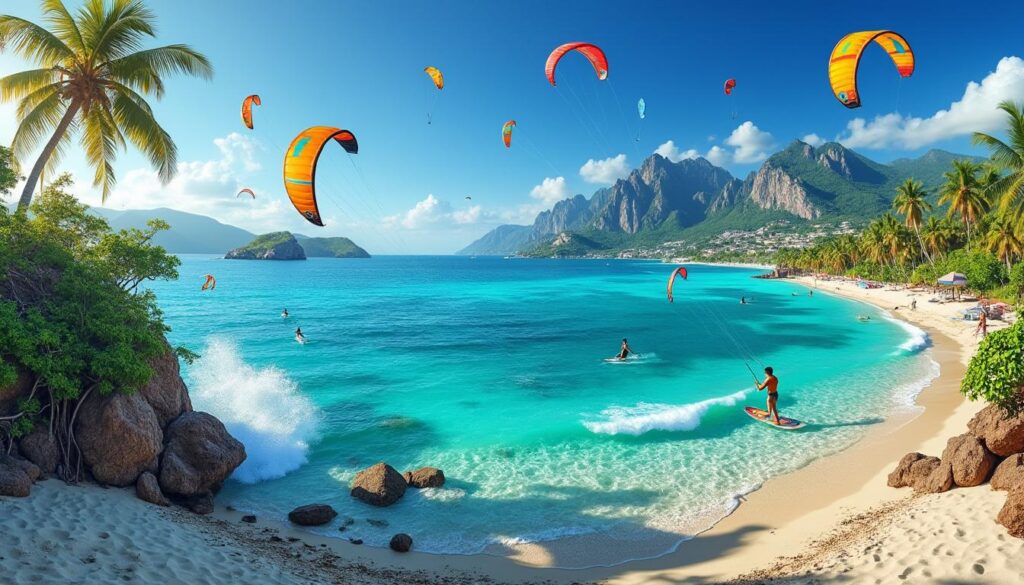
The wind pulls you, the board glides, the body lightens. Kitesurf for beginners doesn’t just mean trying a new sport, it means changing the way you are at sea. Those who approach kite often arrive with a thousand doubts: the fear of the kite ripping away, the fear of deep water, the idea of “not being sporty enough”. With a structured kitesurf course, a serious school and carefully chosen spots, all of this turns into respect, control and, above all, real fun. The heart of the path? Learning to read the wind, manage the power with the bar, know your limits and use them as a starting point. From the coasts of kitesurf Salento to the rest of the Mediterranean, kite is no longer a niche sport: it has entered the lives of students, workers, families who want a session between one work week and another. And those who start from zero need concrete guidance, far from easy promises.
Truly learning means knowing the phases of a kitesurf course for beginners, understanding what the first three days on the beach are like, what happens from theory to the first water start, which mistakes are normal and which instead must be avoided immediately. From the winds of the Adriatic to the calmer waters of the Ionian, the Salento wind is a demanding teacher: it teaches that every spot must be chosen based on wind direction, not Instagram photos. In parallel, the right equipment, safety devices, and the support of a certified instructor make the difference between a calm first session and a bad experience that takes away the desire to return to the water. This content is born precisely for those who feel the attraction of kite but don’t know where to start: a clear map is needed to learn kitesurf without skipping steps, building a progression that leads from the first glides to the first edges independently.
- Structured basic course: at least 3 days, 4 focused lessons (1 theory + 3 practical) with a certified instructor, preferably individual.
- Safety first: helmet, life jacket, wetsuit, quick release systems and a controlled spot are not details, but foundations.
- Clear progression: wind theory, first flight, body drag, then board and water start with support from a RIB or jet ski.
- Spot selection: clean seabed, space on the shore, side-onshore wind; between kitesurf Adriatic and kitesurf Ionian Salento offers ideal scenarios to start.
- Realistic costs: a good basic course is around €300, extra lessons €80–90 per hour, new personal equipment from about €1,500.
Kitesurf for beginners: understanding wind, equipment and the basic course
Even before getting on the board, kitesurf for beginners starts from a simple truth: wind is not argued with, it is interpreted. Those who arrive on the beach for the first day of the course discover that it’s not enough to “pull the bar and go”. A bit of theory is needed to understand where the kite pulls most, how to avoid being dragged ashore, why certain winds are friendly to beginners and others are not. In Puglia, between kitesurf Lecce and kitesurf Taranto, names like Maestrale, Tramontana, Scirocco become part of the everyday vocabulary: each has its own intensity, direction, and dangers.
A well-thought-out basic kitesurf course typically lasts three days and includes 4 hours of individual lessons. The first hour is dedicated to theory: wind dynamics, safety space on the shore, right-of-way in the water, rigging the equipment, quick release systems. Immediately after, you move on to the first kite flight, often from the RIB or in a safe area, away from obstacles. This is where most beginners discover that the kite, if managed well, is not a monster that runs out of control. The bar should be held softly, the arms relaxed, the kite holds position at “12 o’clock” and begins to respond to small controlled movements.
On the second and third days the body comes into play. First the body drag: no board, just the student being pulled by the kite in different directions, learning to orient themselves, raise their head, recover equipment in case of a fall. Then comes the most awaited moment, the board. With the instructor’s help, you put the board on your feet, assume a tucked position, launch the kite into the power window and try the first water start. Every attempt, successful or not, teaches something: how much to pull the bar, how to shift weight, where to look to maintain balance.
To give a concise picture of how a serious learn kitesurf path is structured, a clear overview of phases and objectives can help.
| Course day | Main contents | Objectives for the beginner |
|---|---|---|
| Day 1 | Wind theory, safety, rigging equipment, first kite flight | Understand the wind window, know how to use the quick release, control the kite in neutral position |
| Day 2 | Review kite control, entering the water, body drag in various directions, relaunching the kite from the water | Feel the pull on the body, move in the water without the board, avoid panic in case of a fall |
| Day 3 | Board on the feet, coordination kite-body-board, first water starts and short glides | Stand up on the water, cover the first meters gliding, start managing power and direction |
At the end of this path, many students leave with an IKO certification that attests to the level reached: a sort of “kite license” useful for renting equipment or continuing with advanced lessons in other kitesurf schools in Italy. The point is not to become an expert in three days, but to build solid foundations: know how to rig the kite, control the bar, read wind direction and manage an emergency situation. When these basics are clear, everything else – jumps, maneuvers, kite trips to other destinations – comes with time.
For those who want an idea of the variety of spots along the Adriatic, it’s also very useful to take a look at this overview dedicated to kitesurf spots on the Adriatic, which shows how important it is to choose the right location based on your level and the expected wind type.
Real structure of a beginner kitesurf course: Marco’s case
To make everything even more concrete, imagine Marco, 35, who arrives in Salento with three friends. None of them has ever tried kite, but they all want to finish the weekend with at least one glide. On the first day, Marco spends an hour on the beach and on the RIB: he learns to recognize where the wind blows from, to distinguish power zones, to safely launch and land the kite. Hands shake a little, the brain is full of information, but at the end of the hour he manages to keep the kite stable above his head without being dragged.
The second day he really touches the water. Harness hooked, helmet and life jacket on, Marco enters the sea without a board. The body drag surprises him: the wind pulls him, the water splashes his face, but the instructor is a few meters away, ready to guide him. After half an hour he manages to be pulled while controlling direction, recovers the kite after a small fall, and feels his confidence growing. On the third day the board becomes the protagonist: after the first failed attempts, he finally finds the right timing between kite movement and body weight. He is not yet going upwind, but he glides for about twenty meters. In that moment he understands why so many talk about “wind addiction”.
The lesson is clear: a well-structured path, even in a few days, is enough to go from curiosity to the true sensation of riding. From there on, everything else is practice.
Safety, Salento wind and spot selection for beginners
Kitesurf is powerful, physical, at times explosive. Precisely for this reason, safety is not a separate chapter: it is intertwined with every phase of the course. The first gesture a beginner learns, still on land, is how to use the quick release, the quick release that disconnects the kite from the harness in an emergency. This gesture must be practiced dry until it becomes automatic, because when it is really needed there is no time to think. Immediately after, one learns to depower it by pushing the bar forward, to recognize the difference between a manageable gust and an out-of-scale gust.
On the coasts between kitesurf Lecce and kitesurf Taranto it’s not uncommon to find days of strong Maestrale or robust Scirocco. For the beginner, these names must correspond to clear behaviors: when to go out, when to stay ashore, when to move the session from the Adriatic to the Ionian. Serious schools plan the day based on forecasts, change spots if necessary, and scale down the outing if the wind rises beyond the safe threshold for those who are new.
An often underestimated aspect concerns the difference between a structured course and a “do-it-yourself” try with an experienced friend. At first glance, the second option seems cheaper and friendlier. In reality, it is the fastest way to get hurt or scared. Without insurance, without a support boat, with equipment perhaps too large for the wind of the day, a wrong gust is enough to end up against rocks, buoys or swimmers.
Why the kitesurf school is the safest option
Comparing the two approaches helps to understand where it’s worth investing. A course in a kitesurf school includes certified instructors (IKO or FIV), insurance coverage, verified safety devices, spot selection calibrated to the students’ level, and above all individual lessons. Every minute is dedicated to the single beginner, who does not have to share the kite with three other companions nor remain in the water alone when tired. The RIB or jet ski always stays in the area, ready to recover anyone who drifts too far or struggles to return.
In the “I’ll teach you” model with an experienced friend, these elements are often missing: there’s no one controlling the distance from obstacles, the kite is perhaps oversized, the wind is assessed “by eye”. The result? Bad habits that are then difficult to correct, fear of the wind that remains after a bad fall, confidence in the kite that wavers. It’s no coincidence that many students who come to school after improvised attempts arrive with an extra load of fears.
For those who want to delve into all the rules and good practices related to safety, it’s very useful to also read this guide dedicated to kitesurf safety and rules, which goes into detail on right-of-way, emergency management and correct behavior in crowded spots.
Salento wind, Adriatic and Ionian: how to choose where to go
One of the unique advantages of kitesurf Salento is the presence of two seas at short distance: Adriatic and Ionian. When the wind comes from the northeast and makes the Adriatic choppy and gusty, often the Ionian offers more regular conditions, with flatter water and more space to practice. Conversely, some Scirocco days make the Ionian side rougher, while some Adriatic bays remain manageable even for beginners.
For a beginner, the golden rule is to look for side-onshore wind, i.e., wind that arrives slightly from the side relative to the beach and tends to bring you back toward the shore, not offshore. To this are added other simple but fundamental criteria: sandy and clean seabed, no exposed rocks; free space for landing and launching the kite; absence of umbrellas and bathers in the immediate vicinity during the practice area. In other words, you look for a spot that forgives mistakes and allows you to fall, be dragged a little and restart without creating problems for anyone.
When these criteria are met, the beginner’s mind lightens. They don’t have to worry about dodging obstacles or people, they can focus on the bar, body position and wind sensations. This, in the end, is what makes the difference between a stressful first experience and one that makes you want to book the next session.
Kitesurf equipment for beginners: what you really need to start
The world of kite equipment can seem like a maze: kites of a thousand sizes, boards of different shapes, seat or waist harnesses, wetsuits of varying thickness. For a novice, the question is simple: what do you need to start without wasting money or complicating life? The good news is that a serious basic kitesurf course already includes all the necessary gear. The beginner only needs to bring a swimsuit, towel, lots of curiosity and, if requested, a medical certificate for non-competitive sports activity.
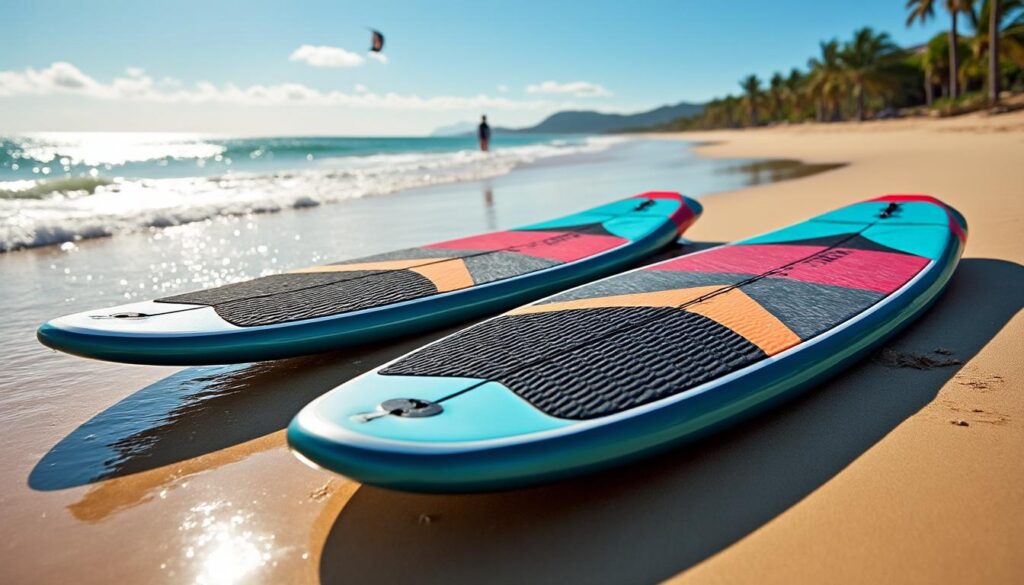
During the course, the instructor adapts the kite and board to the student’s weight and the day’s wind. On windy days smaller kites are used, on light days larger sizes are chosen. For beginners, the most common kites are delta or bow types, stable, easy to relaunch and with good depower. The board is almost always a generous twin-tip, which helps to plane even at low speed and forgives many stance errors.
Basic set for kitesurf beginners
Those who, after the course, begin to think about buying their own equipment discover that there are two paths: new or used. The minimum set includes:
- Kite with bar and lines: the heart of the system, where all power control is played.
- Twin-tip board: the simplest choice to learn to plane in both directions.
- Harness: seat or waist, to be chosen based on body shape and comfort preferences.
- Wetsuit: thicker or thinner depending on the season; in Southern Italy a medium thickness is often enough for most of the year.
- Helmet and life vest or impact vest: essential safety elements, especially in the first months.
Roughly, a second-hand set in good condition can be found between €800 and €1,200, while a new rig starts from about €1,500 and can increase depending on brands and materials chosen. Many riders prefer to start with a mix: a new board and a recent used kite, or vice versa, to contain costs without sacrificing too much quality.
For those considering buying used equipment, it’s very useful to consult guides dedicated to how to safely choose used gear, such as this overview on how to buy used kitesurf equipment, which explains what to check on kites, boards and bars before concluding the purchase.
Recommended additional items and small beach tricks
Besides the essential kit, some accessories make the beginner’s life much easier. Neoprene booties protect from sea urchins and stones, gloves (optional) help on colder or windier days, a microfiber poncho allows you to change comfortably even in less equipped spots. Another often underestimated item is a good pump with a pressure gauge, which ensures the correct kite pressure, avoiding sails that are too soft or overly hard.
Over time, many riders choose to have two or three kites of different sizes to cover a wider wind range. A larger kite for light wind days, a medium for most conditions, a small for really tough days. Similarly, those who progress can experiment with different boards: a larger one for light wind, a freestyle board for jumps and tricks, maybe a surfboard for waves. For a beginner, however, the goal is one: to have a simple, forgiving setup that helps them focus on technique without constant gear changes.
At this stage it’s essential not to be guided only by aesthetics or fashion trends. The best choice is to consult your instructor or local riders, ask for honest advice and maybe try some boards or kites for rent before investing in a personal kit. That way every euro spent supports progression, not just the ego.
Learn kitesurf: technical progression, typical mistakes and tips to go beyond the basic course
After the course, the real adventure begins. Many beginners leave the school already managing a few short glides; some can even keep the board in the water for tens of meters. But the gap between “I get up sometimes” and “I sail independently” is bridged with patience and method. The first milestone is to hold the edge in one direction without losing too much downwind, managing to stop in a controlled way and relaunch the kite after a fall.
Then comes the time for transitions: changing direction without getting off the board. At first it’s just about slowing down, bringing the kite toward 12 o’clock, rotating the body and restarting on the other side with a moderate power burst. Over time, these movements become fluid, almost automatic. Only then do you start working on beating (upwind riding), that is the ability to climb the wind to return to the starting point without relying on the RIB or a long walk on the beach.
Typical beginner mistakes and how to avoid them
Every level has its traps, but some repeat almost universally. The first mistake is pulling the bar too much for fear of losing power, ending up stalling the kite or being ripped forward. The second is looking at your feet instead of the direction of travel: the body follows the gaze, and if you stare at the board tips it’s almost impossible to keep balance. Another classic is bending the back too much, stiffening shoulders and neck, when in reality the force should pass through the harness and legs.
The solution comes from small habits: arms semi-extended, gaze toward the horizon, weight slightly on the heel of the back foot. Each session, the instructor or a more experienced mate can give targeted feedback on these details. Many find it useful to watch technique videos for beginners, pausing the image to notice body position, board angle, kite movement in the wind window.
Strategies to progress faster
Those who want to accelerate progression can follow some simple strategies. The first is to schedule blocks of close sessions, instead of spreading outings randomly over the year. Three intensive weekends with good wind often outweigh ten single days scattered. The second is to work a bit on the body: plank, light squats, shoulder and hip mobility. Nothing extreme, but enough to stay in the water longer without getting exhausted after half an hour.
The third strategy concerns the mind. Accepting that falling is part of the game changes everything. Each time you end up in the water, ask: what did I do just before? Did I move the kite too quickly? Did I load the wrong leg? Did I pull the bar when I should have depowered? This curiosity about mistakes turns every dip into valuable information, and in a few sessions the difference is evident.
Another form of training not to be forgotten is observing others. Watch how intermediate riders manage the edge, how they position themselves at the start, how they raise the kite during transitions. The beach, in this sense, is an open-air gym, and kitesurf Italy now offers a wide and varied community from which to learn something new every day.
Kitesurf in Italy and Salento: where to start, where to continue progressing
Italy has become in recent years a mosaic of kite spots accessible to all levels. From the north to the great lakes, from the islands to the South, it is possible to organize true kitesurf vacations choosing the period and area based on dominant winds. Those starting from zero often look to Puglia for the unique mix of climate, spots and qualified schools, but once the basic course is over the whole peninsula is available to continue growing.
kitesurf Salento remains a particular reference point for beginners. The possibility of choosing between spot kitesurf Puglia on the Adriatic or Ionian side, depending on the wind of the day, reduces the risk of “wasted days” without wind or with unmanageable conditions. In summer, many schools organize intensive courses and camps dedicated to those who want to combine sea, sport and outdoor life. In low season, when the beaches are quieter, conditions often become even more suitable for those who have already passed the initial phase and want to work on beating, transitions and first maneuvers.
From Salento to the Mediterranean: opening the game to other spots
Once the basics are built between kitesurf Lecce and kitesurf Taranto, many riders start looking beyond the Apulian horizon. Some choose to discover other Italian coastlines, like Liguria or Tuscany, others aim for Mediterranean destinations with reliable thermal winds and milder temperatures even off season. Those who dream of combining technical progression and travel find numerous ideas in guides dedicated to places such as Greece, Croatia or the Red Sea.
Whether you stay in Italy or look to foreign islands, the common thread remains the same: read the wind, respect the spot, listen to local riders. The technique learned during the kitesurf course in Puglia becomes the lingua franca to face every new place. Wind windows, safety rules, gust management are always the same; only landscape, temperature and wind intensity change.
Why start now: kitesurf as a lifestyle, not just a sport
There is one last aspect that often goes to the background when talking about kitesurf for beginners: the lifestyle change this sport brings with it. It’s not just about learning a technique, but about developing the habit of checking wind forecasts, organizing weekends based on swells, changing work hours so as not to miss the best time of day. Many discover that kite becomes a way to disconnect from routine, recharge in a few hours of gliding and come back ashore with a lighter mind.
In a context like Salento, this translates into days where you work in the morning, ride in the afternoon, and end the evening watching a sunset over the sea with the bar still imprinted in your hands. Those who start today have access to a network of schools, spots and communities that ten years ago simply did not exist. The real step is not buying the board or booking the course, but deciding to respond to that instinct that pushes toward the wind. From there on, every session becomes another chapter in a story that only you can write on the surface of the sea.
How many lessons are needed to start kitesurfing?
For most beginners, a well-structured basic kitesurf course with 4 lessons of one hour, spread over at least 3 days, is sufficient to reach the first water starts and a few short glides. True autonomy (going and returning, climbing a bit upwind) however requires some extra hours of practice or additional lessons, especially if the wind often changes intensity and direction.
Is it dangerous to learn kitesurfing if I can’t swim well?
Kitesurfing remains a sea sport: being able to swim without fear is a basic requirement. A life jacket helps, but does not replace the ability to stay afloat and move in the water. Serious schools always require a good confidence with the sea and, often, a medical certificate for non-competitive sports activity. If you don’t feel secure in swimming, it’s better to strengthen this aspect first.
How much does a beginner kitesurf course cost on average?
In many kitesurf schools in Italy, a basic course for adults costs around €300 and includes 4 hours of individual lessons, complete equipment, registration and liability insurance. Extra lessons, if you decide to extend the path, generally cost between €80 and €90 per hour. Prices may vary slightly depending on location, season and services included.
What equipment is included in a basic kitesurf course?
A well-organized beginner kitesurf course normally includes everything: kite, bar, lines, board, harness, wetsuit, helmet, life jacket and use of the support RIB or jet ski. The student is only asked to bring a swimsuit, towel, possible neoprene booties and the medical certificate required by the school. At the end of the course an international certification (such as IKO) is often issued with the level reached.
Can I buy my equipment right after the basic course?
It is possible, but it is advisable to do so with the support of your instructor or an experienced rider. After the course you have a first idea of sizes and types of kites and boards that work for your weight and level. Choosing alone, perhaps only based on price or color, increases the risk of buying kites that are too big, boards that are not suitable or worn material. Better to try different setups in rental or follow the school’s advice before investing in your first personal quiver.