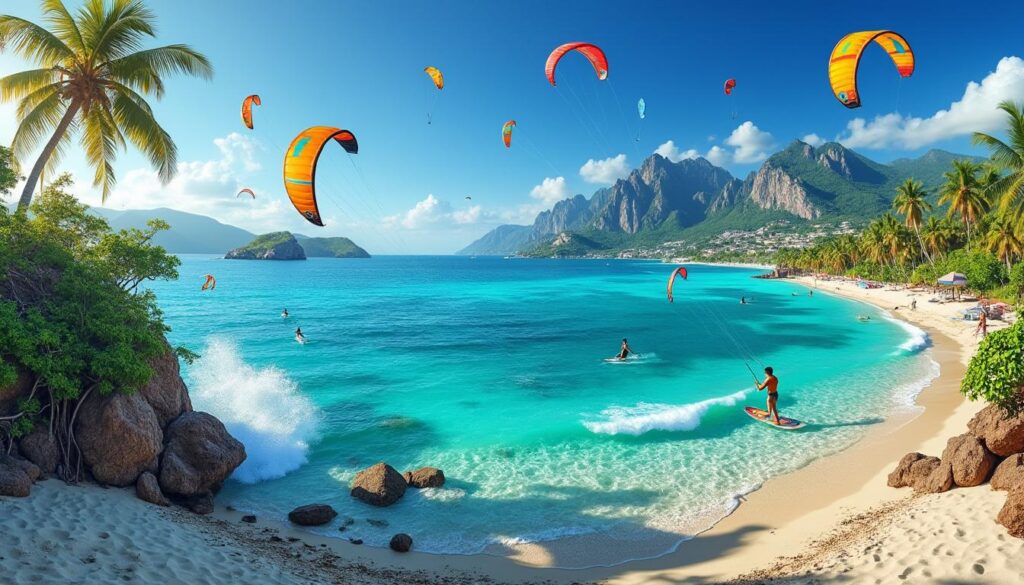
When in Italy people pull out their down jackets and their hands turn to ice on the bar, many riders begin dreaming of winter kitesurfing in warm water, with steady wind and sand under their feet instead of 5 mm thick neoprene. The good thing is that it’s not a mirage: between the extended Mediterranean and farther spots, there are destinations where you can leave your winter wetsuit in the wardrobe, work on your maneuvers and come home with a real level jump. The trick is knowing wind direction, seasons, the level required and the beach atmosphere, so you can choose the right destination instead of relying on the usual glossy social feed.
Those who dream of winter kitesurfing holidays often fall into two categories: those who want to progress safely, with structured schools and flat water, and those who seek waves, adrenaline and a nightlife lifestyle. In between, there are those who travel as a couple or with family, needing to mix days on the water with moments of relaxation on land. In this landscape, spots like Tarifa, El Gouna, Lefkada, Sicily, Cape Town, Boracay, La Ventana, Maui and Zanzibar always come up in riders’ conversations, but not all are equally suitable for beginner kitesurfing or for someone who has just finished a kitesurf course in Italy. The wind doesn’t forgive: it must be understood, respected and matched to your real level.
In short
- Winter kitesurfing: choosing a warm spot is not enough; you need to understand the season, the intensity and the wind direction.
- In the extended Mediterranean, Tarifa, El Gouna, Lefkada and Sicily offer less cold water and many schools for those who want to learn kitesurfing or progress.
- Distant destinations like Cape Town, Boracay, La Ventana, Maui and Zanzibar require more preparation, but provide serious wind and very active kite communities.
- Choosing an insurance policy, checking the Foreign Ministry’s recommendations and assessing your own level are essential steps before booking.
- Physical training, understanding kitesurf weather and contact with the kitesurf community Italy turn the trip into a real opportunity for growth on the water.
Winter kitesurfing in the Mediterranean: Tarifa and surroundings to stay “almost” at home
For those who want to leave from kitesurf Italy without flying to the other side of the world, the first winter thought often lands on Tarifa. Located at the southernmost tip of Spain, it is known as one of the world’s wind capitals. Here the meeting is between the Mediterranean and the Atlantic, a combination that, during the cold months in northern Europe, continues to generate solid sessions. The thermometer isn’t tropical, but with a good wetsuit and light gloves you can log hours of flat water and small chop, perfect for those who want to train long reaches, transitions and first jumps.
The main winds, Levante and Ponente, completely change the face of the kitesurf spot. With Ponente you find more accessible conditions, ideal for those who have already done some kitesurf course and want to consolidate starts and upwind riding. With Levante, the wind tends to be stronger and gustier, recommended for riders with good board control, secure kite relaunches and the ability to manage body drags if the board is lost. This variety is exactly what makes Tarifa interesting for those who already have a solid base possibly built between kitesurf Salento, Sardinia or Gizzeria in Calabria.
Those seeking alternatives in the Mediterranean basin find in El Gouna, on the Red Sea, another strong hub for winter kitesurfing holidays. Here the water is warmer, the lagoons offer wide areas of flat water and the percentage of windy days from November to March is very high. The presence of numerous kitesurf schools makes the area ideal even for those who still feel in the beginner kitesurfing phase. Large spaces, often side or side-on wind, relatively shallow bottoms: it’s the perfect scenario to repeat water starts until your body performs them automatically.
Many Italian riders choose these destinations to turn a week off into a real “personal camp”. Some set up the typical day like this: morning dedicated to technical exercises (tacking in switch, speed control, first small controlled jumps), light lunch break, freer afternoon session where you allow playtime, group downwinds or attempts at new tricks. This approach is far more effective than getting into the water without a plan, hoping progression will come by itself.
Another advantage of spots like El Gouna is the off-water context. Hotels and resorts designed for riders often provide storage for equipment, evening “debriefing” areas, and sometimes even video sessions with instructors. It’s the ideal environment for those who, after starting at a kitesurf Puglia spot like the Ionian or the Salento Adriatic, want to make a leap in quality in a few days. The secret, however, always remains the same: listen to the wind, don’t force conditions beyond your reach and respect your body’s limits.
Staying in the extended Mediterranean also allows for shorter trips, ideal if you only have a few days or a limited budget. A long weekend in Tarifa or on the Red Sea, if well planned, can be almost as valuable as a full week at the other end of the world. The key point is to arrive prepared, with clear objectives and awareness of the context, instead of stepping onto the beach and “seeing what happens.”
Lefkada and Sicily: winter kitesurfing between the Ionian and central Mediterranean
Looking east, Lefkada in the Ionian Sea and various areas of Sicily represent a balanced solution for those who want to keep riding even in the cold months without straying too far from Italy. Lefkada is famous among riders for its clear waters and the wind that, for much of the year, maintains a regularity valuable for those working on technique. Out of high season temperatures drop, but with an appropriate wetsuit the session remains more than enjoyable, especially for those already used to the Salento wind of late autumn.
In Sicily, the western coast and some eastern areas offer wide beaches, sandy bottoms and often generous wind even outside the summer season. For those coming from kitesurf Lecce or kitesurf Taranto itineraries, Sicily is a larger natural gym where you can measure yourself against different yet familiar winds. It’s an excellent choice for a mixed group: beginners who may enroll in a new local kitesurf course, intermediate riders focusing on pop and basic jumps, and advanced riders seeking more demanding lines.
The key, in all these Mediterranean destinations, is being able to read the weather. Before leaving it’s worth studying local forecasts, wind statistics and the type of spot. To avoid relying on chance, it’s useful to pair these studies with specific resources on kitesurf weather and wind, like the dedicated article on Salento Kiter. Knowing the dynamics of a thermal breeze, distinguishing an incoming front, understanding when a strengthening is likely makes the difference between a holiday used to the fullest and days wasted watching the bay from the shore.
In summary, the Mediterranean and surroundings offer concrete solutions for a “relatively” warm winter kitesurfing with plenty of substance, ideal for those who want a mix of technical progression, contained costs and an atmosphere close to Italian habits. The last run of the day, with the low sun and hands still dry despite a few hours in the water, rewards all the planning.
Warm winter spots accessible from Italy: how to choose the right destination
When talking about “warm destinations” for winter kitesurfing, the risk is grouping everything together: one thing is the Red Sea with tepid water and regular wind, another is an area with powerful waves, strong currents and more complex logistics. To avoid mistakes, it’s useful to think in terms of rider profiles. Those still close to the beginner kitesurfing level need spots with sandy bottoms, not-too-gusty wind, structured schools and services at hand. Those who overfly, jump, do kiteloops and long downwinds can push towards wilder destinations.
An often underestimated parameter is the ratio between travel hours and potential hours in the water. Traveling 15 hours total to then have three half-days reduced by uncertain wind doesn’t make much sense, especially if closer alternatives with better wind statistics exist. For this reason many Italian riders, before booking, compare wind charts, air and water temperatures, and the presence of local kitesurf schools. All this does not eliminate unpredictability, but it reduces the “wind gaps” that cut the legs from the desire to progress.
Many riders also use winter to work on the “invisible” aspects of their kite. Besides hours on the water, they include land sessions: stretching, shoulder and hip mobility, core and leg strengthening. Working on these aspects is fundamental, and can be structured by following targeted advice such as those on kitesurf and physical fitness. Arriving at the destination already prepared, instead of improvising, allows you to make the most of the wind and reduce the risk of injuries, especially in the first days when enthusiasm pushes you to stay in the water “as long as there’s light”.
Another key element is company. Traveling in a group with riders of similar level and goals avoids frustrations: no one stays on the shore for lack of motivation, everyone compares lines, mistakes and corrections. To find compatible travel companions, many rely more and more on the kitesurf community Italy, made up of local groups, schools and projects that network riders from north to south. The feedback from those who have already lived a certain destination is worth more than a thousand generic online searches.
Finally, safety should not be forgotten. Before finalizing the trip, it is essential to check the Foreign Ministry’s recommendations for the chosen country. Some areas, even very popular among kiters, can be discouraged during certain periods. In that case insurances tend not to cover any incidents, leaving the rider exposed. It’s therefore better to check calmly beforehand, evaluate alternatives and make an informed choice.
Comparative table: some warm winter destinations compared
To help you put order among the options, here is a comparative overview of some mentioned destinations, designed for a rider starting from Italy:
| Destination | Ideal winter period | Recommended level | Water type | Main strengths |
|---|---|---|---|---|
| Tarifa (Spain) | Autumn – early spring | Intermediate / Advanced | Chop, sometimes waves | Strong and frequent wind, huge community, many schools |
| El Gouna (Red Sea) | November – March | Beginner / Intermediate | Flat lagoons, shallow bottom | Consistent wind, wide spots, kite-resort packages |
| Lefkada (Greece) | Late summer – autumn | Beginner / Intermediate | Generally flat water or light chop | Clear water, relatively calm spots |
| Sicily (Italy) | Autumn – spring | All levels | Mixed: lagoons and open sea | Variety of spots, close culture, easy logistics from Italy |
| Zanzibar (Tanzania) | June – October / December – February | Beginner / Intermediate | Lagoons with sandy bottom | Warm water, trade wind, relaxed atmosphere |
Looking at this table honestly relative to your level, it’s easier to choose where to set your next winter on the kite without turning the holiday into a constant struggle with the wind.
Far classics: Cape Town, Boracay and La Ventana for a winter of strong wind
When talking about the best kitesurf spot Italy, the comparison with major international destinations comes naturally. Cape Town, Boracay and La Ventana are not just names in videos, but true battlegrounds for those who love decisive wind. Cape Town, in South Africa, has become almost synonymous with winter for many European riders: between November and February the southern summer brings powerful thermals, choppy seas and scenes that have appeared for years in big air clips. Bloubergstrand beach, with the view of Table Mountain, is as iconic as it is demanding: it’s not the ideal environment for those still struggling with water starts.
Here the wind often easily exceeds 25 knots, with gusts that test even very experienced riders. You work with small kites, powerful edges and landings that don’t forgive timing errors. It’s the playground for those dreaming of kiteloops, high jumps and pounding seas. To approach these conditions safely, it’s wise to arrive after at least a couple of years of steady practice in more manageable contexts, perhaps with solid bases built between kitesurf Adriatic, kitesurf Ionian and medium trips like the Red Sea or Greece.
Boracay, in the Philippines, is another destination that often enters winter lists. The island offers a leeward bay very suitable for kite, with warm water and trade winds that blow regularly between November and April. Here the atmosphere shifts: less extreme big air, more mix of schools, mid-level riders, travelers discovering kite and intense life on land. It’s an interesting destination for those who want to combine technical progression and time off the water, but distance (and time difference) must be taken into account.
La Ventana, in Baja California (Mexico), represents a small world of its own. It’s a relatively small locality but known worldwide for its conditions: regular wind, clear water and a close-knit community of kiters and windsurfers. Friendships form easily there, technical advice is exchanged over coffee and group outings are common. For many European riders looking to make an “ocean leap” in winter, La Ventana is a logical choice, especially for those who want to combine kite with a bit of road exploration.
These destinations, however, require clarity in preparation. Buying the ticket is not enough: it’s important to organize equipment (a kite set suitable for strong winds), learn about any local rules, book advanced lessons if you want to push new maneuvers safely and, above all, factor in planned rest days. The body, under strong wind and intense sessions, needs more recovery compared to classic breezy afternoons in Italy.
Checklist for distant destinations
To avoid forgetting important pieces when preparing a long-distance winter kitesurf trip, a clear checklist can be useful:
- Passport and documents: check expiration dates, visas and any health requirements.
- Travel and sports insurance: make sure kitesurfing is explicitly covered.
- Equipment: kite set suitable for the average wind, spare bar, leash in good condition.
- Pre-departure training: a few weeks of targeted physical preparation and consistent stretching.
- Meteorological plan: apps, local sites and consultation with riders who already know the area.
Being rigorous at this stage doesn’t take spontaneity away from the trip; on the contrary: it allows you to enjoy the session knowing the basics are in place.
Maui and Zanzibar: winter kitesurfing between surf culture and stable trade winds
Those looking for warm destinations for winter kitesurfing that combine warm water, intense scenery and a well-rooted surf culture often look to Maui and Zanzibar. Maui, in Hawaii, has long been considered one of the absolute meccas for wind sports. Here the line between surf, windsurf and kite is very thin: on the same coast you find foil, directional boards, twin tips and longboards. The famous Ho’okipa spot, even if more associated with windsurf and wave riding, represents a sort of “temple” for those who live the board as an extension of the body. It’s not an area for beginners, but watching local riders in action offers many more lessons than any tutorial.
The beaches more suited to kite, with less radical conditions, become the perfect classroom for those who already have solid control of the equipment and want to work on their relationship with the wave. Hawaiian waves are not decorative: they have power, rhythm and demand respect. Here you learn to choose the right set, to read the section that opens and above all to accept that the ocean always commands. For a rider coming from years of kitesurf Italy, it’s the chance to completely change perspective.
Zanzibar, on the other hand, offers a different face of warm winter: turquoise lagoons, sandy bottoms, trade winds that blow in two main windows (June–October and December–February). It’s a destination much loved by those seeking technical progression in an environment less “extreme” than Cape Town or Maui. The presence of schools, relatively forgiving conditions and a relaxed atmosphere make it suitable even for those just out of the beginner kitesurfing phase who want to consolidate basics like tacks, toeside riding and speed control.
Here you mainly learn consistency. The trade wind doesn’t always arrive like in videos, but when it does it offers hours with similar intensity and stable direction. It’s the perfect opportunity to repeat a maneuver hundreds of times in a row: toeside transition, first jump with a grab, a small controlled backroll. Day after day, with these conditions, the body records the movements and turns them into automatisms.
In both destinations, the cultural side matters. Maui allows immersion in the most iconic surf culture on the planet: respect for the sea, pre-session rituality, attention to the lineup’s unwritten rules. Zanzibar, with its slower rhythms and direct contact with local communities, teaches you to live kite not as “fast consumption” of adrenaline, but as part of a day paced by the wind and tides. This approach fully fits the philosophy of those who see kite not only as a sport but as a lifestyle.
Attention to safety, the Foreign Ministry and insurance
Before orienting yourself toward distant destinations, an often overlooked step is essential: check the official guidance of the Foreign Ministry for the chosen country. Some areas beloved by the kite world can, at certain times, be discouraged for geopolitical or safety reasons. In these situations, travel policies tend not to cover events or incidents occurring there, leaving the rider uncovered just when they would need coverage the most.
For this reason, in addition to checking recommendations, it’s useful to spend time choosing the policy. Not all cover water sports in the same way, and often kitesurfing is included only if practiced at an amateur level and not competitively. Some policies cover medical expenses up to significant limits, but exclude damage to third parties or other people’s equipment. Before taking off, it’s thus advisable to read the terms carefully, perhaps using specific guides like those dedicated to kitesurf insurance. It’s a detail that appears bureaucratic but is actually an integral part of the responsible way to live the wind.
In the end, Maui and Zanzibar represent two different faces of the same desire: a warm winter kitesurfing in which the sea is not just a backdrop but a teacher. Those returning from these spots bring back not only photos and videos, but a different relationship with the board and the water.
Preparing a winter kitesurf trip: community, training and small tricks
Planning a winter spent between kite and sun does not only mean choosing the most Instagrammed destination. The real difference is made by the work that starts months before: consulting other riders, taking care of physical conditioning, deciding whether to bring all the equipment or rent it locally, setting concrete progression goals. In this sense, the fabric of the kitesurf community Italy is a huge resource. Local groups, schools and specialized media share travel reports, comparisons on the quality of new and old spots, and advice on the best periods for each hemisphere.
Participating in these exchanges helps avoid classic mistakes: leaving during the rainy season, arriving when the thermal breeze is not yet active, underestimating currents or overestimating your level in ocean conditions. Often the stories of riders who have lived for weeks in a spot are worth much more than any brochure with glossy photos. In addition, staying connected to the community makes it easier to find travel companions to share costs, transfers and maybe even a private instructor for a few days.
Physical training plays an equally central role. In winter, many Italian riders alternate sessions at local seas (often colder and more demanding) with “dry” activities like landboarding, wing skating or other variants that allow you to keep confidence with kite traction even away from the water. Exploring topics like landboard and kitesurf on land helps understand how traction management and balance can be trained on solid surfaces, with great benefits for starts and upwind control at sea.
Finally, there’s the mental part: deciding in advance what you want to bring home from the trip. Saying “I want to improve” is not enough. It makes sense to set clear goals: master toeside on both tacks, land a backroll safely, learn to manage an outing in medium waves without losing composure. Each session abroad, especially in warmer water with regular wind, thus becomes a concrete building block in your technical construction, not just a memory.
A well-prepared winter kitesurfing trip is not an escape but an investment. You return home with a different relationship with the wind, a more aware body and a wider network of contacts to meet again perhaps between kitesurf Salento, Sardinia, Calabria or the Adriatic. And when on the beach in Italy you hear someone ask “where to go to warm up in winter?”, you’ll have much more than a generic answer: you’ll tell stories of runs, maneuvers, winds and small details that really make the quality of a spot.
What is the best warm destination for winter kitesurfing for a beginner?
For those still close to the beginner kitesurfing level, spots like El Gouna on the Red Sea or some lagoons in Zanzibar are among the safest choices. They offer comparatively flat water, sandy bottoms, often side or side-on wind and a strong presence of kitesurf schools that follow the rider step by step. Before leaving, it is useful to check the wind season, the political conditions of the country and specific kitesurf insurance coverage.
How can I tell if a winter spot is suitable for my level?
The key is to cross-check three data points: wind statistics (average intensity and gusts), the type of water (flat, chop, waves) and the presence of currents or obstacles. A spot with wind often above 25 knots, significant waves and marked shorebreak is not ideal for someone who has just finished a kitesurf course. Conversely, wide lagoons, wind between 15 and 22 knots and shallow bottoms are indicated to build confidence. Consulting riders who already know the destination and reading specific technical guides helps avoid mistakes.
Do you need specific insurance to kitesurf while traveling?
It is strongly recommended. Many standard travel policies do not automatically include water sports like kitesurfing, or they cover them only at an amateur level with some exclusions. Before leaving, it is important to verify that kitesurfing is explicitly mentioned, check the medical expense limits and understand whether damage to third parties is included or not. Informing yourself through guides dedicated to kitesurf insurance helps choose wisely.
How much equipment should you bring for a winter kitesurf trip?
It depends on the destination and your level. In windy destinations like Cape Town many riders bring at least two, often three kites to cover a wide wind range, in addition to a main board and, if possible, a spare. In softer spots with quality rental options you can travel lighter bringing only your harness and personal accessories. Before deciding, it is useful to check rental costs on site, the availability of up-to-date models and airline policies for transporting equipment.
How to train before a kitesurf trip to an intense destination like Cape Town or Maui?
In the two to three months prior, it is useful to set up work on the core, endurance and mobility. Workouts involving legs and back, balance exercises and consistent stretching reduce the risk of injuries and early fatigue. If Italian weather allows, a few outings in windy spots on the Adriatic or Ionian helps get used to gusts and choppy water. If conditions are lacking, you can integrate with dry-land activities like landboarding, always using helmet and appropriate protections.