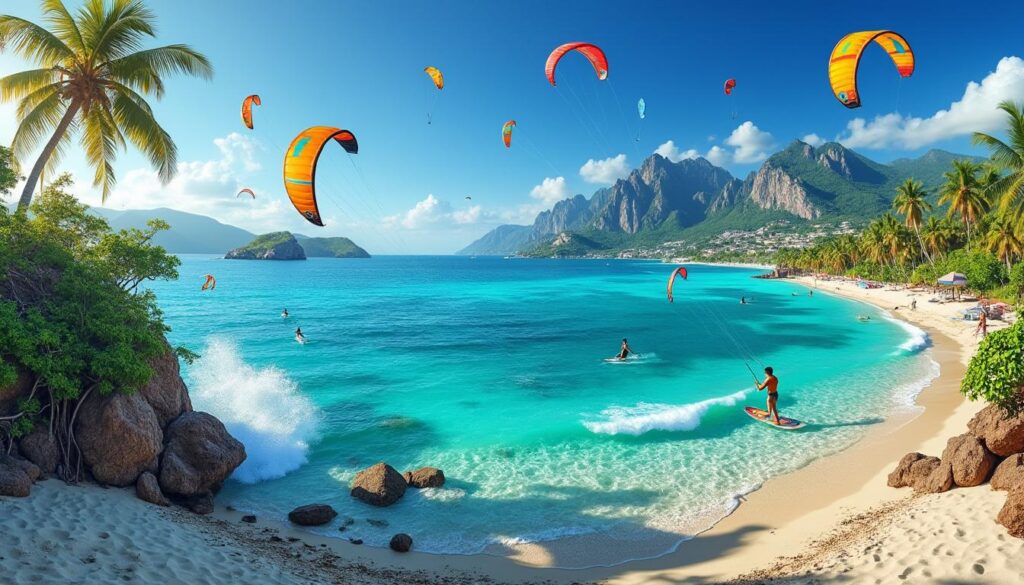
Strong wind, flat lagoons and Atlantic waves: Morocco has become one of the reference corridors for those who want to push their kitesurfing level without getting lost in postcard-filtered scenery. Dakhla and Essaouira are the two names that have been on the lips of European riders for years, but behind these two icons there is a long, windy and surprisingly varied country. Between desert meeting the sea, fortified cities, significant tides and more or less secret spots, kitesurfing in Morocco is not a simple “vacation package”, it is a real journey through wind, logistics and local culture.
Those coming from kitesurfing in Italy, from kitesurfing in Salento or from a kitesurf spot in Puglia will find in Morocco a natural extension of their “training ground”: the same Mediterranean Sea to the north, but an Atlantic that pushes consistently to the west, often with side or side-on winds, perfect for freestyle, big air and wave riding. This article goes into detail on the best kitesurf spots in Morocco, focusing on Dakhla, Essaouira and some alternatives along the coast. The goal is clear: to give you concrete tools to choose when to leave, where to stay, what level is needed for each spot, how to organize a kitesurf course or a solo session, without getting lost in the wording of brochures.
In short
- Dakhla: endless lagoon, strong and consistent wind, ideal to progress from water start to first jumps and for those seeking extreme flat water.
- Essaouira: fortified city, waves, often steady wind, suited to intermediate riders and wave lovers, less “easy” for beginner kitesurfers.
- Other spots in Morocco: Sidi Kaouki, Moulay Bouzerktoun, Safi, more “raw” spots, often wave-oriented, to be tackled with good kite control.
- Organization: choose the right season, evaluate reputable kitesurf schools, understand tides, currents and local safety before inflating the kite.
- Mediterranean–Atlantic connection: if you love Salento wind, kitesurfing the Ionian or kitesurfing the Adriatic, the jump to Morocco is a natural way to raise the bar.
Kitesurf Morocco: why Dakhla and Essaouira are on everyone’s radar
Morocco has become a sort of “second home” for many European riders because it combines three rare elements to find together: frequent wind, still manageable costs and a living culture beyond the spot. Here it’s not just about counting knots, but about living days marked by the rhythm of the Atlantic, with calmer mornings, pumped afternoons, desert sunsets and evenings based on mint tea and steaming tagine.
From the wind point of view, the Atlantic coastal strip of Morocco offers a statistic that is tempting: long periods of trade winds, especially between spring and late summer, with intensities that can easily range from 18 to 30 knots. For those coming from kitesurfing in Lecce or kitesurfing in Taranto, accustomed perhaps to juggling sessions between Mistral, Scirocco and capricious tramontanas, the feeling is of entering a much more reliable “natural fan”. Even in terms of water temperature, the Moroccan Atlantic does require a serious wetsuit, but still gives long and bright days, perfect for racking up hours of practice.
On the cost front, if you compare a kitesurfing vacation package in Morocco with destinations like Mauritius or other distant paradises, the budget usually stays softer, especially if you organize with a group of rider friends. Accommodation, food and internal transfers are still affordable, although super touristic areas like the Dakhla lagoon are seeing progressive increases. The right idea is to choose well where to invest: better a good kitesurf school, solid equipment and decent insurance, rather than spending everything on the Instagrammable lodge.
Finally, the culture. Unlike other “resort-only” spots, in Morocco contact with cities, markets and local habits is inevitable and enriching. Those who also love the lifestyle side of kite, street food, medinas, hammams, will find a full mix. A rider who usually tours the best kitesurf spots in Italy, between Sicily, Sardinia and Puglia, will find themselves here bargaining the price of a taxi with a harness on their shoulder. In summary: Morocco means solid wind, variety of conditions and real life beyond the spot parking lot.
Kitesurfing for beginners in Morocco: yes or no?
Those looking to learn kitesurfing often wonder if it’s a good idea to start directly in Morocco. The answer depends on how ready you feel to handle strong wind and a new context. Spots like Dakhla offer flat lagoons and huge spaces, conditions on paper ideal for beginner kitesurfing, but you always need a structured kitesurf school, with helmets, radios, support boats and certified instructors. Strong wind does not forgive those who go out too independently.
For many Italian riders it’s helpful to do the first basics in a kitesurf course near home, perhaps in an area like kitesurfing in Salento, a kitesurf spot in Puglia on the Ionian or the Adriatic. This way you arrive in Morocco already with control over the wind window and body dragging, and you can use the lagoon to consolidate water starts, first upwind legs and turns. Morocco is not a soft playground, it is an accelerator of progression if you arrive with the right foundations.
Dakhla kitesurf: lagoon, desert and wind that doesn’t let up
Dakhla is the name you hear mentioned whenever someone talks about “infinite flat”. A tongue of sand that extends into the Atlantic and creates a huge, flat lagoon with side-shore wind and space in abundance. For the rider coming from the flats of the Ionian or the lagoons of the Adriatic, it is the “XL” version of what they already love: reduced chop, manageable gusts, spots dedicated to different levels, downwind and speed strips for those dreaming of flying high and fast.
Most camps face directly onto the water, so you can go from breakfast to the bar in hand in a few minutes. It’s a destination designed for those who want to focus on intense sessions: wake up, wind, light lunch, wind again, stretching and dinner. The desert surroundings create that bubble sensation: the “outside” world almost disappears, you remain with your kite and an horizon full of colors.
A key point in Dakhla is the tide. The lagoon changes quite a lot in appearance and depth according to the tidal chart. Beginner areas become more or less easy depending on the hour, some shoals emerge or hide. Before inflating the sail, it’s always wise to study times and heights: those coming from spots in Italy with little tidal range must get used to this extra element. Good practice: always ask the local team which areas to avoid at low or high tide.
Dakhla: levels, disciplines and progression
Dakhla works for almost all levels, provided everyone chooses the right area. For those still close to the learning phase, the shallow water areas near the main camps are perfect for repeated water starts, speed control and the first upwind legs on both tacks. Local kitesurf schools often work in small groups with radios, ideal for correcting mistakes in real time.
For intermediates, the lagoon becomes a training ground for jumps, transitions, toeside and unhooked riding. The often sustained wind allows trying tricks in conditions that forgive many “belly” landings, thanks to the flat water. Those dreaming of big air can take advantage of windier days to aim for high altitudes, always with a helmet and impact vest, because wrong loops do not make exceptions.
Finally the wave: the Atlantic, outside the lagoon, offers decent swell, often combined with side or side-off wind in some areas. It’s not the easiest wave to start on, but for those already playing with waves at spots like Corsica or other windy Mediterranean spots, it’s a natural evolution to push down the line.
Summary table: Dakhla in practice
| Element | Detail |
|---|---|
| Best period | From March to October, with peak consistency between May and September |
| Recommended level | From the beginner guided by a school up to advanced freestyle/big air |
| Water type | Flat lagoon or slightly choppy, ocean with waves outside the lagoon |
| Services | Camps directly on the spot, schools, rental, rescue boat |
| Warnings | Tides, shoals, often strong wind, isolation from cities |
Clear conclusion on Dakhla: those seeking rapid progression, many hours on the water and a kite-centric routine will find their ideal base camp here.
A video like this is perfect to visualize the width of the lagoon, the wind direction and the kind of riding you can expect on days with 20–25 knots.
Essaouira kitesurf: waves, the medina and full Atlantic wind
Essaouira plays in a different league compared to Dakhla. Here the wind often comes in strong, the sea is open and the wave is part of the package. The long beach in front of the fortified city is the main spot, with wind almost always side-shore or side-on and a combination of chop and waves that change with tide and swell. It is an ideal playground for intermediate and advanced riders who want to measure themselves against livelier conditions.
The city itself adds a unique dimension: you get out of the water and within minutes you are inside the medina, among ramparts, street musicians, the smell of grilled fish and alleys full of shops. This makes it perfect for those traveling with non-kiting friends or family: those who don’t ride still have plenty to do. If you come from Italian spots with little “city life” around the spot, here you discover how pleasant it is to switch pace between sessions and evening strolls.
In terms of wind, Essaouira is not joking. Days of 25–30 knots are frequent in high season, with gusts that require good bar control. For those still in the beginner kitesurfing phase, the risk is ending up overpowered and at the mercy of the chop. Better to arrive with decent board control and relaunch skills. Wave lovers can aim for sections farther from the center, where the wave becomes cleaner, always paying attention to the rip current.
Essaouira: how to choose the right day
One of the most common mistakes riders arriving in Essaouira make is underestimating the role of tides and overestimating their level. The trick is learning to read the sea from the parking: wave height, free spaces, zones of more dangerous shore break. If the sea is very messy and all the kites in the water are small, it might not be the best day for a “timid” intermediate rider.
Many locals recommend starting with smaller kites than usual, especially in the windiest months. If at home, on a kitesurf spot in Puglia or in Italy in general, you use a 12 meter as your main kite, here you will often find yourself with 9, 8 or even 7 on the most pumped days. Helmet and impact vest become almost standard accessories, not optional extras.
The real strength of Essaouira is the combination of intense sessions and city decompression. A typical day? Breakfast with a view of the ramparts, wind check, a two-hour session between chop and waves, quick lunch, another session if the body allows, then mint tea on a terrace watching the bay and finishing in a local restaurant. The final insight is simple: Essaouira is the spot that teaches you to respect the Atlantic wind while giving you a lively urban backdrop.
Watching some drone footage of the bay helps understand how waves, currents and the areas more suitable for each rider level are distributed.
Other kitesurf spots in Morocco: Sidi Kaouki, Moulay, Safi and the Atlantic coast
Beyond Dakhla and Essaouira, the Moroccan coast is a succession of rawer, often wave-oriented spots that attract riders with good experience and a passion for surf and kitewave. Names like Sidi Kaouki, Moulay Bouzerktoun and Safi come up in conversations among those who are not satisfied with the “classic package” and seek more technical conditions.
Sidi Kaouki is located south of Essaouira and is a long Atlantic beach with regular waves and often strong wind. The environment is much quieter compared to the city: few bars, some simple facilities, surf village atmosphere. It’s suitable for those who already have good kite control, know how to relaunch in the water with waves and are not intimidated by a decisive shore break. Perfect to combine surf and kite in the same day.
Moulay Bouzerktoun is famous among windsurf enthusiasts and now increasingly among kiters too. Here the wave can become powerful and side-off wind in some configurations makes everything technical. It’s a place you don’t go to learn kitesurfing, but to push your riding in more radical conditions. Those coming from wave spots in Italy, like some Sardinian or Sicilian reefs, find in Moulay a serious testing ground.
Safi, on the other hand, is synonymous with world-class surfing waves. Kitesurfing here is possible but requires perfect timing and a high level, because the wave can be significant and the reef sections do not forgive mistakes. It’s the classic spot you go to with experienced friends and, ideally, with someone who knows it well. It’s not a generic playground, it’s a destination to be treated with respect.
When it makes sense to explore these alternative spots
These spots come into play when you feel that “comfortable” spots like the Dakhla lagoon are no longer enough. If you already move confidently among waves in places like Salento’s Adriatic side, or if you’ve had experiences in oceanic spots like the Brazilian spots or similar, you can start exploring Sidi Kaouki and company. The right signal is when wave conditions no longer “scare” you, but ignite the desire to go out.
Organizing well is fundamental. It’s always worth checking the services on site: rescue practically absent in some areas, little assistance on the beach, rare boats. Here the principle applies “while in the lagoon you can experiment, here you already have to know how to control”. For this reason many riders prefer to build a progressive itinerary: a few days in Essaouira to get back in the groove with wind and waves, then possibly move to Sidi or Moulay if the forecasts and level allow.
The key message: Morocco’s “B-side” spots are not less valid, they are simply more technical. Don’t follow only the trend of videos, honestly assess your level before jumping in.
Morocco, the Mediterranean and kitesurfing in Italy: how to connect your spots
Those who have built their path among kitesurfing in Italy, kitesurfing in Salento, kitesurf spots in Puglia and the many bays scattered between the Ionian and Adriatic often see Morocco as the next natural step. Where Salento wind and the two seas (Ionian and Adriatic) teach you to read sudden changes of direction, Morocco presents a more decisive consistency, but with ocean and tides complicating the formula.
An intelligent way to grow as a rider is to build a “wind path” over the year. For example: spring between Puglia and Sicily to keep the body fit and test gear; summer in a Mediterranean foreign destination, like Paros or other windy islands; autumn-winter in Morocco or other windy Atlantic countries. This way the level doesn’t “stop” at the Italian summer months alone, but progresses every season.
Morocco also helps you understand what kind of rider you want to be. If you fall in love with Dakhla, you might be a fan of flat water, powerful tricks and timed big air. If you feel at home in Essaouira or Sidi Kaouki, probably wave riding in lively conditions is your path. Returning to Italy, you will then be able to choose your spots better: reef, waves, lagoons, beach breaks, depending on what you discovered about yourself on the Atlantic.
Practical checklist to plan a kite trip to Morocco
To turn the idea into reality, it helps to have a concrete, essential list, far from generic advice. Here is an operational summary:
- Level: honestly assess where you are (unstable water start, secure upwind, basic jumps, advanced wave) and choose the spot accordingly.
- Period: cross-check wind statistics with your holidays, without forgetting water temperature and daylight hours.
- Equipment: bring at least two kite sizes (one medium, one small) and a board you know well, plus a wetsuit suitable for the Atlantic.
- School or autonomy: if you aim for a kitesurf course, book in advance with a recognized kitesurf school; if you are autonomous, find out about rescue.
- Insurance and safety: don’t skimp on sports insurance, helmet, impact vest, basic repair kit.
With a checklist like this, the trip stops being a simple “saved dream” and becomes a concrete plan, ready to be attached to the next favorable wind.
What is the best period to kitesurf in Morocco?
In general, the months from March to October offer the most reliable conditions, with a peak of wind consistency between May and September along the Atlantic coast. Dakhla works well for much of the year, while Essaouira and nearby spots perform best from late spring to the end of summer. In winter there are good windows, but they are less stable and often colder.
Is Morocco suitable for beginner kitesurfing?
Yes, but only by choosing the right spots and formats. Dakhla, with its flat lagoon and structured schools, is suitable for beginners supervised by instructors. Essaouira, Sidi Kaouki, Moulay and Safi are more suited to intermediate and advanced riders due to waves, currents and often strong wind. For those starting out, it is advisable to begin with a course near home and then use Morocco to consolidate skills.
Should you bring all your equipment or is it better to rent on site?
If you already have your setup and are comfortable with it, bringing it makes sense, especially board and harness. In many schools in Dakhla and Essaouira it’s still possible to rent kites and boards of the latest generation. The ideal compromise is often: bring your preferred board and rely on rental for some kite sizes, so you can better adapt to local wind ranges without overpacking.
What are the main risks to consider at Moroccan spots?
The most common critical points are strong or gusty wind, marked tides in the lagoon, waves and currents in the ocean, and water assistance that is not always widespread in less touristic spots. It is essential to check conditions daily, ask locals where to enter and exit, follow the instructions of kitesurf schools and not overestimate your level on more demanding days.
How to compare Morocco with kitesurf spots in Italy?
Compared to many Italian spots, Morocco offers on average more wind and more usable days per month, but introduces new elements such as open ocean, more consistent waves and significant tides. If in Italy you mainly move between the Ionian and Adriatic, the jump to the Atlantic is a natural upgrade, provided you arrive with a solid technical base and the willingness to adapt to more variable and intense conditions.