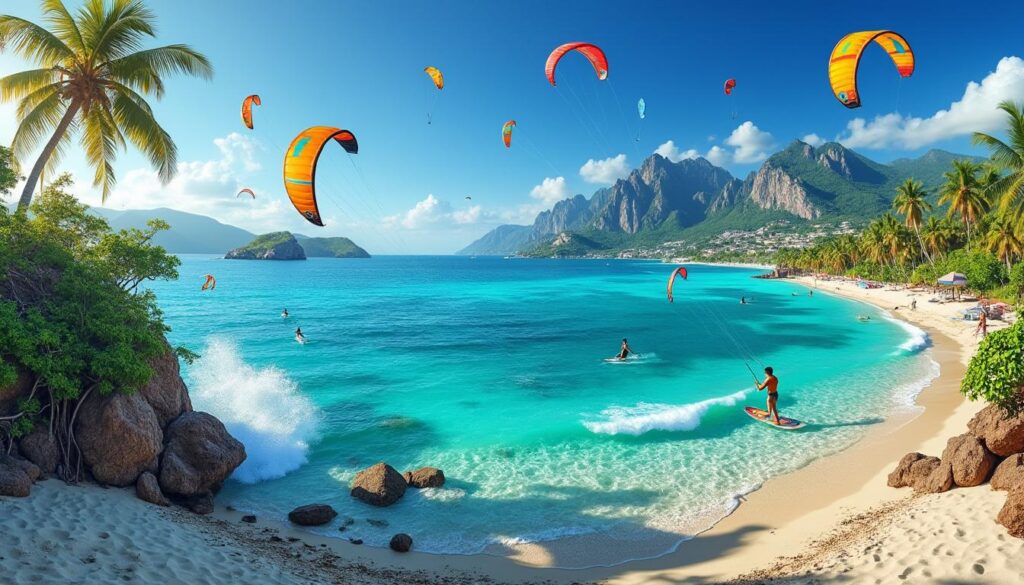
Turin is not on the sea, but those who live in the shadow of the Mole still have the wind on their mind. Between alpine lakes, mountain passes perfect for snowkite and a few “clever” beaches reachable in a day or over the weekend, those who dream of kitesurfing find more options than it may seem. The trick is not to look for the “nearest sea at random”, but to understand where the wind actually blows, in which seasons and with what trade-offs in terms of travel, temperature and services. That’s how real sessions are born, the ones where you load the car at dawn and in the evening you come back still with sand on you or with ice in the snowkite bindings.
This overview puts order into the chaos of tips heard at the bar or read in Facebook groups. We start with the lakes and mountain spots of Piemonte, move through the northern lakes, then widen the view to the marine spots most logical for those leaving from Turin: Liguria, Tuscany, Lazio and the major kitesurfing destinations in Italy. Practical tips on courses, schools, rental, safety, and how to plan a real kitesurf holiday are not missing, whether it’s a long weekend or a more serious trip toward the best kitesurf spots in Italy. All with a simple underlying idea: if you learn to read the wind, even from Turin kite becomes a stable part of your week, not just a distant dream.
- Turin and Piemonte offer lakes and mountain passes perfect for kite, snowkite and landkite, even without the sea.
- Spots reachable in 1–4 hours (Liguria, Tuscany, Garda, Lazio) allow you to build a real session calendar.
- To learn kitesurf as a beginner it is essential to choose schools with wide spaces, manageable wind and clear teaching.
- Snowkite and landboard become fundamental allies to keep fit and progress when water is far away.
- A good annual plan combines spots near the North with longer sessions in Puglia, Salento and Southern Italy.
Kitesurf Turin and Piemonte: where people actually ride between lakes, snowkite and landkite
For those who live in the city, the idea of doing kitesurf in Turin seems almost provocative. Yet, looking at the map with the eyes of a rider, you discover that Piemonte is a true crossroads: mountains with plateaus perfect for snowkite, windy lakes to exploit the breezes, grassy clearings ideal for landboard. Those who organize well can have sessions all year round, alternating water, snow and land, and arrive at their first sea outing with surprisingly good bar control already.
Imagine Luca, 32, who works in Turin and has dreamed of kite for years. Instead of waiting for summer at the sea, he starts with a kitesurf school that operates from a Turin base, does theory in the city, then practices on weekends between lakes and alpine spots. After a few months he has already learned to manage the kite safely, feels the gusts on his skin and understands by himself when a wind is too strong or too weak. When he arrives at his first kitesurf spot in Puglia on holiday, he doesn’t start from zero: he already has the water start in mind, and that changes everything.
Around Turin there are sports centers that offer introductory kite courses, often with very simple online booking systems: enter your address, filter by age and level, choose preferred days and book your first lesson or even a free introductory meeting. Schedules are often designed for those who work: evening sessions, weekends, flexible time slots between morning and afternoon. A “sports search engine” applied to kite, useful especially if you are starting and don’t know where to begin.
Dante’s phrase, “One cannot understand the passion who has not experienced it”, perfectly describes what happens the first time you feel a kite lift your feet off the ground, even on the grass of a sports field. This kind of preparatory experience, perhaps with a kite trainer or a depowered wing on land, allows you to learn the basic movements without the extra weight of water, the harness pulling and the anxiety of not touching bottom.
Many schools linked to the Turin area structure courses with an indoor or classroom part (weather, safety, wind theory), followed by practical sessions on different spots depending on the season. In winter they often focus on alternative activities to stay connected to the wind: snowkite on snowy passes, kite on lakes when conditions allow, and landboard in equipped areas. This modular system makes the learn kitesurf path more continuous and less dependent on “those four days of holiday at the sea”.
The result? When you finally put the board in the water, the day of your first water start you are no longer a tourist trying an exotic sport, but a rider who has already taken a real kitesurf course, used to the bar and wind dynamics. This is exactly what makes Piemonte a credible base to build a long-term kite pathway.
Snowkite in Piemonte: Moncenisio, Sestriere and the mountain passes
When snow covers the valleys and dams turn into white plateaus, kitesurf moves up in altitude and becomes snowkite. In the “kitesurf Turin and Piemonte” context, Moncenisio is one of the names that keeps coming up: a large basin at almost 1900 meters, below the dam, which between December and March offers wide spaces, clean wind and often abundant snow cover. Here the kite glides on snow, not on water, but the sensations of traction, power control and managing the wind window are the same.
The main spots develop in the area below the dam, an open area where kiters can edge with wide freedom. The ideal wind is moderate, steady, between 12 and 22 knots: enough to plane without turning the wing into a cannon. For those living in Turin, travel times are humane: you leave in the morning, return in the evening, with a day on the legs worthy of a real surf trip.
Beyond Moncenisio, the province offers other snowkite spots such as the areas around Sestriere, Monginevro, and some basins in the Cuneo area. Each valley has its own “microclimate” and you need to study bulletins and orientation well: one of the advantages of practicing snowkite is precisely this continuous training in reading maps and wind, a skill that is also fundamental when you return to the sea at a kitesurf spot on the Adriatic or Ionian.
Landboard and kite on land: training close to home
For those who don’t always have time to go up to the mountains, landboard (kite on land with a wheeled board) is a precious ally. A large lawn, a sports field, or a grassy plain far from obstacles and power lines is enough. In some areas near Turin, sports associations organize dedicated sessions with helmets, protection and smaller wings, precisely to make kite more accessible even on weekday afternoons after work.
The beauty of landboard is that every meter covered prepares you for managing power on the water: you learn to start, to brake, to change direction, to feel how an incorrect body position transforms a gust into uncontrolled pull. Those who invest a few months on land then find themselves facing the kite in the sea with fewer fears. Want to explore this world further? A complete overview is available in articles dedicated to landboard and kitesurf on land, which show how to integrate this practice into an annual training program.
Training so close to home makes kite part of your routine, not just a summer hobby. This change of perspective is what transforms “I’d like to start” into “ok, when do we go in the water?”.
Windy lakes near Turin: opportunities and limits of kitesurfing on Piedmont lakes
Looking at a map, it’s natural to ask: “So you really can’t kitesurf on Piemonte’s lakes?”. The answer is: it depends on the lake, local regulations and the season. Some bodies of water have very restrictive rules on sailing and motor navigation, others allow kite only in certain time slots or with special permits. That’s why it’s essential to check every year through municipalities, basin authorities or local kite communities.
From the wind point of view, alpine and pre-alpine lakes often work with thermal breezes: cold air descending from the mountains in the morning, warm air rising from the valley floor in the afternoon. These are not explosive winds like the Sardinian Maestrale, but when they combine well they can give you those 2–3 hours of 15 knots perfect for a session with mid-size wings. For those living in Turin, a lake reachable within 90 minutes by car is pure gold: it allows you to maintain board sensitivity between one holiday and another.
One aspect to evaluate carefully is the type of bottom: Piedmont lakes often drop deep just a few meters from the shore, and beaches are narrow or pebbly. This makes kite launching and landing more delicate, and increases the need for serious assistance among the riders present. For kitesurf beginners, many instructors prefer to use the lake for wind direction and theory, but move the body drag and water start phase to seas or lagoons with more space.
To give you a comparative idea, it can be useful to look at how a super organized lake like Garda works, famous for its Peler and Ora thermals, and mentally compare it with the Piedmont reality: same wind logic, but with more services, schools and pro-kite logistics. This type of comparison helps to understand why those who start in Piemonte often choose to move to Garda for the first real water courses.
Quick comparison: nearby lake vs Lake Garda
To put order among the alternatives, here is a table that compares a typical Piedmont lake with Lake Garda (Torbole area) from the point of view of an aspiring kiter leaving from Turin. The values are indicative, but give you a basis to think about.
| Parameter | Typical Piedmont lake | Lake Garda (Torbole) |
|---|---|---|
| Average distance from Turin | 1–2 hours by car | 3–4 hours by car |
| Kite regulation | Often uncertain or very limited | Dedicated kite areas, clear permits |
| Thermal wind | Irregular, dependent on microclimate | Peler and Ora very regular in season |
| Kitesurf schools present | Few or absent | More schools, structured basic and foil courses |
| Beach space | Limited, often pebbly | Areas organized for launch and landing |
| Suitable for beginners? | Only with instructor and perfect conditions | Yes, with a structured school and support boat |
This comparison shows why many people from Turin choose an “intelligent mix”: train near home when possible, but dedicate long weekends or first real water outings to more frequented spots like Garda, where there are boat lifts to the wind zone, online permits and a whole supply chain used to kiters.
Organizing the first lake sessions safely
Whichever lake you choose, safety remains the priority. Gusts coming down from the mountains can change intensity in minutes, chop can appear out of nowhere, and the shore can be full of rocks. For this reason many instructors insist on some fixed points: never go out alone, always have a boat or a support SUP in the area, wear a helmet and impact vest, and above all check wind direction and intensity twice before rigging.
Another often underrated issue is insurance. In many Italian spots, especially if you rely on a kitesurf school affiliated with federations such as FIV or IKO, liability insurance is mandatory. If you want to understand how to choose a serious coverage, with adequate limits and valid also for travel abroad, you can deepen the topic with guides dedicated to kitesurf insurance selection, designed precisely for those who start moving between multiple spots during the year.
With these basics, the lake doesn’t become your only spot, but a fundamental piece of the puzzle: a place to keep your kite sensitivity alive, try new setups and build confidence in yourself while waiting for the next Maestrale at sea.
From Piemonte to the sea: Liguria, Tuscany and Lazio as natural extensions of Turin
Sooner or later, anyone who kitesurfs in Piemonte hears the call of the sea. The typical question is: “From Turin, where does it make sense to go for a weekend without killing yourself on the road?”. In terms of driving hours, the natural answer is Liguria for quick missions, Tuscany for long weekends, and Lazio for those who don’t mind a few extra kilometers in exchange for wider beaches and more regular waves.
Liguria is the first outlet: relatively close sea, but also narrow coastal stretches, towns squeezed together, few parking spaces and waves that get trapped between breakwaters. For those who are already autonomous, with good technique and wind knowledge, it’s an interesting base. For those in the full phase of kitesurfing for beginners, however, the margins are often too tight: limited launch spaces, bathers in high season, rocks in the water. In this view, it’s often worth going a bit further.
The Tuscan coast, from Talamone to Castiglione della Pescaia and beyond, offers a compromise much more friendly to kiters: long sandy beaches, regular thermals in spring and summer, and wave spots with Scirocco in autumn and winter. Here kite logistics are more structured: large car parks, schools with wind centers, areas dedicated to launching, camping possibilities near the spot.
Tuscany: didactic spots to learn and progress
In the geography of kitesurfing in Italy, Talamone is considered one of the most reliable thermals of the central Tyrrhenian. The semicircular gulf channels a nice W–NW breeze from late spring to early autumn, with peaks of 16–22 knots in the central hours of the afternoon. The water remains relatively flat with side-on wind, perfect for the first tacks in both directions, the first direction changes and the first toeside starts.
Further north, spots like Castiglione della Pescaia and the Roccamare area offer a mix of summer thermal wind and autumn libeccio with waves that can reach 1–2 meters. Here you start to play with surf and maneuvers on the waves, but the most interesting thing for those arriving from Turin is the possibility to alternate flat learning sessions with more “rough” days dedicated to advanced progression.
A typical weekend for a group of people from Turin can be organized like this: depart Friday afternoon, arrive at a campsite near the spot, Saturday a 3–4 hour intensive kitesurf course with an instructor, light lunch break, free session at sunset, and Sunday morning one last outing before returning. In three days you can easily fit six hours of course and at least as much free water time, a huge leap forward compared to “just trying kite”.
Lazio: Rome, Focene and the historic Fiumara Grande
Those who are not afraid to push the accelerator a bit further find a completely different setting in Lazio: very long beaches, less built-up areas and a wind that works year-round. Fiumara Grande (Focene area) is one of the historic spots near Rome: moderate waves with libeccio in autumn-winter, flatter water with Maestrale in spring-summer, wide spaces to launch the kite without the breath of bathers on your neck.
From the perspective of a rider from Turin, Lazio is not a day trip, but a real mini-vacation: you plan to stay at least 3–4 days, optimizing the trip with as many sessions as possible. The advantage is the high density of schools and community, which allows you to easily connect to local groups to share shuttles, alternative spot tips and forecasts more precise than apps.
This type of trip is perfect when you already feel autonomous on a calm thermal and want to try the “real” sea, with waves, currents and more complex scenarios. Practically, you move from a “student” setup to a “rider who organizes himself” setup, and this transition weighs heavily on your medium-term growth.
Learning kitesurf starting from Turin: courses, schools and intelligent progression
Those who start from scratch often imagine signing up for a three-day course and “going home knowing how to do everything”. The reality of an effective kitesurf course is different: it needs intelligent progression, spread-out times, gradual exposure to wind and to the board. For those living in Turin, this means exploiting kitesurf schools that combine theory in the city with practice on multiple spots, and then planning one or two intensive blocks at the sea to consolidate everything.
The typical path is divided into phases. First phase: basic theory, safety, equipment setup, wind reading and practice on land with small kites. Second phase: body dragging in the water, managing the wing while lying down, board recovery. Third phase: water start and first short tacks, often in lagoons or protected bays. Fourth phase: autonomy, upwind recovery, first simple maneuvers (basic turn, toeside). Serious schools do not promise jumps over these steps, but build them with you.
How to choose the right school if you live in Turin
Not all schools work the same way. Some are based permanently at the sea and ask you to be there for the entire course. Others have an organizational base in a city like Turin, then move students to various spots according to forecasts. To understand if a kitesurf school suits you, start with these criteria:
- Modular organization: possibility to do theory in the city, practice on lakes or nearby spots, and then intensive blocks at the sea.
- Certified instructors: IKO, FIV or equivalents, with concrete experience of different Italian spots (Adriatic, Ionian, Tyrrhenian).
- Maximum number of students per instructor: the smaller the group, the more real time you’ll have on the bar.
- Updated equipment: wings with modern safety systems, helmets, impact vests, radio-helmet for teaching.
- Weather plan: a clear strategy on what to do if the wind is missing, if it shifts too much or comes in too strong.
Those who build serious pathways also know how to advise where to go once you finish the basic course: they might tell you to aim for a flat kitesurf spot in Puglia for the first long tacks, or a Sicilian lagoon with shallow water and constant wind. The goal is always the same: put the rider in the best conditions to progress, not to skip steps.
Kitesurf for beginners: realistic timelines and mistakes to avoid
A myth to dispel: learning kitesurf doesn’t necessarily mean “stuck to the bottom for weeks”. If the wind is right and the teaching is clean, already after 6–9 hours of course many students can do a water start and a few meters of riding. The transition from “getting up” to “going and returning to where you started”, however, requires more time, especially if you live far from the sea and cannot go out every day.
Most common mistakes? Immediately trying to cut lesson hours to “save money”, going out alone too early without instinctive bar control, underestimating physical fitness and believing that “it’s all kite pull anyway.” In reality, a good base of core strength, mobility and endurance makes the difference between a session spent struggling with the board and a session where you start really playing with the tacks.
If you’re interested in preparing your body even before the first course, there are resources dedicated precisely to how kite changes your physique and which exercises make the difference: you’ll find ideas in practical guides on kitesurf and physical fitness, useful to set up a minimal training routine even at a gym near your home in Turin. The more prepared you arrive, the more fun and less tiring the course becomes.
The key advice is to accept that kite is not a “weekend and done”, but a pathway. If you live it that way, every hour on the field, at the lake, on the snow or at sea becomes a concrete step forward.
Piedmont as a base to explore kitesurfing in Italy: from Puglia to Salento
Once you have built the foundations between Turin, lakes and first sea outings, Piemonte becomes the springboard to discover some of the best kitesurf spots in Italy. With high-speed trains and direct flights, reaching Puglia, Sicily, Sardinia or Calabria is much easier than a few years ago. And this is exactly where a rider who “cut his teeth” in the North can explode in terms of progression.
Puglia, for example, offers both Adriatic and Ionian spots, with the possibility of choosing day by day based on wind direction. Areas like Vieste on the Gargano, Torre Guaceto, the beaches of Salento between kitesurf Lecce and kitesurf Taranto, are perfect to turn a simple sea trip into a true personal training camp. The Salento wind, capricious but generous, allows you to work both in flat water and with waves, in almost all seasons.
Further south, the Ionian side of Salento offers almost daily summer thermals, while the Adriatic can become a playground with tramontana and grecale. Those coming from the North, used to chasing the wind between lakes and mountains, are often surprised at how much you can laugh in a single week when the weather plays in your favor. The trick is to plan intelligently, choosing the right months for each area.
Salento and southern Italy as the next step
For a rider based in Turin, the South is not just “warmer sea”: it’s the ideal place to permanently tie kite to your life. In Salento, for example, you can find Puglia kitesurf spots with shallow water that seem designed to perfect the first jumps, to work on toeside, to try foiling in reassuring conditions. Local schools know every wind rotation by heart, know when to move students from the Adriatic to the Ionian, and turn every useful window into an effective session.
If you like to plan ahead, it makes sense to look at guides on the best kitesurf destinations in Italy and the Mediterranean, to understand how to combine weekends and holidays throughout the year. Many riders from Turin, for example, fit their season like this:
- Winter and early spring: focus on snowkite and landboard in Piemonte when snow is good; if possible, a long weekend in Liguria or Tuscany if wind and water temperature allow (with a good 5/4 mm wetsuit).
- Late spring and early summer: advanced courses and sessions at Lake Garda and in Tuscany; work on secure water starts, upwind recovery, first maneuvers.
- July–September: a week of kitesurfing holidays in the South (Puglia, Sicily, Calabria) to rack up many hours in flat water and reliable wind.
- October–December: final Tuscan thermals, possible waves with libeccio, and the start of the snowkite season when the first serious snows arrive.
This kind of calendar allows those living far from the sea to reach a solid level in one or two years, capable of managing very different conditions. Piemonte and Turin are not a limit, but a strategic starting point.
Kitesurf Salento, Adriatic and Ionian: why they complete a Northern rider’s path
The kitesurf Salento / kitesurf Adriatic and kitesurf Ionian combination is particularly interesting if you come from a context like Piemonte. On one hand, you find the fine work on wind that you learned on lakes and mountain passes. On the other, you exploit the double exposure of Salento coasts to almost always have a chance of a session, moving a few kilometers.
A strong tramontana day? You can choose a sheltered spot on the Adriatic with flat water but full wind. A strong Scirocco day? The Ionian warms up with fun but manageable waves. In this way you learn not only to manage the board, but also to think like a real rider: you look at maps, cross-check forecasts, decide where to go based on your level and objectives.
In the end, the real wealth of those who start kite from Turin lies precisely in this double view: mountain and sea, snow and water, lakes and southern beaches. A mix that builds a sensitivity to wind hard to find if you grow up all year on the same spot.
Planning a year of kitesurf living in Turin: strategy, budget and real life
Putting the whole picture together – Turin, Piemonte, lakes, nearby sea and trips to the South – only makes sense if you can turn it into a real strategy, compatible with work, budget and free time. There’s no point dreaming of ten trips a year if half of them get canceled: better to build a concrete plan, with a few clear priorities and some margin for the unexpected.
The first choice concerns equipment. If you are a beginner, it often makes sense to rent during courses and first holidays: many centers offer course + gear packages with daily prices that, under a week of use per year, are more convenient than the cost of a bag, board and two wings plus harness and wetsuit. When you start going out at least twice a month, then it makes sense to think about your own personal quiver, calibrated to the conditions you’ll face most often.
How to distribute sessions and trips throughout the year
An example of an annual program for a Turin rider who wants to progress smartly could be this:
- January–March: focus on snowkite in Piemonte when the snow is good; if possible, a long weekend in Liguria or Tuscany if wind and water temperature allow (with a good 5/4 mm wetsuit).
- April–June: advanced courses and sessions at Lake Garda and Tuscany; work on safe water starts, upwind recovery, first maneuvers.
- July–September: a week of kitesurfing holiday in the South (Puglia, Sicily, Calabria) to accumulate many hours in flat water and established wind.
- October–December: final Tuscan thermals, possible waves with Libeccio, and the start of snowkite season when the first serious snowfalls arrive.
This structure is not rigid, but shows a clear principle: alternate periods of “training near home” with windows of “full immersion” at the sea. Those who follow a similar logic tend to grow steadily, reducing periods of total stop in which progress made months earlier is forgotten.
Budget, insurance and rider lifestyle
Talking about kitesurf without talking about budget would be hypocritical. Between fuel, tolls, courses, rentals and equipment, expenses can grow quickly. That’s why it’s worth thinking in advance about which expenses are “one-off” (basic course, first wetsuit, first harness) and which are recurring (trips, accommodation, insurance, gear maintenance). Setting up a small annual “wind” fund helps: an account, an envelope or a simple file where you slowly set aside what you need so you don’t have to give up a session just when the forecast explodes.
Insurance, already mentioned, is another pillar. Not only because it is required in many Italian spots, but because in case of damage to third parties a serious coverage limit can literally save you from big problems. Consider coverages that also include travel and equipment, especially if you dream of moving to kitesurf spots in Europe or beyond in the coming years.
Finally, the lifestyle. Kiting regularly changes the way you manage sleep, nutrition and training. Those who live in Turin and wake up at 5 to go up to the mountains to snowkite, or who leave Friday night to catch the Maestrale in Tuscany, quickly learn to choose lighter food, to sleep well the night before a session, to cut excesses. Not out of sport obsession, but because you literally feel better in the water when your body is less weighed down.
In the end, planning like this does not take spontaneity away from kite. On the contrary, it is thanks to this organization that, when a nice wind window opens, you can really say: “Ok, load the car, we’re leaving” – without having to deal with logistics, money or impromptu fitness at the last second.
Is it really possible to learn kitesurf living in Turin without the sea nearby?
Yes. Piemonte offers snowkite, landboard and some opportunities on lakes which, combined with structured courses at the sea, allow you to build a complete progression. Many schools linked to Turin organize theory in the city and practice on multiple spots, then focus the first water starts in locations with wide beaches and manageable wind, such as Tuscany, Garda or Puglia.
What is the best time to start a kitesurf course if I live in the North?
For those starting from zero, the ideal window goes from late spring to early autumn, when the water is warmer and thermals are more stable. In this season you can easily combine lessons at Lake Garda, weekends in Tuscany and, if possible, a week in the South. In winter it makes sense to focus on snowkite and theory, leaving the first water starts to the warm season.
Is it better to buy equipment right away or start by renting?
If you still have few hours of kite behind you, renting almost always makes sense: centers often update wings and boards, and you can try different sizes depending on the wind. Buying makes sense when you understand the type of wind you’ll face most often (lakes, thermals, Maestrale) and how many realistic outings you’ll have per year. A practical rule: if you go out less than 10–12 days a year, renting remains more rational.
Do you need special physical preparation to start kitesurfing?
It’s not mandatory to be super athletes, but a good base of core strength, some endurance and mobility will help a lot. Those coming from sports like cycling, swimming, running or gym start advantaged. The important thing is to get the body used to sessions of a few hours: exercises for shoulders, abs, back and legs reduce injury risk and make the first outings much more enjoyable.
Do snowkite and landboard really help improve on the water?
Yes. Snowkite and landboard allow you to work for hours on managing kite power, on bar control and on posture, without the additional difficulty of water. Those who practice these disciplines in Piemonte during winter and shoulder seasons acquire a feeling with the wind that then translates into faster progress as soon as they return to kitesurf at sea.