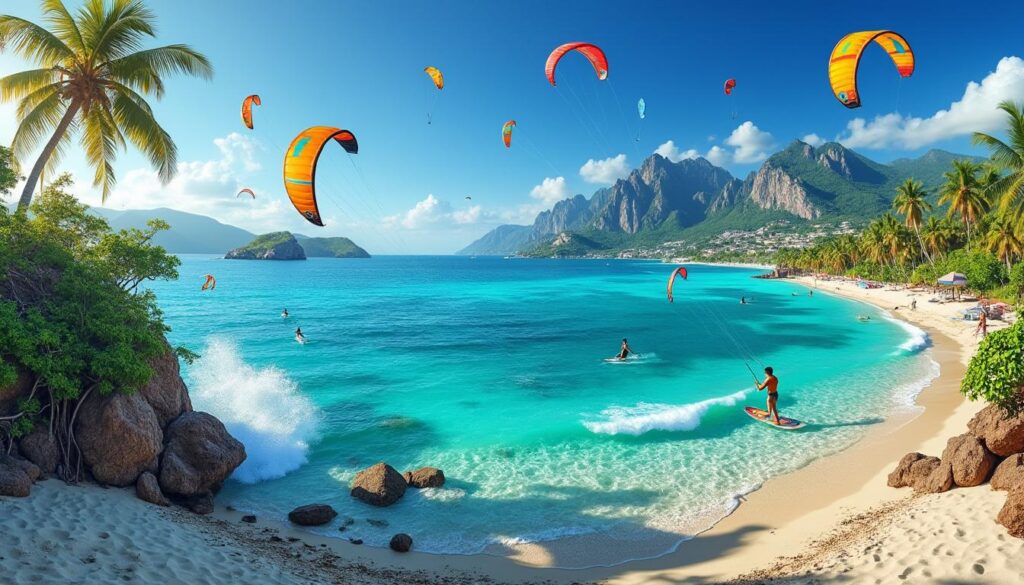
In Milan you can’t see the sea, but the wind arrives anyway. Those who live in the city and dream of a kitesurf session have learned to think in terms of lakes, afternoon thermals and minute‑planned weekends. Between Lake Como, Garda, Maggiore, Iseo and Idro, Lombardy has become one of the most lively hubs for kitesurf Italy, with schools active from March to October, rescue boats and increasingly numerous communities. Away from glossy brochures, kite here is concrete: wetsuits on, departures at dawn from Milano Centrale, returning in the evening with hair still salty.
Those starting from scratch can easily find kitesurf for beginners with courses structured in clear steps: wind theory, first ground drills with the foil trainer kite, body drag in the water and finally water start with the board. Those who are already independent play with the local lake winds, look for the spot best suited to their level and plan outings according to the thermals. Around this a real lifestyle is born: car sharing to the lakes, WhatsApp groups to coordinate outings, endless comparisons on boards, kites and wetsuits. And when the urge for the real sea strikes, many Milanese look south, choosing a kite trip to the best Italian destinations to finally smell the Adriatic or the Ionian.
In short
- Kitesurf Milan means taking advantage of the large Lombardy lakes: Como, Garda, Maggiore, Iseo and Idro.
- Schools offer kitesurf courses from March to October, with flexible hours and individual lessons.
- Lake Como is perfect for starting, thanks to fairly steady wind and generally calm waves.
- Garda and Maggiore are ideal for those who want to progress and push their riding level.
- Those leaving from Milan can use city sports centers to train (wakeboard, gym, simulations) between sessions.
- For a real step up in quality, many Milanese choose kitesurf Salento and other sea spots on holiday.
Kitesurf Milan and Lombardy: understanding the “lakes game”
For those who live in Milan, the key is not to ask “where is the sea?”, but “which lake works today with this wind?”. Kitesurf in Lombardy revolves around a simple balance: city in the center, lakes all around, local winds that change from basin to basin. Those who learn to read this pattern can turn an ordinary Saturday into a full session, without needing to take a plane.
The ideal protagonist is Marco, 32, who works in an office near Porta Garibaldi and discovered kite through friends. No endless holidays, but a strong desire to glide. For him “kitesurf Milan” means: check the winds on the lakes Friday evening, load the gear Saturday morning and be on the water within an hour. He starts on Lake Como, where he finds generally calm waters and fairly predictable thermals. Here the schools born in recent years have made kite accessible to those arriving from the city with no nautical experience.
The strength of the lakes lies precisely in their less selective conditions compared to the sea. You don’t need to wait for a major weather system: often the afternoon thermals are enough to have wind sufficient for a beginner or intermediate session. For those who want to learn kitesurf, this means being able to schedule lessons with more peace of mind, without constant cancellations. The downside? You have to accept precise timings: many schools set outings in time slots where the wind truly “comes in”, especially from mid‑afternoon.
Another element that benefits those starting from Milan is the density of facilities: schools, rentals, accommodations, a well‑organized kitesurf school directory, direct contacts with federation instructors. There are portals that collect kitesurf courses, accommodations and rentals on a single page, so the beginner doesn’t have to get lost among a thousand different sites. You choose the lake, level, formula (full course or single lessons) and go.
The urban context also plays an important role in physical preparation. Many practitioners alternate lake sessions with specific city training: gym, swimming, balance on a balance board, maybe some wakeboard outings at Idroscalo. This way they get to the water less fatigued and with better body control, as explained also in guides dedicated to maintaining good physical shape for kitesurf. The result is a faster learning curve and fewer “fatigue” falls.
Those who live in Milan don’t have the sea at their doorstep, but they have a system of lakes that, if understood well, becomes a real playground for kite. Awareness of this “lakes game” is the first step to turning the desire for kite into real and regular sessions.
The main lakes for kitesurfing near Milan
Around Milan revolve several key basins for kite, each with a different character. Knowing what they offer helps choose the right spot based on level, season and session goal. Not all of them work the same way: some have large launch beaches, others require boats, some are more suitable for beginners, others make advanced riders shine.
Below is a concise overview, useful for initial orientation.
| Lake | Approximate distance from Milan | Recommended level | Main characteristics |
|---|---|---|---|
| Lake Como | ~1 h | Beginner – Intermediate | Often calm waves, relatively steady wind, many recent schools |
| Lake Garda (Campione) | ~1.5–2 h | Intermediate – Advanced | Powerful thermals, large dedicated beach, rescue boat |
| Lake Maggiore | ~1.5 h | Intermediate | Alpine scenery, fairly constant winds but less “didactic”, more technical spots |
| Lake Iseo (Vello area) | ~1.5 h | Intermediate – Advanced | Boat launches only, no kite beaches, optimal winds in the dedicated area |
| Lake Idro | ~2 h | Beginner – Intermediate | Area reserved for kiters, concentrated spot, school managed by high‑level professionals |
This mental map is the compass for those living in Milan who want to quickly choose where to point the car, without wasting half a day driving around. Choosing the right lake, more than the number of knots, determines the quality of the session.
Lake Como, Garda, Maggiore, Iseo, Idro: choosing the right spot near Milan
When talking about kitesurf in Lombardy, the temptation is to say “all lakes are fine”. In reality each body of water has a precise character, and knowing it saves you frustration. Beginners don’t need extreme wind, but manageable water, space and present instructors. Advanced riders instead look for “full” conditions for bigger jumps and longer runs.
Lake Como is often recommended as the first step. In recent years many schools and centers have sprung up, ready to welcome especially those coming from Milan for a day trip. The lake often presents contained waves and fairly regular wind, a scenario that helps with the first reaches. In addition, the presence of several operators allows structured courses, boat outings, and a minimum of extra safety for those who don’t yet have full control of board and kite.
Lake Idro is another reference point for those who like an organized context. Here a zone reserved for kitesurfers has been delimited, which means no swimmers in the flight window and less stress during launch. The sport is mostly practiced from early afternoon, when the wind comes in; a school like Maselli Kite School, led by riders with world titles, brings competitive know‑how that filters down even into basic lessons. This mix of a dedicated area and technical expertise is a huge plus for the novice.
Lake Iseo is a paradise for water sports, but requires a different approach. There are no beaches suitable for direct kite launch, so you reach the Vello area by boat. Here the wind works well, but the absence of land launches requires more technical logistics management. It’s a spot recommended for those already familiar with equipment and safety procedures, or for those taking courses with schools that manage boats and material.
Lake Garda, tradition says, is “home” to those who love wind sports. Long frequented by windsurfers, in recent years it has seen an exponential increase in kiters. In Campione, on the Lombardy side, there is one of the largest and safest kite beaches in the area, with rescue boats available and a range of on‑shore services. The thermal wind, strong and regular at the right hours, allows level sessions: freestyle, big air, foil, downwinds beneath impressive rock walls.
Finally, Lake Maggiore. Here kite pairs with a very scenic alpine panorama, with fairly constant currents. It’s a less “school‑like” spot compared to Como or Idro, but fascinating for those who already have good boat control. Those leaving from Milan find wilder sessions on Maggiore, with fewer crowds in some stretches and a water‑mountain relationship that leaves a mark.
In short: beginners can mainly aim for Como and Idro; intermediate or advanced riders love Garda, Iseo and Maggiore. The choice of spot, even more than the kite brand, makes the difference between a day of progress and one of frustration.
Practical tips for planning a kite session from the Navigli to the lakes
Organizing a kitesurf Milan – lakes session is a small logistical exercise. It’s not complicated, but it requires method. The first step is the weather: the rule is simple, check the forecast beforehand, not when you’re already on the motorway. The thermals of the Lombardy lakes have variable schedules and intensities: knowing the usual patterns – and checking with locals – minimizes the risk of arriving to flat conditions.
A good approach is to follow some basic rules.
- Check two weather models: don’t rely on a single app, compare at least two wind‑dedicated forecasts.
- Talk to local schools: a phone call or WhatsApp message often gives more precise info than any chart.
- Organize the car the night before: kite, bar, board, wetsuit, harness and helmet all ready, so you don’t forget essential pieces at 6 a.m.
- Plan the timing: consider traffic, parking, changing, briefing with the instructor and return trip.
- Set an objective: first reaches, improve the water start, try a new trick; having a focus prevents wasting the session.
Those who organize like this, even living in central Milan, manage to fit a good number of days on the water each year. For the most methodical, keeping a small session diary (spot, wind, progress, mistakes) accelerates growth even more: understanding what failed one Saturday helps correct course the next weekend.
In this balance between tight schedules, traffic and the desire for wind, those who live in Milan quickly learn a basic kite lesson: the wind waits for no one, it must be understood and “taken” when it comes.
Kitesurf courses near Milan: how a complete pathway really works
Those who type “kitesurf for beginners Milan” often don’t know what to expect from a complete course. Serious kitesurf Italy schools follow a clear scheme, divided into progressive blocks. The logic is simple: first you understand the wind, then you control the kite on land, then you enter the water without a board, and finally you try the actual start. Skipping steps increases risks and reduces fun.
A typical pathway, also found in many lake schools in Lombardy, often consists of six main lessons. It’s not mathematics, but it’s a good reference to understand what awaits you when you sign up for a kitesurf course.
The first lesson is theoretical. Here you talk about wind and points of sail, navigation rules, safety and equipment. You learn the wind window on paper, right‑of‑way rules in the water, what depower does, how to read wind intensity realistically and not “by eye”. This moment is often underestimated, but it is the foundation that prevents gross mistakes once hooked to the harness.
In the second lesson you move to the first ground practice. The foil trainer kite comes into play: you assemble and disassemble the wing, get familiar with the controls, begin to feel the pull in your hands. Here also come the first “physical” safety rules: don’t hold the bar randomly, don’t turn with lines on you, always look at what’s happening in the space in front of the kite.
The third lesson is still on land, but with a small inflatable kite and short lines. You repeat assembly and disassembly, introduce assisted launch and landing, deepen the wind window and feel where the wing pulls the most. Here the rider begins to understand that the kite is not a “monster”, but a tool that responds precisely to bar movements.
The fourth lesson usually stays on the beach, but moves to a kite with standard 20–25 meter lines. Work focuses on autonomous launching (always supervised), first seated drag starts pulled by the kite, and the surf rescue maneuver, i.e. how to recover a person in the water. Even on the Lombardy lakes, where depth varies, this skill is crucial.
The fifth lesson is the real jump: first water practice with body drag. You enter without a board, learn to be dragged by the kite along different points of sail, try relaunching the wing if it falls in the water and work on board recovery. Body drag is often the phase that divides those who fall in love with kite and those who give up: the cool lake water, the sensation of gliding with just your body and the sound of wind in your ears make everything very real.
The sixth lesson introduces the first board starts. Here the focus is on the balance between body, board and kite: placing the feet correctly, not pulling the bar too hard, going with the pull instead of opposing it. The “first reaches” are almost always messy, with many falls, but every meter of gliding leaves an adrenaline rush that makes you forget the upside‑down efforts.
Lake schools generally operate from March to late October, with lessons possible every day (wind permitting), from morning to sunset. Many offer individual lessons curated by federation instructors, who can issue official certificates. Flexibility is a great advantage for those living in Milan with complicated schedules: you can concentrate the course on weekends or spread it over multiple outings during the week, participating calmly, without pressure.
A well‑structured course does not promise miracles, but provides solid tools. The real goal is not “to jump in three days”, but to finish the course with a healthy relationship with wind and kite, ready to manage the first independent outings on the lakes and, someday, at sea.
How to choose the most suitable kitesurf school if you start from Milan
Not all schools are equal, and starting from Milan also means deciding carefully where to invest time and money. A good kitesurf school near the lakes should offer certified instructors, up‑to‑date equipment, safety systems (support boat when needed, radios, helmets) and an honest handling of weather conditions: if there is no wind, the lesson is not held, period.
City dwellers can evaluate some very concrete criteria: distance from the spot, schedule flexibility, group size in the water, possibility of one‑to‑one lessons. It’s also useful to understand how the school communicates: whether it responds quickly, gives clear information on costs and programs, explains well the difference between basic and advanced packages. Many centers use contact forms and WhatsApp to offer quick quotes, with a course manager calling back within a few minutes.
Another often overlooked factor is the community. A school that creates groups of students, chats to organize outings, small end‑of‑day events, makes the learning path lighter. Kite, especially for those coming from Milan and moving alone, is also about people. Joining a local community, like those described in deep dives about the kitesurf community in Italy, helps find travel companions to share petrol, advice and, why not, a post‑session beer.
Those who choose their school carefully are not only buying a course, but a first ticket into a world where wind becomes a constant in daily life.
Preparing for kite in the city: training, mindset and first alternative experiences
Living in Milan and kiting involves a particular balance: during the week you move between office, metro and traffic lights; on the weekend you grab the bar and enter a completely different environment. To make this double rhythm sustainable, a minimum of physical and mental preparation is needed. Kite does not require extreme athletic abilities at the start, but it does demand endurance, mobility and good fatigue management.
Many Milanese riders use the city as an extended gym. Gym work to strengthen core, shoulders and back, swimming to get used to water and breathing under strain, stretching and yoga to avoid common injuries. Those who take care of these aspects arrive at the lakes more relaxed and with less fear of the unexpected. A minimally prepared body tolerates water start attempts and the “washing machine” typical of first outings better.
On the mental level, kite teaches two fundamental truths: wind cannot be controlled, only followed; progression is not linear, it alternates leaps forward and days that feel like regression. Accepting these rhythms reduces the frustration typical of those coming from the urban world, where everything is under control and planned. Working on this mindset already in the city – studying theory, watching technical videos, talking with more experienced riders – allows you to arrive at the spot with a clear head.
For those who cannot go to the lake every weekend, there are alternative activities near Milan. At Idroscalo, for example, several practitioners approach traction with wakeboard, using the cable parks as training for board control and water feeling. Others try landboard or mountainboard in flat areas, as told in guides about kitesurf on land, working on wind reading with small kites in open spaces.
These experiences don’t replace real kitesurf on lakes or sea, but build a set of useful skills: balance, directionality, speed management. Those who arrive at their first course already used to moving with a board under their feet have a concrete advantage on the learning curve.
In this weave between city and water, training and sessions, a new identity is slowly built: that of the Milanese who, between a tram and a meeting, already feels the call of the wind for the weekend.
From the lake to the sea: when the Milanese discover Salento, the Adriatic and the Ionian
After a season on the lakes, many Milanese riders start looking beyond, towards the sea. It’s the moment when searches shift from “kitesurf Milan” to “best kitesurf spot Italy”. Here regions enter the scene where the wind Salento and the two coasts, kitesurf Adriatic and kitesurf Ionian, offer a range of conditions lakes can’t replicate. Those who practiced on Como or Garda and then arrive at a spot like Porto Cesareo or Torre Mozza realize the leap: salt water, infinite space, shallow bottoms in many areas, thermal or storm winds with a different breath.
At the same time, others look to Calabria, Sardinia, or remain faithful to the north, planning long weekends between sea and lakes. The advantage of having started your path among Como, Idro and Garda is huge: those who come from the lakes already have a solid base to manage more complex spots, read new conditions and make the most of their kitesurf holidays.
For those leaving from Milan, the lakes are not a “fallback”, but a constant gym that prepares you for any kite adventure in Italy and the Mediterranean. Once you understand this, every session, even a two‑hour sunset one on a lake, acquires a different value: it’s not just fun, it’s another step toward the freedom to choose any spot on the map.
Beyond Milan: connecting the Lombardy lakes to other Italian kitesurf hubs
Once you understand the Milan‑lakes system, the next step is to expand the map. Kitesurf Italy is not made only of Lombardy: there are important hubs like Piedmont, Veneto, Tuscany, Lazio, Sicily, Calabria and of course Puglia. Those who start on the Lombardy lakes often continue to look for spots reachable by car or train, building a personal wind geography.
For example, Turin and Piedmont offer interesting scenarios, detailed in specific guides like those dedicated to kitesurf between Turin and Piedmont. From Milan you arrive in a few hours and find a different context, with artificial basins, particular wind systems and schools that have adapted to a territory less “classic” than the coast. Those who trained on Como or Garda thus find themselves exploring new bodies of water, bringing with them the same logic: read the wind, study the spot, trust the locals.
Puglia, and in particular kitesurf Salento, is another fundamental piece. Here the combination of kitesurf Lecce, kitesurf Taranto, and spots scattered across the Adriatic and Ionian creates a unique mosaic of conditions: waves, flat water, summer thermals, autumn storms. Many Milanese who started on the lakes choose Salento for long holidays, moving from one kitesurf Puglia spot to another depending on wind direction. It’s the moment when one truly moves from “student” to a rider able to autonomously choose where and when to go in the water.
Similarly, those who love variety look to other Mediterranean regions: Sicily with its salty lakes and bays, Calabria with spots like Gizzeria, told in guides about kitesurf in Gizzeria, or even destinations abroad like Greece and Spain, well described in overviews on kitesurf in Europe. In all these trips, the experience gained between Milan and the Lombardy lakes remains the red thread: wind reading, equipment management, respect for navigation rules.
For those living in Milan, therefore, the lakes are the first chapter of a much longer story. A chapter made of dawn departures, wetsuits still wet stowed in the trunk, motorways traveled with the anxiety of missing the thermal, but also of new friendships and continuous technical progress.
How to turn Milan into the starting point of your personal “kite system”
What distinguishes dreamers from doers is not the address of their home, but the system they build around their passion. Living in Milan and kitesurfing means organizing the week thinking about the wind: monitoring forecasts, keeping equipment ready, having a couple of reference schools, knowing who to ask when the weather is uncertain.
Many city riders create small stable groups: carpool companions to split costs, chats where they share screenshots of weather apps, webcam links, spot reports. That way Milan stops being just a big city “far from the sea” and becomes a hub from which to depart for every kind of spot: Lombardy lakes in a day, Salento and other regions on holiday, maybe some winter trips to warmer destinations told in guides about winter kitesurf destinations.
When this network is active, kitesurf is no longer an occasional luxury, but a stable part of daily life. Every time the wind turns right, Milan is not a city far from water: it’s simply the zero point from which the next session departs.
Can you really learn kitesurfing while living in Milan?
Yes. People living in Milan have access to several lakes ideal for kitesurfing, such as Como, Garda, Maggiore, Iseo and Idro. Schools operate from March to October, with structured courses for beginners and flexible schedules. You can easily make return trips from the city in a day, planning multiple sessions per month and building a solid base to then face sea spots.
Which lake is best to start kitesurfing near Milan?
For beginners, Lake Como and Lake Idro are often recommended. Lake Como offers relatively steady wind, contained waves and many recent schools. Lake Idro has an area reserved for kitesurfers and a strong presence of experienced instructors, with a very orderly and didactic context. In any case, it is essential to rely on a certified school.
How long does it take to make the first reaches independently?
With a structured course of about 5–6 intensive lessons, many students manage to perform the first short reaches independently, always under supervision. Progression varies from person to person, but following all phases (theory, ground practice, body drag, board starts) without skipping steps is the fastest and safest route. Basic physical training and consistency in outings help a lot.
Is a great physical preparation necessary to start kitesurfing?
To start, extreme athletic preparation is not necessary, but a good general fitness level helps. A bit of endurance, joint mobility and core strength makes the first outings less tiring. Many Milanese riders alternate gym, swimming and stretching with lake sessions to reduce injury risk and improve board and kite handling.
What is the difference between kitesurfing on lakes and at sea?
Lombardy lakes often offer more contained waves and thermal winds with fairly predictable timing, great for learning and practicing. The sea, such as in Salento or other Italian regions, adds tides, larger waves and wider spaces, with winds that can sometimes be stronger or more variable. Those who start on the lakes build a good technical base to then confidently face marine spots on the Adriatic and Ionian.