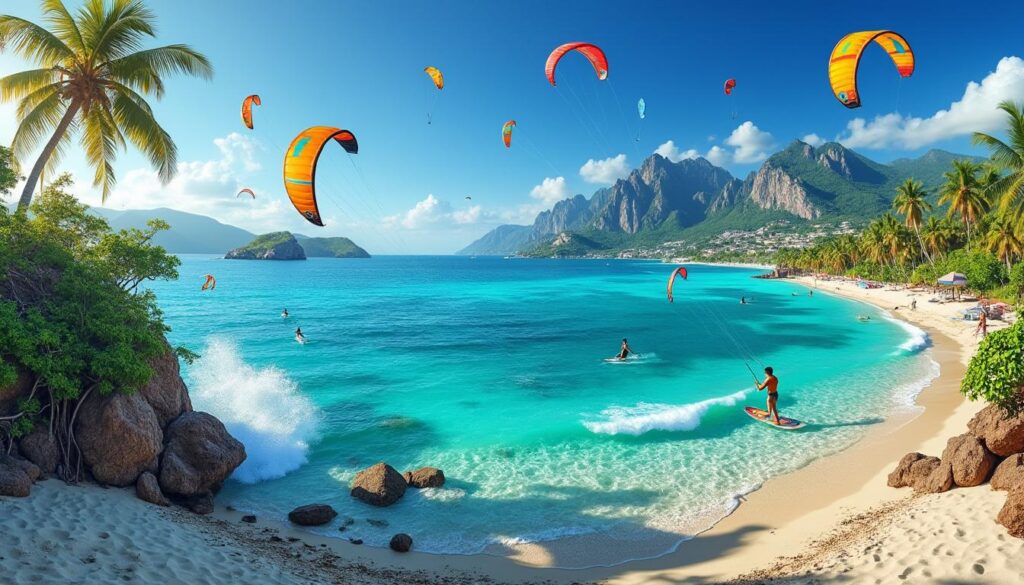
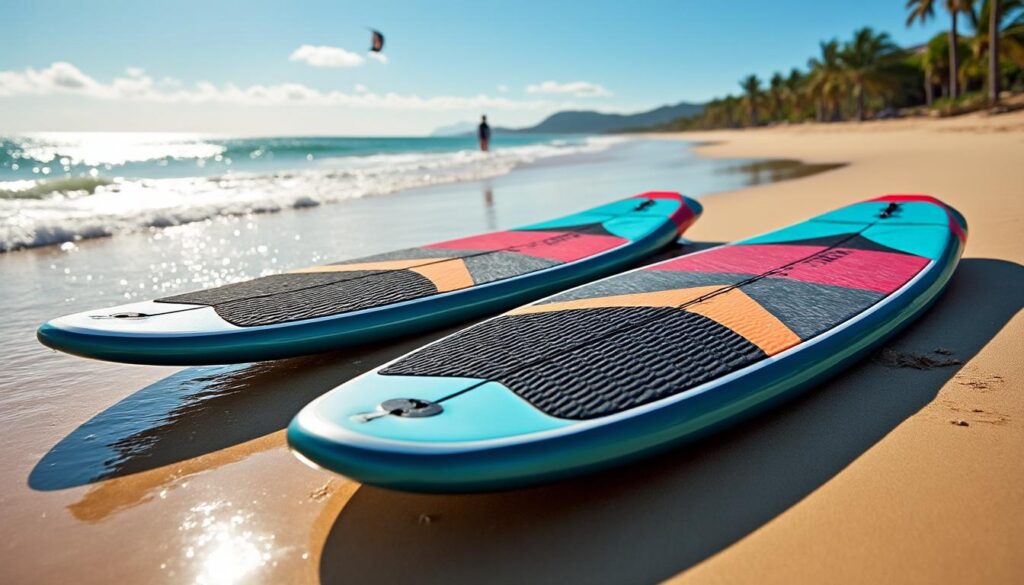
- Kitesurf: more technical at the start, but explosive in progression; ideal if you love jumps, speed and want to exploit wide, windy spots, from kitesurf Salento to the Mediterranean classics.
- Wing foil: softer access, quick setup, perfect if you have little time, small spots or irregular wind; surfy feeling and silent foiling at the center of everything.
- If you live near large open beaches and can invest time in a kitesurf course, the kite is a long-term companion.
- If you move between lakes, harbors or narrow bays, the wing foil allows you to get out often, even where the kite would be complicated or forbidden.
- Many riders today combine both disciplines: kite in strong and regular wind, wing on lighter days and in “difficult” spots.
Kitesurf vs Wing Foil: sensations in the water and riding style
To really understand the difference between kitesurf and wing foil just imagine a typical day on the Ionian. Thermal wind at 16 knots, clear sky, water with a bit of chop. Davide goes out with a 12-metre kite and a twin-tip, hooked into the harness, ready to look for the first jump as soon as a serious gust comes in. Elisa inflates her wing, mounts the foil and prepares to glide above the water almost silently. From the shore they look like two variations of the same game, but what they feel in their legs and hands is very different.
In kitesurf, the wind is captured by a kite connected to the body via bar and harness. Every gust translates into acceleration, spray under your feet, potential for a jump. The legs work hard, the core keeps the body stable, the arms communicate with the bar to manage power and direction. It’s a “pulled” sport that rewards those who love adrenaline and the idea of flying above the water level. Not surprisingly, those aiming for jumps and tricks spend evenings watching tutorials and videos on kitesurf freestyle and tricks to steal every technical detail.
In wing foil, the energy arrives more directly. The inflatable wing is in your hand, you don’t have 20‑metre lines spread on the beach. As soon as the foil gets into play and the board rises, the hiss of the water almost completely disappears: what remains is the foil’s whine and the wind breathing in the wing. It’s a softer, more surf-like feeling, far from the idea of “hooking into the sky” typical of the kite. Those coming from surfing or SUP often experience the wing as a natural extension of their relationship with the wave, because you can almost “turn off” the wing and let yourself be carried only by the water wall.
This difference is felt even more when conditions change. With a full Mistral on the Adriatic side, 25 knots side-on and well-formed waves, kitesurf explodes: fast long runs, spray to the chest, jumps that seem endless. On the Ionian side, with light thermal wind and flatter water, wing foil allows very long foiling legs, fluid turns on small waves, quieter sessions but equally intense in terms of sensations.
Another key point is the “mental noise.” The kite asks for continuous monitoring: wind window, kite position, other riders nearby. The wing, while requiring attention, is often perceived as more “meditative,” especially when you catch a wave, depower the wing and focus only on the line you want to draw with the foil. Many riders say that after a stressful day, the wing helps them empty their head, while the kite “switches them on” and charges them up.
The summary is simple: if the idea of flying high, pushing on the edge of the board and leaving a trail of spray behind you makes your eyes light up, kitesurf speaks your language. If instead the image of sliding in silence, close to the waves, with a minimal setup attracts you, wing foil will probably make you smile after just a few outings.
Kitesurf vs wing foil: sensations with Salento, Adriatic and Ionian wind
In Salento the comparison becomes even more evident thanks to the two coasts. On the kitesurf Adriatic, with short waves and often tighter wind, the kite is a natural tool: jumps, demanding downwind runs, wave surfing with strapless boards. On the kitesurf Ionian, where the sea can be flatter with summer thermals, wing foil has won many riders who used to stay on the beach when the wind was marginal.
Those who know every kitesurf spot in Puglia well know: with messy chop and irregular gusts, the foil “filters” the surface chaos and turns a complicated day into a smooth session. On linear days, instead, the kite remains the perfect tool to squeeze every knot of wind into speed and power. Understanding these nuances is the first step to choosing the discipline that will make you enjoy the sea more often, not only in “perfect” conditions.
Watching a few comparative videos of sessions between the Adriatic and the Ionian helps to visualize even better the differences in style and rhythm between the two sports.
Learning curve: learning kitesurf or wing foil from scratch
When talking about kitesurf for beginners, the question that always comes up first is: “Is kite easier or wing?” The honest answer is that it depends on how you organize your path, the time you have and the type of sea you frequent. However, there are some clear trends that help form an idea.
In kitesurf, the first hours of a kitesurf course are all dedicated to kite handling: wind window, safety, relaunching from the water, body drag. Patience is needed to reach the famous water start, that moment when you finally get up on the board and start planing. Those who imagine being able to “go and come back” in a weekend often feel disoriented: the kite demands respect, time and a few days when it seems like you can’t coordinate anything.
The reward, however, is huge. Once basic kite control becomes muscular memory, progression becomes rapid: longer tacks, first jumps, controlled directional changes. Many riders say that, once past the initial phase, the kite becomes almost an extension of the body. To get an idea of how to structure the path, it can be useful to take a look at a guide on the costs and organization of kitesurf lessons, so you can plan from the start a package that allows you to see real results.
In wing foil, access is perceived as softer. At first you work with voluminous boards and often no foil or a very forgiving foil. You learn to manage the wing in your hand, first on your knees, then standing up, at low speeds and with wide margins for error. The “real” foil comes into play only when balance and wing handling are already decent. This means many beginners see tangible progress after just a few sessions: standing and riding, changing direction, making short tacks without falling every two meters.
Take the example of Chiara, 38 years old, office worker in Lecce and only a few free afternoons a week. She starts with a classic kitesurf course, but due to commitments and weather she can only come to the beach once every 10–15 days. Each time she has to rebuild the feeling with the bar and the wind window. After a few months she decides to try wing foil: already good balance thanks to yoga, quick progress with the wing in hand, first “flights” on the foil after a few consecutive outings. For her lifestyle, the sensation of seeing quick results is decisive to stay motivated.
This does not mean that wing has no difficulties. The moment of “takeoff” on the foil requires fine coordination and confidence in your balance. But overall, for those with little time, seeing results sooner helps to not give up. The kite, on the other hand, offers a steeper learning curve, but once you get past the initial wall it provides a huge universe of maneuvers, from freeride to wave.
A practical tip for the undecided: choose the discipline you can practice more consistently in the first months. If you have a serious kitesurf school on the beach under your home, with good conditions and instructors present, kite is a solid choice. If instead your spot is more suitable for wing (narrow bay, fickle wind, limited space for launching), starting with wing foil will give you more good days than days waiting on the sand.
Learning kitesurf in Italy: Salento, lakes and foreign destinations
Those who want to learn kitesurf in Italy today really have many options: from northern lakes to the great beaches of Sicily and Sardinia, up to the extremely powerful winds of kitesurf Salento. The choice of location greatly influences the learning curve. A wide beach, side-on wind, sandy bottom and a structured school can halve the times compared to a crowded or turbulent spot.
The same goes for the wing: starting in a chaotic spot, with an awkward water entry and irregular wind, makes everything more complicated than necessary. If you can move for a weekend or a week to a spot really suitable for beginners, for either kite or wing, the investment pays off in safety and motivation. Because, in the end, the goal is one: to get out of the water wanting to come back, not with the feeling of having made life unnecessarily complicated.
A visual comparison between a basic kite lesson and a wing lesson will help you understand what kind of movements and physical effort to expect in the water.
Equipment kitesurf vs wing foil: costs, setup and practicality
When it comes to budget and logistics, kitesurf vs wing foil becomes a very concrete comparison. It’s not just about list price, but how much stuff you can fit in the car, how long you need to get ready and how much stress you carry around between lines, pump, bags and accessories.
In basic kitesurf, the minimum equipment includes: at least one kite, a bar, a harness, a board (twin-tip or surfboard), a pump, a wetsuit and safety accessories. If you then fall in love with foil, you add a specific board and a foil. It’s a rich, customizable ecosystem where every piece has a role. But it also involves more things to assemble, check and maintain.
In wing foil the list shortens: inflatable wing, board with adequate volume and foil. Nothing prevents having multiple wings to cover different winds, but in general the setup remains more compact. No lines to lay out, no bar, less risk of snagging something on the beach or in the water. For many riders who live in cities and have small cars or little time between work and family, this simplicity is a very strong argument.
In terms of costs, in 2026 the difference between a kite set and a wing set is not huge. A quality kite with bar can cost slightly more than a wing, but boards and foils for wing foil are often more refined and, consequently, more expensive. The result is that the total budget tends to even out. The true discriminator becomes how much you want to complicate (or simplify) your life every time you arrive at the beach.
| Factor | Kitesurf / Kite Foil | Wing Foil |
|---|---|---|
| Number of components | Kite, bar, harness, board, possible foil | Wing, foil board with removable foil |
| Setup on the beach | Lay out lines, check crossings, choose size according to wind | Inflate wing, screw foil, ready in a few minutes |
| Space required | Wide beach for lines, attention to other riders and bathers | Perfect for small bays, lakes, marinas |
| Transport and travel | Bulky bags, especially with multiple kites and boards | More compact gear, ideal for travel and small cars |
| Maintenance | Periodic check of lines, valves, bridles | Check seams and bladder, attention to screws and foil connections |
Those who love kite know that each component adds possibilities: different bars, 2- or 4-line configurations, different kite sizes to cover all conditions. To deepen these technical aspects, many riders rely on specific guides, like the insights on 2- or 4-line bars and pairings with harnesses and wetsuits. In wing foil the choice is often slimmer, but the quality of the board and foil greatly affects the pleasure of sailing.
Then there is the “everyday life” issue. If you have only a couple of hours free between work and commitments, the possibility of inflating the wing, mounting the foil and jumping in the water in a few minutes weighs heavily. The same goes for travel: a wing setup can fit into a sports suitcase more easily than a full kite quiver. It’s not a detail when planning kitesurf holidays or quick weekend getaways.
Practical list: how to choose equipment based on your profile
To orient yourself among boards, sails and foils, a small reasoned list can help as a compass when you go to the shop or contact a school.
- If you are a total beginner: aim for school gear or recent used equipment, for both kite and wing. The goal is to forgive mistakes, not chase the latest race novelty.
- If you travel by plane often: consider the volume of the equipment. A compact wing kit can save you surcharges and check-in problems.
- If you also want to surf waves: consider strapless boards for kite and boards with good volume and a mid-size foil for wing, so you can really play with rough seas.
- If you have a limited budget: better one well-chosen set (an all-round kite or a versatile wing) than too many mediocre pieces. Focus on the quality of the foil or the main kite.
- If you live far from specialized shops: choose equipment that is widespread and easily available in Italy, to find spare parts and assistance without having to wait months.
Deciding where to invest the budget is an integral part of choosing between kite and wing: it’s not just about money, but how often you will actually get the equipment in the water.
Wind, spots and conditions: when kitesurf wins and when wing foil does
The wind is the true referee of the kitesurf vs wing foil duel. Given the same rider, equipment and motivation, it’s the wind’s direction, intensity and quality that decide which discipline truly shines. In Italy, and especially in Puglia, this is very evident thanks to the variety of spots available within a few kilometers.
With light but steady wind, especially on flat or slightly rippled water, kite foil is still an unbeatable machine. A large, well-trimmed kite paired with an efficient foil makes you fly with very few knots, often before a wing can lift the board from the water. For those who live on lakes or light thermal spots, this can be a decisive difference.
With gusty wind, instead, wing foil gains advantage. Holding the wing in hand, you can depower in an instant: just bring it above your head or to a neutral position to dump an unexpected peak. In the kite the same situation requires more technique on the bar, fine control of the wind window and, sometimes, a good dose of calm nerves. It’s no coincidence that many people, especially women and more cautious riders, say they feel safer with wing precisely because of the absence of long lines and the possibility of “letting go” of the wing in a second.
When waves arrive, it becomes a matter of personal taste. Wave kitesurfing, especially strapless, remains a spectacular discipline: decisive bottom turns, powerful cutbacks, a tight rhythm with the lip. Wing foil, however, offers a different reading of the same wave. You can catch it early, almost switch off the wing and let the foil carry you on sections you wouldn’t even touch with a traditional board. The ride becomes very long, continuous, almost hypnotic.
In Puglia, this means that the same swell seen from kitesurf Lecce can offer two opposite experiences. On the Adriatic, side-on wind and messy waves can be the perfect playground for those who love strapless kite. On the Ionian, with cleaner waves and less tense wind, wing foil allows smooth lines and endless carving on the foil. Going beyond Instagram photos and reading wind and swell forecasts well is the secret to choosing the right tool.
Kitesurf Italy and ideal spots for one discipline or the other
Italy offers an enormous catalog of spots, where often the choice between kite and wing changes from bay to bay. The large windy beaches of Sardinia, Tarifa or the Red Sea are almost natural scenarios for a complete kite quiver, as many guides on travel and the best European spots recount. Small rocky bays, narrow lakes, marinas with an afternoon thermal breeze are, instead, perfect grounds for wing foil.
Looking beyond Salento, those planning a tour among the best kitesurf spots in Italy can think strategically: kite for destinations with large beaches, wing for those with limited space and stricter regulations on kites. In places where kite is restricted near the shore but the wind is good just outside, wing often opens new possibilities, turning “almost unusable spots” into everyday playgrounds.
Rider profile: which discipline best fits your lifestyle
After talking about wind, equipment and progression, the most personal question remains: kitesurf or wing foil, which discipline is for you based on who you are outside the water? The answer lies in the time you have, how you like to move, your sporting history and, why not, the type of videos you find yourself watching at night.
Imagine some typical profiles you meet on the beaches of kitesurf Salento and in various Italian spots:
The rider with lots of free time. Works seasonally, or has flexible hours, lives near the spot. Can go out often, choose the best time of day, wait for the right condition. For them, kitesurf is the ideal companion: the more time you put in, the more the kite rewards you with different possibilities (freeride, freestyle, big air, wave, foil). Every new wind direction becomes an excuse to try something different.
The one who works a lot and only has short windows. Shifts, family, a thousand commitments. Arrives at the beach often late, with wind dropping or not quite perfect. In this case wing foil is a precious ally: quick setup, less stress about beach space, easier to exploit half an hour of decent thermal. The sea fits into life without having to turn it upside down.
The surfer or SUP rider. Already lives the wave as the main guide. Often finds in wing foil a natural transition: same love for the wave line, with the foil’s bonus that amplifies possibilities and more frequent outings thanks to the wind. The kite may come later, to play with jumps and distance, but for many the first love remains the surf feeling that the wing gives right away.
The pure adrenaline fan. Loves jumps, rotations, kiteloops. Spends time studying board-off tricks and looking for those two extra knots that make the difference to pop higher. For this type of rider kitesurf is almost inevitable: the feeling of compressing the board edge, feeling the kite pull upward and seeing the water recede under your feet is something the wing, for now, doesn’t even try to imitate.
The person who feels “past their prime” but wants to start. Many over 40 or 50 choose wing foil because they perceive it as less aggressive on the body. More fluid sessions, fewer violent impacts on the water, no dragging when launching the kite. This does not mean wing is a “soft” sport, but the ability to modulate intensity and risk more directly helps to enjoy the sea with serenity, especially if the goal is feeling good rather than “performing”.
How to read your priorities to really choose between kitesurf and wing foil
To sum up on a personal level, it can help to honestly answer a few key questions:
- How often can I get on the water? If less than twice a month, wing offers quicker satisfactions; if you can go out often, kite unfolds all its potential.
- What kind of spot do I have near home? Wide, windy beach favors kite; narrow bay, lake or harbor favors wing.
- What excites me most? Flying high and doing tricks → kite. Sliding in silence and surfing waves with the foil → wing.
- How much do I want to travel with my sport? If you aim to travel the world following great kite spots, kitesurf remains the most “spoken” language. If you want to fit your gear anywhere and exploit many micro-spots, wing is a formidable ally.
There is no choice carved in stone. Many riders start with one discipline and, after a few years, add the other to complete their way of living the sea. The important thing is that the one you choose now is the one that will make you want to go out for real, not just dream while watching others from the umbrella.
Is wing foil really easier to learn than kitesurf?
For many beginners yes. In wing foil you immediately work on balance and handling the wing in your hand, at low speeds and without the complexity of a kite attached to a harness with long lines. You see the first results – like riding standing up and making short tacks – in a few sessions. Kitesurf requires more initial time to learn the wind window, safety and bar control, but once you get past this phase it offers huge progression in terms of jumps, speed and variety of disciplines (freeride, wave, foil).
Is kite foil or wing foil better for light wind?
In very light wind kite foil still holds a clear advantage. A large, well-trimmed kite generates more traction with few knots compared to a wing, allowing you to get into plane earlier and stay flying on the foil continuously. Wing foil needs a few more knots to lift the board from the water, although once flying it becomes very efficient. If your spot is often on the limit in wind strength, kite foil is usually the more logical choice.
What equipment is needed to start wing foil compared to kitesurf?
To start kitesurf you need at least: a kite, a bar, a harness, a board (twin-tip or surfboard), a pump, a wetsuit and safety accessories. If you move to kite foil add a specific board and a foil. To start wing foil the base is: an inflatable wing, a board with adequate volume for your weight and a foil; you also need a wetsuit and a leash. In terms of number of pieces the wing is simpler and takes up less space, but quality boards and foils can be costly, so the overall budget is often similar between the two disciplines.
Which sport is safer between wing foil and kitesurf?
Both can be practiced safely if you rely on a good school, respect spot rules and choose conditions suitable for your level. That said, wing foil is often perceived as easier to manage: no long lines under tension, a wing that can be easily depowered in hand and less risk of dragging in the first meters from shore. Kitesurf requires more attention at launch and landing, distance from obstacles and people and management of the wind window. In any case, helmet, impact vest and common sense remain fundamental for both.
Does it make sense to start directly with wing foil if I want to do kitesurf later?
Yes, for many riders it’s an effective strategy. Wing foil builds a good base of wind sensitivity, board balance and foil handling, all with a softer initial access. When you decide to learn kitesurf, you will already be familiar with reading the wind, body position in the water and speed management. Likewise, many experienced kiters are adding wing to their quiver to exploit small spots, fickle wind and days they would have otherwise spent on the shore.
If you look at the Adriatic or the Ionian and ask yourself whether it’s time to take the kite bar or the wing for wing foiling, it means the wind is already calling you. Kitesurf and wing foil are children of the same element, but they completely change the way your body interacts with the water. The kite pulls you, launches you, makes you play with speed and height. The wing foil lifts you silently onto the foil, turning every wave into an endless treadmill to surf without noise. Two different worlds, both extremely powerful for those who dream of riding kitesurf in Italy, especially among the windy spots of Salento.
Before choosing between kitesurf vs wing foil it’s useful to look at your real life: how much time you can dedicate to the sport, what kind of sea you frequent, what sensations you really seek when the wind comes in. Those who dream of big air, kiteloops and freestyle maneuvers look for one thing. Those who want to exploit every breath of wind in narrow bays, lakes or small harbors look for another. In between are budget, safety, ease of transporting equipment, plus the decisive role of the Salento wind, with the dual choice kitesurf Adriatic and kitesurf Ionian. This comparison is not meant to declare a winner, but to give you concrete tools to understand which discipline best fits your lifestyle today.
In short
- Kitesurf: more technical at the start, but explosive in progression; ideal if you love jumps, speed and want to exploit wide, windy spots, from kitesurf Salento to the Mediterranean classics.
- Wing foil: softer access, quick setup, perfect if you have little time, small spots or irregular wind; surfy feeling and silent foiling at the center of everything.
- If you live near large open beaches and can invest time in a kitesurf course, the kite is a long-term companion.
- If you move between lakes, harbors or narrow bays, the wing foil allows you to get out often, even where the kite would be complicated or forbidden.
- Many riders today combine both disciplines: kite in strong and regular wind, wing on lighter days and in “difficult” spots.
Kitesurf vs Wing Foil: sensations in the water and riding style
To really understand the difference between kitesurf and wing foil just imagine a typical day on the Ionian. Thermal wind at 16 knots, clear sky, water with a bit of chop. Davide goes out with a 12-metre kite and a twin-tip, hooked into the harness, ready to look for the first jump as soon as a serious gust comes in. Elisa inflates her wing, mounts the foil and prepares to glide above the water almost silently. From the shore they look like two variations of the same game, but what they feel in their legs and hands is very different.
In kitesurf, the wind is captured by a kite connected to the body via bar and harness. Every gust translates into acceleration, spray under your feet, potential for a jump. The legs work hard, the core keeps the body stable, the arms communicate with the bar to manage power and direction. It’s a “pulled” sport that rewards those who love adrenaline and the idea of flying above the water level. Not surprisingly, those aiming for jumps and tricks spend evenings watching tutorials and videos on kitesurf freestyle and tricks to steal every technical detail.
In wing foil, the energy arrives more directly. The inflatable wing is in your hand, you don’t have 20‑metre lines spread on the beach. As soon as the foil gets into play and the board rises, the hiss of the water almost completely disappears: what remains is the foil’s whine and the wind breathing in the wing. It’s a softer, more surf-like feeling, far from the idea of “hooking into the sky” typical of the kite. Those coming from surfing or SUP often experience the wing as a natural extension of their relationship with the wave, because you can almost “turn off” the wing and let yourself be carried only by the water wall.
This difference is felt even more when conditions change. With a full Mistral on the Adriatic side, 25 knots side-on and well-formed waves, kitesurf explodes: fast long runs, spray to the chest, jumps that seem endless. On the Ionian side, with light thermal wind and flatter water, wing foil allows very long foiling legs, fluid turns on small waves, quieter sessions but equally intense in terms of sensations.
Another key point is the “mental noise.” The kite asks for continuous monitoring: wind window, kite position, other riders nearby. The wing, while requiring attention, is often perceived as more “meditative,” especially when you catch a wave, depower the wing and focus only on the line you want to draw with the foil. Many riders say that after a stressful day, the wing helps them empty their head, while the kite “switches them on” and charges them up.
The summary is simple: if the idea of flying high, pushing on the edge of the board and leaving a trail of spray behind you makes your eyes light up, kitesurf speaks your language. If instead the image of sliding in silence, close to the waves, with a minimal setup attracts you, wing foil will probably make you smile after just a few outings.
Kitesurf vs wing foil: sensations with Salento, Adriatic and Ionian wind
In Salento the comparison becomes even more evident thanks to the two coasts. On the kitesurf Adriatic, with short waves and often tighter wind, the kite is a natural tool: jumps, demanding downwind runs, wave surfing with strapless boards. On the kitesurf Ionian, where the sea can be flatter with summer thermals, wing foil has won many riders who used to stay on the beach when the wind was marginal.
Those who know every kitesurf spot in Puglia well know: with messy chop and irregular gusts, the foil “filters” the surface chaos and turns a complicated day into a smooth session. On linear days, instead, the kite remains the perfect tool to squeeze every knot of wind into speed and power. Understanding these nuances is the first step to choosing the discipline that will make you enjoy the sea more often, not only in “perfect” conditions.
Watching a few comparative videos of sessions between the Adriatic and the Ionian helps to visualize even better the differences in style and rhythm between the two sports.
Learning curve: learning kitesurf or wing foil from scratch
When talking about kitesurf for beginners, the question that always comes up first is: “Is kite easier or wing?” The honest answer is that it depends on how you organize your path, the time you have and the type of sea you frequent. However, there are some clear trends that help form an idea.
In kitesurf, the first hours of a kitesurf course are all dedicated to kite handling: wind window, safety, relaunching from the water, body drag. Patience is needed to reach the famous water start, that moment when you finally get up on the board and start planing. Those who imagine being able to “go and come back” in a weekend often feel disoriented: the kite demands respect, time and a few days when it seems like you can’t coordinate anything.
The reward, however, is huge. Once basic kite control becomes muscular memory, progression becomes rapid: longer tacks, first jumps, controlled directional changes. Many riders say that, once past the initial phase, the kite becomes almost an extension of the body. To get an idea of how to structure the path, it can be useful to take a look at a guide on the costs and organization of kitesurf lessons, so you can plan from the start a package that allows you to see real results.
In wing foil, access is perceived as softer. At first you work with voluminous boards and often no foil or a very forgiving foil. You learn to manage the wing in your hand, first on your knees, then standing up, at low speeds and with wide margins for error. The “real” foil comes into play only when balance and wing handling are already decent. This means many beginners see tangible progress after just a few sessions: standing and riding, changing direction, making short tacks without falling every two meters.
Take the example of Chiara, 38 years old, office worker in Lecce and only a few free afternoons a week. She starts with a classic kitesurf course, but due to commitments and weather she can only come to the beach once every 10–15 days. Each time she has to rebuild the feeling with the bar and the wind window. After a few months she decides to try wing foil: already good balance thanks to yoga, quick progress with the wing in hand, first “flights” on the foil after a few consecutive outings. For her lifestyle, the sensation of seeing quick results is decisive to stay motivated.
This does not mean that wing has no difficulties. The moment of “takeoff” on the foil requires fine coordination and confidence in your balance. But overall, for those with little time, seeing results sooner helps to not give up. The kite, on the other hand, offers a steeper learning curve, but once you get past the initial wall it provides a huge universe of maneuvers, from freeride to wave.
A practical tip for the undecided: choose the discipline you can practice more consistently in the first months. If you have a serious kitesurf school on the beach under your home, with good conditions and instructors present, kite is a solid choice. If instead your spot is more suitable for wing (narrow bay, fickle wind, limited space for launching), starting with wing foil will give you more good days than days waiting on the sand.
Learning kitesurf in Italy: Salento, lakes and foreign destinations
Those who want to learn kitesurf in Italy today really have many options: from northern lakes to the great beaches of Sicily and Sardinia, up to the extremely powerful winds of kitesurf Salento. The choice of location greatly influences the learning curve. A wide beach, side-on wind, sandy bottom and a structured school can halve the times compared to a crowded or turbulent spot.
The same goes for the wing: starting in a chaotic spot, with an awkward water entry and irregular wind, makes everything more complicated than necessary. If you can move for a weekend or a week to a spot really suitable for beginners, for either kite or wing, the investment pays off in safety and motivation. Because, in the end, the goal is one: to get out of the water wanting to come back, not with the feeling of having made life unnecessarily complicated.
A visual comparison between a basic kite lesson and a wing lesson will help you understand what kind of movements and physical effort to expect in the water.
Equipment kitesurf vs wing foil: costs, setup and practicality
When it comes to budget and logistics, kitesurf vs wing foil becomes a very concrete comparison. It’s not just about list price, but how much stuff you can fit in the car, how long you need to get ready and how much stress you carry around between lines, pump, bags and accessories.
In basic kitesurf, the minimum equipment includes: at least one kite, a bar, a harness, a board (twin-tip or surfboard), a pump, a wetsuit and safety accessories. If you then fall in love with foil, you add a specific board and a foil. It’s a rich, customizable ecosystem where every piece has a role. But it also involves more things to assemble, check and maintain.
In wing foil the list shortens: inflatable wing, board with adequate volume and foil. Nothing prevents having multiple wings to cover different winds, but in general the setup remains more compact. No lines to lay out, no bar, less risk of snagging something on the beach or in the water. For many riders who live in cities and have small cars or little time between work and family, this simplicity is a very strong argument.
In terms of costs, in 2026 the difference between a kite set and a wing set is not huge. A quality kite with bar can cost slightly more than a wing, but boards and foils for wing foil are often more refined and, consequently, more expensive. The result is that the total budget tends to even out. The true discriminator becomes how much you want to complicate (or simplify) your life every time you arrive at the beach.
| Factor | Kitesurf / Kite Foil | Wing Foil |
|---|---|---|
| Number of components | Kite, bar, harness, board, possible foil | Wing, foil board with removable foil |
| Setup on the beach | Lay out lines, check crossings, choose size according to wind | Inflate wing, screw foil, ready in a few minutes |
| Space required | Wide beach for lines, attention to other riders and bathers | Perfect for small bays, lakes, marinas |
| Transport and travel | Bulky bags, especially with multiple kites and boards | More compact gear, ideal for travel and small cars |
| Maintenance | Periodic check of lines, valves, bridles | Check seams and bladder, attention to screws and foil connections |
Those who love kite know that each component adds possibilities: different bars, 2- or 4-line configurations, different kite sizes to cover all conditions. To deepen these technical aspects, many riders rely on specific guides, like the insights on 2- or 4-line bars and pairings with harnesses and wetsuits. In wing foil the choice is often slimmer, but the quality of the board and foil greatly affects the pleasure of sailing.
Then there is the “everyday life” issue. If you have only a couple of hours free between work and commitments, the possibility of inflating the wing, mounting the foil and jumping in the water in a few minutes weighs heavily. The same goes for travel: a wing setup can fit into a sports suitcase more easily than a full kite quiver. It’s not a detail when planning kitesurf holidays or quick weekend getaways.
Practical list: how to choose equipment based on your profile
To orient yourself among boards, sails and foils, a small reasoned list can help as a compass when you go to the shop or contact a school.
- If you are a total beginner: aim for school gear or recent used equipment, for both kite and wing. The goal is to forgive mistakes, not chase the latest race novelty.
- If you travel by plane often: consider the volume of the equipment. A compact wing kit can save you surcharges and check-in problems.
- If you also want to surf waves: consider strapless boards for kite and boards with good volume and a mid-size foil for wing, so you can really play with rough seas.
- If you have a limited budget: better one well-chosen set (an all-round kite or a versatile wing) than too many mediocre pieces. Focus on the quality of the foil or the main kite.
- If you live far from specialized shops: choose equipment that is widespread and easily available in Italy, to find spare parts and assistance without having to wait months.
Deciding where to invest the budget is an integral part of choosing between kite and wing: it’s not just about money, but how often you will actually get the equipment in the water.
Wind, spots and conditions: when kitesurf wins and when wing foil does
The wind is the true referee of the kitesurf vs wing foil duel. Given the same rider, equipment and motivation, it’s the wind’s direction, intensity and quality that decide which discipline truly shines. In Italy, and especially in Puglia, this is very evident thanks to the variety of spots available within a few kilometers.
With light but steady wind, especially on flat or slightly rippled water, kite foil is still an unbeatable machine. A large, well-trimmed kite paired with an efficient foil makes you fly with very few knots, often before a wing can lift the board from the water. For those who live on lakes or light thermal spots, this can be a decisive difference.
With gusty wind, instead, wing foil gains advantage. Holding the wing in hand, you can depower in an instant: just bring it above your head or to a neutral position to dump an unexpected peak. In the kite the same situation requires more technique on the bar, fine control of the wind window and, sometimes, a good dose of calm nerves. It’s no coincidence that many people, especially women and more cautious riders, say they feel safer with wing precisely because of the absence of long lines and the possibility of “letting go” of the wing in a second.
When waves arrive, it becomes a matter of personal taste. Wave kitesurfing, especially strapless, remains a spectacular discipline: decisive bottom turns, powerful cutbacks, a tight rhythm with the lip. Wing foil, however, offers a different reading of the same wave. You can catch it early, almost switch off the wing and let the foil carry you on sections you wouldn’t even touch with a traditional board. The ride becomes very long, continuous, almost hypnotic.
In Puglia, this means that the same swell seen from kitesurf Lecce can offer two opposite experiences. On the Adriatic, side-on wind and messy waves can be the perfect playground for those who love strapless kite. On the Ionian, with cleaner waves and less tense wind, wing foil allows smooth lines and endless carving on the foil. Going beyond Instagram photos and reading wind and swell forecasts well is the secret to choosing the right tool.
Kitesurf Italy and ideal spots for one discipline or the other
Italy offers an enormous catalog of spots, where often the choice between kite and wing changes from bay to bay. The large windy beaches of Sardinia, Tarifa or the Red Sea are almost natural scenarios for a complete kite quiver, as many guides on travel and the best European spots recount. Small rocky bays, narrow lakes, marinas with an afternoon thermal breeze are, instead, perfect grounds for wing foil.
Looking beyond Salento, those planning a tour among the best kitesurf spots in Italy can think strategically: kite for destinations with large beaches, wing for those with limited space and stricter regulations on kites. In places where kite is restricted near the shore but the wind is good just outside, wing often opens new possibilities, turning “almost unusable spots” into everyday playgrounds.
Rider profile: which discipline best fits your lifestyle
After talking about wind, equipment and progression, the most personal question remains: kitesurf or wing foil, which discipline is for you based on who you are outside the water? The answer lies in the time you have, how you like to move, your sporting history and, why not, the type of videos you find yourself watching at night.
Imagine some typical profiles you meet on the beaches of kitesurf Salento and in various Italian spots:
The rider with lots of free time. Works seasonally, or has flexible hours, lives near the spot. Can go out often, choose the best time of day, wait for the right condition. For them, kitesurf is the ideal companion: the more time you put in, the more the kite rewards you with different possibilities (freeride, freestyle, big air, wave, foil). Every new wind direction becomes an excuse to try something different.
The one who works a lot and only has short windows. Shifts, family, a thousand commitments. Arrives at the beach often late, with wind dropping or not quite perfect. In this case wing foil is a precious ally: quick setup, less stress about beach space, easier to exploit half an hour of decent thermal. The sea fits into life without having to turn it upside down.
The surfer or SUP rider. Already lives the wave as the main guide. Often finds in wing foil a natural transition: same love for the wave line, with the foil’s bonus that amplifies possibilities and more frequent outings thanks to the wind. The kite may come later, to play with jumps and distance, but for many the first love remains the surf feeling that the wing gives right away.
The pure adrenaline fan. Loves jumps, rotations, kiteloops. Spends time studying board-off tricks and looking for those two extra knots that make the difference to pop higher. For this type of rider kitesurf is almost inevitable: the feeling of compressing the board edge, feeling the kite pull upward and seeing the water recede under your feet is something the wing, for now, doesn’t even try to imitate.
The person who feels “past their prime” but wants to start. Many over 40 or 50 choose wing foil because they perceive it as less aggressive on the body. More fluid sessions, fewer violent impacts on the water, no dragging when launching the kite. This does not mean wing is a “soft” sport, but the ability to modulate intensity and risk more directly helps to enjoy the sea with serenity, especially if the goal is feeling good rather than “performing”.
How to read your priorities to really choose between kitesurf and wing foil
To sum up on a personal level, it can help to honestly answer a few key questions:
- How often can I get on the water? If less than twice a month, wing offers quicker satisfactions; if you can go out often, kite unfolds all its potential.
- What kind of spot do I have near home? Wide, windy beach favors kite; narrow bay, lake or harbor favors wing.
- What excites me most? Flying high and doing tricks → kite. Sliding in silence and surfing waves with the foil → wing.
- How much do I want to travel with my sport? If you aim to travel the world following great kite spots, kitesurf remains the most “spoken” language. If you want to fit your gear anywhere and exploit many micro-spots, wing is a formidable ally.
There is no choice carved in stone. Many riders start with one discipline and, after a few years, add the other to complete their way of living the sea. The important thing is that the one you choose now is the one that will make you want to go out for real, not just dream while watching others from the umbrella.
Is wing foil really easier to learn than kitesurf?
For many beginners yes. In wing foil you immediately work on balance and handling the wing in your hand, at low speeds and without the complexity of a kite attached to a harness with long lines. You see the first results – like riding standing up and making short tacks – in a few sessions. Kitesurf requires more initial time to learn the wind window, safety and bar control, but once you get past this phase it offers huge progression in terms of jumps, speed and variety of disciplines (freeride, wave, foil).
Is kite foil or wing foil better for light wind?
In very light wind kite foil still holds a clear advantage. A large, well-trimmed kite generates more traction with few knots compared to a wing, allowing you to get into plane earlier and stay flying on the foil continuously. Wing foil needs a few more knots to lift the board from the water, although once flying it becomes very efficient. If your spot is often on the limit in wind strength, kite foil is usually the more logical choice.
What equipment is needed to start wing foil compared to kitesurf?
To start kitesurf you need at least: a kite, a bar, a harness, a board (twin-tip or surfboard), a pump, a wetsuit and safety accessories. If you move to kite foil add a specific board and a foil. To start wing foil the base is: an inflatable wing, a board with adequate volume for your weight and a foil; you also need a wetsuit and a leash. In terms of number of pieces the wing is simpler and takes up less space, but quality boards and foils can be costly, so the overall budget is often similar between the two disciplines.
Which sport is safer between wing foil and kitesurf?
Both can be practiced safely if you rely on a good school, respect spot rules and choose conditions suitable for your level. That said, wing foil is often perceived as easier to manage: no long lines under tension, a wing that can be easily depowered in hand and less risk of dragging in the first meters from shore. Kitesurf requires more attention at launch and landing, distance from obstacles and people and management of the wind window. In any case, helmet, impact vest and common sense remain fundamental for both.
Does it make sense to start directly with wing foil if I want to do kitesurf later?
Yes, for many riders it’s an effective strategy. Wing foil builds a good base of wind sensitivity, board balance and foil handling, all with a softer initial access. When you decide to learn kitesurf, you will already be familiar with reading the wind, body position in the water and speed management. Likewise, many experienced kiters are adding wing to their quiver to exploit small spots, fickle wind and days they would have otherwise spent on the shore.