The wind coming in from the coast, the water changing color between the Adriatic and the Ionian, the boards lined up on the sand ready for the next session: choosing between SUP and kitesurf is not only a matter of style, but of sensations, safety and goals. Those who dream of gliding silently along the coast looking at caves and cliffs often lean toward SUP. Those who feel the call of gusts and jumping into the void aim for the kite, perhaps right on a spot kitesurf Puglia where the Salento wind sets the rules of the game. In between is you, with your questions: is it better to start calmly and then raise the level, or to throw yourself into kitesurfing immediately to live more intense sessions?
The real difference is not only in the equipment, but in how you want to experience the sea. SUP brings you close to the coast, makes you read the movement of the water at reduced speed, trains your balance and endurance. Kitesurf, on the other hand, forces you to understand the wind, to manage a powerful sail and to coordinate body, board and bar: the reward is a fast plane, the first upwind tacks and, over time, jumps. In Italy and especially in kitesurf Salento, the two disciplines coexist on the same beach, often on the same day: a calm morning on a SUP on the Ionian, an afternoon with a 20-knot Mistral on the Adriatic kitesurf. This guide was born to help you read the differences, understand what truly suits you and, if you want, combine the two sports into a single water lifestyle.
In short
- SUP: stable, accessible, ideal for those who want to start calmly, explore the coast and train balance and endurance.
- Kitesurf: dynamic, more technical, perfect if you’re looking for speed, adrenaline and sessions with strong wind.
- For beginner kitesurfing you need a serious kitesurf school, dedicated equipment and maximum attention to safety.
- SUP and kitesurf require different boards, volumes and materials: choosing the right equipment avoids frustration and slow progress.
- The Salento wind and the configuration between the Adriatic and the Ionian allow both sports to be practiced almost year-round.
SUP and Kitesurf: differences in sensations, rhythm and relationship with the sea
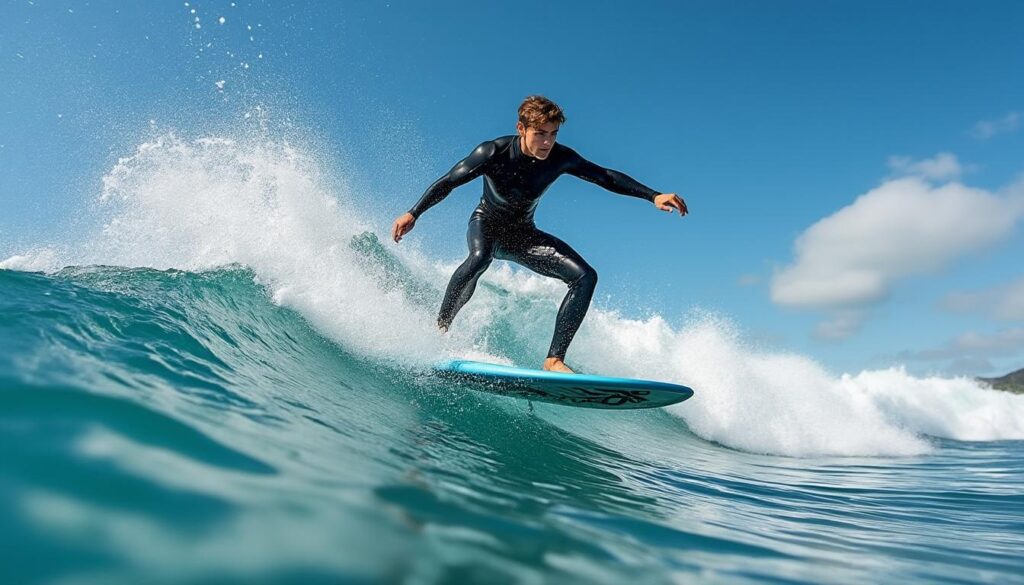
When we talk about SUP and kitesurf, many look only at speed and difficulty level. In reality the first big difference lies in how you experience the sea. SUP puts you standing on a wide, stable board, paddle in hand, breathing rhythm syncing with the movement of the water. It’s a sport that brings you close to the coast, to caves, to hidden coves — perfect for those who want to learn to stand on the water without too much pressure.
Kitesurf completely flips the scene: a smaller board, a kite that pulls in all directions, a bar to control continuously. You’re no longer just on the water, you “fly” above it. The wind becomes your engine, the wind window your playground. Here it’s not enough to watch the waves: you must learn to read gusts, wind holes, lateral currents. The sea is no longer just a backdrop, it’s a track where every timing mistake translates into a fall.
Kitesurf Italy vs SUP: who these sports really speak to
For those seeking kitesurf Italy, the objective is often one: find the best spot with reliable wind, space and serious schools. Kitesurf attracts those who love the sensation of accelerating, planing, getting air in jumps, but also those willing to invest time in a kitesurf course to really learn. SUP attracts a broader audience: families, runners wanting to change surface, those looking for an activity to practice even with little time and zero wind.
Imagine Luca, 35, who arrives in Salento for a week of kitesurf holidays. The Mistral does not blow every day with the same intensity. On light-wind days he may take a SUP and do a long dawn tour along the Ionian coast, staying on the water and keeping the feeling of balance. When the wind picks up, he switches to a twin-tip board and the kite. Same sea, two completely different rhythms, but complementary.
Progression and learning curve
In SUP the first results come quickly: with a wide board and a bit of patience, after a few outings you can stand up and paddle on flat water. Challenges come later, when you try SUP in choppy conditions or surf-sized waves. In kitesurf, by contrast, the start is more demanding: at first you train on land with the trainer kite, then body dragging in the water, managing the bar, and finally the first water start. The learning curve is steeper, but once you get past the initial phase the progression becomes extremely rewarding.
Those looking for beginner kitesurfing must account for a few hours of “washing machine” and a lot of time spent understanding the wind. Those choosing SUP must instead work on endurance and paddling technique, to avoid tiring shoulders and back. Two different paths, both valid, but with different mental and physical demands.
In short, SUP educates you to the water, kitesurf educates you to the wind: choosing where to start depends on what you want to train first.
SUP and Kitesurf Equipment: boards, sails, paddles and how not to buy wrong
One of the most frequent questions on the beach is: “Can I use the same board for multiple sports?”. The answer, when talking about SUP and kitesurf, is almost always no. The technical requirements of the two disciplines are too different. In kitesurf the board is designed to plane at sustained speed, hold an edge and allow you to go upwind. In SUP the board must float even when stationary, carry your weight and remain stable while you paddle.
When starting out, the temptation to buy random second-hand gear is strong. But a wrong choice can turn enthusiasm into frustration. Too small a kiteboard? You won’t get planing and you’ll sink at every water start. SUP with too little volume? You’ll spend more time in the water than standing. That’s why serious kitesurf schools always insist: try first, then buy.
How to choose the right board for SUP and kitesurf
In kitesurf, board length and width determine stability and ease of planing. A longer, wider board helps beginners get into planing with less wind. Intermediate or advanced riders can move to smaller sizes for greater maneuverability in jumps and rotations. In flat lagoons or lakes like Lake Maggiore with its kite spots, a shorter freestyle board can make a difference in maneuvers.
In SUP the key parameter is volume: the higher it is, the more stable the board. A beginner of average weight, who wants calm tours on flat water, can opt for an all-round wide and thick board. Someone who wants to do SUP surf on waves of the Adriatic or the Ionian must reduce volume and length to have agile and responsive boards.
| Discipline | Board key characteristic | Ideal for |
|---|---|---|
| Kitesurf beginners | Wide board, moderate rocker, good planing surface | Easy starts, control with medium-low wind |
| Kitesurf advanced | Shorter, stiffer board, performance channels and fins | Jumps, rotations, speed and aggressive edging |
| SUP all-round | High volume, generous width | Stability, coastal touring, beginners |
| SUP surf | Tapered shape, reduced volume | Wave maneuvers, quick direction changes |
| SUP race | Long, narrow board, pointed nose | Speed, long distances, racing |
Wing, paddle, harness: the details that change the session
In kitesurf the wing is your engine. Beginners and those who want to learn safely should avoid wings that are too large or with too reactive profiles. A kite with predictable behavior, effective depower and modern safety systems is the most important ally in the first sessions. Size should be chosen based on weight, wind strength and the spot (an Adriatic kitesurf with a 25-knot Bora is not the same as a light thermal on the Ionian).
In SUP the paddle is often underrated. An adjustable carbon paddle lightens the arms, reduces shoulder strain and allows you to adapt the length to the discipline: longer for touring, slightly shorter for SUP surf. A comfortable grip prevents soreness and lets you truly enjoy the distance covered.
In short: the right equipment is not a luxury, it is the foundation for having fun and progressing without losing confidence.
Safety, Salento wind and spot selection: when SUP and kitesurf separate
The true dividing line between SUP and kitesurf is not only technical, but safety-related. SUP on flat water, close to shore and with a properly attached leash, is one of the most manageable water sports. Kitesurf, however, works with the power of the wind: a mistake in kite handling or quick-release can turn a session into a serious problem, especially on crowded spots or with obstacles downwind.
That’s why in Italy, and particularly in areas of kitesurf Salento like the beaches between Lecce and Taranto, schools insist on wind control as the first topic. Direction, intensity, gusts, afternoon thermals: everything must be read before entering the water. The Salento wind is generous but does not forgive those who underestimate it.
Mandatory safety devices (and why to always use them)
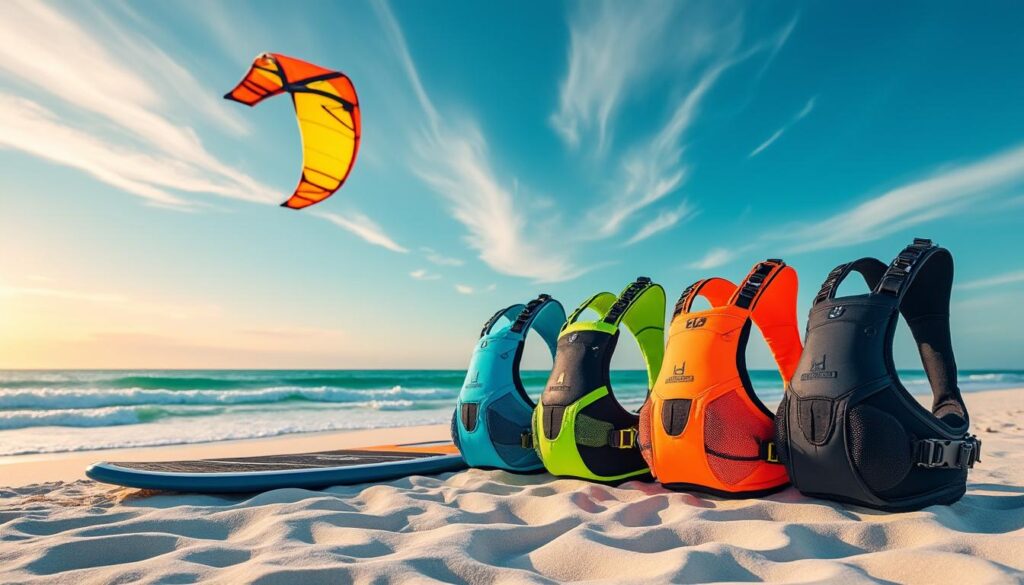
In kitesurf some elements are not optional: helmet, impact vest or buoyancy aid, board leash only in specific contexts and, above all, efficient quick-release systems on the bar. In an emergency, you must be able to deactivate the kite’s power instantly. This is not a technical detail, it’s what allows you to keep having fun for years.
In SUP the equipment changes but the logic remains: a robust leash to avoid losing the board, a buoyancy aid for longer or remote sections, attention to wind and currents that can push you offshore. On windy days, an inexperienced SUP rider can find themselves pushed away from the coast in minutes, especially if they don’t know the wind behavior between the Adriatic and the Ionian.
- Helmet and vest: essential in kite, recommended in SUP in rough conditions.
- Leash: always in SUP, used with judgment in kitesurf to avoid creating hazards in case of dragging.
- Quick release: checked and tested before every session.
- Return plan: always know where to exit the water in case of trouble.
Different spots, different rules: Adriatic, Ionian and beyond
Spot choice makes the difference between a calm session and a complicated one. In the Adriatic kitesurf you often enter with strong winds and formed waves: perfect for those seeking action, less suitable for first upwind tacks. The Ionian, with often smoother water and regular thermals, is an ideal laboratory for learning. You can find these differences explained in many local guides, including features dedicated to the best spots of the Adriatic, useful for planning upcoming outings.
For SUP, on the other hand, you look for sheltered areas, natural bays, lagoons and stretches of sea protected from the prevailing wind. In Puglia as in the rest of the Mediterranean, the coexistence of SUP and kite on the same beach requires respect: clear kite launch and landing areas, SUP routes that do not cut the paths of riders in planing.
Those who learn to choose the right spot for the day’s discipline discover that safety is not a brake, but the basic condition to push their limits a little further.
Learn kitesurf or start with SUP? How to decide based on your level and goals
Many arrive at the beach with the same question: “Do you start with SUP and then move to kite, or can you start directly with kitesurf?”. There is no single answer, but some key criteria really help choose. The first is your relationship with the water: can you swim well, do you feel calm when you’re not touching bottom, can you handle small waves without anxiety? If the answer is no, it makes sense to start with SUP on flat water to build confidence.
The second criterion is how much you’re willing to commit to a kitesurf course. Kite cannot be improvised: it takes at least several hours guided by a kitesurf school with certified instructors, updated equipment and a clear progression program. SUP, on the other hand, can be tackled with a short 30-minute beach introduction, then lots of autonomous practice.
Assessing your level: from beginner to advanced
An experienced instructor, whether in Puglia, Liguria or on Garda, always starts with three questions: how much time have you spent in the sea, what kind of sport do you normally do, how eager are you to learn something technically demanding. An absolute beginner, who perhaps hasn’t practiced sports for years, can gain great benefit from a few weeks of SUP before thinking about kite. You train balance, core, endurance and learn to read the water.
Those already athletic, perhaps used to snowboarding, wakeboarding or skateboarding, can instead jump faster into a beginner kitesurf course. In that case SUP remains a perfect ally on no-wind days, to continue building leg strength and stability on the supporting foot. At intermediate and advanced levels, combining the two sports allows you to be on the water almost every day, adapting to weather conditions.
Concrete goals: what do you really want from the sea?
To choose between SUP and kitesurf it’s useful to clarify three concrete goals: what you want to feel, what you want to learn and how you imagine your typical days at the sea. If your goal is to explore, do long outings along the coast, maybe with a dry bag tied to the board and stops in coves, SUP is the natural answer. If you dream of flying, lifting above the water, doing jumps and maneuvers, kite is what you’re looking for.
Many riders who attend a kitesurf camp in Italy arrive with just this doubt. Often the solution that works best is a combination: lazy SUP mornings to warm up, kite lesson afternoons when the wind comes in. That way you don’t wait for the gust sitting on the beach: you live the sea from the start, at different intensities.
In the end, the choice is not SUP or kitesurf forever, but which side to start your serious relationship with water and wind from.
Watching some comparative videos, preferably shot at spots similar to those you’ll frequent, helps visualize the real progression of the two sports and understand which one you feel more in tune with.
SUP and Kitesurf in the rider’s lifestyle: holidays, destinations and smart combinations
Once you understand the technical differences between SUP and kitesurf, the fun begins: how to fit them into your real life. Kitesurf holidays in Italy and the Mediterranean are changing. More and more travelers arrive with a dual request: strong wind some days for kiting, but also slow moments to discover the coast, perhaps with a board underfoot but without the wing.
In this scenario SUP is the secret weapon. Scirocco day too gusty for your kite level? Pull out the SUP and stay on the water anyway. Wind dropping at sunset after a long kite session? End the day with a soft paddle in front of the illuminated coastal villages.
Destinations kitesurf Italy and beyond: where the two sports shine
In Italy, the best spots to combine SUP and kite are those with dual exposure, like in kitesurf Salento between the Adriatic and the Ionian. Depending on wind direction you move the van from one coast to the other, almost always finding useful conditions for at least one of the two disciplines. Also in Liguria, on northern lakes or in Sicily, the combination works, provided you choose spots with easy access and prepared schools.
Outside Italy, destinations like Greece, Egypt or Brazil allow you to live this double soul of the rider: calm mornings and windy afternoons. Those planning longer kite trips, like to the Red Sea or northeast Brazil, often now bring an inflatable SUP in their backpack to make use of every hour of water.
Travel videos that tell of this combination of sports help understand how to best organize a light but complete setup, between kite, board, inflatable SUP and collapsible paddle.
Training routine and cross benefits
Physically, SUP and kitesurf complement each other very well. SUP strengthens the deep core muscles, improves balance and weight control: all qualities that show up in more stable edging, safer water starts and less “hard” landings in jumps. Kitesurf, in turn, trains quickness, coordination and wind reading — skills that make it easier to face a choppy sea even with a paddle in hand.
A typical routine for someone living near the sea could be this: two evenings a week of easy SUP to work on breathing, a couple of windy afternoons dedicated to kite, alternating freeride and practicing new maneuvers. That way you no longer depend on a single element (strong wind), but exploit every face of the sea depending on how it wakes up each day.
In perspective, the true Mediterranean rider lifestyle is not “only kiter” or “only supper”, but someone who knows how to choose the right tool for what the sea offers, without waiting for the perfect day.
Is it better to start with SUP or kitesurf if I am a complete beginner?
If you don’t yet have confidence with the sea and don’t practice board sports, starting with SUP on flat water is often the calmer choice. It lets you work on balance, endurance and personal safety without immediately managing the power of the wind. If instead you are already athletic, can swim well and are drawn to speed and jumps, you can start directly with a kitesurf course at a qualified school, using SUP as support on no-wind days.
How long does it take to learn the first upwind tacks in kitesurf compared to SUP?
With SUP, on a stable board, many people can stand up and paddle already after the first or second outing. In kitesurf the process is longer: on average it takes several hours of course time to move from kite control on land to the first water starts in the water, and a few additional sessions to close the first controlled upwind tacks. Progression depends greatly on outing frequency, wind conditions and the quality of instruction.
Can I use the same board for both SUP and kitesurf?
No, SUP and kitesurf boards are designed for completely different needs. SUP requires volume and stability to float stationary and paddle, while a kiteboard is designed to plane at high speed with little volume and a shape made to hold an edge. Trying to use a SUP board with a kite is dangerous and ineffective, while a kiteboard would not let you paddle correctly standing up.
Do you always need a kitesurf school or can I learn on my own like with SUP?
For kitesurf it is strongly recommended, and in practice indispensable, to go through a kitesurf school with qualified instructors. Kite is a traction sport: incorrect handling of wings and safety systems can create serious risks for you and those around you. SUP, on the other hand, can be approached autonomously after a short explanation on paddling technique and basic safety, especially if practiced in calm conditions and close to shore.
In which weather conditions is it better to practice SUP compared to kitesurf?
SUP shines with weak or absent wind, flat sea or slightly rippled water — conditions ideal for exploring the coast or training without rush. Kitesurf, instead, requires regular and sufficient wind according to kite size and your weight. On days with unpredictable gusts or marked wind holes, it is often more sensible to stay in SUP mode rather than forcing an unsafe or frustrating kite session.