The wind that pushes a kite over the water now counts as an Olympic medal. Kitesurfing, born as a pastime of a few pioneers who were towed by a homemade kite, has become Formula Kite, an ultra-technical sailing discipline, timed to the second and regulated down to the smallest detail. From the wind-swept beaches of the Atlantic to the Salento wind on the Ionian and the Adriatic, the journey has been long, made of trials, mistakes, innovations and noisy falls into the water. But the result is clear: kitesurf at the Olympics has forever changed the perception of this sport.
For those who dream of learning kitesurfing, seeing riders fly on foil boards at the Olympics means having a new horizon to reach. It’s no longer just about making a clean water start or holding the first upwind leg, but about understanding that the same discipline you learn at a kitesurf school on your local spot is the one that, pushed to the extreme, takes athletes to the podium in Marseille. This article delves into the history, the rules and the protagonists of Olympic Formula Kite, with a constant eye on the reality of courses, spots and sessions in Italy, from kitesurf Italy in Puglia, Sicily, Liguria, to long trips across the Mediterranean.
- Kitesurf has become an Olympic discipline with Formula Kite, a foil specialty focused on speed and tactics.
- Olympic rules define equipment, buoy courses, minimum and maximum wind, and athlete qualification criteria.
- The history of kitesurfing starts in the 1970s and reaches the Games thanks to technical innovations, new schools and a growing global community.
- Qualified athletes show varied paths: some come from freestyle, others from traditional sailing, all united by the foil.
- Those starting today with a kitesurf course in Salento, in Liguria or on the Garda can follow the same technical thread that leads to Formula Kite.
Kitesurf at the Olympics: how the kite went from the beach to the podium
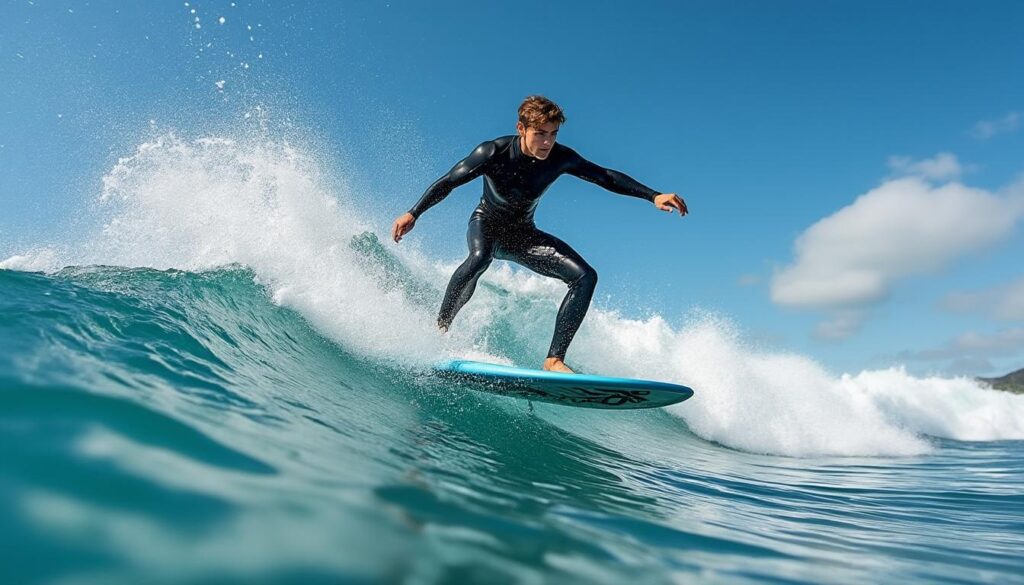
To understand what “kitesurf at the Olympics” really means, you have to imagine a harbor like Marseille transformed into a natural stadium. No artificial stands: just sea, wind and a fleet of riders on foil boards gliding silently at over 30 knots, with kites changing course with every gust. The same gestures repeated every day at a spot kitesurf Puglia or at kitesurf Adriatic spots, but pushed to a level where every mistake costs positions in the standings.
The turning point came when the International Olympic Committee decided to invest in disciplines close to young people. After surf, BMX and new specialties, kite also entered the program, but not in any form: Formula Kite was chosen, i.e. kitefoil racing. No big air, no megaloops for social media: at the Olympics the kite is pure speed, foil control and wind reading. The message is strong: kite is not just spectacle, it is also a complete sailing sport, with refined rules and strategies.
The Olympic location in Marseille was studied precisely to highlight this dimension. Relatively consistent wind, no strong tides, limited currents, a coast that allows a good angle relative to the prevailing wind. Practically a giant “advanced training field” where the best riders in the world can express the full potential of foil boards and kites. Those used to switching sides between kitesurf Ionio and kitesurf Adriatic in Salento know well how much micro-differences in angle and wind strength matter: in Formula Kite these details decide the medals.
Behind the polished image of the Games, however, there are years of work by sailing federations, World Sailing and the International Kiteboarding Association. A clear rulebook is needed, a defined class, a qualification system that also allows smaller nations to send a single athlete. For this reason Formula Kite was structured with separate men’s and women’s categories, 20 men and 20 women in total. A choice that makes the Olympic goal more accessible compared to other mass sports, and that pushed many freestyle or big air riders to switch to foil.
On the water, though, a simple truth remains: board, kite, wind and split-second decisions. The same dynamics you know when facing one of the first upwinds during a basic kitesurf course, only multiplied by ten in terms of speed and psychological pressure. The thread that connects the first lesson on the beach to the start of an Olympic final is the ability to read the wind and trust your hands on the bar. It is this ideal bridge that makes the debut of kitesurf at the Olympics a reference for anyone who wants to progress, not just for those aiming for the national team.
In short, the passage from the beach to the podium was not a magical leap, but the result of a structured evolution: more safety, clear rules, defined equipment and a format that speaks to both riders and the general public. Kite has left the niche without losing its soul made of wind and sea.
From the origins of kitesurfing to the birth of Formula Kite
Long before people talked about the best kitesurf spot in Italy or kitesurf holiday packages, there were only a few experimenters trying to be towed by a kite on water, snow and sand. In the 1970s a Dutchman, Gijsbertus Adrianus Panhuise, registered one of the first patents for a system that allows a person on a board to be pulled by a kite. The idea existed, but the technology did not yet: lightweight materials, safety systems and reliable bars were missing.
In the 1980s the situation changed. In France, the Legaignoux brothers developed the first inflatable kites, more stable and relaunchable from the water. This single step opened up a world. Anyone who today prepares the sail on a beach of kitesurf Lecce or kitesurf Taranto does it almost without thinking, but that inflatable leading edge is one of the reasons why kite became teachable in safety and did not remain a game for a few daredevils. In the same years the first riders who organized informal races on the water began to appear, mixing the DNA of surf and sailing.
In the 1990s, with the arrival of materials like dyneema and spectra for the lines, control increased again. The first dedicated boards were born, shorter and stiffer, and quick release systems appeared. It was the era in which the first structured kitesurf schools proliferated, from the Pacific Ocean to the beaches of southern Europe. In Italy local communities began to form on every coast, from the Tyrrhenian to the kitesurf Adriatic, passing through the South with the first organized spots in Puglia and Sicily.
This development was not linear. There were accidents, misjudgments, equipment not always up to the task. For this reason safety became central. Today dedicated guides like the main safety rules in kitesurfing are the basis of any path for kitesurfing for beginners. Even World Sailing, recognizing the International Kiteboarding Association in 2009, pushed for framing kite within the larger family of sailing sports, bringing common standards worldwide.
Meanwhile technology continued to run. The decisive step towards Formula Kite came with the spread of foil boards: a mast with a small submerged wing that, above a certain speed, lifts the entire board out of the water. It is the moment when kitesurfing stopped being just “planing” on the surface and became stabilized flight. For anyone who has tried a foil on the Ionian in a light thermal, the feeling is clear: no water noise, only the whistle of the wind on the lines.
This setup, optimized for racing, gave rise to Formula Kite. Long, narrow foil boards, kites with very thin profiles, sets of sails from about 7 to 25 square meters to cover a wind range between 5 and 40 knots. Everything is designed to turn every knot of wind into pure speed. Every adjustment, from bar pressure to line length, becomes a detail that can change a heat. The evolution, which started from an almost artisanal idea in the 1970s, culminated in a discipline with standardized rules, recognized and measurable, perfect for the Games.
In this process, Italian spots played a quiet but real role. Windy days in kitesurf Salento, Ligurian swells, Garda thermals and the canals of the Venetian lagoon have seen generations of riders grow who today compare themselves with international champions. The history of kite is not only made of famous names and major events, but of thousands of local sessions where someone learned to control one more edge.
So, when you watch the start of an Olympic Formula Kite race, you are actually looking at the result of decades of trials in every corner of the world, from pioneering Netherlands to the most remote bays of the Mediterranean. Every sail cut and every new board are the fruit of that long road.
Rules, race format and equipment of Olympic Formula Kite
When we talk about Formula Kite at the Olympics, we are not talking about free sessions: it is a class with precise rules, designed to guarantee fair competitions understandable even to those who have never held a bar. The format is based on buoy races, like in sailing. Each heat follows a course with upwind legs (close-hauled), reaches and downwind legs (running). Athletes must decide how much to point upwind, when to tack or jibe, how to handle gusts and wind holes.
The allowed wind range is wide: from 5 to 40 knots. To adapt, each rider has several approved kites, with areas roughly from 7m² to 25m². In light wind you see huge kites flown high and slow, with high-lift foils. When the wind rises, smaller sails, punchier profiles and a more controllable foil setup at high speeds come into play. Anyone who has tried switching from a 12 to a 9 in a growing kitesurf Ionio day knows how much the choice of size can save the session.
Boards are specialized foil boards with a certified mast and hydrofoil wing. The Formula Kite class strictly defines which models can be used in competition, so the contest is a challenge of skill and tactics, not a race to the most extreme prototype. This does not stop innovation, but channels it: brands work to offer approved yet high-performing products also for non-Olympic athletes who want an extra gear in their sessions.
The structure of an Olympic regatta includes a series of qualifying races over several days. Each heat awards points based on finishing order: few points to the first, more points to those who finish behind. At the end of the qualifiers, the best advance to the final, where a single day can decide everything. The adrenaline is extremely high: a bad start, a foil touchdown or a wrong choice of side of the race area can ruin the work of an entire season.
The qualification system for the Games is equally structured. One spot is reserved for the host nation, others are assigned based on results at the World Sailing championships, then there are continental quotas and a “last chance” regatta for nations not yet qualified. In practice: you need consistency over two full years of international season, a single lucky result is not enough.
For those coming from the world of kitesurfing for beginners, all this may seem distant, but in reality many logics are the same ones learned during a well-run kitesurf course: power control, speed management, respect for right-of-way on the water, wind reading. The difference is the level of precision: if a beginner is happy to hold the upwind leg, a Formula Kite athlete measures their angle to the wind in degrees, minute by minute.
To connect Olympic logic to daily practice, it is useful to look at how choices are made about the spot and equipment. Whether you plan a session at a spot on the Adriatic in Italy or a trip to Greece or the Red Sea, the key is always the same: forecasted wind, direction, intensity, water type and the session’s objective (training, freeride, waves, foil). It is exactly this mentality that is taken to the extreme in Formula Kite.
| Element | Olympic Formula Kite | Advanced freeride session |
|---|---|---|
| Objective | Speed and ranking result | Fun, personal technique, exploring the spot |
| Equipment | Kitefoil and approved foil board, defined sail set | Free equipment (twin tip, small surfboard, foil, different wings) |
| Wind conditions | 5–40 knots, clear rules on limits and safety | Personal choices, often more conservative |
| Course analysis | Continuous analysis of gusts, shifts and current | General observation to find the best edge |
| Safety | Official procedures, support team, safety boats | Self-managed: respect for local rules and personal level |
Understanding these differences helps to read races with the eyes of a rider and not just as a spectator. Every board change, every seemingly tiny foil mistake tells how this sport, born free, has also become a discipline of very high rigor. And yet, at its core remains the same thing: the wind that cannot be commanded, but that you learn to recognize and exploit.
Race strategy: what really makes the difference
Watching a race on TV it may seem like a straight dash to a buoy. In reality, every leg is a puzzle. Riders must decide whether to follow the group or risk a side of the course with more wind pressure, whether to anticipate a shift or protect a position. It is the same logic an experienced rider uses to choose whether to stay downwind of the kite fleet in a crowded spot or move to a freer channel to pull longer legs.
Key differences in a race often come from the start. Getting out well from the line, with a stable kite, the board flying and free space ahead, means immediately setting the best angle toward the first buoy. A messy start, with a touchdown or a sluggish kite, forces you to chase. Tactics in Formula Kite are a continuous mix of courage and caution, a subtle dance with a wind that does not forgive distractions.
Olympic kitesurf athletes: profiles, paths and leading nations
Behind every name on the Formula Kite starting list there is a story that often starts from a local spot, from a first lesson in a little bay. Riders who qualified for Paris 2024 – and who now project the discipline toward future editions – come from different backgrounds: some grew up in traditional sailing, some come from freestyle, some started with twin tip at spots like Dakhla, Tarifa, Salento or the Red Sea.
In the men’s fleet stand out athletes like Maximilian Maeder (Singapore), able to impose himself very young in major international regattas, or Toni Vodisek (Slovenia), a familiar face for years on the foil circuit. Italy answers with Riccardo Pianosi, who has been able to turn work done in national race fields into world-class results. In the women’s fleet, names like Daniela Moroz (USA) and Gisela Pulido (Spain) well narrate the meeting between freestyle experience and the new foil era.
Interesting is the mix of represented nations. Alongside historical sailing powers like France, Great Britain, the Netherlands or Germany, countries that until a few years ago you wouldn’t have associated with high-level competitive kite appear, such as Singapore, Mauritius, Thailand or Colombia. This demonstrates a simple thing: where there is wind, a champion can be born, if there is at least one kitesurf school able to accompany talent from the base to performance.
In Italy, the Olympic effect is felt especially among the new generations who look to the Azzurri riders as a concrete reference. If before a kid starting kitesurfing for beginners in Salento or Liguria saw kite only as a summer passion or a travel sport, now they can imagine a different path: clubs, youth regattas, technical gatherings, national selections. Exactly as has happened for years in traditional sailing with Optimist, Laser or 470.
The paths of these athletes are not all the same, but they have some traits in common:
- A strong technical foundation in variable conditions, often developed between sea spots and inland lakes.
- Specific work on the foil, with hours and hours of sailing in light wind to learn to fly stably.
- Targeted physical training, focused on core, balance, reaction time and endurance.
- Support from local clubs and schools, which provide logistics, equipment and coaching.
- International experiences at different spots, from the Mediterranean to the ocean, to learn to read every type of water.
Many of them know well the spots that today also attract amateur riders, like the bays of Dakhla or the Greek coasts. Those who want to follow their tracks, even without aiming for the Olympics, find detailed guides on destinations such as kitesurf in Dakhla and Essaouira, but also on the Greek islands or the Red Sea. These are the same places where many professionals prepare their racing seasons, thanks to reliable wind and long days on the water.
Watching these athletes race, knowing where they come from, changes how you live a session. When you find yourself on a spot kitesurf Puglia with 18 knots side-on and almost flat water, you can play “act like a pro”: try tighter upwind legs, cleaner tacks, board changes with less wasted meters. You don’t need an Olympic coach to start thinking like a racer; you just need to want to go beyond “I go up and down” and set a goal for each outing.
What Olympic athletes teach those who kite every day
Formula Kite riders are not only to be watched, they are also to be “copied” in habits. They have an almost obsessive respect for the wind: they check forecasts from multiple models, observe the sky, measure with an anemometer, talk to locals. They have a serious relationship with safety: clear procedures on the water, equipment always in order, no compromises on leash, quick release and line checks.
Those who do kitesurfing in Italy as a passion can take cues from this approach and adapt it to their level. A well-prepared session, with equipment in good condition and a spot chosen according to wind direction, is worth much more than three improvised outings in the wrong conditions. It is precisely this “pro” mentality, but relaxed, that makes days on the water safer and more enjoyable.
From the basic course to Formula Kite: what changes (and what doesn’t) for those who want to progress
Seeing kitesurf at the Olympics raises a spontaneous question: is it still a sport for everyone or is it becoming too technical? The answer lies in the path. The basics of kite, what you learn in the first ten hours at a serious school, are the same for everyone: kite control on land, body dragging, getting on the board, first safe legs. There are no shortcuts here, whether you only dream of a sunset in Salento or a World Cup bib.
The next step is deciding in which direction to go. Many choose twin tip and the freeride route with some jumps, someone else explores small surfboards and waves, others fall in love with the foil. The latter is the door that, if pushed far enough, leads into the territory of Formula Kite. But beware: before thinking about the Olympics, you must build solid foundations.
A good progression starts with a kitesurf school that does not sell illusions like “in three days you learn everything”, but that truly accompanies you, including assisted outings after the course. The choice of spot is fundamental: if you want to learn calmly, a spot with flat water and side or side-on wind is gold. In Puglia, for example, many choose lagoons or sheltered bays; in Liguria people look for less extreme days, as many guides on kitesurfing in Liguria and its windy spots also tell.
For those looking at foil, the ideal transition does not go directly from Formula Kite, but from more forgiving setups: foils with larger wings, more voluminous boards, manageable speeds. The goal of the first sessions is simple: get up, fly a few meters, lower without falling forward. Only after many hours of controlled flight does it make sense to consider racing foils and Formula-specific kites.
Equipment choice, especially for those not yet expert, is another key point. Used gear can be a great option, provided you know how to evaluate year, condition and type of kite, as specific guides on how to buy used kitesurf equipment without mistakes explain. A kite that is too old or a poorly maintained bar can turn a promised session into a day of problems.
The red thread that connects the novice to the Olympic athlete is one only: respect for the wind. Those who start in kitesurf Salento, between tramontana gusts and scirocco thermals, understand this quickly. Wind is not negotiated, it is observed, anticipated, accepted. It is this attitude that makes kite a sport where progression is not only technical, but also mental. Formula Kite only brings this philosophy to its maximum expression, turning it into medals and rankings.
In the end, what truly changes is the level of detail and discipline. What does not change is the joy of catching the first planing or flying leg. Whether you do it in front of a beach full of friends or before an Olympic jury, the feeling of freedom remains the same.
What is the difference between kitesurf and Olympic Formula Kite?
Kitesurfing is the general term for the sport of being pulled by a kite on a board, encompassing different disciplines (freeride, freestyle, wave, foil). Formula Kite is a specific kitefoil racing class, recognized by World Sailing, with certified boards and kites and precise rules to compete on buoy courses, as at the Olympics.
Do you need foil experience to get into Formula Kite?
Yes, Formula Kite requires solid foil control. Before thinking about racing it is essential to be able to fly stably, perform tacks and jibes without touchdown and handle light and sustained wind. To start it is better to use easier foils and more stable boards, accompanied by an experienced instructor.
Can you reach competitions starting from a basic kitesurf course?
Absolutely yes, provided there is consistency. You start with a basic course at a reliable school, then build experience with the twin tip, upwind sailing and safety. Later you move to foil, first freeride and then, if desired, to racing formats. The path requires time, but it starts from the same basics all beginners learn.
What wind do Formula Kite athletes use at the Olympics?
The rules provide an indicative range between 5 and 40 knots. Below 10 knots very large kites and high-lift foils are used, while with strong wind smaller sails and more stable high-speed setups come into play. Choosing the right size and tuning the equipment is a crucial part of race strategy.
Can watching kitesurf at the Olympics help improve as a rider?
Yes. Watching Olympic athletes helps understand how important foil handling, wind reading, choice of trajectories and adherence to safety procedures are. Even freeride riders can take inspiration from their way of preparing the session, maintaining equipment and analyzing the spot before entering the water.