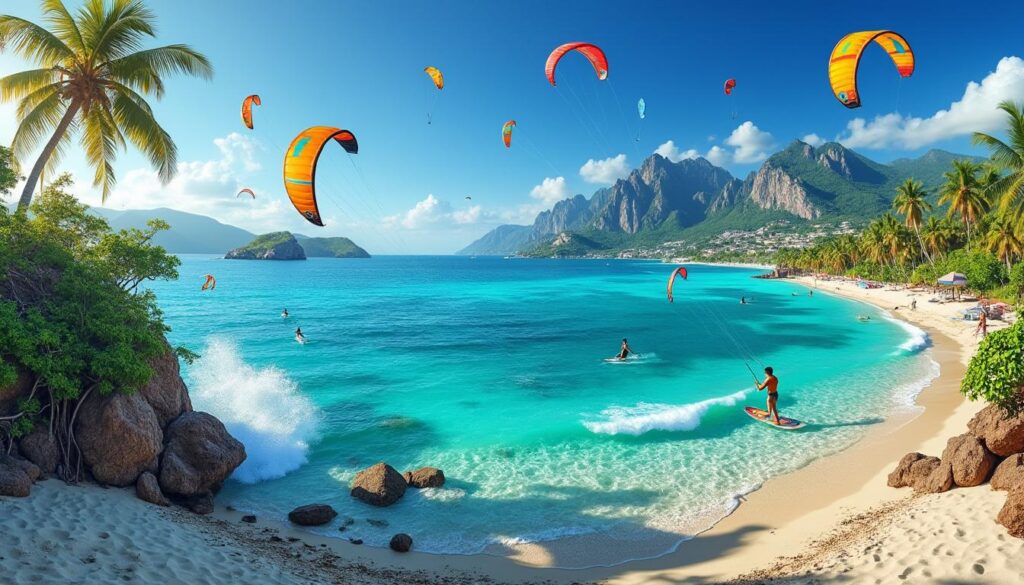
In Liguria the wind slaps the coast, the mountain drops steeply into the sea and kitesurf spots wedge between small harbors, cliffs and narrow beaches. Those who only look for postcards stay on the promenade. Those who really want kitesurf Liguria must read the weather, understand thermals, know the storm surge and choose the right time to enter the water. Between ponente and levante the morning borino, steady libeccio, clean maestrale and some wave days that wake you better than a strong espresso alternate. The Riviera is not an easy playground, but when you hit the spot and the direction, the session stays imprinted in your head for months.
This guide takes you along the whole Riviera, from Ventimiglia to beyond Sestri Levante, with a constant focus on wind, safety and logistics. The idea is simple: help you choose the right spot based on your level, the type of sea you’re looking for and the time you have available. It’s not just about “beautiful places”, but about real conditions, currents, obstacles, municipal regulations, best periods and classic mistakes to avoid. A common thread links every Ligurian spot to what happens in the rest of kitesurf Italia, from the kitesurf Adriatico to the Tyrrhenian and all the way to the Salento wind, so you can compare, plan and minimize days wasted waiting for wind that never comes.
- Liguria in breve: narrow coast, seabeds often deep immediately, variable but powerful wind when it turns right.
- Per chi è: riders with a solid base; true beginners should aim for wider bays or first take a kitesurf course in easier spots.
- Vento chiave: libeccio and maestrale for strong days, summer afternoon thermals, watch for winter fronts.
- Strumenti obbligatori: detailed wind forecasts, an eye on storm surge and up‑to‑date info from local schools.
- Obiettivo: help you choose the right spot kitesurf Liguria for each day, without relying only on Instagram photos.
Spot di kitesurf in Liguria: panoramica della Riviera da Ponente a Levante
Those who talk about kitesurf Liguria often think only of two or three famous names, but the reality is a strip of coast long and squeezed between railway, motorway and sea. That means difficult parking, limited launch spaces and many wind differences in just a few kilometers. A rider like Luca, who escapes from Milan with his board at the weekend, knows it well: miss by 20 km and you find yourself watching others plane while you stay onshore with a limp kite.
The Ponente, towards Imperia and Sanremo, offers some of the most interesting areas, with spots that work well with libeccio and maestrale. To the east, towards Genoa and beyond, the wind can funnel through valleys and surprise with sudden gusts. That’s why someone arriving from Puglia, used to the more predictable vento Salento across two seas, must change mindset here: less improvisation, more control and planning. The Ligurian coast rewards those who study before setting up the kite on the sand.
Another key point is beach space. In many seaside resorts, especially in high summer, the establishments occupy almost everything, with mandatory launch corridors or limited times for kitesurfing. This makes Liguria less suitable for kitesurf for beginners in high season, but very interesting in the shoulder seasons, when bathers disappear and only riders, surfers and locals who watch the sea to understand what’s about to happen remain.
The seabed also impacts spot choice: in various stretches it drops off immediately, in others there are shoals, rocks or submerged cliffs to know before launching into a determined water start. A classic mistake by those coming from “easy” spots, like many lagoons or some bays of the kitesurf Ionio, is to assume that wind and space are enough. In Liguria you also need a careful reading of the sea, because a wrong wave or too onshore a gust near a cluster of rocks can ruin the day.
Within this general framework, each stretch of coast builds its own character: there are more “freeride” zones, others where the waves tempt those coming from surfing, and others perfect only for certain directions and useless in others. Understanding this map is the first step to turning the Riviera into a true wind playground, without wasting time and energy on unnecessary transfers.
Those who choose to link Liguria with other kitesurf holiday routes in the Mediterranean often combine it with a trip to France or a jump down to Puglia, where spot kitesurf Puglia like Porto Cesareo or the Stagnone in Sicily offer opposite conditions: wide lagoons, flat water, less capricious winds. This contrast helps to understand how ideal the Ligurian Riviera is as training ground for those who want to become a complete rider.
In short, the overview is clear: narrow coast, variable but powerful wind, limited spaces and great satisfaction for those who learn to read every detail. From the general picture we now move on to concrete spots, those every rider who loves kitesurf Italia should mark on their personal map.
Kitesurf Liguria Ponente: da Ventimiglia a Imperia, vento e onde da guidare
The Ponente area is the heart of kitesurf Liguria for many riders from Northern Italy. Here the libeccio comes in decisively, the maestrale can give clean days and summer thermals help when depressions are scarce. The character to keep in mind is Marco, a semi‑local rider who leaves from Turin: he checks three weather apps, a WhatsApp group of local spots and decides where to go only after seeing the latest gusts recorded on the buoys.
Areas like Bordighera, Riva Ligure or the spots near Imperia are known for wave sessions. With strong libeccio the sea rises quickly, sets organize and those with good surfkite technique find interesting lines. Here though you need cool nerves: mixed seabeds, presence of rocks and harbors in many stretches force a precise plan for getting out and back in. It’s not the place to improvise after two lagoon lessons.
Ponente Liguria is also a proving ground for those coming from more “comfortable” contexts, like the big spots of kitesurf Taranto or kitesurf Lecce, where you often have wide beaches and lots of meters to manage mistakes in the first tacks. Here launch space can be reduced to a few meters of sand between a low wall and the sea. Managing the kite on land becomes as important as in the water: bar controlled, no unnecessary loops, clear communication with whoever assists you in launch and landing.
A concrete tip for those wanting to explore this area: study municipal regulations and dedicated launch corridors carefully. Some stretches of coast allow kitesurfing only beyond certain buoys or with access from specific gaps during certain times of the year. Ignoring these rules means trouble with lifeguards, authorities and, above all, risks for those in the water or onshore. A good starting point is to check info from local kitesurf schools, which often publish updated guidance on spaces and permits.
In terms of wind, the Ponente behaves like an amplifier of Atlantic fronts entering the Mediterranean. When you see libeccio or maestrale above 20 knots on the maps on a large scale, it’s time to seriously consider a session here. Many riders alternate these outings with trips to more exotic destinations: those who love strong waves often also look with interest at guides like the guides on Dakhla and Essaouira, where wind and swell combine almost every week.
For gear, on this stretch of coast it’s common to see quivers with small kites, even 7 or 8 meters, ready for strong libeccio days. At the same time, the shoulder seasons require a 10 or 12 to take advantage of lighter thermals. Those who often move between ponente ligure and flatter spots like those described in the kitesurf Adriatico guides tend to build a versatile quiver, able to handle both waves and flat water, without bringing half the house every weekend.
The key element of the Ponente is this: powerful wind, serious waves, logistics to know. It rewards riders who can read forecasts and the sea, punishes the improvised. If you like the feeling of launching the kite with a view of the hills and colorful houses behind you, this stretch of the Riviera quickly becomes one of your reference points.
Levante ligure e zona di Genova: vento canale e logistica urbana
Moving towards Genoa and the Levante, kitesurf Liguria changes face. The mountains get even closer to the sea, the valleys become natural wind channels and the city comes into play with traffic, port terminals and urbanized stretches of coast. Here Chiara appears, a rider who works in smart working: she closes her laptop, looks out the window and if she sees flags taut she grabs her backpack and heads to the nearest launch corridor.
The wind in this area can surprise for better or worse. With certain weather configurations, particularly with winds from the southwest or southeast, the coast behaves like a tunnel that channels gusts. In other situations, the sea remains messy and the wind unstable, with holes difficult to manage for those who don’t yet have secure board control. This is where the difference between a rider who took a good kitesurf course and someone who learned “by chance” becomes evident.
In this part of the Riviera there are spots that work in specific conditions: some beaches offer interesting sessions with less formed sea, others become playgrounds for those seeking chop and small waves. Access often involves limited parking and stairs down to the water, so organization and respect for shared spaces are essential. The kite must be inflated where it doesn’t obstruct, gear placed neatly, because you share space with people walking, jogging, fishing or simply watching the sea.
Genoa and surroundings are also a mental test. You’re not in a “tropical postcard”, you’re in a real city, with container ships passing in the distance and industrial quays in sight. This atmosphere, however, gives a unique feeling: you switch off from work, put on your wetsuit and after ten minutes you’re on the water tacking with the skyline of buildings behind you. For many local riders, that’s the discreet magic of urban kitesurf Italia.
Regarding equipment, Ligurian riders alternating Genoa, Ponente and occasional trips to Southern Italy or abroad quickly learn to choose gear carefully. Those who want to build a solid quiver without spending a fortune pay attention to tips on how to choose used kitesurf gear, because in these urban and often variable conditions there’s no point in changing everything every season. You need reliable gear with a wide wind range and a bar that transmits every gust.
The key point of the Levante and the Genoa area is this: more unpredictable wind, urban context, spots to “know” rather than improvise. Those who invest time to understand times, working directions and access management end up having a playground within reach that few other places in Europe can offer so close to a major urban center.
Quando fare kitesurf in Liguria: stagioni, vento e differenze con Puglia e Salento
Knowing when to go is as important as knowing where. Liguria experiences very different seasons: winter brings the strongest fronts, spring and autumn mix depressions and crystal‑clear days, summer relies mainly on thermals and some libeccio entries. For those thinking in terms of kitesurf holidays, combining the Riviera with Puglia, Sicily or Sardinia allows you to build a complete calendar spread across almost the whole year.
The difference with kitesurf Salento is obvious. In the heel of Italy the game is based on two seas, kitesurf Adriatico and kitesurf Ionio, which allow you to move around the peninsula and look for leeward coasts. In Liguria you have a single, narrow coastline that must be read to the millimeter. That makes forecasts even more crucial: those who rely only on a “colored” map often arrive late or pick the wrong spot entirely.
To put things in order, here’s a summary of the most interesting seasons for kitesurf Liguria:
| Period | Wind characteristics | Recommended level | Useful notes |
|---|---|---|---|
| Winter | Strong fronts, libeccio and maestrale, often rough sea | Intermediate / advanced | Powerful sessions, cold water, good technique and a thick wetsuit required |
| Spring | Mixed between depressions and clear days with steady winds | Intermediate | Great compromise between wind strength and manageable temperature |
| Summer | Afternoon thermals, some libeccio entries, more unstable | Careful intermediate | Crowded beaches, stricter rules, less room for mistakes |
| Autumn | Organized fronts, often similar to winter but with warmer water | Intermediate / advanced | One of the best periods for wind and sea, fewer bathers |
Many riders organize the year like this: autumn and spring between Liguria and other Northern spots, winter with targeted escapes to wind‑guaranteed destinations like those told in the guides on kitesurf in Mauritius, and summer spent between Ligurian thermals, classic Tyrrhenian spots and maybe some weeks down in Puglia, taking advantage of spot kitesurf Puglia that are wider and also suitable for relaxing moments with family or non‑rider friends.
An often underrated aspect is local wind reading. weather apps are essential, but not enough. Ports, narrows between headlands, valleys opening behind the coast can completely change the gust profile. That’s why many Ligurian riders keep an eye on tools like live wind maps and bulletins designed for wind sports. Cross‑checking official data with real observations – flags, smoke from chimneys, streaks of gusts on the sea – is the real key to not completely missing the day.
Compared to regions like Puglia or Sicily, Liguria offers fewer “safe” days numerically, but many intense and technical days. It’s an excellent training ground: whoever learns to read the Riviera with all its nuances will make fewer mistakes even when flying to distant destinations like Brazil, Sri Lanka or the Red Sea, where the wind is more constant but the sea always demands respect.
The final message on seasons and wind is clear: Liguria does not reward those who only seek comfort. It rewards those who study, observe, compare and then decide where to enter. And that, over time, builds complete riders capable of moving confidently anywhere.
Sicurezza e livello: la Liguria non è un playground per principianti distratti
Talking about kitesurf Liguria without addressing safety would be a mistake. The narrow coast, piers, cliffs and sea that becomes deep immediately make the Riviera a fascinating but unforgiving spot for those without solid foundations. Those starting to learn kitesurf are far better off doing their first real tries in wider spots, perhaps taking a kitesurf course in areas like Salento, Sicily or lagoons with ample lateral space.
A typical mistake of those who feel “intermediate” after a few outings is underestimating obstacles onshore. Narrow corridors between establishments, posts, cabins, people walking: it takes little to turn a dragged tack into a serious danger. That’s why managing the kite’s power, especially during takeoff and landing, is fundamental. Bar close to the body, a clear wind window in your head and no experiments with loops on the beach. The fun only starts when you are far enough from shore.
From a rules point of view, many locations have introduced precise regulations: mandatory launch lanes, minimum distances from bathers and boats, permitted hours. Knowing these constraints is as important as knowing how many knots there are. A prepared rider doesn’t just look at the sea but also informs themselves about local ordinances. This not only avoids fines but builds a healthy relationship between the kite community and those who use the beach differently.
For those who feel ready to tackle Liguria but want to do it with their head, the ideal is to work on some key points:
- Water restarts: development of the water start technique in chop and wave conditions, not just flat water.
- Self‑rescue: real, not theoretical, ability to dismantle the kite at sea, secure the lines and return by swimming.
- Managing gusts: learning to dump power with the bar and body, without panic when the wind rises suddenly.
- Reading the shorebreak zone: understanding where to go through the first waves without getting tossed and losing the board immediately.
Those who have these elements clear will enjoy Ligurian sessions much more. Those who do not yet have them should invest first in training. To deepen these topics, the resources on kitesurf safety and fundamental rules are a practical, direct starting point, far from the easy promises of “all at once”.
Safety is also linked to the type of gear chosen. Modern freeride kites with good depower and easy relaunch make life much easier in technical spots. Boards not too small, with sufficient volume, help overcome wind holes and cross‑wave zones. Helmet and impact vest are not overcautious, but a smart choice on a coast where you can end up too close to cliffs or piers if something goes wrong.
The last piece is mental: the ability to say “not today” even if you drove two hours. In Mediterranean rider culture this is a fundamental step. Better to postpone the session than force it in conditions that exceed your level or present too many unknowns. Liguria will be there, with its winds and storm surges. What really matters is that you can come back, ready to progress and not to fix damage.
Liguria nel puzzle del kitesurf Italia: collegare Riviera, Puglia e Mediterraneo
Placing Liguria in the broader picture of kitesurf Italia helps understand its true value. It’s not the region with the most planable days in the year, nor the one with the widest spots. But it is a powerful technical gym, located a few hours’ drive from major Northern cities. For a rider living between Milan, Turin, Genoa or even Bologna, this coast becomes the laboratory to train on tight winds, waves and demanding logistics.
Many riders build a calendar alternating Liguria and Southern Italy. Winter and the first autumn swells are lived between Ponente and Levante, then the escapes south arrive to take advantage of spots like those in kitesurf Salento, the southern Tyrrhenian or Sicily. In this way they keep the kite feeling all year long, moving from harsher conditions to softer, more permissive contexts, also ideal for letting friends who still watch from the shore try the board.
Those who then broaden their view to the eastern Mediterranean or the ocean discover that the skills developed among Ligurian cliffs, wind carved by valleys and narrow spaces are useful everywhere. Guides on kitesurf in the Greek islands or those dedicated to Croatia, the Red Sea and Brazil show spots with different characteristics, but the connecting thread remains the same: knowledge of the wind, respect for the sea, choosing the right spot for your level.
In this puzzle, Liguria plays a precise role:
- Technical training: handling chop, waves, gusts and tight spaces develops reflexes and control.
- Geographical accessibility: for Northern Italy it’s often the first option when wind maps turn purple.
- Variety of conditions: summer thermals, winter fronts, autumn storms, clear spring days.
A rider who learns to move between kitesurf Liguria, spot kitesurf Puglia, Sicilian lagoons and maybe some trips to Mauritius or Brazil builds a complete baggage. They are no longer just someone who “can keep a kite in the air”, but a true practitioner able to analyze conditions, choose the right equipment, decide when to enter and when to wait.
The Ligurian Riviera, with its mountains that almost touch the sea, reminds a simple truth every day: the wind is not commanded, it is interpreted. Those who accept this rule, study it and apply it, turn every outing – even imperfect days – into a step forward. And when they then find themselves on a smooth sea, with steady wind and plenty of space, they immediately feel how much those “hard” sessions in Liguria made the difference.
Is Liguria suitable for kitesurfing for beginners?
Liguria can be challenging for those who are new: narrow beaches, seabeds that are often deep right away, the presence of rocks, piers and strict regulations in summer. To learn kitesurfing from scratch it is advisable to start in wider, more permissive spots, perhaps taking a kitesurf course in Puglia, Salento or a lagoon, and return to Liguria when you already have good control of departures, upwind sailing and kite relaunch.
What is the best period to kitesurf in Liguria?
The most interesting seasons are spring and autumn, when organized fronts alternate with steady wind and still manageable temperatures. Winter offers very powerful but cold sessions, suitable mainly for intermediate and advanced riders. Summer relies on thermals and occasional libeccio days, with the limitation of crowded beaches and reduced launch space.
What equipment is needed for kitesurfing in Liguria?
In Liguria it is useful to have a versatile quiver: small kites (7–9 m) for strong libeccio and maestrale days, and medium sizes (10–12 m) for thermals and lighter conditions. A freeride board not too extreme, helmet, impact vest and a wetsuit suitable for the season are strongly recommended. Modern equipment with good depower and easy relaunch helps a lot in technical spots like those in Liguria.
How to check wind and sea conditions in Liguria?
To plan a session it’s best to combine multiple sources: specialized weather and wave apps, real‑time wind maps, buoys and local webcams. It’s also important to listen to local kitesurf schools and compare data with direct on‑site observation: flags, streaks of gusts on the water, wave direction. Cross‑checking these signals reduces the risk of choosing the wrong spot or underestimating wind strength.
Is it mandatory to take a course before going out in Liguria?
There is no formal obligation, but it is strongly recommended to have solid training before facing narrow and technical spots like those in Liguria. A good kitesurf course teaches kite management, self‑rescue, reading the wind window and right‑of‑way rules. With these basics, Liguria becomes a place to progress safely, rather than a testing ground that is too risky.