On Lake Maggiore the wind funnels between the mountains, the water changes color as the day goes by and the kites launching near the shore immediately give the impression of a small “North Sea” set between Italy and Switzerland. Those looking for kitesurfing in Italy often focus only on the sea, but this long, deep lake offers surprising spots, technical sessions and perfect logistics for those who want to combine riding, nature and small water-facing villages. From the Maccagno and Tronzano area to the Swiss side, Lake Maggiore allows you to work well with thermal winds and north depressions, provided you know how to read schedules, directions and microclimates.
The context is very different from kitesurfing Salento or spots on the Adriatic and Ionian Seas: here the mountains shape the wind, land spaces are often tight and safety management requires discipline. For this reason, anyone arriving at Lake Maggiore for the first time with their board should know where to launch, which schools to contact, when to avoid entering the water and how to make the most of the services offered by local associations that organize boat outings or RIB assistance. The great thing is that, once you understand the game, the lake becomes a true training park: often relatively flat water, steady wind, quick restarts and many miles to grind upwind. Ideal for those who want to progress and arrive more solid for their next kitesurfing holidays at the sea.
In short
- Key area for kite: upper Lake Maggiore, especially the Maccagno–Tronzano area, thanks to thermal winds and wind channels between the valleys.
- Wind conditions: afternoon thermal breeze in good weather, Föhn episodes and north winds in autumn/spring, watch out for sudden disturbances.
- Recommended level: from beginner supervised by a kitesurf school to intermediate/advanced riders who want to carve and work on jumps in relatively flat water.
- Logistics: often tight spots, many launches from boat, absolute respect for local rules and priority to safety.
- Why go: combine quality sessions with mountains, villages and the possibility to move to other northern lakes (Como, Garda) in the same week.
Kitesurfing Lake Maggiore: lake features and wind between the mountains
Lake Maggiore is more than 60 km long and stretches from north to south between the Canton of Ticino and the Italian regions of Piedmont and Lombardy. This elongated shape set between elevations creates a kind of perfect corridor for the wind. Those arriving expecting a mirror-like calm water are surprised when the afternoon breeze stretches into streaks on the water and begins to form small white crests: it’s the signal that the session is about to start.
The lake is famous for sailing, windsurfing and wakeboarding, but in recent years kitesurfing on Lake Maggiore has grown thanks to schools and specialized centers, especially near the northern Lombard shore. Here the combination of wind, water depth and useful space to launch the kite makes the lake one of the serious candidates for the title of best kitesurf spot in Italy among “inland waters”, alongside nearby Lake Como.
Thermal wind, Föhn and disturbances: what to expect on Lake Maggiore
When the sky is clear and temperatures rise, thermal wind comes into play. The sun heats the valleys and the air moves, creating a flow that aligns along the lake. Usually this wind picks up around midday and strengthens in the afternoon, offering an ideal window for setup, water starts and long tacks. It is not always strong, but it can be surprisingly consistent, especially in summer and mild shoulder seasons.
In some situations north winds related to the Föhn add to the picture. When pressure over the Alps pushes air southwards, the wind can channel through the valleys and descend onto Lake Maggiore with sudden intensity, giving powerful but technical sessions. Experience comes into play here: it’s better to face these days with properly sized kites, continuously monitoring gust changes and cloud cover.
Water, waves and chop: how to read the lake surface
Unlike the sea, long waves on Lake Maggiore almost don’t exist. The wind mainly creates short swell and chop, with smoother areas close to shores and sheltered bays. This makes the lake excellent for working on edging, board control and initial strapless maneuvers, but also for those dreaming of switching to foil and needing relatively even water to manage touchdowns.
When the wind strengthens beyond 20 knots, however, the lake can get rough and surprise those used to flat water. Cross chop requires strong legs and the ability to use the body as a shock absorber. It’s the perfect ground to build stability and confidence, especially if the goal is then to move to more demanding spots on the Adriatic or other windy Mediterranean coasts.
Kitesurf spots on Lake Maggiore: Maccagno, Tronzano and surroundings
Not all the lake’s shoreline is suitable for kite. Many shores are occupied by marinas, bathing areas, campsites and rocky stretches where it would be impossible to manage a kite safely. For this reason there are some well-defined areas, often in the northern stretch, where the practice is organized with schools, centers and controlled launch areas.
Among the zones most mentioned by riders, Maccagno and Tronzano stand out as true gateways to the lake for kitesurfing. Here the wind enters relatively cleanly, the water area is wide and there are facilities that know the lake dynamics very well. It’s the place where many Lombard and Ticino riders spend sunny weekends, loading boards and kites into the car at dawn to not miss the right moment.
Maccagno: wind, logistics and “kite base” atmosphere
Maccagno is located on the Lombard shore, just below the Swiss border. The area offers an interesting mix of small beaches, lawns and lake access points, but for kiting it’s essential to rely on areas managed by clubs or local associations. In many cases launching and landing happen with the help of other riders or directly from a boat, especially on crowded days.
The wind here works well with thermals and north situations. Mornings can be calm, then toward midday a breeze can pick up and strengthen in the afternoon. When pressure and temperature play in your favor, you can have 3–4 good hours of 15–20 knots, ideal for freeride, jumps and technical drills. Visitors should remember that this is a shared environment with sailors, SUP riders and bathers: respecting zones and right-of-way is not optional.
Tronzano and centers dedicated to wind
A little further north, Tronzano is another hot spot for those seeking steady wind and services tailored to water sports. In this area some facilities have specialized in windsurfing, wingfoil and kitesurfing, offering courses, rentals and on-water support. It’s the ideal place to enter the lake world with a guide who knows every nuance of the local weather.
Riders aiming to improve jumps and kite handling in gusty conditions often train here. The water tends to be slightly rougher on strong days, but the depth and absence of significant submerged obstacles make the area suitable also for board recovery exercises, body-dragging and early, more progressive upwind tacks.
Comparison between the main Lake Maggiore spots
To get a clear overview of the differences between the most known points, a concise summary of the key characteristics is useful.
| Area / Spot | Prevalent wind type | Recommended level | Access | Main notes |
|---|---|---|---|---|
| Maccagno | Afternoon thermal, N winds | Intermediate–advanced (beginners only with a school) | From shore and boat, dedicated areas | Very busy spot, order and respect for rules required |
| Tronzano | Thermal, Föhn, strong episodes | From beginner (in course) to advanced | Structured centers and schools | Great for courses, windsurf, wingfoil, “surf base” atmosphere |
| Central lake area | More irregular wind | Advanced | More limited for kite | Often preferred for sailing and motorboats, less for kitesurf |
| Swiss side | Depends on the valley, local winds | Intermediate–advanced | Selective access | Check local regulations, some restrictions possible |
Knowing where to go based on your level and the expected wind type is the key to turning Lake Maggiore from an uncertain setting into a true ally for progression.
Learning kitesurfing on Lake Maggiore: courses, schools and progression
Many dream of learning kitesurfing watching pro videos on the open sea, but starting on a structured lake like Maggiore has several advantages. The first is logistics: parking relatively close to the water, short access times and schools that organize days tailored to the weather, often with small groups. The second is reading the wind: here you feel it arrive along the lake, see the streaks of gusts and really begin to understand its logic.
For those looking for kitesurfing for beginners, Lake Maggiore centers offer modular courses that start with theory on land and lead up to the first tacks in the water. All with helmet–instructor radio communication systems, support boats and modern equipment with large safety margins.
How a typical kitesurf course on the lake works
A standard kitesurf course on Lake Maggiore follows a clear progression. It starts with kite control on land, learning how to use the bar, understand the wind window and manage the first movements. Then you move to exercises in shallow water (when possible) or immediately assisted by boat, with body-dragging, starting and board recovery.
Only when control is stable do you work on the water start, i.e., the moment when, using the kite’s pull, you lift out of the water and begin to glide. In an environment like Lake Maggiore, without long waves, this step is often more linear compared to the open sea, because the rider can focus on power and direction without having to manage too much surface movement.
Kitesurf school, safety and lake rules
The presence of a structured kitesurf school is essential not only to learn techniques but also to understand the lake’s unwritten rules: prohibited areas, ferry routes, wakes generated by motorboats and advice on how to react if the wind suddenly drops. Many schools organize detailed briefings before each outing, focusing on safety, weather and plan B.
Those who want to delve deeper into this topic can find many practical guidelines in articles dedicated to safety and rules in kitesurfing, useful for any spot, lake or sea. Bringing this culture with you when you enter the water on Lake Maggiore means protecting yourself, other riders and the future of kite in the area.
Moving from the lake to the sea: Adriatic, Ionian and beyond
Training on Lake Maggiore is an excellent springboard for those who then want to explore other corners of kitesurfing in Italy. Regularly going out here gives you an advantage when you decide to move to the kitesurfing Adriatic, the kitesurfing Ionian or the kitesurfing Salento spots, because you will have already developed sensitivity to irregular wind and the ability to react to gust changes.
A typical path for many northern riders is to combine Lake Maggiore, Lake Como (covered in guides such as the one on kitesurfing Lake Como) and then a week in the south between kitesurfing Lecce, kitesurfing Taranto and other kitesurf spots in Puglia. The common thread is always the same: know the wind beforehand, read the weather charts, choose the right spot and respect local rules. Those who learn this mindset on the lake are ready anywhere.
In summary, using Lake Maggiore as a “gym” allows solid progression, where each session adds another piece of control.
Equipment, seasons and practical tips for kitesurfing Lake Maggiore
To truly exploit Lake Maggiore’s potential you need the right equipment and a bit of strategy regarding seasons. The wind here isn’t “on” every day: those who organize with margin, forecast checks and versatile gear, however, manage to pack many sessions during the year. The rest is about choosing the right sizes and the support of local riders.
The first aspect to consider is the wetsuit. Lake waters are colder compared to many sea areas, especially early in the season and in autumn. A good 4/3 or 5/4 with hood in the cooler months, and a 3/2 in summer, allow you to extend the usable period considerably. Booties and, on windy days, a lightweight helmet complete the basic protection.
Kite, boards and recommended sail ranges
Variety reigns on Lake Maggiore: days of 12–15 knots for mellow freeride and days when the north wind exceeds 25 knots. For this reason it’s useful to have at least two kite sizes. A commonly used combination is 9 and 12 meters for riders around 75–80 kg, while lighter riders may opt for 7 and 10. Lake schools are a good reference to understand the ranges most used in that specific period.
On the board side, a versatile twin-tip is the most balanced choice for those doing freeride and wanting rapid progression. Those who like to carve and play with control can consider boards with a bit more flex to better handle chop. More and more riders are also bringing foil to the lake, because relatively flat water and medium thermal wind lend themselves well to long, silent glides.
When to go: best seasons and times for the wind
The kite season on Lake Maggiore usually opens in spring, when days lengthen and the thermal begins to organize. April and May often offer good windows with 12–20 knots, alternating with stronger disturbances. Summer sees a more regular thermal but sometimes less intense, while autumn offers explosive days with decisive north passages.
The best hours, especially on fair-weather days, run from early afternoon to late afternoon, when the thermal wind is at its peak. Those planning the day as a “session” aim to arrive at the spot calmly, rig their gear without haste and be ready as soon as the first serious gusts smooth the lake surface.
Practical checklist before a session on Lake Maggiore
To help those planning their first outings, here is a simple but effective checklist.
- Wind and weather forecasts: check at least two sources, with specific focus on Lake Maggiore and the surrounding valleys.
- Contact the local school or club: ask for real-time updates on the day’s conditions and recommended times.
- Complete equipment: kite, board, wetsuit, harness, board leash (if required), pump, safety knife.
- Plan B: decide what to do if the wind drops or shifts (alternative outing, technical session on land, equipment check).
- Spot rules: learn about prohibited areas, exit corridors, right-of-way and zones dedicated to bathers or boats.
Those who get used to this discipline before each session turn Lake Maggiore into a predictable setting, where fun does not depend on chance but on conscious choices.
Beyond the lake, many riders use these same checklists when they move to other Italian and Mediterranean spots, creating a way of traveling that is “tailored to the wind”.
Lake Maggiore and the network of spots: from northern Italy to the Mediterranean
The great thing about Lake Maggiore is that it doesn’t live in isolation. It’s part of a network of spots that touches Lake Como, Lake Garda and the main Italian coasts. Many riders use it as a training base during the week or on weekends, then fly to the sea when it’s time to take a few days of freedom.
In this mosaic of places, each area strengthens a different part of your skills: the lake trains control, the sea trains timing on waves and reading large spaces; foreign spots add new winds and new kite cultures.
Lake Maggiore, Lake Como and internal wind routes
Many kitesurfing holiday road itineraries in Italy include Lake Maggiore and Lake Como in the same week. Distances are manageable by car and conditions are often complementary: when one lake disappoints, the other may offer full sessions. This flexibility is a great advantage for those who don’t want to stay on the beach waiting for a gust that never comes.
Guides dedicated to northern Italy often recommend knowing at least two spots per area, so you can change quickly depending on wind direction. Those based in Milan, for example, can oscillate between Maggiore, Como and, in the right periods, the Garda area, building a true “multi-lake” growth path.
From lakes to coasts: Puglia, Liguria, Venice, Croatia
Once technique is well rooted thanks to lake sessions, the natural next step is to explore the sea. Riders starting from Lake Maggiore often look south: kitesurf spots in Puglia, kitesurfing Salento, Sardinia, Sicily. Each of these destinations requires reading different winds, from strong mistrals to humid siroccos, up to local lagoon thermals.
To plan broader trips in the Mediterranean, such as those to the Croatian coast, it can be useful to draw inspiration from overviews on spots and winds in Croatia, which show how conditions and kite cultures vary just a few ferry hours from Italy. Those who start from a structured lake like Maggiore are already used to thinking in terms of direction, intensity and orography, a skill precious for any new spot.
Equipment and travel: new, used and a ready pack
When you start linking Lake Maggiore, other lakes and the sea together, the question naturally arises: how to manage equipment? Many riders build their quiver piece by piece, mixing new and carefully selected used gear. Knowing how to choose and buy used kitesurf equipment lets you have more kites and boards available without blowing the budget.
The goal is always to have a “ready pack”: two key kites, a reliable board, a wetsuit suitable for the season and essential accessories. Lake Maggiore thus becomes not only a spot but a mental base: the place where combinations are tested, settings are experimented with and every future trip to other waters is prepared.
Those who think this way turn every session on Lake Maggiore into a piece of a broader journey that connects north and south, lakes and seas, training and travel.
Ultimately, Lake Maggiore is not only a place to “do kite”: it is an important node on the wind map for those who want to truly experience kitesurfing in Italy in all its aspects.
What is the best time to kitesurf on Lake Maggiore?
The most interesting seasons for kitesurfing on Lake Maggiore are spring and autumn, when the thermal wind often combines with north wind passages. Between April and May, and then from September onwards, you can find many days with a steady 12–20 knots. In summer the thermal wind can work well on sunny afternoons, but sometimes it is lighter. In any case, it is essential to check lake-specific forecasts and compare them with reports from local centers.
Is Lake Maggiore suitable for kitesurfing beginners?
Yes, but only if the beginner is supervised by a kitesurf school or qualified instructors. Lake Maggiore spots have limited land space, boat traffic and winds that can vary quickly. For this reason, kitesurfing for beginners should be approached through structured courses, using a support boat and detailed safety briefings. Once this step is taken, the lake becomes a perfect gym to consolidate the basics.
What equipment is needed to kitesurf on Lake Maggiore?
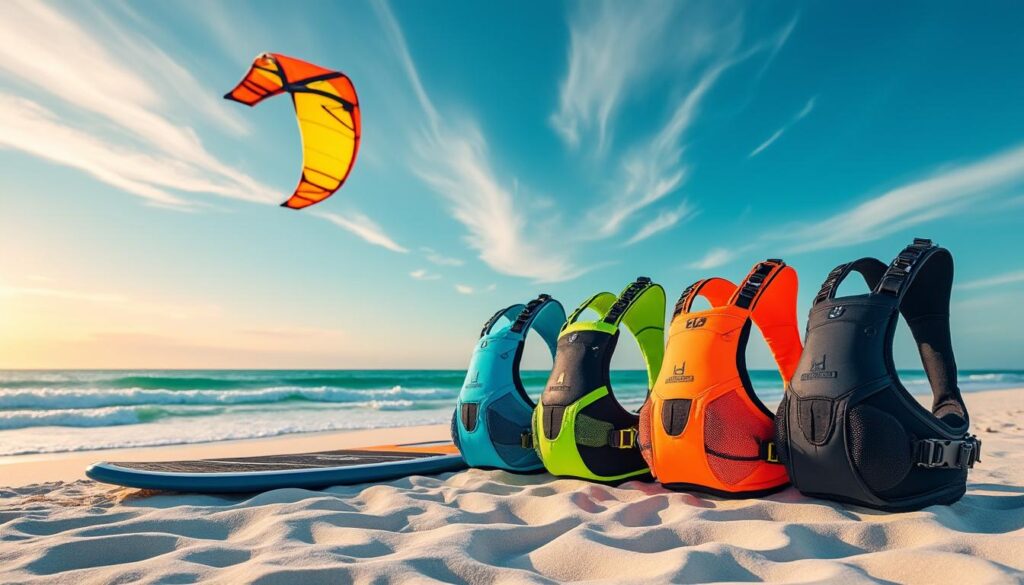
For Lake Maggiore it is recommended to have at least two kite sizes to cover a range roughly between 12 and over 25 knots, a versatile twin-tip board and a wetsuit suitable for the season (4/3 or 5/4 in cold periods, 3/2 in summer). Helmet, impact vest and safety knife increase protection, especially on windy days. Beginners can start with school equipment, postponing purchases until they have a clearer idea of their riding style.
What are the main safety rules to follow on the lake?
On Lake Maggiore it is essential to respect launch and landing areas, keep distance from bathers and boats, follow exit corridors established by local clubs and not enter the water in uncertain weather or during thunderstorms. It is important to know right-of-way rules among riders, always inform someone onshore before a session and keep an eye on possible wind changes linked to the valleys. A good theoretical foundation on safety rules drastically reduces risks for everyone.
How to connect Lake Maggiore with other kitesurf spots in Italy?
Many riders plan itineraries that combine Lake Maggiore with Lake Como and then with sea spots in Puglia, Liguria or Veneto. The lake allows you to train technique, control and wind reading, while the sea adds waves and larger spaces. By planning ahead and monitoring forecasts, you can decide whether to stay on the lakes or move to the sea from time to time, turning Italy into a large training field throughout the year.