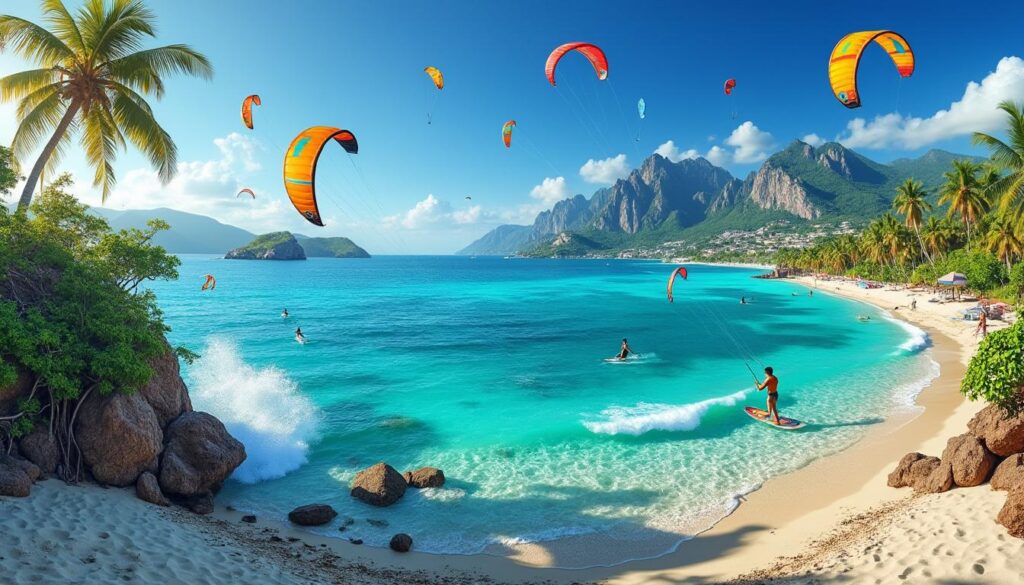
Between afternoon thermals that kick in like a switch and wind channels that run between islands and peninsulas, Croatia has in a few years moved from a “stopover” destination to a staple of kitesurf summer holidays in Europe. Those looking for a scenery different from the usual—clear water reminiscent of the Italian Adriatic but landscapes of cliffs, stone villages and sheltered bays—find here a powerful combination: reliable winds from May to September, organized schools and a myriad of spots that change character completely depending on wind direction.
Along the entire Dalmatian coast shallow lagoons alternate with river mouths perfect for freestyle and more exposed areas to the open sea where chop and short waves really force you to work on edging. For those coming from Italy, especially if used to the Adriatic kitesurf or the Ionian kitesurf in the south, Croatia is convenient: you can drive there, accommodation costs remain affordable, and in a single trip you can combine 2 or 3 different spots without complicated logistics. The trick is to understand right away when to go, which stretches of coast “light up” the thermal, and where the local Mistral channels best.
Beginners find safe areas, shallow water and light but steady wind, ideal for setting up the water start without getting intimidated. Intermediate and advanced riders, instead, can play with freeride and big air at spots like Bol or Viganj, taking advantage of 20–25 knot windows that, with the right board, really make you fly. You don’t need a tropical budget: compared to destinations like kitesurf in Mauritius or the large lagoons of Brazil, Croatia offers a very interesting wind/cost ratio, especially in high summer.
- Best period: from May to September, with regular thermals and up to 25 knots on the best days.
- Key spots: Bol (Brač), Viganj (Pelješac), Nin (near Zadar), Neretva, Primosten and other smaller scattered bays.
- Recommended level: ideal for kitesurf for beginners and intermediates; some areas are perfect for pros looking for summer big air.
- Budget: affordable accommodation, especially in apartments; well-organized schools and widespread equipment rental.
- Travel style: coastal road trip, combining kite, small historic villages and a few no-wind days for trekking and island visits.
Kitesurf Croatia: understanding the wind season and choosing when to go
To really read Croatia with the bar in your hand, the first thing is understanding the rhythm of the wind. The main window runs from May to September, when daytime thermals and sea breezes do the heavy lifting. In these months statistics show up to 25 knots on the best days, with an average settling between 15 and 20 knots in the early-to-mid afternoon hours. Air temperature hovers around 22 °C in high summer, so you often sail in a shorty or even just a rash guard during the hottest hours.
From late September to November the picture changes slightly, but it’s far from the “end of season” many imagine. Strong wind days remain frequent, the thermal is less explosive but frontal systems bring more regular winds, with average temperatures around 17 °C. Those used to the Salento wind in October or November will have no problems: a good 4/3 wetsuit is enough to cruise comfortably, with less crowded spots and lower prices for facilities.
The key is to think in terms of objectives. Are you planning a kitesurf course, with lots of shallow water and wind that won’t scare you? Then June and early July are perfect: long days, regular thermals and heat waves that warm even the most cold-sensitive. Want to consolidate big air or try more aggressive maneuvers in flat water? Then aim for July–August in strong thermal areas like Bol and Viganj, or September when there are fewer people on the water but still many good wind days.
An important difference compared to other kitesurf Italy scenarios is that in Croatia many spots work with thermals created by the combination of inland elevations and sea, more than by large weather systems. This makes weather forecasts not always trivial: wind apps give you a baseline, but locals often look at pressure trends and cloud cover to understand whether the thermal will really “explode.”
For example, along the coasts around Primosten and up to Cape Planka, the point where northern and southern Adriatic winds meet, a few extra inland clouds are enough to completely change the session. On a clear July day, at 1pm you can still be on the beach with a cappuccino, and by 3pm find yourself with 20 knots side-onshore turning the bay into a playground.
If you come from the Salento kitesurf world, you already know that thermals are not negotiable: they are studied. The same applies here. Checking forecasts the evening before, cross-referencing 2–3 models, watching local webcams and talking to local schools makes the difference between three hours of pure glide and a sunny day spent watching a flat sea.
Another often underestimated point is the transition between high summer and autumn. In October, for example, some think Croatia “closes” for kite. In reality, for those willing to move a little by car, autumn can gift days with still relatively warm sea and more structured winds. It’s the same logic that makes it interesting to chase off-season wind in other parts of the Mediterranean, as when planning a trip for kitesurfing in the Greek islands.
In summary: if your goal is a mix of sun, daily kite and warm water, go for June through early September. If the focus is strong wind and you’re not scared by a well-placed frontal system, seriously consider September and October, when thermals mix with low-pressure systems and deliver significant surprises.
Practical table: when to go kitesurfing in Croatia
For a quick overview, this monthly breakdown helps line up holidays, skill level and wind expectations.
| Month | Average wind | Air temperature | Recommended level | Notes for kite travel |
|---|---|---|---|---|
| May | 12–18 knots | 18–20 °C | Intermediate | Good wind/cost compromise, water still cool, less crowded. |
| June | 15–22 knots | 20–24 °C | Beginner–Intermediate | More regular thermals, great for learning kitesurf with long days. |
| July | 15–25 knots | 24–28 °C | All levels | High season, warm water, crowded spots but great atmosphere. |
| August | 15–23 knots | 25–30 °C | All levels | Conditions similar to July; book accommodation and kitesurf school in advance. |
| September | 14–20 knots | 21–24 °C | Intermediate–Advanced | Less crowd, mix of thermal and system winds, falling prices. |
| October | 12–20 knots | 17–20 °C | Intermediate–Advanced | More fronts, variable conditions, great for those seeking occasional strong wind. |
With this mental map it’s much easier to match your level, the type of spot you want and the reality of Croatian weather, without catalog-style illusions.
Spot kitesurf Croatia: Bol, Viganj, Nin, Neretva, Primosten
When choosing the best kitesurf spot in Italy people often look for long sandy beaches. In Croatia the logic is different: smaller bays, peninsulas and islands create real wind “corridors.” Some names always come up when talking about kitesurf Croatia: Bol on the island of Brač, Viganj on the Pelješac peninsula, Nin near Zadar, the mouth of the Neretva river and the Primosten area.
Bol (island of Brač) is probably the most famous. A very regular afternoon Mistral enters here, concentrated near the famous Zlatni Rat beach. The coastline configuration means that in the afternoon, especially between June and August, you can easily find 18–25 knots side shore with fairly flat water offshore and light chop near the shore. It’s a perfect spot for those wanting to progress in freeride: lots of space, organized schools, rental options and a context similar in logic to certain Adriatic kitesurf hotspots but with an island Mediterranean twist.
Viganj (Pelješac peninsula) lives practically on thermal wind. We are in the south of the country, facing Korčula, in a narrow stretch of sea where wind accelerates when the inland heats up. The best season runs from June to September, with temperatures easily reaching 27 °C and winds between 15 and 25 knots. The village is tiny, full of bars and small restaurants that fill up in summer with kiters and windsurfers. Those looking for a surf-village vibe with everything within walking distance feel at home here.
Nin, near Zadar, is another classic, especially for those wanting to combine kitesurf for beginners with more technical sessions. The typical feature is the sandy, shallow bottom, with vast areas where you can touch—perfect for setting up your first tacks and trying water starts without fear of losing the board. At the same time, a little further out you find areas with short waves and chop that challenge even intermediates: a complete playground where a rider like Luca, an imaginary Italian traveler, in one week managed to go from tentative first tacks to basic switch maneuvers precisely thanks to the safety of the shallow water.
The Neretva area, at the river’s mouth, offers a different environment. Here the main protagonist is the lagoon of flat, shallow water that forms between the mouth and the open sea. The afternoon thermals are very reliable between May and September, with 2–3 hour sessions almost daily when the weather cooperates. It’s a spot loved by freestyle and big air riders: the flat water makes it easier to focus on technique and absorb landing impacts, while non-kitesurfers can explore the nearby villages and countryside.
Primosten, finally, deserves a special mention for its context. Historically, the town was founded on a cone-shaped islet connected to the mainland by a bridge, hence the name. Today the area is interesting for kite mainly because of its proximity to Cape Planka, the meeting point between northern and southern Adriatic winds. This means very variable wind patterns: days of clean Mistral, others where the wind shifts with the arrival of low-pressure systems. It’s not the easiest spot to read, but for experienced riders it offers sessions with rougher seas and almost theatrical backdrops of cliffs and stone villages.
If you like the idea of a multi-spot trip, a classic route could be: arrive in Zadar, spend a few days in Nin, move to Neretva for serious flat water, and finish in Viganj to soak up the village rider atmosphere. It’s the same logic used for planning a trip in the Red Sea or Morocco, as in guides about kitesurf in Dakhla and Essaouira: changing spots every few days lets you chase the wind and never get bored.
Every Croatian spot has its own precise character: knowing it before you leave avoids disappointments and lets you really build your ideal route between flat, chop and village life.
Kitesurf for beginners in Croatia: schools, safety and progression
Those approaching kite often dream directly of Caribbean-style lagoons. The reality is that to learn kitesurf you first need shallow water, gentle wind and present instructors. In this sense, some Croatian spots are perfect for starting or for taking the leap from “novice learning to tack” to an independent rider. Nin and Neretva, in particular, offer exactly this mix.
The kitesurf schools in these areas operate mainly between May and September, organizing basic courses and intensive 3–5 day packages. The main advantage compared to many areas of Italy is the combination of internal or semi-enclosed waters and shallow bottoms: if you make a mistake, you stand up, breathe and start again without the anxiety of being dragged offshore. It’s the ideal scenario to firmly fix the fundamentals: kite control at 12 o’clock, upwind and downwind body dragging, water start, first tacks with board recovery.
Imagine Martina, 32, with no traction-sport experience, lots of sea time but zero sessions with the bar. In a week between Nin and a lagoon near Neretva, with a kitesurf course scheduled for 2 hours of water time per day, she covered all the basic stages up to making her first 50–70 meter tacks independently. The secret isn’t magic, but daily repetition in similar conditions: light but steady wind, absence of annoying waves, and an instructor who can follow her walking in the water.
On the safety side, Croatia is not the wild west: local regulations, marked bathing zones and exit corridors for kites are now standard in many tourist municipalities. Serious schools work with helmet, impact vest, buoyancy aids and communication systems (radio earpiece) at least during the initial phases. For a beginner it’s important to verify:
- That the school has recent equipment and kites in various sizes to adapt to the wind.
- That lessons run in small groups (maximum 2 students per instructor in the water).
- That there is a clear rescue plan with a rescue boat or jet-ski, especially in more open spots.
- That the instructor speaks a language you understand well (Italian, English or German are common).
For those who already have a good base – for example used to kitesurf Lecce, kitesurf Taranto or windy spots in northern Italy – Croatia becomes a training ground to consolidate transitions and early hook-in maneuvers. In a lagoon you can work on toe-side riding, first controlled jumps and basic rotations, knowing that a mistake usually results in a soft landing on flat water. It’s the kind of progression that makes a difference later when you tackle more demanding spots like the Red Sea, the reefs of Mauritius or the trade winds of Brazil.
An often underestimated aspect is energy management on windy days. In Croatia, during summer, the thermal almost always comes in the afternoon. Taking a lesson at 2pm with 12–14 knots and another at 5pm with 18–20 is not the same. For beginners it makes sense to start early when the wind is milder and leave the afternoon peaks to those who already have control. It’s the same balance found at major international spots—from kitesurf in Sri Lanka to exposed Pacific bays—where locals always tell you “get in before the wind goes crazy.”
Closing the loop, the message is clear: if your goal is to leave this season saying “I can really kite,” Croatia gives you a context where fear goes down and the desire to try again each day goes up. One fundamental condition: don’t skimp on the quality of the school, because technical flaws learned badly in shallow water will follow you everywhere, from Salento to Croatia to the tropics.
Wind, equipment and comparison with other Mediterranean spots
When talking about the Salento wind or the Mistral on the west coast of Italy, many riders use these conditions as a benchmark. In this Mediterranean comparison, Croatia positions itself as a destination with reliable thermals, often calmer seas compared to certain Scirocco or Ponente days at home, but with less absolute guarantee than “wind machine” spots like Dakhla or some corners of the Red Sea.
In summer, between May and September, the mix of inland heating, coastal mountain relief and long sunny days creates a predictable pattern: calm mornings, wind that rises toward noon, peak between 3pm and 6pm, gradual drop toward evening. In this context, planning the day is simple: morning exploration or relaxation, light lunch, then rig the kite without hurry. It’s a routine many riders who frequent other Mediterranean areas, like Corsica or Greece, recognize at a glance.
On the equipment side, for a week of kitesurf holidays in Croatia in high summer, a typical quiver might be:
- Two kites (for example 9 m and 12 m for an average weight, or 7 m and 10 m for lighter riders).
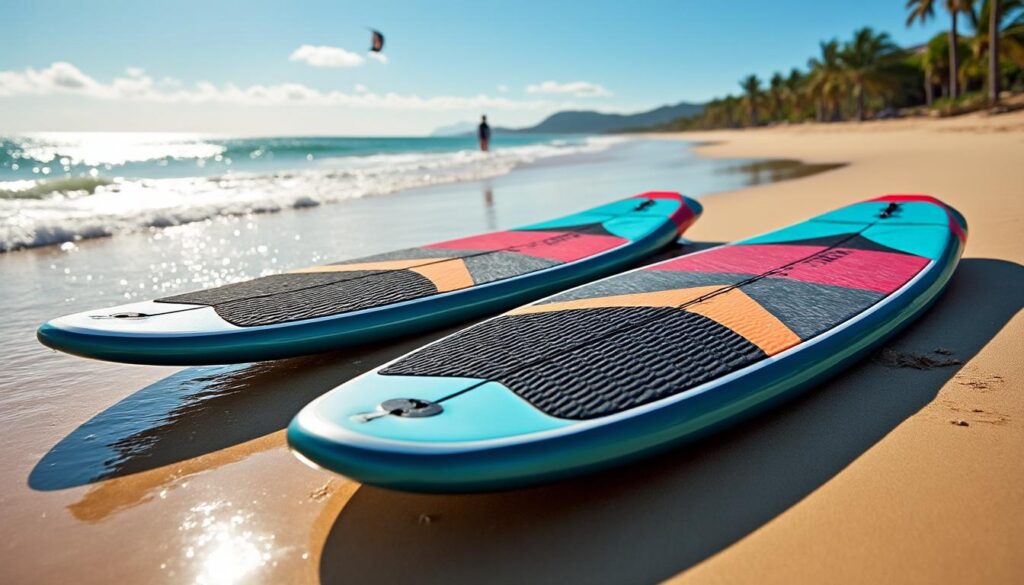
- A twin-tip freeride board and, for the more curious, a slightly larger board for lighter breeze days.
- Short wetsuit (2/2) or shorty for May/early June and late September; rash guard and boardshorts for July–August.
- Impact vest and helmet, especially if you’re still working on jumps and not-yet-solid maneuvers.
Travel-savvy kiters know that the real difference between spots comes down to details: wind quality, chop type, dominant direction. If you put Croatia, Salento kitesurf, the Greek islands and Corsica on the table, the picture that emerges is this: Croatia very strong in summer thanks to low costs and reliable wind; Salento more varied but less stable in July–August; Greece often windier but sometimes too windy even for beginners; Corsica very beautiful but sometimes more challenging, as also discussed in guides on kitesurf in Corsica.
Then there’s the lifestyle topic. Some extremely famous international destinations—think Hawaiian reefs or Brazilian lagoons—require a significant logistical and cultural leap. Croatia, instead, speaks a language very similar to ours: hours, cuisine, how people live the sea. This also makes it easier for those traveling as a couple or with family, where not everyone is board-obsessed: while you take advantage of windy hours, others can stroll through historic towns, hike or sunbathe on non-kite beaches.
Finally, it’s worth mentioning an often ignored aspect: mental training. Wind not always guaranteed, some days too light or too strong, and the need to choose the right spot train you to be a more composed rider. If you can make sensible decisions in a “medium” scenario like Croatia, you’ll be much more ready when you land in extreme spots like the central Red Sea, or even Hawaiian bays where choosing the wrong kite or entering at the wrong time is not a game.
In conclusion, rather than asking if Croatia “is as strong as” a tropical destination, the useful question is: how much do you really need to get out, progress and have fun without complicating your life? For many European riders, the answer is along these Dalmatian coasts.
Organizing a kite trip in Croatia: logistics, accommodation and no-wind days
A well-executed kitesurf Croatia trip starts long before you rig the first kite on the beach. Logistics, fortunately, are relatively simple: you can arrive by car from northern Italy, put your car on a ferry, or fly into cities like Zadar, Split or Dubrovnik and then rent a car locally. For a road trip with 2–3 spots, having your own or a rented car is almost mandatory: it gives you the freedom to chase the wind day by day.
On accommodation, one of Croatia’s strengths is the good availability of apartments and small hotels a short walk from the water. In key kite areas—Bol, Viganj, Nin, Neretva—you can find 3-star hotels around €35 per night and 4-star around €50 (indicative prices) if you book with some advance. For those wanting to wake up with the board almost on the beach, hotels near Zlatni Rat in Bol or small heritage-style places in Viganj are perfect choices.
A classic strategy for a group of 3–4 riders is to rent an apartment with a kitchen: you save on meals, have space to dry wetsuits, repair kites and stretch, and can adapt meal times to the wind. Those used to managing rider life in Puglia or Sicily will immediately recognize the feeling: you eat lightly when the thermal is about to come in, relax and party in the evening when the wind drops.
On no-wind days—which realistically can happen even at the best spot—the Croatian coast offers plenty. Instead of spending hours complaining in the WhatsApp group, you can:
- Go for a SUP or kayak tour along more sheltered bays.
- Visit historic cities like Split, Zadar or Dubrovnik, or lesser-known but charming towns like Stari Grad.
- Organize a day of rafting on the Cetina river or light trekking on the hills behind the coast.
- Devote time to theory sessions: bar setup, forecast study, equipment maintenance.
Imagine a group of friends leaving Trieste with two cars full of boards and kites. First stop Nin, where they stay three days but the wind skips one afternoon. Instead of treating it as a defeat, they use it to explore the inland, discover a small local winery and come back to the water the next day clearer on currents and downwind routes. This travel style is what turns a holiday into a true step forward as a rider.
One important thing: especially in July and August, the most famous spots can get crowded. Here the rule of mutual respect is fundamental. Keep jump lines away from the shore, avoid blocking school areas, follow right-of-way rules while riding. Those who have already experienced similar situations in busy hotspots—think Dakhla lagoons or certain Greek bays—know how little is needed to keep a spot livable for everyone.
In the end, organizing a trip to Croatia is like preparing a good session: the more care you put into the basics—choosing spots by wind, streamlined logistics, margins for no-wind days—the lighter the feeling once you hook into the chicken loop.
What is the best period to kitesurf in Croatia?
The most reliable period for kitesurfing in Croatia runs from May to September. In these months the afternoon thermal winds often blow between 15 and 25 knots, with mild temperatures and progressively warming water. June, July and August are ideal for combining daily kite and warm sea; September and early October appeal to riders looking for slightly fewer crowds and more structured winds, at the cost of a few fewer pure thermal days.
Is Croatia suitable for beginner kitesurfers?
Yes, several Croatian spots are particularly suitable for beginners. Areas like Nin and the Neretva lagoon offer wide expanses of shallow, flat water where you can take basic courses safely. Local schools operate mainly from May to September and many instructors also speak Italian or English. The important thing is to choose a structured school with small groups and a rescue system, and not to improvise your first lessons on your own.
What kind of equipment do you need for a summer kite trip in Croatia?
For an average-weight rider, two kites (for example 9 m and 12 m) and a twin-tip freeride board are often sufficient in summer. Lighter riders might consider 7 m and 10 m, while heavier riders may go up a size. For neoprene, in high summer a rash guard or shorty is often enough; for May, early June and late September a 2/2 or a light 3/2 is recommended. Helmet and impact vest are strongly advised, especially if you’re still working on jumps and not-yet-stable maneuvers.
How much does a kitesurf trip to Croatia cost approximately?
Costs vary by season and area, but overall Croatia remains more affordable than many exotic destinations. In kite localities like Bol, Viganj, Nin or Neretva you can find 3-star hotel rooms from around €35 per night and 4-star around €50, especially if you book in advance. Shared apartments among friends further reduce the budget. Kitesurf lessons are priced in line with the rest of Europe, while food and car travel remain generally sustainable for the average traveler.
Do you need an advanced level to have fun at Croatian spots?
No, many Croatian spots are designed for the progression of riders between beginner and intermediate levels. Flat lagoons and shallow water help work on board control, starts and first maneuvers. That said, advanced riders will find plenty to enjoy at spots like Bol or Viganj, where summer thermals can reach 25 knots and allow big jumps and intense freeride sessions. The key is choosing the right place for your level and checking with schools or locals before going on the water.