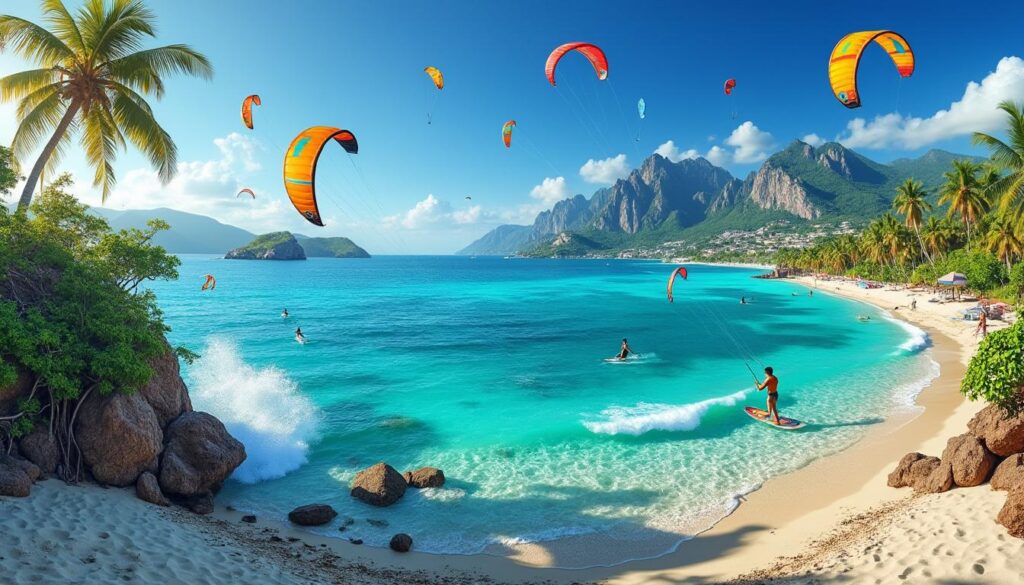
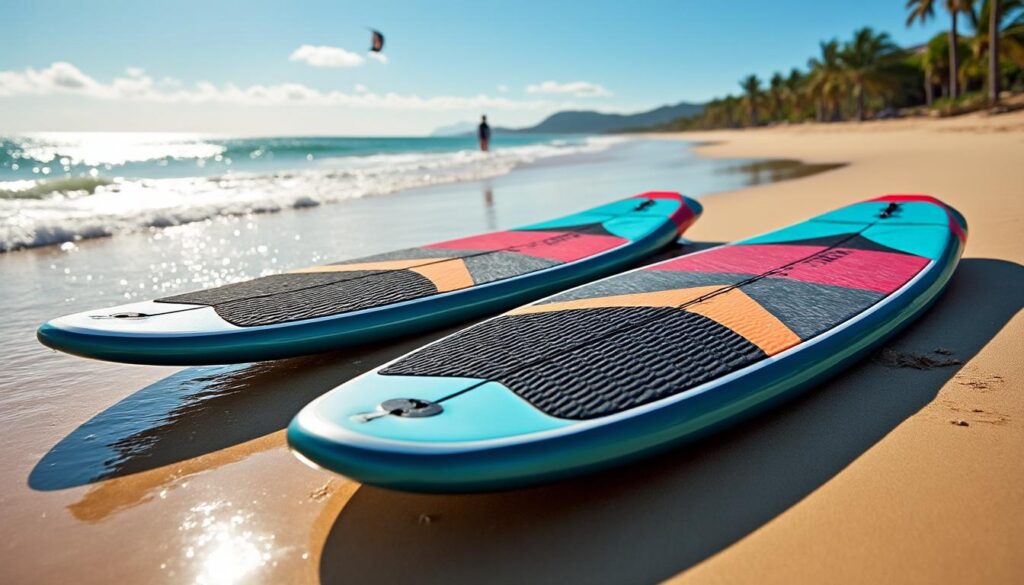
If you look at the sea and don’t know whether to start with wing foil or kitesurf, you’re in the right place. These two sports share wind, water and a desire for freedom, but in the water they offer very different sensations. The kite shoots you out of the water, makes you fly high, and demands commitment and concentration. The wing foil lets you float silently on the foil, closer to the wave, with a direct relationship between your body and the wind. Choosing is not a matter of fashion, but of lifestyle, available time and the type of spot you frequent, from Adriatic kitesurf to the Ionian, from lakes to sheltered bays.
To really understand whether to aim for kitesurf or wing foil, you need to go into detail: learning curve, costs, minimum wind, safety, progression potential. Someone who wants to learn kitesurf in Italy, perhaps during kitesurf holidays in Puglia or at a kite camp in Italy, has different needs than someone looking for a quick and fun way to use every breeze after work. In the paragraphs that follow, the comparison will be concrete, with real examples, sensations from the beach and rider-to-rider advice to help you choose the sport that will really make you want to grab the bar… or the wing.
In short
- Kitesurf: more spectacular, more technical, requires time to progress but rewards with jumps, speed and pure adrenaline.
- Wing foil: easier to organize, quick setup, ideal if you have little time and want to get into foiling without complications.
- For light wind and long upwind legs kitesurf still has an advantage, while wing foil shines in crowded spots, narrow bays and gusty conditions.
- Both allow you to reduce gear for your kitesurf holidays, but the wing often wins in everyday practicality.
- The best choice depends on how much time you want to dedicate to learning, the type of sea you visit and how much you are drawn to jumps and freestyle versus surf feeling and quiet foiling.
Wing Foil vs Kitesurf: differences in on-water sensations and riding style
Imagine two friends, Luca and Marta. Same spot, same day, thermal wind on the Ionian around 16 knots. Luca goes out on kitesurf with a 12 meter and a twin-tip, Marta mounts her wing foil with a voluminous board and a generous foil. From the outside it looks like the same game: planing, tacks, turns. In reality, the sensations they experience are almost opposite.
Kitesurf is a pulled sport. The kite generates a lot of power even with little wind, you feel “attached” to the kite through the bar and the harness. Every gust translates into acceleration, spray, and the possibility to pop a jump. The body works a lot with the legs and core, control goes largely through the bar. That’s why adrenaline lovers often put it at the top of the list of the best kitesurf spots in Italy and abroad, from Jericoacoara to Greece.
The wing foil, instead, has a more free and surf-like feel. No long lines, no harness (at least at first), the wing is in your hands, the contact with the wind is direct. When the foil comes into play and the board lifts, the sound of the water almost disappears, leaving only a whistle under your feet. Here the adrenaline doesn’t come so much from jumping, but from that flight a few centimeters above the sea, the smooth turns on the waves, and the search for the right balance between speed and control.
Those coming from surfing or SUP often feel the wing as a natural extension of their way of being on the sea. You can catch a wave, almost fully depower the wing and let the wall of water carry you, extending the ride beyond what would be possible with a traditional board. It’s a dimension that closely resembles surf foiling, but with the constant power of the wind giving you more opportunities.
For those who dream of the historic kitesurf spots in Italy and around the world – from the Ligurian beaches described here: spots and wind in Liguria to the legendary reefs of Oahu and Maui – the kite remains the perfect tool to play with jumps, kiteloops and strap-on maneuvers. That feeling of hooking yourself to the sky, pressing on the edge of the board and being catapulted out of the water is something the wing does not intend to replace.
When you consider the Salento wind, with the double option of Adriatic kitesurf and Ionian kitesurf, the difference is felt even more. On days with short, gusty chop, many riders choose wing foil for its ability to “filter” messy water thanks to the foil. When a strong, straight Mistral comes in, the kite brings out the best: fast long runs, big air and challenging downwinds.
The key point: there is no objectively better sport. There is the type of feeling you seek. If you love the acrobatic side of the wind, jumps and tricks, kitesurf speaks your language. If the idea of sliding in silence, surfing even small waves and playing with a light, minimal setup appeals to you, wing foil will make you smile after just a few sessions.
Wing foil vs kitesurf: the learning curve for beginners
One of the most common questions is: which is easier between wing foil and kitesurf for beginners? The honest answer is that it depends on how you organize your path. If you start from zero, with no experience in traction sports, the combination “kite + body control + board management” can feel like a lot at once.
In beginner kitesurfing the first hours of lessons are almost entirely dedicated to the kite: wind window, safety, relaunching, body drag. It takes a while before arriving at the water start and the first ride. Those who expect to “go and return” in two days are often disappointed, because the kite asks for patience and consistency. However, once you pass that threshold, progression starts to become exponential.
In wing foil the access is more direct. At first you work on balance on a voluminous board and handling the inflatable wing. You can start on your knees, then stand up, without the sea immediately feeling hostile. The foil comes into play only later, when you already have confidence with the board and wind. This makes wing foil particularly interesting for those who want to learn calmly but see progress right away.
A concrete example: Marco, 40 years old, little free time and a great desire for the sea. He tries a classic kitesurf course, but can only make it to the beach twice a month. Each time he has to “wake up” muscles and reflexes, progression is slow and he always feels a bit behind. He switches to wing foil and discovers that, with the same frequency of outings, in a few weeks he can ride steadily standing up and start some foil touches. The psychological impact of these small successes is huge.
This doesn’t mean wing is trivial or kite is too difficult. It means that if your life is full of commitments and you look for something that gives quick satisfaction without becoming a “wind addict”, wing foil plays in your favor. The kite remains a fantastic choice for those who can dedicate time to it, especially if they already come from surfing, snowboarding or other board sports.
In any case, relying on a good kitesurf school or a qualified instructor is the true accelerator. Whether you want to learn kitesurf in Salento, on Lake Maggiore or at some foreign spot, structured teaching makes the difference between months of frustration and smooth progression. The same logic applies to the wing: a few initial lessons spare you bad habits that are hard to correct.
Wing foil vs kitesurf equipment: costs, setup and everyday practicality
When talking about wing foil vs kitesurf, equipment is crucial. Not only for the budget, but also for how easy it is to fit everything in a car, inflate, go out and return to the office still with sand on you. Here the two worlds separate clearly.
For basic kitesurf you need: kite, bar, harness, board (twin-tip or surfboard), pump and, of course, wetsuit and safety accessories. If you move into kite foil, add a specific board and foil. It’s a complete, powerful and modular ecosystem, but there are many things to manage. Preparing lines, checking they are not tangled, choosing the right sail according to the wind: all this is part of the game.
In wing foil the list is shorter: inflatable wing, board (often with good volume to ease starts) and foil. You still have pumping and logistics, but no long lines to lay out, no bar, no risk of catching someone else’s kite. You’re more “compressed” around your body, you take up less space in water and on land, especially in tight spots.
To make the comparison clearer, here’s a summary:
| Factor | Kitesurf / Kite Foil | Wing Foil |
|---|---|---|
| Learning curve | Steeper (kite + board handling) | Gentler, focus on balance and wing |
| Setup | Lines, bar, managing beach space | You inflate the wing and you’re almost ready |
| Initial costs | Similar, but more components (kite, different bars) | Fewer pieces, board/foil often more expensive |
| Light wind | Kite foil advantage, gets going earlier | Needs a few more knots |
| Gust handling | Requires bar technique | Wing easy to depower with your arms |
| Space required | A wide beach is needed for the lines | Perfect for small, crowded bays |
| Riding style | Freestyle, big air, speed | Surf feeling, carving, waves |
In terms of costs, in 2026 the average prices of a complete kite set and a wing foil are not that far apart. A good quality kite with a bar can cost slightly more than a wing, but boards and foils for wing foil tend to be more refined (and therefore pricier). The result is that, at equal level, the overall budget is often comparable.
The real difference is in simplicity. A rider who lives in the city, with a small car and little space, will appreciate the possibility of fitting wing, a disassembled foil board and wetsuit into the car without filling everything. Also for frequent travelers, perhaps combining kitesurf holidays in destinations like the Red Sea or the Greek islands with just one suitcase, the wing can be more practical to check in.
Another little-discussed aspect: pre- and post-session handling. With kite you must always consider the risk of lines under tension, more material on the beach, and people walking around. With the wing, once the wing is deflated, you’re practically invisible. This makes wing foil ideal for lakes, small harbors, and tight kitesurf spots in Puglia where space isn’t infinite.
Wind, spots and conditions: where wing foil wins and where kitesurf dominates
The next step is understanding in which conditions kitesurf is still unbeatable and where, instead, wing foil takes the stage. This is where Salento wind, the two coasts, but also lakes and city spots come into play. Each discipline has its ideal “battlefield”.
In light and steady wind, especially with flat or slightly rippled water, kite foil remains an incredible weapon. A well-trimmed kite on an efficient foil lets you plane with very few knots, when wing foil still needs a few more gusts to lift the board off the water. For those who live near lakes or light thermal spots, this can be decisive.
In gusty wind, instead, wing foil shines. Holding the wing in your hands allows you to depower instantly: just bring it above your head or let it “spill” in the wind to manage sudden peaks. In kite the same situation requires more bar technique, edge control and readiness in managing the kite in the window.
When there are waves, you enter a territory where personal taste counts a lot. Many wave riders still love kite wave riding, often strapless, which allows powerful bottom turns and vertical cutbacks. Others have found in wing foil a new way to read the sea: you catch the wave, almost forget the wing and let the foil carry you on unsuspected sections. The ride becomes long, fluid, almost meditative.
On the locations front, Italy really offers everything. From kitesurf in Lecce and kitesurf in Taranto along the Apulian coasts to the alpine and pre-alpine lakes covered in articles about inland kiting, each spot has its ideal combination. The wing foil, for example, is perfect for sheltered Ionian bays where launching a kite would be complicated, while kitesurf dominates large open Adriatic beaches with regular side-on wind.
Those dreaming of farther travels, from articles on kitesurf in the Greek islands to guides on Hawaii or Brazil, will find many purely “kite-oriented” spots. But even there, wing foil is carving out new spaces: narrow reef channels, shallow inside sections, lagoons where kite lines would be a nightmare.
The lesson is simple: don’t choose just based on the sport, choose based on the wind and the type of water you frequent. If you live close to a windy, open spot with lots of space, the kite explodes to its full potential. If you often move between lakes, harbors, small bays or fickle wind, wing foil will let you make the most of days that with the kite you would have spent on the beach watching the anemometer.
How to choose between wing foil and kitesurf: rider profile and lifestyle
After seeing sensations, equipment and wind, the real question remains: which sport is right for you, today? Here free time, age, fitness and also what makes your eyes light up when you watch a session on YouTube come into play.
To clarify your ideas, it can help to think in terms of “typical profiles”. These are not fixed rules, but realistic portraits of who, in practice, fits better with one sport or the other.
- The rider with lots of free time: if you can go out often, perhaps live near the spot and organize your days around the wind, kitesurf is a perfect companion. The more you practice it, the more natural it becomes, and you have room to explore freestyle, big air, wave and foil.
- Someone who works a lot and only has short windows: here wing foil is a precious ally. You arrive at the sea, inflate the wing, spend an hour in the water and get back to the car. No lines to rewind, less mental setup, more freedom.
- The surfer or SUP rider: often finds in wing foil a natural extension of their way of reading waves, with the foil bonus that transforms short waves into very long rides.
- The pure adrenaline fan: those who dream of high jumps, kiteloops and spectacular maneuvers still strongly favor the kite, which from this point of view remains unbeatable.
- Those who feel “past their prime” but want to start: many over 40 or 50 choose wing foil for the less “aggressive” approach on the body, especially if they experience it as fluid sessions rather than high-impact sport.
Another aspect to consider is long-term motivation. Kite rewards dedication: if you know the wind will become your happy obsession, it’s a choice that won’t disappoint. Wing rewards practicality: if you want the sea to fit around work, family and travel, without giving up technical progression, the versatility of the wing will make you feel “in tune” with your time.
An honest tip for the undecided: if you are completely new and have no idea what you like, start where you can get out more often. If you have a wide beach and a good kitesurf school near you, kite is an excellent gateway into the world of wind sports. If your spot is a narrow bay, often irregular wind, or a city lake, wing foil is probably the smarter route.
Also remember that no choice is definitive. More and more riders mix it up: kite when the wind is strong, wing in lighter summer afternoons, surf when the wave decides to fire up. The same sea, three different keys to open it. The important thing is that the discipline you choose now makes you want to get back on the water, not stay dreaming while watching other people’s videos.
Kitesurf in Italy, Salento and beyond: combining trips, spots and progression
The last variable, but not the least important, is where you plan to take your sport. Italy is one of the countries richest in wind variety: from kitesurf Salento with its double coast, to the northern lakes, through Sardinia, Sicily and Liguria. Added to this are major foreign destinations for kitesurf and wing foil in the Mediterranean and beyond.
If your dream is to visit the best kitesurf spots in Italy and then expand to the Red Sea, Greece, Brazil, Hawaii, kite remains a universal language. Wherever you go you’ll find schools, rentals, rider communities and competitions. You can combine kite and surf in historic spots, as told in guides on surf-kiting and kiteboarding, and use the kite as a key to line-ups and reefs that have made the history of our sport.
However, wing foil is growing fast. In 2026 it’s seen in almost every windy spot, often where kite is limited by regulations or reduced space. Small lagoons, narrow gulfs, cliffs with tight entrances: the wing opens possibilities that the kite simply cannot handle safely or within local rules.
Combining the two disciplines, in the end, is what many riders are doing. Wing foil for “difficult” spots, light days or fickle wind; kitesurf for when the sea gets serious and pushes hard. Every new trip becomes an opportunity to better read wind and waves, choose the right tool and return to shore smiling as wide as the beach.
Whether you’re planning a weekend on the Ionian, a week of kite camp or an escape to some Mediterranean island, the starting question is always the same: what do you want to feel under your feet and in your hands when the wind comes in? From there everything else is built.
Is wing foil really easier to learn than kitesurf?
For many beginners yes. In wing foil you initially focus on balance and handling the wing in your hands, without having to control a kite attached to a harness and long lines. The entry is gentler and you see early results, such as riding standing up, within a few sessions. Kitesurfing requires more time at the start to learn the wind window, safety and bar control, but once the initial phase is overcome it offers very broad progression, especially in terms of jumps and maneuvers.
For light wind is wing foil or kite foil better?
In very light wind kite foil still maintains an advantage. A well-trimmed kite generates more traction with a few knots compared to a wing, allowing you to get into plane sooner and stay flying on the foil continuously. Wing foil needs a few more knots to lift the board off the water, but once flying it becomes very efficient. If your spot is often borderline in intensity, kite foil may be the more logical choice.
What equipment is needed to start wing foil compared to kitesurf?
For kitesurf you need at least a kite, a bar, a harness, a board (twin-tip or surfboard) and a wetsuit, plus a pump and safety accessories. If you move to kite foil add a specific board and foil. For wing foil, the base consists of an inflatable wing, a board with volume adequate to your weight and a foil. In terms of number of pieces the wing is simpler and takes up less space, although quality boards and foils can be expensive.
Which sport is safer between wing foil and kitesurf?
Both can be practiced safely if you rely on an excellent school and respect wind and spot rules. That said, wing foil is often perceived as easier to manage: no long lines under tension, a wing easily depowerable in the hands and less risk of being dragged in the first meters from the shore. Kitesurf requires more attention during launch and landing and to distance from obstacles and other people. In any case, helmet, impact vest and common sense remain fundamental.
Does it make sense to start directly with wing foil if I later want to do kitesurf as well?
Yes, for many riders it is an effective strategy. Wing foil builds a good base of wind sensitivity, balance on the board and foil handling without the initial complexity of the kite. When you decide to learn kitesurf, some skills will already be there: wind reading, positioning in the water and speed management. Likewise, many experienced kiters are adding the wing to their quiver to make the most of spots and conditions they previously didn’t consider.