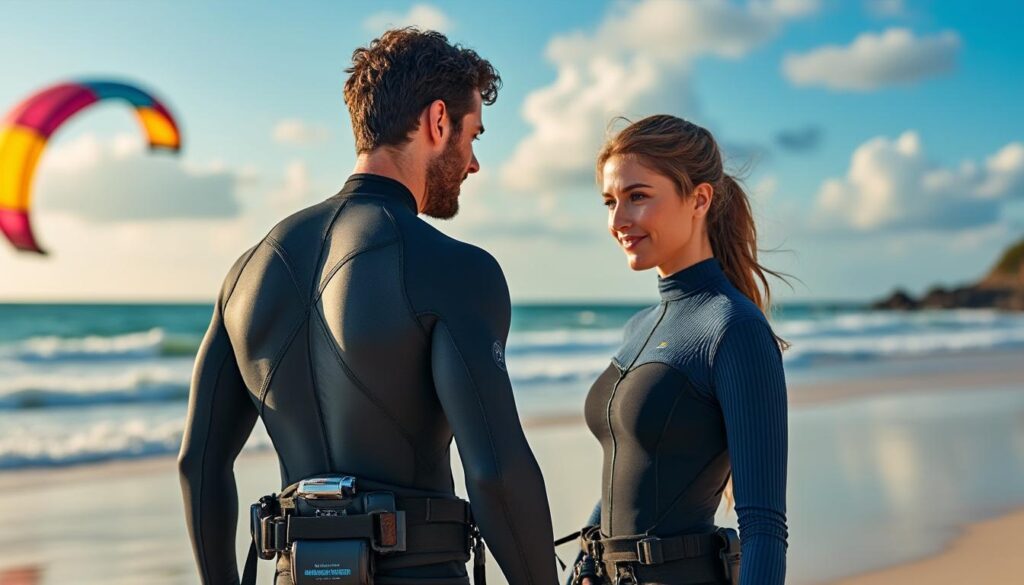
Sharp wind, a breathing sea and hands gripping the kitesurf bars. When you talk about Dakine kitesurf, your mind immediately goes to rigid and semi-rigid harnesses that save your back during long sessions, reliable bars and accessories designed by people who live on the water more than on land. On the best kitesurf spots in Italy, from Puglia to Sardinia, more and more riders choose this brand for a simple reason: it combines robustness, comfort and clever details that really make a difference on the water, especially when the wind decides to be fickle.
Those entering the world of beginner kitesurfing often underestimate the role of the harness and the bar. Yet the balance between lumbar support, load distribution and freedom of movement is what allows you to enjoy the Salento wind on the Otranto channel or a Maestrale on the Adriatic kitesurf without ending up bent over out of the water. More experienced riders, however, look for that combination of stiffness and flexibility that allows you to throw a decisive kiteloop, hook a handlepass or surf a wave on the Ionian kitesurf while better controlling every gust. Harnesses like the Pyro and C-2, compatible bars and well-designed accessories create a coherent ecosystem where every detail is intended to push you to progress, perform tricks and control the kite with more precision, both in the flat spots of kitesurf Lecce and in the more demanding waves of the Tyrrhenian Sea.
In short
- Dakine kitesurf harnesses: semi-rigid and rigid with advanced lumbar support, memory foam and shaped shells that adapt to the body after a few sessions.
- Bars and spreader bars: secure locking systems, specific hooks for kites, wide compatibility and design engineered to distribute force evenly.
- Essential accessories: impact vests, helmets, boardbags and travel bags for those organizing kitesurf holidays between Puglia kitesurf spots, Sicily and the rest of the Mediterranean.
- Setup choice: differences between seat harness and waist harness, adjustments for those starting to learn kitesurf and for those seeking maximum performance in freestyle or wave maneuvers.
- Salento Kiter approach: practical tips to build your own quiver, read the wind and find the right compromise between comfort, performance and safety.
Dakine Kitesurf: why the harness matters more than the kite on the Salento wind
The moment you hook the chicken loop and pull the depower, all the kite’s pull passes through a single point: the kitesurf harness. That’s why many local riders, especially on busy spots like those of kitesurf Salento, prefer to invest first in a good harness and only then think about changing the wing. The wrong harness can ruin your water start, cause lower back pain and make you leave the water after half an hour, even if the wind is perfect.
The Dakine models dedicated to kite were born precisely to handle long sessions and sustained winds. Harnesses like the Pyro, with a reinforced honeycomb shell, have been redesigned in recent years to increase robustness while reducing weight, so as not to give that “rigid armor” feeling that limits movements during a jump or a toeside transition. The semi-rigid structure maintains high back support, but the flexible edge follows the waist when you lean to load the board or push hard on the edge for a decisive upwind.
Another key aspect is load distribution. A cheap harness tends to concentrate all the pull in a central point, compressing the lower back. The more modern Dakine systems instead work in “three zones”: main support on the lower back, lateral straps that accompany torso movement and memory foam padding that, session after session, molds to the body. In the long run this means less pain, fewer lateral abrasions and above all more clarity to focus on jump timing and kite control.
Anyone attending a kitesurf course knows how important it is to be able to endure at least an hour of continuous exercises: water starts, wrong launches, falls, board recoveries. A well-adjusted Dakine harness makes this phase much less traumatic. Instead of “cutting” into the hips, it stays stable even if the beginner tends to hold the bar too low or gets pulled out of the water with straight legs. The result is a smoother learning curve and fewer give-ups after the first windy days.
On spots like Frigole, San Cataldo or the lagoons around kitesurf Taranto, where the wind can rise above 25 knots, the difference between a generic harness and a model designed for kite is most evident in gusts. With a snug rigid harness, every change in pull is absorbed and distributed to the core; the torso stays in position, the board keeps the hull in the water and you can keep giving power following the gust instead of suffering it. And when you start playing with old-school maneuvers, this stability translates into more controlled landings and fewer unpleasant twists.
In short, before dreaming of a quiver of colorful wings, it makes sense to look at your own body: a well-chosen Dakine harness is the bridge between wind and muscles, the element that decides whether a session remains a bitter memory or a day to take advantage of until the last knot.
Rigid harness, semi-rigid or seat harness? How to choose based on your level
On the coasts of kitesurf Italy it is common to see beginners struggling with windsurf harnesses or models too advanced for their level. The choice of harness type should be calibrated to your trajectory. A seat harness helps those starting from zero, because it keeps the hook lower and reduces pressure on the lower back. However, it limits freedom of movement when you start jumping or playing with the board. Dakine seat harness models still maintain a certain ergonomics, with adjustable straps that prevent the harness from “riding up” under pull.
The semi-rigid waist harness is the ideal compromise for most Salento Kiter riders: supportive enough to handle strong winds and long sessions, flexible enough to surf waves or carve on flat water. With models like the C-2, the three-part shell works in synergy: the central section supports the spine, while the side zones can twist slightly following torso rotation during a jump or backroll.
For advanced riders seeking maximum control, the rigid harness is almost a must. The idea is simple: less shell deformation, more transmission of the kite’s power to the body. On advanced freestyle maneuvers or powerful waves, this means a more immediate response and less “lag” between what you feel on the lines and what your body does. Of course it requires precise adjustment and good physical fitness, but once you find the right setting it becomes a natural extension of the rider.
To understand where you should position yourself, it is worth comparing sensations and goals with your kitesurf school of reference or with local instructors. In many facilities, like those reviewed in articles on kitesurf lessons and real costs in Italy, you can often test different harness types during the first outings. The important thing is not to fixate on a single model “forever”: when you move from beginner to intermediate level, the choice of harness also deserves an update.
In the end, the issue is practical: each type of Dakine harness answers a different need, and recognizing it in advance avoids costly mistakes and loss of motivation in the early stages of learning.
Bars, hooks and Dakine spreader bars: control, safety and feeling on the board
If the harness is the base, the kitesurf bar is the steering wheel of your session. The quality of the spreader bar, the hook and the locking system directly affects safety and the feeling with the kite. Modern Dakine systems offer specific combinations for kite and windsurf, with dedicated spreader bars that limit torsion and improve load distribution on the harness.
A feature much appreciated by riders who frequent the Adriatic kitesurf is the presence of a triple safety closure on some models: main strap, secondary strap and quick lock. This setup minimizes the risk that the harness opens in case of a violent crash or backfirst landings. Additionally, the ergonomic shape of the spreader bar limits “riding up,” an annoying phenomenon especially for those with a narrower waist.
Another often overlooked detail is the integrated knife pocket in many Dakine harnesses. In advanced safety and self-rescue courses on the kite, especially on windy spots like those of kitesurf Salento, it is explained how important it is to be able to cut a line quickly in an emergency. Having the knife well positioned, always in the same pocket and easily reachable with one hand, is a plus that gives mental peace on the water.
Compatibility between Dakine bars and harnesses also allows setup personalization. Some riders prefer classic bars with a fixed hook for freeride and old-school jumps; others choose spreader bars specific for wave riding, with sliding ropes that allow the hook to move laterally. When surfing waves in the Ionian or Tyrrhenian Seas, this translates into freer torso rotation, a smoother board in the bottom turn and less torsion on the harness coming out of the wave.
For those who spend a lot of time in the water practicing tricks, as explained in practical guides like kitesurf freestyle: first tricks and progression, a well-tuned bar also means less arm fatigue. The grip, diameter and softness of the bar influence holding: if too rigid or slippery, it leads to over-gripping, fatiguing forearms and shoulders. Dakine bars focus on materials that balance UV resistance, softness and grip, with inserts that protect the fingers during more violent loops.
Finally, the quick release should not be forgotten. Updated systems from leading brands, including Dakine, now follow internationally shared standards, but it remains essential to test the quick release regularly on the beach. Knowing exactly how much force is needed to activate it and how to reassemble the system after release avoids moments of panic when the wind suddenly increases or a line wraps around the kite tip.
How to adjust the bar and harness to exploit minimum wind and strong gusts
Among the most read articles on Salento Kiter is the one dedicated to minimum wind to go out kitesurfing. But beyond kite size, what radically changes the wing’s behavior in the air is the adjustment of bar and harness. In light winds, it is advisable to keep the bar closer to the body, exploiting the full power range; the trim should be set to avoid stalling, especially with large kites. With a well-fitting harness, every pump of the kite transfers energy directly to the board, making it easier to get up even with low pressure.
When the wind rises, especially above 25 knots in the channels of Southern Italy, the goal becomes control. Here the ability to dump part of the power comes into play: the depower should be shortened, the bar slightly moved away from the body during gusts and the posture in the water becomes more aggressive, with shoulders toward the kite and hips pushed forward. If the Dakine harness is adjusted to the right height, it won’t ride up onto the chest, and you can focus on the board’s edge and the direction of your gaze.
Many riders underestimate line length. In light wind, slightly longer lines (if allowed by the system) help the kite describe a wider ellipse, generating more power. In strong wind, standard or shortened lines provide a crisper response and a faster loop. Bars compatible with Dakine systems often allow this customization, making the setup adaptable both to the summer breezes of the Ionian kitesurf and to the cold fronts that hit the Adriatic in autumn.
The golden rule remains: always spend a few minutes on the beach adjusting straps, spreader bar and bar trim. Those few repetitive gestures before each session can turn a “survival” outing into a smooth ride, where every knot of wind is used without stressing the body.
Dakine accessories for kitesurf Italy: impact vests, helmets, bags and boardbags
Once harness and bar are set, the next step is to build a set of accessories that allow you to live kite year-round, across different spots and variable conditions. Here Dakine’s catalog offers a complete range from impact vests to helmets, and bags and boardbags designed for those who often travel between Puglia kitesurf spots, Sicily, Sardinia and northern coasts.
Impact vests dedicated to kitesurf are designed to cushion impacts on the chest and back without limiting mobility. The padding is distributed in segmented panels so that the torso can bend during maneuvers or jumps, yet remain protected when you land flat or take a wave on the side. On inland seas and crowded beaches, this type of protection reduces bruises and microtraumas, especially for those still perfecting the first hooked-in jumps.
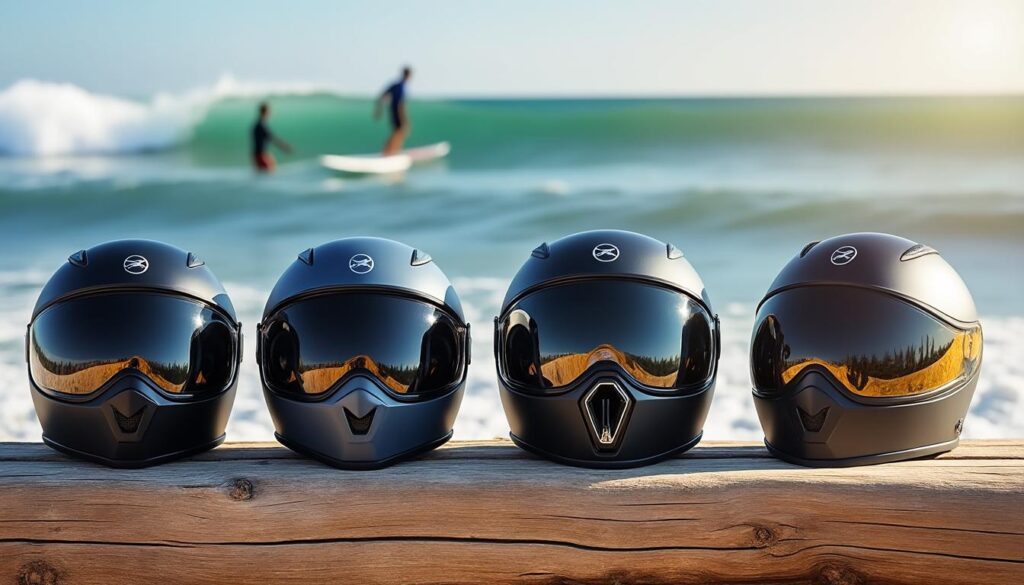
Helmets for beginner kitesurfers are another smart investment. Many riders adopt them even at advanced stages, especially on spots with rocks, breakwater walls or anchored boats. Dakine and similar brands focus on lightweight hard shells, soft interiors and drainage openings. An adjustable closure allows finding the right compromise between stability and comfort, preventing the helmet from shifting over the eyes during an impact.
For those who frequently organize kitesurf holidays, bags and boardbags become indispensable travel companions. Padded kiteboard-specific models protect the board from airport impacts and car transport on rough roads. Inside, separate pockets allow organizing fins, handles, leashes and small tools. On longer trips, multi-quiver bags let you carry two or three boards and several kites, optimizing special luggage required by airlines.
Those who want to learn how to best organize their gear while traveling can check guides like how to choose a kitesurf bag for traveling, where concrete tricks are explained to avoid surprises at check-in and damage to boards. Again, details matter: robust zippers, sand-resistant wheels, well-placed handles to lift the bag on stairs or docks.
Completing the picture are accessories such as gloves, sun caps, rashguards and ponchos for changing on the beach. In winter, especially when you decide not to stop and continue going out even in cold water, neoprene hoods, thermal boots and thicker gloves come into play. Many Italian riders alternate winter sessions in home seas with escapes to warmer destinations, following tips from articles about kitesurf in winter and warm destinations, where robust bags and smart gear organization really make a difference.
Comparison table: key elements of the Dakine setup for a typical session in Salento
To better clarify how each component contributes to your session, here is a comparative summary useful when choosing your equipment for a weekend of kitesurf Salento.
| Element | Main function | Specific benefit at Puglia spots | Usage tips |
|---|---|---|---|
| Dakine waist harness (e.g. Pyro) | Lumbar support and power transfer | Handles strong gusts on the Salento wind without tiring the back | Adjust the straps so it does not ride up onto the chest; use the semi-rigid shell for long sessions |
| Spreader bar with kite hook | Secure connection between rider and chicken loop | Stability in choppy water, less torsion in Ionian waves | Check screws and locking system periodically; try both fixed and sliding hooks |
| Dakine impact vest | Impact protection and light buoyancy support | Useful on mixed bottoms and in the early learning stages at kitesurf Lecce | Choose a snug size to prevent it from riding up; combine it with a wetsuit suitable for the season |
| Kitesurf helmet | Head protection in case of impact with board, kite or obstacles | Particularly useful on crowded spots and near breakwaters | Always check the chin strap and stability in the water |
| Boardbag and travel bag | Transport and equipment protection | Makes moving between kitesurf Taranto, Ionian and Adriatic easier | Use internal padding and wrap the boards; distribute weight to avoid exceeding airline limits |
Looking at the table, it becomes clear how each component of the Dakine setup plays a precise role across the different spots in Puglia, allowing you to build a quiver consistent with your progression and local conditions.
Learning kitesurf in Italy: how Dakine gear really helps beginners and intermediates
When talking about learning kitesurf in Italy, the best spots are often immediately mentioned: lagoons with flat water, wide beaches, reliable thermal winds. But those teaching on the ground know that equipment, especially in the early steps, is equally crucial. A comfortable Dakine harness, a well-adjusted bar and an impact vest that gives psychological confidence radically change how a beginner experiences the first falls.
On the coasts of kitesurf Salento, it is not uncommon to see students coming from cities like Milan or Turin to focus a few days on an intensive kitesurf course. Many do not yet have their own equipment and rely on schools for rentals. Here the use of reliable brands like Dakine guarantees a solid base: different sizes, quick adjustments and materials resistant to intensive use by students who pull, fall and drag harnesses across the sand.
For a beginner, the first barrier is often the fear of getting hurt. A setup with a soft but stable harness, impact vest and well-adjusted helmet reduces this anxiety. Knowing you can fail the water start without wrecking your back or head allows you to focus on posture, line of sight and bar control. Psychologically, the rider feels allowed to experiment, and the learning curve accelerates.
For those who have already passed the first glides and start working on transitions, basic jumps and first tricks, gear precision comes into play. A harness that does not move and a bar with good grip allow you to feel micro-variations in pull. On a flat spot as often happens on certain days in the Ionian kitesurf, this is the moment when you stop being “carried” by the kite and start truly steering it. Corrections become finer, edges cleaner and the first controlled rotations no longer seem so far away.
For those looking for inspiration on how to progress, technical articles like those dedicated to kitesurfing waves and basic technique help connect theory and practice, explaining how body positioning in the harness, the use of depower and edge management completely change between freeride and wave riding. Once again, a harness designed for kite, with correct lumbar support and flexible edges, is the silent ally that allows you to spend hours in the water without collapsing at the first serious gust.
Practical checklist: what to check in your Dakine setup before a session
To help you better organize each outing, here is a concise checklist of useful checks to do on the beach, especially when the wind promises an intense session:
- Harness: check that the straps are intact, that the velcro closes well and that the shell shows no cracks or unusual deformations.
- Spreader bar: check screws, fiber and hook; make sure the locking system is secured and there are no signs of corrosion.
- Knife pocket: confirm that the safety knife is in place, sharp and easily reachable with both hands.
- Bar: run the lines between your fingers to feel for knots or wear, test the quick release and verify the depower runs smoothly.
- Impact vest and helmet: ensure closures are in good condition and the fit is still snug, without excessive play.
- Bag and boardbag: before leaving for a new spot, check zips, handles and padding to avoid unpleasant surprises on arrival.
Making this a habit transforms the quality of your sessions and minimizes the risk of returning to shore for problems that could have been avoided with two minutes of attention.
Dakine, kite culture and travel between Adriatic and Ionian: living kitesurf beyond the gear
The charm of kitesurf Italy is not made only of wind and technical gear. There is an entire lifestyle revolving around sessions, trips from one spot to another, breaks on the beach with the board still wet and the harness unbuckled. Dakine, with its history tied to board sports, has always interpreted this “lifestyle” side well, designing backpacks, clothing and accessories that naturally transition from water to the city.
For those living between kitesurf Lecce, Taranto and northern spots, travel is an integral part of the season. Sand-resistant backpacks, roomy bags for wet wetsuits and ponchos for quick changes are small pieces of a daily routine made of weather apps at the top of the phone and cars always ready for an hour of driving to chase a Maestrale. In this context, having reliable gear also means being able to improvise without carrying the constant anxiety “will something break today?”.
Many Italian riders alternate local sea sessions with trips to other regions or Mediterranean countries, following tips and inspiration from articles on the best kitesurf destinations in Europe. Whatever the destination, the harness always ends up in the suitcase: it is the most personal element of the entire setup, the one many prefer never to rent. A Dakine harness that has taken the shape of your body becomes a kind of “personal armor”, recognizable at a glance on the beach, often with scratches and marks that tell of jumps, mistakes and progress.
Kite culture in Italy is also built with these shared details: the rider who lends their harness to a friend to try it, the beach discussions about which model unloads back load better, the post-session photos with the group, all with the same spreader bar shining in the sun. In this circle of stories and advice, brands that genuinely listen to riders’ feedback end up creating products closer to the reality of the water than to shop windows.
From the first time you put on a Dakine harness to when you start playing with more serious maneuvers, the common thread remains: understand the wind, listen to your body and build a relationship of trust with your gear. Thus, every outing on the Salento wind, on the Sardinian Maestrale or on the Adriatic breezes becomes another piece in how you live kitesurf, far beyond the simple choice of a brand.
Which Dakine harness is most suitable for beginner kitesurfing?
For those starting to learn kitesurfing, a semi-rigid or seat Dakine harness is recommended, offering more stability and better distribution of pull on the lower back. Semi-rigid waist models still allow good freedom of movement, ideal for moving from first glides to first jumps without having to change harness immediately.
How do I know if my Dakine harness is adjusted correctly?
The harness is correctly adjusted if it stays low on the hips without riding up onto the chest when the kite pulls hard. You should be able to fit two fingers between the strap and your body, but without the harness rotating too much laterally. Do a few beach tests loading the bar: if you don’t feel excessive pressure points and your back remains supported, you’re on the right track.
Is an impact vest really necessary for kitesurfing in Salento?
It is not mandatory everywhere, but it is strongly recommended, especially for beginners and intermediates. A Dakine impact vest helps absorb impacts on the chest and back, slightly improves buoyancy and gives more psychological confidence during initial falls on chop and the short waves typical of many Salento and Adriatic spots.
Can I use the same Dakine spreader bar for kite and windsurf?
There are hybrid spreader bars, but in general it is better to use a hook specific for kitesurf, designed to work with the chicken loop and quick release. Dedicated kite models offer an optimized shape and hook angle to reduce unwanted torsion and improve safety during quick-release maneuvers.
What accessories should I always have with me for a safe kitesurf session?
Besides a harness and bar in good condition, it is advisable to always carry a safety knife in the Dakine harness pocket, a well-adjusted helmet, an impact vest if your level is not advanced, and a sturdy bag or backpack to carry a wetsuit, pump and small spares. A quick equipment check before each session reduces the risk of problems on the water.