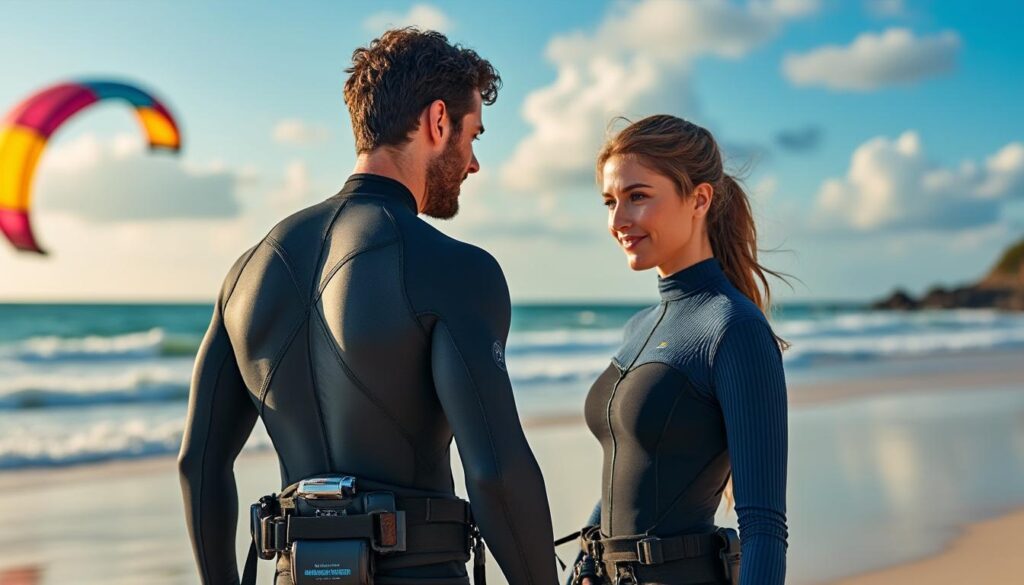
The world of kitesurf Italia is made of wind, waves and adrenaline, but those who spend their days on the water know that without the right equipment the magic quickly fades. The ION wetsuits, the ION harnesses and all those little accessories you throw into your bag at the last minute are the real bridge between a simple outing and a session that makes you end the day with salt on your skin and a permanent smile. From the brand’s founders, grown on the winds of the Adriatic and northern Europe, to the beaches of kitesurf Salento, ION has become synonymous with warm neoprene, serious back support and a design that doesn’t go unnoticed. Those looking for a best kitesurf spot Italia today also check which gear will let them stay longer in the water, from the first water start to the most aggressive loop.
Those approaching kitesurf for beginners dream of gliding, but often underestimate the difference between the wrong wetsuit that makes you shiver with cold and a well-made one that lets you focus only on the bar. In the same way, choosing the right harness is not an aesthetic detail: it means protecting your back and having constant control over the kite’s power, whether you’re taking a lesson at a kitesurf school on the Ionian Sea or doing an advanced session on a reef in Greece. Accessories – gloves, booties, helmets, vests, travelgear – complete the picture: they’re the “small” things that change everything. This content gets concrete: how to choose ION wetsuits based on the season, why rigid harnesses are dominating the market, which accessories should never be missing when planning your kitesurf holidays between kitesurf Lecce, kitesurf Taranto, the Adriatic and the Ionian Sea.
- ION wetsuits for kitesurf: how to choose thickness, cut and zipper based on season, spot and level.
- ION harnesses: differences between hard shell and soft shell, men’s/women’s models, back support and comfort in the water.
- Essential accessories: booties, gloves, helmets, impact vests and travelgear to travel light but fully equipped.
- Tailored setup for Salento: how to adapt your equipment to Salento wind on kitesurf Adriatico and kitesurf Ionio.
- Technical progression: which gear really helps you learn kitesurf and try new freestyle tricks safely.
ION Kitesurf: brand philosophy between wetsuits, harnesses and accessories
Behind every ION wetsuit or harness hung in a shop there’s a story made of wind and miles covered between different spots. The brand was born in the early 2000s with a clear idea: create products designed by people who live water sports every day, not by an office far from the shore. For this reason, from the beginning, the priority has been neoprene for windsurf, surf and kitesurf, with the aim of offering warmth, freedom of movement and durability over time. In just over a decade, this radical choice made ION a global reference for kitesurf wetsuits and harnesses, especially for those who sail in challenging conditions.
The DNA is clear: challenge yourself in nature and design equipment that can withstand that challenge. It’s no coincidence that many riders choose ION wetsuits for long winter sessions or first attempts in the waves. The combination of technical materials, ergonomic cut and smart details – like key pockets, reinforced knee panels, zippers designed not to make you swear in the cold sand – comes directly from feedback of riders who spend more days in the water than at home. The result is a product range that spans from top-of-the-line wetsuits to more accessible lines, all united by a common thread: endure and make you have fun.
Over the years, the brand has also extended beyond the water, entering the bike world with the same mentality: protection, comfort, style. But for the Italian kiter, the truly interesting part remains the water department: wetsuits, harnesses, accessories, travelgear and technical clothing. Those who move between spot kitesurf Puglia, Greece, Sicily or the Canaries increasingly see the ION logo on the backs of the most regular riders, precisely because the combination of quality and aggressive design has conquered a huge slice of the scene.
An often underestimated aspect is the attention to female riders. It’s not just about coloring a wetsuit purple, but studying specific fit and support. Models like Nova for harnesses or Amaze for wetsuits show targeted work: shaped panels, padding where needed, shells with flex optimized for the female body. For those who kitesurf kitesurf Salento year-round, this care makes the difference between a comfortable session and a constant struggle with equipment that “doesn’t fit”.
The same “no compromises” approach is seen in next-generation harnesses, with rigid shells in composite materials or full carbon, designed to distribute loads evenly across the back. Here the direct experience of riders who spend hours hooked to powerful kites, both in freeride and big air, comes into play. With correct support, you can push harder without squeezing your lower back every time. For those checking the weather and waiting for the perfect Maestrale day on the Ionian Sea, knowing you have a harness that won’t let you down is a huge mental bonus.
In short, ION offers a complete ecosystem: wetsuit, harness, accessories and travelgear designed to work together. This integrated approach becomes evident when you plan an intensive kitesurf course, a week of freestyle training or a spot tour between the Adriatic and the Ionian Sea: using gear designed with the same philosophy reduces surprises and lets you focus on wind and technique. And when a brand manages to make you forget the presence of the equipment, it means it has hit the target.
ION wetsuits for kitesurf: how to choose the right model for the Adriatic, the Ionian Sea and travel
Talking about ION wetsuits kitesurf means talking about water temperature, wind direction and the type of session you want to do. The same person who in August at kitesurf Ionio wears a shorty, in December on kitesurf Adriatico needs a sealed 5/4, hood, gloves and booties. Choosing thickness is the first step: the more millimeters you have, the more the wetsuit insulates, but stiffness also increases. For an all-year use in Salento the ideal combination is often a 5/4 for winter and cold mid-season, plus a 3/2 or 4/3 for late spring and mild autumn.
ION builds different lines to cover all these needs, with top-of-the-range neoprene that is lighter and warmer for those who don’t want compromises, and more accessible but reliable versions for those starting to learn kitesurf. A concrete criterion to choose is to ask yourself: how long will you be in the water per session? For someone doing a short one-hour outing, even a mid-range wetsuit with a good cut is sufficient. Those who take two-hour lessons in a kitesurf course or spend entire afternoons trying new tricks need neoprene that doesn’t give way and doesn’t flood with water over time.
A second fundamental aspect is the type of zipper. ION front-zip wetsuits limit water entry on the chest and offer greater freedom in the shoulders and back, ideal for those who pump the kite often or do many jumps. Back-zip are easier to put on, often preferred by beginners or those with broad shoulders. The trick is not to fixate only on “what’s fashionable”, but on what allows you to move better in your main spot. In windy areas like kitesurf Lecce and surroundings, where you often sail with short chop and quick direction changes, being able to rotate your torso without feeling the wetsuit pull is gold.
For frequent travelers, drying time and weight also come into play. Some high-end ION wetsuits use inner linings that drain water quickly and materials that dry in a few hours in the air. If you’re planning a trip between multiple spots – maybe inspired by travel ideas in this in-depth on how to travel with the kitesurf bag – having a wetsuit that doesn’t stay wet and heavy for days in the car or on a plane becomes a huge practical advantage. Less smell, less humidity, more comfort on the first water entry the next day.
Another key point is the gender-specific fit. ION’s women’s ranges are not simple copies of the men’s models: shaped panels, hip and chest cuts, calibrated arm and leg lengths. This reduces leaks, eliminates unnecessary folds and makes the wetsuit a “second skin”. For those who live spots like spot kitesurf Puglia, where in winter the tramontana can make the water biting cold, a wetsuit that fits well means less thermal shock during body drag and greater focus on technique.
To choose wisely, a simple reference table adapted to Mediterranean conditions can help:
| Water temperature | Recommended ION wetsuit thickness | Typical use in Italia (Salento & Mediterranean) |
|---|---|---|
| 8–12 °C | 5/4 or 6/5 with hood, gloves, booties | Late winter on the northern Adriatic, cold and windy days |
| 13–16 °C | 5/4 or sealed 4/3 | Winter and early spring on kitesurf Salento, Ionio and Adriatic |
| 17–20 °C | 4/3 or 3/2 | Spring and autumn on best kitesurf spot Italia |
| 21–24 °C | 3/2, shorty or lycra + boardshort | Ventilated summer, afternoon thermals, beginner courses |
| 25 °C and above | Anti-UV lycra or technical swimsuit | Light sessions, foil, summer downwinds |
Following this logic, the ION wetsuit becomes a tool for reading your spot: it forces you to know the real temperature, the average duration of your outings and your body’s needs in motion. Those who learn to think like this can better plan sessions and take full advantage even of borderline days, the ones when many stay home because “it’s cold”, while a few, with the right wetsuit, find the sea half empty and the wind all to themselves.
ION harnesses kitesurf: support, performance and differences between models
The kitesurf harness is the direct contact point between you and the kite’s power. It’s where all the gusts, course corrections and slightly crooked landings end up. It’s no surprise that ION built its reputation on this piece of equipment: harnesses designed to give back support, freedom of movement and durability. From rigid versions in Curv or carbon to more flexible solutions for those seeking absolute comfort, the brand covers almost every riding style, from relaxed freeride to aggressive big air.
Models with a hard shell, like the Curv or Spectre series, are designed for riders who want structured support. The shell distributes loads over a wide surface, reducing local pressure points and limiting column torsion. This is particularly useful when sailing in overpower, when you go out with strong wind on kitesurf Adriatico or when you push for high jumps with short lines. The next-generation front bar, often lightened and stiffened, helps keep the harness shape stable, preventing it from riding up towards the ribs or rotating during maneuvers.
On the other hand, softer harnesses offer greater flex and a more “hugging” feeling. They are often preferred by those who do wave riding or see kitesurf as surf strapless, with continuous posture changes and torso rotations. Also for those in the middle of a kitesurf for beginners program or taking a long course, a slightly softer harness can be less demanding on the lower back and more forgiving of small position errors. The important thing is that the harness doesn’t pinch or create friction points, especially on the hips and ribs.
ION works a lot also on the : shaped padding, internal panels that grip without slipping, chosen in materials that don’t saturate with water. Some models integrate fine angle adjustment systems, allowing the harness to be adapted both to freeride wings and to more radical setups for freestyle. For those who frequent spots like kitesurf Taranto and often move from chop to flat water depending on wind direction, being able to adapt on the fly with a few adjustments is a notable plus.
Variants dedicated to female riders, like Nova, start from a simple concept: the female back has different curvatures, the hips work differently and the pelvic belt bears loads in another way. Consequently, the distribution of padding, the shape of the shell and the position of traction points are designed to accompany the body, not constrain it. The result is less fatigue at the end of the session and a better feel of the wing, which is useful both for a simple tack on the Ionian Sea and for landing a rotated jump.
To understand which ION harness to choose, it’s worth asking yourself three clear questions:
- What type of riding will you do most often? Freeride, waves, freestyle, foil, big air?
- How long do you spend in the water per session? 45 minutes or 3 consecutive hours?
- Do you have a history of back or hip pain? Do you need more support or more freedom?
The answers guide you toward a hard or soft shell, toward a higher or lower flex index, toward more or less padding. A harness too rigid for a wave rider can be cumbersome, while one too soft for a big air rider can cause lumbar discomfort after a few outings. Those who want to push tricks can also find useful insights in dedicated resources like this guide to kitesurf freestyle and tricks, combining technical advice and gear choices.
Of course, the best way to understand if an ION harness is “the right one” always remains the same: try it in the water. Dryland tests deceive: on the beach everything seems comfortable, but only with the kite in the air and the body under load do you understand if the support is correct, if the bar stays in place, if there are no burning points. Once you’ve found the perfect match between body, wetsuit and harness, every gust becomes an opportunity to push, not a risk to manage with fear.
ION accessories for kitesurf: the details that change the session
ION equipment doesn’t stop at wetsuits and harnesses. The small accessories are often what save the session when the wind shifts or the temperature drops suddenly. Neoprene booties with reinforced soles for walking on reefs, gloves designed not to tire the forearm, snug hoods that cut wind on the nape, protective vests that absorb impacts: each of these elements may seem secondary until you find yourself at the first water start in mid-winter. Those who kitesurf kitesurf Salento know well how a stiff tramontana on the Adriatic can make you regret not having thrown a pair of booties in the car.
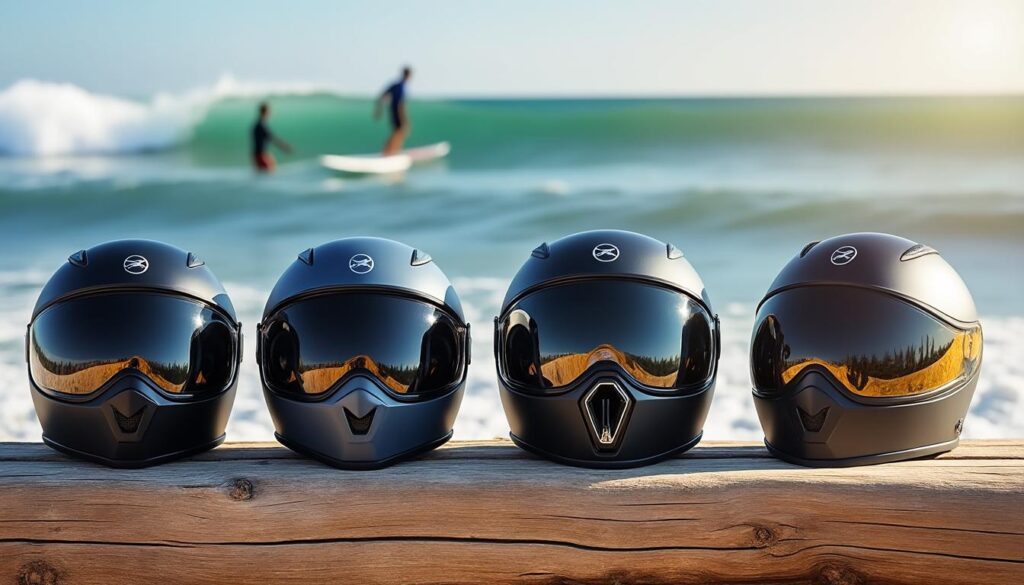
ION also takes care of physical protection: lightweight helmets with vents designed not to create a sail effect, impact vests that combine buoyancy and rib protection, knee pads for those who often crash in shallow water. These accessories are not aimed only at pros, but become essential even for those in the early stages of a kitesurf for beginners course, when falls are frequent and body awareness in the water is still being built. A good vest can transform the perception of safety and free the mind, leaving more room for technique.
Another area where ION has invested heavily is travelgear. Padded bags for twin-tip and directional boards, bags for multiple kites, backpacks with separate dry and wet compartments, lightweight trolleys for frequent flyers. Those organizing kitesurf holidays between the Mediterranean and the ocean know that check-in is the moment when you hope the bag weight fits the limits. Having bags designed to maximize usable space, distribute loads and protect equipment from conveyor belt impacts makes a significant difference both financially and in terms of gear lifespan.
Equally important is the off-water clothing: windproof softshells, thermal hoodies, quick-change microfiber towels, ponchos to take off the wetsuit on the beach without wrestling with a towel. These garments are designed for the moments between sessions, when you sit and watch the vento Salento shift, weigh up whether to wait for a reinforcement or change spot. Staying warm and dry between rides keeps concentration high and reduces the risk of catching a chill just when the wind finally turns perfect.
To avoid forgetting anything, many riders use a fixed list of accessories to always keep in the car or bag. A concrete example, adapted to the ION offering, could be:
- Extra neoprene: hood, gloves, booties of different thicknesses.
- Protection: lightweight helmet, impact vest, knee pads if you often ride in shallow water.
- Travelgear: padded board bag, compression bag for kites, waterproof daypack.
- Technical clothing: poncho, windproof softshell, thermal socks.
- Small accessories: safety leash, leash, simple repair kit.
With such a base, the likelihood of having to give up a session because of “a missing detail” drops to almost zero. And when you move from one best kitesurf spot Italia to another – maybe planning trips with the help of guides like those on European kitesurf destinations – having everything under control lets you focus only on forecasts and coast orientation, not on the fear of having forgotten something critical at home.
The final piece is equipment care. ION designs its accessories to withstand salt, sand and sun, but without minimal maintenance even the best product ages poorly. Rinse with fresh water, dry in the shade, don’t leave wetsuits and harnesses closed in a hot car are simple habits that multiply the years of gear life. And the longer the equipment lasts, the more budget remains to move between spots, take advanced courses or buy that new board you’ve had your eye on for months.
ION setup for kitesurf Italia: from Salento to other destinations
One of the most frequent questions among those approaching kitesurf is: what do I really need to start and progress? Looking at the context of kitesurf Italia, the answer inevitably depends on spots, seasons and goals. In an area like Salento, with two seas and different wind directions, the ideal setup changes between winter, spring and full summer. ION, with its catalog of wetsuits, harnesses and accessories, allows you to build a “base kit” that covers needs from beginner to intermediate-advanced well, without having to change everything every year.
For those starting with a kitesurf course in Puglia, the minimum recommended package includes a 4/3 or 5/4 wetsuit depending on the period, a comfortable harness with good lumbar support, booties if the spot has rocky bottom or sea urchins, plus helmet and impact vest for the first sessions. Many kitesurf schools provide this equipment, but buying at least your own harness and, when possible, your own wetsuit from the start helps build confidence. Personal equipment adapts to the body, takes the right folds and becomes a natural extension of arms and torso.
As you progress, attention shifts from simple comfort to performance. Those who start playing with jumps, more dynamic transitions and first tricks can look in the ION catalog for harnesses with a slightly stiffer shell, more stable bars and wetsuits with greater shoulder freedom. In parallel, accessories such as light gloves for cold tramontana days or shaped hoods to reduce “brain freeze” during first winter falls become important. Every upgrade should be seen as an investment to increase the number of sessions per year and the quality of hours in the water.
When the desire to travel across Italy grows, the setup must adapt. The same rider can find themselves doing kitesurf Milano spot on northern lakes with cold water, then heading down for kitesurf Torino Piemonte among windy alpine spots, and finally finishing the season in the warmth with kitesurf in inverno in destinazioni calde. In these cases, having two ION wetsuits – one thicker and one lighter – and a modular set of accessories allows you to travel without stress. The harness remains the heart of the system, while everything else adapts to the climate.
For those looking beyond national borders, resources like this overview of the best kitesurf destinations help plan trips by crossing wind, season and equipment requirements. ION, with its travelgear, fits perfectly into this “nomadic” approach: bags optimized for airline weight, targeted protections, wetsuits that cover a wide range of temperatures. The trick is to build a modular kit, not bring the whole house on the plane.
Those who sail regularly know that the real luxury is not owning dozens of kites, but having a basic setup that always works: a main wetsuit, a backup one lighter or heavier, a harness that doesn’t let you down and a selection of smart accessories. ION aims precisely at this: reduce negative variables and let you manage only those that truly matter, namely the wind, the sea and your head. Salento, with its alternation of Maestrale, Scirocco and tramontana, is a perfect testing ground to understand how much gear quality affects session consistency.
In the end, whether you’re riding a wave on the Ionian Sea or trying first jumps on a flat lagoon, the ideal setup is the one that disappears. If you don’t think about the wetsuit, if you don’t have to constantly pull down the harness, if you don’t feel cold in your hands or feet, then you can truly listen only to the wind. And that’s when kitesurf stops being a fight with equipment and becomes what it should be: an open dialogue between you, the board and nature.
For those who want to delve into the technical aspect related to waves and advanced maneuvers with the right gear, it can be useful to look at targeted content like those dedicated to wave technique with kitesurf, where the choice of wetsuits and accessories enters into the detail of real water conditions.
Which ION wetsuit to choose to kitesurf year-round in Salento?
To cover the entire year between kitesurf Adriatico and Ionio it’s sensible to have two ION wetsuits: a 5/4 (or a well-sealed 4/3) for winter and cold mid-season, plus a 3/2 or shorty for late spring and summer. In winter, pair with a hood, gloves and booties; in summer often a 3/2 or even an anti-UV lycra is enough on the warmest days, but the choice should always be tailored to water temperature and the average duration of your sessions.
Is a rigid or soft ION harness better to start kitesurfing?
For those who are beginners and are taking a kitesurf course, a harness with medium or soft flex is often the most comfortable choice: it’s more tolerant of posture errors and adapts better to the body. ION rigid models in Curv or carbon are ideal when you start pushing more (jumps, strong wind, long sessions) and already have a fairly correct position in the water, because they offer extra back support.
Which ION accessories are really essential for kitesurfing in Italia?
The minimum recommended set includes: a wetsuit suitable for the season, harness, booties if the bottom isn’t sandy, a lightweight helmet and an impact vest, especially during learning. To these add gloves and a hood for winter, a padded travel bag if you travel often and a poncho or quick-change towel to protect you from the wind on the beach. These details increase the number of usable days per year and the quality of sessions.
How to know if the size of an ION wetsuit or harness is correct?
The wetsuit must fit like a second skin: no air bubbles, no excessive folds, but also no compression that hinders breathing. The harness should be adjusted so that, when hooking the chicken loop and pulling with your hands on the bar, it does not ride above the ribs or rotate. In a store or kitesurf school, it’s useful to simulate the pull of the wing to check stability before taking it into the water.
Do you need two different ION wetsuits if you also travel for kitesurf abroad?
If you plan to do kitesurf holidays both in Italia and in colder or much hotter spots abroad, yes, having two wetsuits is the most practical option: a thicker one (5/4 or sealed 4/3) for cold water and a lighter one (3/2 or shorty) for mild or tropical climates. This way you can quickly adapt to local conditions without sacrificing comfort, making the most of every windy day available.