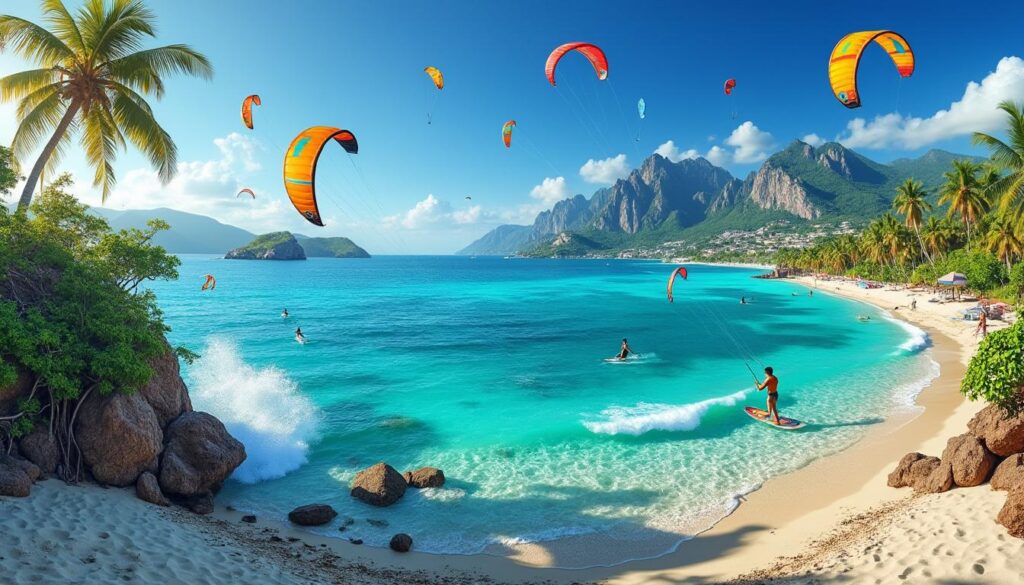
The Adriatic wind doesn’t give discounts, but when it blows in the right direction it turns Italy’s east coast into a real playground. Between Adriatic kitesurfing, wild beaches and seaside towns, the coast that runs from the Gargano down to deep Salento kitesurfing offers spots for all levels: flat water for the first tacks, formed waves for those who love to jump, sheltered lagoons to train tricks. Forget the filtered photos on social media and think instead of the sound of the kite inflating, the bar pulling, the first “clean” water start under a tight tramontana.
The logic is simple: if you want to find the best kitesurf spots in Italy on the east side, you have to start with the wind. Maestrale, Tramontana, Scirocco, Grecale and local thermals decide where to go day by day. This is where the wind in Salento and that of the Gargano really make the difference: they change in a few hours and force you to choose the spot well, otherwise your session becomes a walk on the beach with the board under your arm. The Adriatic rewards those who watch the sky, not those who only look at stories.
In short
- Adriatic kitesurfing: east coast with spots that vary from the Gargano to the Salento, ideal for itinerant kite trips.
- For kitesurfing for beginners areas with sandy bottoms and shallow water like Frigole, Spiaggia Lunga and Torre San Giovanni work well.
- Wave spots like Frassanito and Capo Vieste with Maestrale or Tramontana are perfect for those looking for jumps and solid surf.
- Spots for kitesurfing in Puglia are always chosen based on wind direction: north for waves, south for softer sessions and summer thermals.
- A good kitesurf school on the Adriatic coast helps you read the weather and set up a proper kitesurf course.
Adriatic kitesurfing between Gargano and Puglia: how to choose the right spot
Those looking for kitesurfing in Italy often start from the North or from Sardinia, but the Adriatic has an extra card: kilometres of still-authentic beaches, where local kiters are used to changing spots depending on the wind. From the Gargano promontory down to the heel of Italy, the east coast lets you organise a real road trip: car loaded, kites of different sizes, and one rule only, follow the air direction. It’s the opposite of a static holiday: here you drive for an hour, get dressed in five minutes and go in the water as long as the light holds.
In the upper part of Puglia, the Gargano is the first reference. Vieste is a complete area, not only for the landscape but above all for the variety of conditions. Those who want to learn kitesurfing find at Spiaggia Lunga a stretch of sand, generally flat water with thermal winds or moderate Maestrale, and many active schools, like the Gargano kitesurf school, used to following both novices and those who want to make the jump to their first jumps. More experienced riders move towards Capo Vieste, where the Tramontana can raise real waves, to be surfed with care and precision.
Going down the coast, each bay has its own “personality” linked to the dominant direction. This is where the comparison between Adriatic kitesurfing and Ionian kitesurfing becomes interesting: on the Adriatic side north and north-east swells carve steeper waves, the wind often comes side or side-on, and kite handling requires good technique. On the Ionian side the same disturbance can generate softer conditions, less choppy water and slightly less gusty wind, ideal for those still consolidating board control.
To avoid turning the kite trip into a series of wasted attempts, many riders use a simple strategy, perfect even if you are a beginner: choose two or three fixed bases (for example Vieste, the Otranto/Frassanito area and the Ionian Salento) and then move within a radius of 30–40 km based on the forecasts. This allows you to make the most of the Salento wind and the Gargano without getting lost in endless programme changes.
Another key point is the equipment. On the Adriatic it’s advisable to have at least three kites: a large one for lighter thermals, a mid-size for standard days of 18–22 knots and a small one for when Maestrale and Tramontana decide to pick up. If you want to optimise the budget, it can be useful to check content dedicated specifically to choosing equipment, such as the article on how to buy used kitesurf gear and choose the right equipment, which helps avoid classic mistakes of newcomers to kite.
Those who come from the North or abroad are often struck by the density of local schools: almost every bay with good conditions from May to October hosts at least one centre with IKO or FIV instructors. This makes kitesurfing holidays on the Adriatic particularly convenient: you can plan guided sessions, rent equipment and adapt the days to those travelling with you, even if not everyone practices wind sports. The Adriatic, in short, is not a single spot, but a wind corridor to be read like a modern nautical chart.
The idea to keep in mind is clear: on the east coast the winner is not the one with the most likes, but the one who knows how to read the wind best and choose the right spot at the right time.
Quick table of the main winds on the Puglian Adriatic
To orient yourself among the different wind names and immediately understand where to go, this summary helps you link direction and the type of spot ideal.
| Wind | Direction | Typical effect on the Adriatic | Recommended spots |
|---|---|---|---|
| Maestrale | North-West | Rough water, medium waves, wind often side/side-on | Frassanito, Alimini, Vieste, Capo Vieste |
| Tramontana | North | Strong wind, formed waves, marked chop | San Foca, Frassanito, Otranto area |
| Grecale | North-East | Big, long seas, challenging conditions | Frassanito only for experts, some sheltered bays of the Gargano |
| Scirocco | South-East | Less aggressive waves, summer thermals, humid climate | Otranto, Alimini, Frigole with thermal, Porto Cesareo Ionian side |
| Levante thermal | East | Afternoon wind 14–20 knots, worked but manageable water | Frigole and other spots near Lecce |
Learning to link these winds to your level is the first step to turning the Adriatic into a true progression lab.
Gargano and Vieste: the northern gateway of Adriatic kitesurfing
In the panorama of Adriatic kitesurfing, the Gargano plays a leading role. The promontory that stretches into the Adriatic creates a particular microclimate, often amplifying north and west winds. It’s the place where many riders from central and southern Italy begin to seriously understand what it means to plan sessions according to the weather, not just holidays. Typical days alternate quiet mornings with afternoons of increasing Maestrale, perfect for organising lessons in the morning and more intense freeride in the afternoon.
The Vieste area offers several spots. Spiaggia Lunga is the most cited for those looking for kitesurfing for beginners on the Adriatic side: sandy bottom, wide space, schools present, possibility to set up a linear progression from first body drags to upwind and downwind tacks. Here the wind comes in clean especially with Maestrale and summer thermals, offering sessions of 15–22 knots ideal for medium kite sizes. A typical student can, in three or four well-structured kitesurf course days, close their first safe water starts.
A little further south, Capo Vieste completely changes the cards on the table. Same sea, but with a different energy: the Tramontana can bring significant waves, steeper shapes and challenging chop. It’s the right spot if you already have good upwind control, know how to manage depower well and want to start surfing the wave with a directional board or twin tip. Those arriving without wave experience often realise that here it’s not the kite power that makes the difference, but the timing with which you read the wave.
From the point of view of kitesurfing holidays, the Gargano has a big advantage: in summer, while some areas of the Mediterranean struggle to exceed 12 knots, local statistics report a high probability of useful days with at least 14 knots thanks to thermals and the promontory’s configuration. This means more time hooked to the bar and less time staring at the anemometer. For those travelling with non-kiting companions, Vieste offers enough beaches, restaurants and walks to fill the days without anyone sighing when you check the forecast for the third time in a row.
The Gargano is also a good testing ground for those who dream of one day measuring themselves against more extreme spots around the world. If you are curious to compare the Adriatic with international scenarios, you can get an idea of the differences by reading, for example, a guide to ocean spots like those described in the article about kitesurfing in Morocco between Dakhla and Essaouira. You’ll notice that many logics are the same: read the wind, understand the bottom, respect your level limits.
From a technical point of view, many riders use Vieste to work on some key goals:
- Upwind control in slightly choppy water, essential for every other spot.
- First transitions in relatively stable conditions, without overly aggressive waves.
- Introduction to wave riding at Capo Vieste with smaller kites and strong wind.
The central concept is this: the Gargano is a gateway to kitesurfing in Italy on the Adriatic that allows you to grow progressively, without burning stages.
Frassanito, Alimini, San Foca: the wave heart of the Salento Adriatic
Heading south, the landscape changes and you enter Salento kitesurfing territory. Here the Adriatic coast becomes wilder, with pine woods, rocky stretches and narrower beaches. It’s the realm of wave spots like Frassanito, just north of Otranto. This spot is considered one of the most complete on the Puglia kitesurfing spots Adriatic side: with Maestrale it offers steep, clean waves up to 25 knots, perfect for jumping and surfing. With Tramontana, depending on the period, you can find truly challenging conditions, with wind pushing up to 30 knots and waves exceeding three metres.
When the Grecale comes in, things get even more serious. Waves can exceed 4.5 metres, long energy, a sea that doesn’t forgive distractions. In these situations Frassanito is terrain only for very experienced riders, those who know their limits well and don’t challenge them recklessly. It’s not the right spot for those still trying to figure out getting out of the water or managing pull in gusts.
Next to Frassanito is the Alimini area, facing the Otranto channel. With winds from the north and north-west it offers intense sessions, often with waves less “angry” than Frassanito’s but still technical. In the presence of south-east summer thermals, the water can remain more manageable, offering sessions with lively but not destructive sea. It’s a good compromise for those already confident with kite and wanting to approach wave gradually.
San Foca is instead a more “hybrid” spot, much appreciated by kiters when the Tramontana blows. Although the coast is sandy, there are scattered rocks that require attention, especially when launching and landing. The scenario is typical of kitesurfing in Lecce: open sea, side wind, clear skies on high-pressure days. If you’re planning a kite trip, it’s the classic place to mark as a “plan B” when other spots are too crowded or too extreme.
Those who want to build a progression route on the Adriatic side of the Salento often think like this: first outings and technique refinement on easier water, then gradual inclusion of days at Frassanito with medium Maestrale, and only later face the true swells of strong Grecale or Tramontana. The common thread is always one: learn to know and respect the sea before asking it for spectacular manoeuvres.
This area of the Salento Adriatic demonstrates one clear thing: kitesurfing in Italy is not only lagoons and flat water, but also powerful waves just a few kilometres from urban centres.
Lecce and surroundings: Frigole and the Adriatic spots to learn kitesurfing
Not everyone arrives in Puglia already ready to surf three-metre waves. Those looking for kitesurfing for beginners on the Adriatic find in the Lecce area an excellent balance between reliable wind and safe spaces to learn. Frigole, a few kilometres from the city, is a perfect example: the spot is located on a dune, with the sea on one side and an artificial lake on the other, inside an organised lido with a launch corridor and rescue means. This means you can focus on kite control without the stress of chaotic spots typical of high season.
The dominant winds here are Maestrale and Tramontana, which guarantee days with tight air and generally favorable direction for kitesurfing. From May to September, however, the Levante thermal comes into play when forecasts announce south or south-east: a local wind that often settles between 14 and 25 knots. This thermal makes Frigole a very solid destination for building technical foundations: not too strong to scare beginners, but decisive enough to allow real progress.
A typical kitesurf course session here can follow a clear progression: kite control on land, safe body drags thanks to the manageable bottom, first water starts in the more sheltered band, and then longer tacks to practise starting and returning to the take-off point. The presence of a structured kitesurf school, with assistance and dedicated rescue means, is a determining factor in turning initial fear into confidence.
The Lecce area, overall, allows alternating training days on the Adriatic with calmer sessions on the Ionian, according to the wind. If the Maestrale stirs the Adriatic too much with waves beyond your level, you can head down to Torre San Giovanni or Gallipoli on the Ionian side, where the sea often proves less aggressive. It’s a not insignificant luxury: two seas less than an hour apart mean few lost days and many smiling riders.
From the point of view of kitesurfing holidays, Lecce also works as a logistical base: a lively city all year round, services, connections and in a short time you are at almost all the main spots. Those who come to learn often organise a week with a declared objective: close the first complete tack and learn to manage their equipment independently. The ideal rhythm alternates theory and setup in the mornings with practice in the afternoons, always keeping an eye on wind direction.
An aspect that should never be underestimated, especially for beginners, is safety. Right-of-way rules, handling bar release, planning a plan B for exiting the water: all things a good instructor on the Adriatic repeats until they become automatic. For those who want to deepen the basic principles, it’s also useful to read dedicated content, such as the guidelines on kitesurf safety and rules, which help fix these concepts even before inflating the kite.
In the end, Frigole and the nearby spots confirm a simple fact: the Adriatic is not only for those who jump high, but also for those who put their feet on the board for the first time.
Practical checklist for your first Adriatic kitesurf course
To avoid arriving unprepared on the beach, this list summarises what you really need when you book a course on the east side.
- Updated sports medical certificate, especially if you plan intense physical activity and several consecutive days of course.
- Sports insurance specific for sailing sports or included in the school package.
- Wetsuit suitable for the season: shorty in full summer, full suit in shoulder seasons.
- Reef shoes or booties if the spot has rocky stretches or mixed bottom.
- Water and salty snacks: better to get in the water hydrated and with energy.
- Sunglasses with a strap and water-resistant sunscreen.
Following this checklist allows you to focus on the wind and not on forgotten details.
Otranto, Santa Maria di Leuca and the bridge to the Ionian
The southernmost part of the Puglian Adriatic coast, between Otranto and Santa Maria di Leuca, is a fascinating transition area. Here the Adriatic meets the Ionian, and the behaviour of the wind changes over a few kilometres. Otranto, besides being a historic seaside village, represents a strategic point for choosing sessions: with north winds you look to Adriatic spots like Frassanito and Alimini, with south winds you prepare to turn the corner and head for the Ionian.
Santa Maria di Leuca is a different story. Rocky bottom, strong currents, coastal orography that channels the wind and makes it irregular in some conditions. It’s not an area suitable for someone who has just finished a basic course. Here you need physical endurance, the ability to read current and wind together, and above all mental clarity to stop the session when the sea starts pushing too much. It’s a spot to face with respect, perhaps following expert local riders who know every change in wind direction.
This southern area, while less “commercial” in terms of schools compared to the Vieste–Lecce stretch, has a magnetic pull for riders looking for something more “raw”. Scirocco days can offer sets of regular waves, less aggressive than a Grecale but still solid, while with some north winds the combination of current and gusts challenges even those used to ocean spots.
Many expert kiters use Leuca as a starting point to read the double coast: if the Adriatic is too rough for a safe session, move to the Ionian towards Torre Mozza, Torre San Giovanni or Gallipoli; if the Ionian is too flat or off-axis, go back up to Frassanito and Alimini to look for real waves. This flexibility makes Salento kitesurfing unique within kitesurfing in Italy: few other places offer two seas, two climates and two wave configurations so different within such a small area.
From a lifestyle point of view, this area is for quiet evenings after intense sessions. Small restaurants, little harbours, low lights. The classic scenario where you mentally review the best tacks of the day with a cold beer in hand, while the wind drops and the sound of the waves remains the only soundtrack. Here the Adriatic stops being just a set of weather data and becomes a real environment, to be respected and understood.
The message from the far south is clear: here you don’t look for “comfort”, you look for the right wind and you’re ready to follow it, even when it takes you to spots that don’t forgive distractions.
When to choose the Adriatic and when to choose the Ionian
To make the most of the Salento’s double coast, many riders follow a simple operating rule.
- Choose the Adriatic with winds from the north, north-west and north-east if you have good experience and are looking for structured waves.
- Choose the Ionian with winds from the south, south-west and west when you want more manageable water and often less formed sea.
- Play the thermal card on summer days with clear skies, especially in sheltered bays where a local afternoon wind activates.
Understanding this alternation is like having the key to the whole Salento kite scene.
Organising an Adriatic–Salento kite trip: itinerary, levels and practical tips
To turn the information into real days on the water, you need a minimum of planning. A well-built Adriatic–Salento kite trip always starts with three questions: what is your real level, how many days do you have, and how willing are you to move by car. From here the itinerary is born. Those still in the kitesurfing for beginners phase can organise a week split between the Gargano and the Lecce–Frigole area, with a couple of detours to quieter spots on the Ionian. This way you alternate course hours with controlled progression and short trips to look for more linear conditions.
An intermediate rider, who already knows how to ride upwind and do some basic jumps, can add Frassanito with medium Maestrale, San Foca with Tramontana and a few days at Capo Vieste if in the northern area. The common thread remains the same: choose the spot based on the wind, not the photo seen online. Check weather models, cross-check them with locals’ experience and always have a plan B if the wind changes or rises suddenly.
For advanced riders, the Adriatic becomes a playground to train manoeuvres that will also be useful on trips further afield, whether to the Brazil with spots like Jericoacoara or other windy destinations. Working on jumps in chop, learning to read messy waves, managing strong gusts: these are all skills the east coast offers in abundance when the north winds come in full force.
A good Adriatic kite trip that includes kitesurfing in Lecce, kitesurfing in Taranto (for nearby Ionian spots) and the Gargano doesn’t need many promises: three or four good windy days are enough to send you home with new certainties about your technique. The rest of the time fills easily with coastal exploration, snorkeling, beach stretching sessions and, why not, a few full rest days to let the body recover.
To summarise the right approach to this type of trip, it’s useful to keep a few clear rules in mind:
- Check the weather before leaving, not just on the day, but remain flexible with your movements.
- Talk to locals: no app will ever tell you how hard a Grecale really hits Frassanito in winter.
- Adapt your quiver to the season: larger kites in summer for thermals, smaller ones in winter for Maestrale and Tramontana.
- Don’t force your level: if the spot is beyond your abilities, move bays, not your flotation line.
Organising an Adriatic kite trip doesn’t mean chasing a myth, but learning to live with a real sea that rewards you when you listen to it.
What is the best time to kitesurf on the Adriatic in Puglia?
The most reliable window runs from May to October, when thermals and moderate Maestrale enter regularly. For those who love intense wave, autumn and winter bring stronger Tramontana and Grecale, but those conditions are suitable only for experienced and well-equipped riders.
Are the Adriatic kitesurfing spots suitable for beginners?
Yes, but they must be chosen carefully. Areas like Spiaggia Lunga on the Gargano and Frigole near Lecce offer sandy bottoms, wide spaces and structured schools, ideal for beginners. Spots like Frassanito or Santa Maria di Leuca, instead, are indicated only for those who already have solid experience.
Is it better to choose the Adriatic or the Ionian to learn kitesurfing in the Salento?
For the early learning phases, many instructors prefer the Ionian on days with south wind, because the sea tends to be less agitated. The Adriatic becomes perfect for consolidating technique when thermals are regular or Maestrale is not too strong. The real strength of the Salento is being able to go from one sea to the other in less than an hour.
Do I need to have my own equipment to take a kitesurf course on the east coast?
No, almost all schools provide kite, board, harness and wetsuit for the duration of the course. Having your own gear is useful during progression, but to start it’s better to use the school’s equipment, which is often newer and better suited to teaching.
How do I prepare physically for a kite trip on the Adriatic?
A few weeks before the trip it is useful to work on core, shoulders and general endurance: planks, pulling exercises and moderate cardio sessions. On site, remember to warm up before entering the water and do light stretching after the session, especially on consecutive days of strong wind.