Venice and its lagoon are not just gondolas and narrow alleys. When the right wind blows, among salt marshes, canals and harbour mouths another world lights up: that of kitesurfing in Venice. From the skyline of the bell towers seen from the board to outings toward the Adriatic between Chioggia, Sottomarina and Lido, this corner of the Upper Adriatic offers unique conditions, especially for those who want to learn kitesurfing in relatively flat water but with scenes that look painted. Anyone used to kitesurfing in Salento or a Puglia kitesurf spot will be surprised by how technical, changeable and, if well managed, perfect the lagoon can be to raise their level.
The Venetian lagoon is huge, over 500 km² of canals, tidal flats, salt marshes and historic islands. This means the potential for kite is enormous, but it also means you need to know rules, currents, environmental restrictions and forbidden zones well. Between the commercial port, ships, MOSE and Natura 2000 zones you can’t think of launching your kite anywhere. You need clear information on the best kitesurf spots in Venice, on exploitable winds, tide times and where to rely on a local kitesurf school. This article gets right into that: the details a rider wants to know before loading all the equipment into the car (or on the vaporetto) and heading to the lagoon.
In short
- Venice Lagoon: flat water, shallow seabeds and historic landscape, but with many navigation constraints and environmental protection rules.
- Open-sea spots (Sottomarina, Lido, Jesolo, Caorle): perfect for those looking for waves, space and structured kitesurf schools for beginners.
- Main winds: Bora, Scirocco and summer thermal breeze; know them well to choose between the lagoon and the Adriatic.
- Safety: tides, dredged channels, marine traffic and MOSE require a conscious management of every session.
- Connection with the rest of Italy: Venice as a stop on a wider kite trip between Adriatic kitesurfing, Ionian kitesurfing and the best kitesurf spots in Italy.
Kitesurf Venice and the lagoon: understand the territory before opening the wing
Before talking about spots, you need to understand where you are riding. The lagoon of Venice is the largest in the Mediterranean, a mosaic of shallow water, deeper channels, natural and artificial islands, reclaimed areas and sandy barrier islands that separate it from the open sea. The system is connected to the Adriatic by three harbour mouths: Lido-San Nicolò, Malamocco and Chioggia. Each inlet has different currents, traffic and restrictions, which significantly affect anyone wanting to kitesurf safely.
The tides are decisive. In some periods, the tidal range exposes salt marshes and tidal flats where an hour earlier you were riding calmly, or conversely makes landmarks disappear and increases depth in dredged channels up to 10 metres. For the kiter this means studying high and low tide times and planning the return in advance. Those used to “simple” spots must change mindset: here the session is planned, not improvised.
Another key element is the presence of port and industrial areas, especially towards Marghera and Chioggia. In these zones kite should be avoided due to heavy traffic, historical pollutants in the sediments and irregular currents. At the same time there are stretches of more “wild” lagoon, especially to the north, where the salt marshes are still well present and the environment is more natural, but often they fall within protected areas where kitesurfing can be limited or forbidden, especially because of migratory wildlife.
A practical example: Luca, an intermediate rider used to kitesurfing in Lecce, arrives at the lagoon thinking he’ll find a “new Stagnone”. He quickly discovers that, between MOSE, navigation channels marked by bricole and speed limits, you cannot just set up in the middle without knowing where you are. After a reconnaissance with a local school and a boat tour, he understands which areas are allowed, where the water stays shallow even at high tide and which bricole mark channels to avoid with the board.
From a wind point of view, the lagoon mainly responds to Bora and Scirocco. The Bora blows cold and stiff from the north-east, often gusty but ideal for those who love powerful sessions in flat water, especially in the more internal stretches. The Scirocco arrives humid and loaded from the south-east, raising water levels and, in particular combinations with atmospheric pressure, favouring acqua alta events. For kiting this means more formed waves toward the open sea and less predictable conditions inside the lagoon, with wind sometimes irregular near islands or higher salt marshes.
In this context the kitesurf school becomes almost a “local pilot”. Not only for the course itself, but to translate nautical charts into safe trajectories. Knowing where ferries pass, where the MOSE gates open and which seabeds hide sudden shoals is as fundamental as knowing how to do a good water start.
Those coming from Italy’s kitesurf spots used to linear beaches like some in Puglia, Liguria or Lazio, will find here a sort of water maze. It is precisely this complexity — if understood and respected — that makes kitesurfing in Venice different from the rest of the Mediterranean.
Between history and tides: a living lagoon, moving spots
The lagoon is not a still lake. Over the centuries, river diversions, land reclamations and constructions like the Murazzi have changed the balance between sediments and sea. Today the kiter who looks at a view from above sees a complex network, but must remember that salt marshes and tidal flats are continuously eroded or submerged. This means kitesurf spots that “move” slowly over time, channels that deepen and areas that become too shallow for a safe session.
Here modern tools come into play: interactive lagoon maps, weather buoys, local rider groups that update on changes. In such a dynamic context, always heading to the same route just because “three years ago it was great” is the perfect way to get literally stuck. Understanding that you are riding in a living ecosystem is the first step to adapting your style and choice of spot.
Kitesurf spots Venice: lagoon, Lido, Sottomarina, Jesolo and surroundings
When we talk about kitesurf spots Venice and Lagoon, you have to mentally divide between two connected but different worlds: the purely lagoon environment, more technical and regulated, and the open-sea Adriatic side, more “classic” for those already familiar with Adriatic kitesurfing in other areas. The smart rider alternates the two options depending on wind, tide and session goals.
For a quick overview, here is a concise summary of some relevant spots in the area, useful to choose where to head by car (or train) before even inflating the kite.
| Area | Type of water | Ideal winds | Recommended level | Points of attention |
|---|---|---|---|---|
| Lagoon (authorized areas) | Flat water, variable seabed | Bora, moderate Scirocco | Intermediate/advanced | Deep channels, traffic, environmental restrictions |
| Lido Kitebeach (sea side) | Wavy, variable shorebreak | Side Bora, summer thermal | Beginners accompanied, intermediates | Access by ferry, managing space with bathers |
| Sottomarina di Chioggia | Chop, waves with Scirocco | Scirocco, Bora, Mistral | All levels | Summer crowding, gusty winds at times |
| Jesolo / Cavallino | Medium chop, small waves | Bora, winds from NE/E | Beginners with school, freeride | Bathing areas, delimited zones |
| Caorle / Altanea | Chop, some calmer stretches | Bora, N-NE winds | Intermediates, foil | Protected areas, check local regulations |
Take Sottomarina: long beach, frequent winds, the first Venetian kite school active since the ’90s. Here kitesurf for beginners is facilitated by wide spaces and instructors used to handling all the conditions of the Upper Adriatic. With Scirocco, fun waves enter, perfect for those who want to start playing with small jumps and transitions on the crests.
The Lido Kitebeach is instead the direct bridge between the city and the sea. You arrive by vaporetto, then go down to the southern stretch where the breakwaters end. On one side you have the Adriatic with its waves, on the other the view toward the lagoon and Venice. With side wind and medium swell, it’s a spot that gives nice lines and soft landings, but requires attention to the backwash near the breakwater barriers.
Jesolo and Cavallino offer more “family friendly” conditions. Large tourist infrastructures, long beaches and the possibility to alternate kite, SUP and relaxation. Ideal if you travel with someone who is not interested in spending the whole day choosing kite sizes. In low season, with a good Bora, you can find surprisingly clean sessions, especially if you move a bit away from the busiest areas.
Finally, those who like to combine travel and kite can use Venice as a stop within a wider itinerary along the Adriatic. From Veneto you can head down to the best Adriatic kitesurf spots down to kitesurfing in Salento, or head toward Croatia with its windy channels and the spots described in dedicated guides. This way Venice is not just a tourist parenthesis, but becomes a hub of a real rider road trip.
How to choose the right spot between lagoon and sea
Choosing a spot in the Venice area comes down to three parameters: wind direction, tide and the session objective. Want to do freestyle in flat water? Better aim for authorized lagoon areas with a strong Bora and intermediate tide. Want to work on jumps and kite control in the air? Move toward the open sea with Scirocco or Mistral to use the waves as a natural trampoline.
A simple method: the evening before, check the predicted wind for different locations (Lido, Chioggia, Jesolo, Caorle), then open a nautical map of the lagoon and identify where the wind will enter cleaner without too many obstacles. Finally, verify with the local community or a school which zones are actually practicable that day, taking into account any temporary restrictions or works related to MOSE. This way you avoid wasted trips and focus on the session you really want.
Winds, seasons and weather conditions for kitesurfing in the Venetian lagoon
Wind is the key, always. In the Venice area three main players enter: Bora, Scirocco and thermal breeze. Each of them shapes a type of session, conditions the water surface and influences the choice of board and kite. Those coming from southern Italy, used to Salento winds like Mistral and Tramontana, need to recalibrate their references a bit.
The Bora generally blows from the north-east, often cold and gusty, especially in the colder months. In the lagoon it creates very flat water in the more sheltered stretches, ideal for those who want to work on pop, controlled jumps and strapless manoeuvres. The downside is the gusts: it’s essential to learn to read the holes and avoid over-powering. Better a slightly smaller kite and good board edging than a wing too large that rips you away at every gust.
The Scirocco enters from the south-east bringing humidity, clouds and a rising sea. On the sea side it means growing waves, stronger shorebreak and currents that can push you sideways. In the lagoon it raises the water level, submerging some tidal flats and changing the perception of depth. On days of strong Scirocco the city itself can experience acqua alta; for the kiter this translates into a greater margin of depth, but also stronger currents near the harbour mouths.
In the warm months, especially between late spring and early autumn, local thermal breezes also develop, linked to the heating of the mainland. They are not always very strong, but can give afternoons with 15–18 knots regularly, perfect for relaxed freeride, foil or to safely and progressively take beginners into the water.
Managing the seasons also means choosing the best period for your goals. Autumn and spring are the times with more active frontal systems, therefore more options for windy days. Winter offers powerful Bora but cold water, which requires the right wetsuit, gloves and hood, in addition to a solid technical base to handle long planing with reduced sensitivity. Summer offers fewer “epic” days, but in return long daylight, warmer water and that combination of kite & aperitif that in Italy is never missing.
An often underestimated aspect is the effect of wind on tides and internal currents. Strong Scirocco, for example, can slow the outflow of water toward the sea during ebb, keeping levels higher than expected in the lagoon. Conversely, an intense Bora can accentuate the outflow, making seabeds lower than usual. For the rider this means finding exposed sandbanks where you thought there would still be enough water, or misjudging distances to return to your starting point.
Practical tools to read wind and the lagoon
To avoid relying only on instinct, it’s worth creating a small routine as an organized rider. Every morning open two types of maps: weather models for wind and pressure, and tide maps that indicate tide trends and possible peaks of high or low water. Cross the data with what you know about the spots: if you see the Bora strengthening and the tide falling, head to areas with deeper seabeds. If Scirocco and rising tide coincide, be prepared for stronger currents near the harbour mouths and choose less exposed zones.
It’s also useful to keep a personal session diary in the Venetian lagoon: wind, entry point, tide, on-site conditions. After a few months you will have a small local “bible” that is worth more than any generic app. It’s the same logic you use if you kitesurf in the Ionian Sea or Taranto: the wind is the same, but each coast interprets it in its own way.
Safety, regulations and respect for the Venice lagoon ecosystem
Talking about kitesurfing in the lagoon without addressing safety and regulations would be irresponsible. Venice is not a spot lost in the middle of nowhere: it is a UNESCO heritage site, a strategic commercial port, an industrial area and a Natura 2000 zone at the same time. This translates into rules, restrictions, forbidden areas and, above all, a strong responsibility on the part of those who enter the water with a wing that can become dangerous for themselves and others.
First of all, there are the navigation channels, marked by bricole. In these stretches the traffic of motorboats, vaporetti and commercial ships is continuous. A rider who stops in the middle with the kite in the water risks collision or forcing boats into sudden manoeuvres. Basic rule: never remain or perform slow manoeuvres on the main channels. Cross them as perpendicularly as possible, at good speed and keeping the wing in a stable position.
Second point: the MOSE and works at the harbour mouths. When the gates are in operation, or when there are works, some areas become totally off-limits. Not only because of the danger of impacts with structures, but also because of the abnormal currents generated nearby. The Harbour Authorities of Venice and Chioggia regularly publish ordinances: those who kite in the area must get used to reading them with the same attention they use to check the wind.
The lagoon is also a fragile ecosystem, with salt marshes and tidal flats that host migratory birds, lagoon fish and typical plants such as glasswort. Launching and landing kites on these surfaces, passing over them with the board on very shallow bottoms or setting up “improvised spots” in protected areas means damaging an environment that is already facing erosion, pollution and human pressures. The right attitude is clear: use only authorized entry points or those already established by the local kite community and always keep a safe distance from areas marked as sensitive on maps.
To deepen the basics of proper behavior you can rely on resources dedicated to water safety, such as the guides on kitesurf rules and safety, where you find principles valid everywhere: distance from obstacles, handling equipment on the beach, right of way rules in navigation. Applying these rules in a complex context like the Venetian lagoon is what distinguishes the responsible rider from the distracted tourist.
Practical safety checklist for kitesurfing in Venice
To make these concepts concrete, a small checklist to use before every session in the Venice and lagoon area can help:
- Check ordinances: verify if there are temporary bans in the lagoon or near the harbour mouths.
- Traffic analysis: observe boat and ship passages for at least 10–15 minutes in the area where you plan to enter.
- Return plan: decide in advance where to exit the water in case of wind drop or problems with the board or kite.
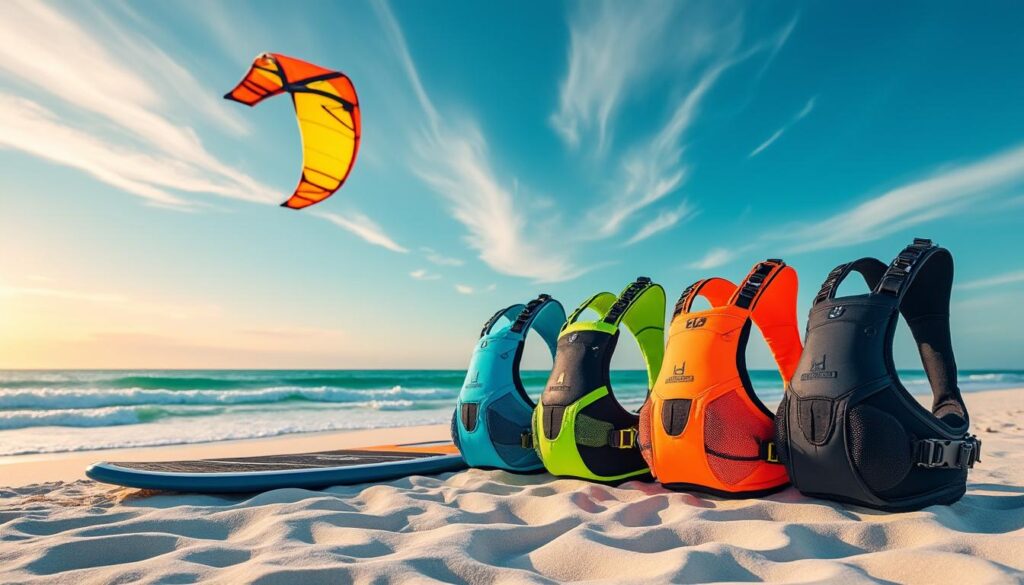
- Adequate equipment: leash, buoyancy aid in areas with currents, winter wetsuit if the water is cold.
- Session in company: avoid going out alone in little frequented or poorly known areas.
Following this routine takes a few extra minutes, but greatly reduces the risk of complicated situations. In a scenario where local boats, tourists, strong wind and complex infrastructures cross paths, calmness matters as much as technique.
Learning kitesurfing in Venice: beginners, schools and progression
When people hear about the lagoon they immediately think of a perfect spot for kitesurfing for beginners. Partly true: flat water, relatively shallow seabeds, absence of breaking waves. However, in the Venetian lagoon you also have tides, deep channels, currents and space constraints. For absolute beginners the key is a structured kitesurf school, preferably with clear authorizations and instructors who know the area perfectly.
Many local operators offer kitesurf courses in sea-lagoon areas along the Venetian coast: Sottomarina, Rosolina, Jesolo, Caorle. These schools exploit both the protection of the barrier and the opening towards the Adriatic, adapting lessons to the day’s wind. A typical beginner starts with body-drag, bar control, kite handling in the wind window and first water starts in shallow, sandy-bottom water.
The advantage of this area is variety: if one day the lagoon is unmanageable due to tide or a tricky wind, you move to the sea side; if the sea is too rough for a novice, you look for a more sheltered stretch inside. In this sense, the Venice area offers rare flexibility. Those who then want to continue their path in other parts of Italian kitesurfing will naturally move from here to spots described in guides on kitesurf Liguria, Puglia or Greece.
For those already intermediate and wanting to progress, the lagoon becomes a real training ground for fine board control, starting in marginal wind conditions and managing the kite in more confined spaces compared to an endless beach. Working on perfect transitions, toe-side riding, first jumps with flat-water landings and handling sudden gusts is much more productive in a context like this than in confused open sea.
From the first water start to kite trips: building a path
One thing many underestimate is how a solid base in an area like Venice then opens the doors to more ambitious trips. Imagine having made your first stable tacks here, learned to start in light wind and to handle serious gusts. The next step can be a trip to a super-windy spot like the Red Sea or Brazil, or a flat-water spot like Dakhla or Jericoacoara.
For this reason many guides recommend alternating home sessions with targeted trips. From Venice, with a few hours’ flight, you can head to destinations covered in in-depth guides on kitesurfing in the Red Sea, kitesurfing in Morocco or Jericoacoara in Brazil, where the wind blows almost every day and you can rack up hours on the water. Returning to the Venetian lagoon with this experience, you will find yourself much more relaxed when the Bora gets impatient or the Scirocco rises unexpectedly.
Equipment, lifestyle and connections between Venice and the rest of Italian kitesurfing
For the rider, Venice is not just a spot but a different way of living kite. Here logistics involve vaporetti, long-stay parking, trolleys to transport bags and boards. Those who fall in love with this city also accept these “complications” as part of the game, a bit like those who kitesurf on islands where every move is tied to tides and local boats.
The ideal equipment for this area must be flexible. Having at least two kite sizes covers most situations: one around 8–9 m² for Bora days and one around 11–12 m² for thermals and moderate Scirocco. For the board, a versatile twin-tip is perfect for 90% of sessions, while those wanting to exploit light wind or thermal days can consider a surfboard or a foil. The latter pairs well with the lagoon when the seabeds allow it and when you are sure you won’t encounter shoals or submerged obstacles.
Many riders also choose to combine new gear and used kitesurf equipment, especially when they start expanding their quiver. In a context where salt, thermal excursions and frequent transports can stress equipment, learning to choose reliable used gear is essential to avoid wasting budget unnecessarily.
From a lifestyle perspective, Venice is the place where you can truly mix culture and kite. A morning on the water at the Lido, an afternoon among museums and alleys, an evening with cicchetti and spritz. It’s not the classic “beach-only” kite holiday, but a mix that attracts those who don’t want to give anything up: intense sessions and a lively city. And when the craving for “pure” sea grows, just get in the car and chase the wind south: Emilia-Romagna, Marche, Abruzzo, Puglia, down to the beaches where Salento wind rules sessions between the Ionian and Adriatic.
A network of spots from Veneto to the South
Thinking of Venice isolated from the rest of Italy is a mistake. Many northern riders now build a network of spots that links Veneto with Croatia, Greece and southern Italy. Weekends in the lagoon or Sottomarina, long holidays in Istria or the Greek islands covered in guides on kitesurfing Greece and islands, long vacations in Salento between Ionian kitesurfing and the warmer Adriatic kitesurfing.
In this network, Venice becomes the place to train refined technique, get used to reading tides and channels, then transfer these skills to more linear but perhaps windier contexts. It’s a mature approach to kitesurfing: don’t just look for the “best kitesurf spot in Italy” overall, but build a session calendar that helps you grow as a rider, step by step.
Can you kitesurf anywhere in the Venice lagoon?
No. The lagoon is a complex area with navigation channels, port zones, industrial sites and protected natural areas. Kitesurfing is allowed only in specific areas, often managed or known by local schools and associations. Before entering the water it is essential to inquire with the Harbour Authority, the Municipality or a local kitesurf school to know which areas are effectively authorized and at which times.
Is the Venice lagoon suitable for beginners who want to learn kitesurfing?
It can be, but only if you are followed by a structured kitesurf school that knows tides, channels and regulations well. For beginners kitesurfing is usually conducted on beaches along the Venetian coast (Sottomarina, Jesolo, Rosolina, Caorle) where managing space, wind and safety is easier. The lagoon itself, if tackled without guidance, is more suitable for intermediate riders.
What is the best time to kitesurf in Venice and surroundings?
The windiest periods are generally spring and autumn, when fronts with Bora and Scirocco pass. Winter offers strong wind but cold water, so it requires appropriate thermal gear and good experience. Summer brings fewer depressions but can offer pleasant days with thermal breeze, ideal for relaxed freeride, foil or basic lessons along the Adriatic beaches.
Is a minimum level needed to kite near the harbour mouths?
Yes. Areas near the Lido, Malamocco and Chioggia inlets have currents, marine traffic and, in some cases, works like MOSE. They are suitable only for riders with good tack control, secure water starts and the ability to return to the starting point even with irregular wind. Beginners should stay in more sheltered areas and under instructor supervision.
How much equipment is needed to cover typical Venice conditions?
For most riders two kites are sufficient (for example 8–9 m² and 11–12 m²) and a versatile twin-tip. Those wanting to exploit light wind days can add a surfboard volumous or a foil, but must evaluate seabeds carefully. A good full wetsuit is essential between autumn and spring, helmet and impact vest are recommended especially in the lagoon, where currents and distances to exit points can increase fatigue.