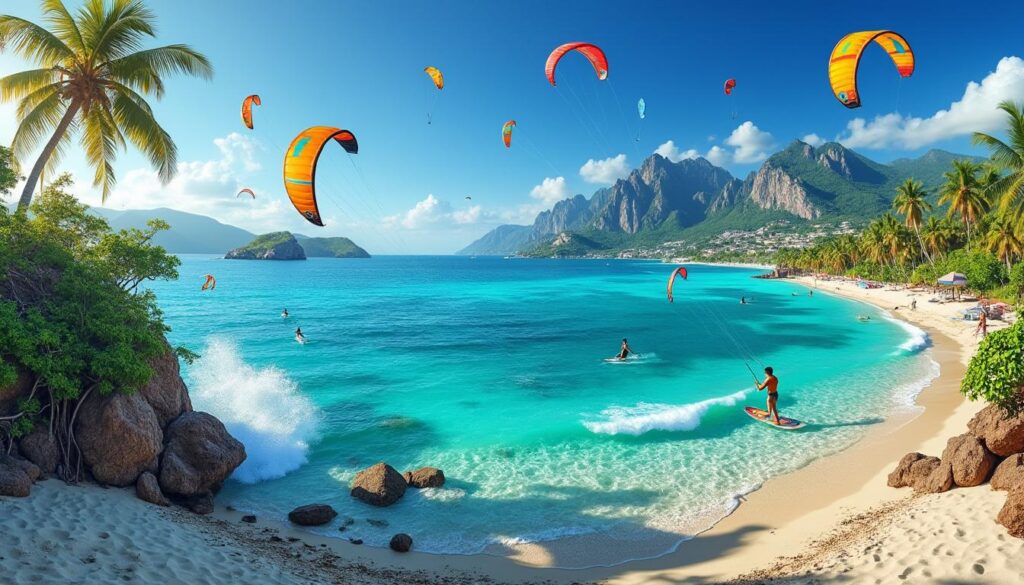
Twelve months, twelve wind directions, dozens of spots that change their face depending on the season. The beauty of kitesurfing is that, if you organize yourself well, you can chase the “endless summer” without having to become an extreme wind nomad. The trick is not having your passport always in hand, but understanding which are the best kitesurf destinations for each month of the year, how they fit your level and how to read weather and logistics without being fooled by glossy photos on social media.
From Tarifa to El Gouna, from Maui to Zanzibar, passing through Sicily, the Salento and the classic kitesurf spots in Italy, every period has its protagonists. January and February call the trade winds, the European winter pushes towards the Caribbean and Brazil, while the Mediterranean summer explodes between Apulia, Greece, France and more challenging ocean spots. The goal is not only to make you dream, but to give you a concrete map: where to go, when, with what wind, what difficulty to expect in the water and who each destination really suits.
In short
- Winter (January–March): reliable trade winds across the Caribbean, Brazil, Hawaii, Zanzibar and South Africa for those who want warm water and strong wind.
- Spring (April–June): the Mediterranean heats up with Morocco, Egypt, Sicily, Greece, Turkey and the first major European classics like Tarifa and Leucate.
- Summer (July–September): full swing for kitesurf Italy across Sicily, Puglia kitesurf spots, Calabria, but also Dakhla and Egypt for those who want daily wind.
- Autumn (October–December): the Red Sea still warm, South Africa coming into season, Brazil and the Canary Islands as “grab your kite and go” solutions.
- For beginners: choose spots with flat lagoons, reputable schools and non-extreme wind; for a complete look at kitesurf for beginners and safety, also check out this practical guide to kitesurf insurance.
Winter kitesurfing (January–March): trade winds, warm water and first “serious” trips
When you’re shivering at home in a sweatshirt and hood, elsewhere people ride in lycra. The months from January to March are perfect for seeking consistent wind outside Europe, taking advantage of the tropical trade winds. It’s the period when many riders organize their first real long-haul kite trip.
For January, one name that always comes up is Tarifa in southern Spain. Even in winter the Levante can come in pretty strong, but the water temperature calls for a serious wetsuit. Tarifa is a continuous laboratory: long beaches, strong winds, kite-town lifestyle and a mix of schools and rentals that makes organizing easy, provided you accept a few off days if weather systems misbehave. Who is it for? Those who already have a secure water start, want progression in strong wind and love the energy of wind towns.
Those looking for warm water and gentler waves turn their eyes to the Caribbean and Brazil. Names like Cabarete (Dominican Republic) and Cumbuco (Brazil) remain staples: wide bays, protecting reefs, internal lagoons where you can freestyle safely. Here the concept of a “no wind day” is rare during this period. The atmosphere is relaxed, but the wind is serious: perfect for moving from the first powered rides to turns and basic jumps.
In February a giant enters the scene: Cape Town, South Africa. The austral summer is in full swing, and the combination of Atlantic swell and thermal wind creates a playground for those who love big jumps and serious waves. Bloubergstrand is the icon, with Table Mountain filling the horizon. It’s not a spot to recommend for those learning body dragging: priority here goes to solid riders with good board control and confidence handling strong gusts. For those who have already been, though, it always returns to the “places to redo” list.
At the same time, February and March are the heart of the season in La Ventana, in Baja California (Mexico). Regular thermal wind, turquoise water, a tightly knit kite community. Ideal if you like a simple lifestyle, days marked only by wind, tacos and dinners with fellow riders. La Ventana also works well for families and beginners thanks to more sheltered bays and open water space.
March is also the month that pushes many to look to the Hawaii, in particular Maui. Here true wave riding comes into play: reefs, consistent swell, wind to be handled with respect. First-timers often alternate lessons in easier spots with observation sessions at famous points, because seeing in person those who push hard between kite and windsurf completely changes the perception of what is possible on a board.
For those who prefer East Africa, Zanzibar begins to come into window. Long tongues of white sand and clear lagoons allow you to always have the “right depth” to learn or progress, with wind that builds over the day. It’s the classic scene where in the morning you practice starts and controlled edges, and in the afternoon you begin to try the first jumps.
The common thread of winter is simple: reliable trade winds and warm water. If you have limited vacation time, consider spots where the wind statistically exceeds 60–70% of usable days in the period. And keep safety in mind: before booking destinations like Venezuela or some areas of Morocco (Dakhla, Laayoune), always check the latest foreign office advisories and what your insurance covers.
This first part closes with a clear tip: in winter, better a slightly farther trip in full season than a nearby compromise with uncertain wind.
Spring kite (April–June): the Mediterranean wakes up and wind games begin
With April’s arrival the compass turns back to the Mediterranean. Days lengthen, the water warms slowly and thermals begin to work, which will make riders happy through autumn. Here the fine choice comes into play: kitesurf Italy, Greece, Turkey, Morocco, Egypt… each area has its own character.
April is the perfect month for those who like to combine travel and technical progression. Dakhla in Morocco remains one of the most mentioned lagoons ever: kilometers of flat water, very regular wind, schools everywhere. It’s an ideal training ground for those who want to work on new maneuvers safely. At the same time, precisely because it’s a more “sensitive” destination, it’s always wise to check the country’s situation first and consult the Foreign Ministry and your insurance: not all policies cover discouraged areas.
Moving to the Red Sea, El Gouna and Hurghada in Egypt enter their best phase between April and June. Shallow lagoons, generous wind, tested infrastructure: many people take a full kitesurf course here with school, accommodation and rental in the same package. Days pass between lessons, soft organized downwinders and evening barbecues with the local crew.
May marks the revival of the great classics of kitesurf Italy. Leading the pack is Sicily, with the Stagnone di Marsala as a mecca for those who want flat water and steady winds. Wide lagoons, shallow bottoms, thermal wind that kicks in midday: conditions that allow beginners and intermediates to feel at ease fast. For a specific focus on the best island spots and how to organize yourself, this guide dedicated to kitesurf in southern Sicily can be useful.
At the same time, Greece and Turkey begin to play a bigger role. Lefkada and Paros offer an interesting mix: comfortable beaches, regular thermal winds, relaxed atmosphere that also suits those traveling as a couple or with non-kiter friends. In Turkey, the bay of Gökova is an example of a well-organized spot: flat water, side-on winds and wide spaces to practice without stress.
June, finally, is the month when western Europe truly ignites. Tarifa returns to the fore with its “wind capital” title, but spots like Leucate in France gain space too, famous for the steady tramontana and a freeride/freestyle vibe, and Hood River in the USA, along the Columbia River, which combines strong winds and spectacular scenery.
In these months, those targeting kitesurf Salento start to closely monitor the vento Salento between the Adriatic and Ionian. Although the main season comes later, April–June is a good time for the first long weekends among kitesurf Lecce, Puglia kitesurf spots and first trials for those who want to learn kitesurf with water more manageable than the summer peaks.
To orient yourself among all these options, a concrete help can come from a table that crosses period, type of spot and recommended level.
| Month | Area | Type of spot | Recommended level |
|---|---|---|---|
| April | Dakhla (Morocco) | Flat lagoon, strong wind | Intermediate–advanced |
| April–May | El Gouna / Hurghada (Egypt) | Shallow lagoons, medium wind | Beginner–intermediate |
| May | Sicily (Stagnone) | Flat lagoon, thermal wind | Beginner–advanced |
| May–June | Lefkada / Paros (Greece) | Mixed light wave / chop | Intermediate |
| June | Tarifa / Leucate | Open sea, strong wind | Intermediate–advanced |
To correctly interpret forecasts and models, and understand why a thermal “skips” or a Mistral strengthens beyond predicted knots, it’s worth reading this technical resource on weather and wind in kitesurfing. Understanding the air is the first real upgrade for your riding.
The spring key is to choose spots with reliable thermals and lots of flat water, so you arrive at summer with board confidence that will make you enjoy every gust.
Summer (July–September): Italy, Puglia, Sicily and the great windy classics
Summer, the real one, is when Europe stops looking far away and discovers how often the best kitesurf spot in Italy is a few hours by car or plane. Between kitesurf Adriatic, kitesurf Ionian, islands and lagoons, from July to September you can build an almost full calendar just staying in the Mediterranean.
In July Morocco continues to produce windy days, with Dakhla still at the center for those who want intense wind and long lagoon sessions. But those who prefer to stay closer to home have a range of choices in Italy: Sicily keeps its strong season going, with the Stagnone and the south coast spots offering more than generous wind, often into late afternoon. August and September are perfect to combine culture, cuisine and flat water.
Meanwhile, kitesurf Salento becomes one of the most interesting cards in the deck. With two seas available, kitesurf Adriatic and kitesurf Ionian, strategy matters: if the Mistral comes in you look to the Ionian side, if the Sirocco blows you rotate to the Adriatic. Between kitesurf Lecce and kitesurf Taranto, with spots spread along both coasts, you move from flat water perfect for freestyle to longer waves for those working on strapless surf.
For those who prefer the great southern lagoons, Calabria gains points, especially with spots like Gizzeria which has become a reference for summer: regular thermal winds, flat water, events and competitions that attract riders from all over Europe.
In mid-August, while beaches fill up, many riders look for destinations where the wind blows steadily but water management remains relatively calm. This is where the Red Sea with Hurghada and El Gouna comes in strong, continuing to guarantee reliable wind, warm water and simple logistics even for those traveling with family.
In September, when the beach crowds thin, Europe perhaps shows its best face: still warm water, full days but without August’s oppressive heat, often more regular winds. Dakhla returns as a smart choice for those who want intensive training with less crowd. In Italy, September is one of the most loved months for kitesurf holidays: less stress, often lower prices, spots like Sicily, Puglia and Calabria still offering optimal conditions.
In these summer months, it’s essential to think about the body too. Long sessions under the sun, salty water, tight wind: all demand energy and recovery. For those who want to understand how to prepare physically without turning into an Olympic athlete, it’s useful to dive into specific physical preparation for kitesurfing: a mix of mobility, core and endurance that really makes a difference when the wind holds for days.
A good way to visualize the kite summer is to turn it into a mini-list of key destinations, to combine as stages of a trip or scattered weekends:
- July: Dakhla for those who want full immersion in wind; Salento and Sicily for those seeking a mix of Italian sea and technical progression.
- August: Egypt (Hurghada, El Gouna) as “wind guarantee”; Puglia and Calabria kitesurf spots for those who don’t want to leave Italy.
- September: southern Sicily, Salento, Gizzeria and Greece as a gentle but windy end to summer.
Summer teaches one clear thing: with two seas like in the Salento and a peninsula surrounded by water, the real secret is not to run far away, but to know how to read the wind and choose the right spot day by day.
Autumn (October–December): Africa, Brazil, the Canary Islands and the art of extending the summer
When the first sweatshirts return to backpacks, many riders ask the same question: “Is the season over or can I extend the summer elsewhere?”. Autumn, from October to December, is the realm of smart choices: the Red Sea still warm, South Africa coming into full season, Brazil and the Canary Islands as classics for those who want wind and water without excessive flight time.
October still keeps Egypt in the limelight. Hurghada, El Gouna and other Red Sea spots work very well: perfect temperatures, wind often less nervous than in August, ideal conditions for those who want to close the year with tangible progress. It’s also a great period for kitesurf for beginners, because the water is still warm and schools have slightly less pressure than in peak months.
From November, some names come back strong: Cape Town reopens the big show, while La Ventana in Mexico comes back into full swing. These are perfect destinations for those who already have an intermediate level and want to push further: big jumps, waves, longer downwinders. Those seeking a more isolated environment look to Los Roques in Venezuela, with its low islands, clear water and small atolls drawn for long rides.
December is the month that divides those who put their kite in the garage from those who pull out the soft suitcase. In Brazil, regions like Ceará see spots such as Guajirù, Cumbuco and surroundings still in full form: almost daily side-on wind, internal lagoons perfect for freestyle, long downwinders along the coast for those who love covering miles. Here the concept of the “kiter’s endless summer” becomes very concrete.
Closer to home, the Canary Islands, particularly Fuerteventura, offer an excellent compromise: mild climate, regular winds, short flights compared to other ocean destinations. Fuerteventura has a variety of spots: lagoons, reef, beach break. It’s one of the places you can bring non-kiter friends without boring them.
Throughout all this, we must not forget the less romantic but more concrete part: insurance, coverage and safety. Sliding onto a reef in Maui, injuring yourself on a high jump landing in Brazil or colliding with another kite in a lagoon has a cost if you are not covered. Some policies cover surfing and kitesurfing only at an amateur level, others exclude third-party liability, others still are not valid in countries flagged as risky by the Foreign Ministry. It’s truly worth reading the conditions carefully before boarding.
To help you choose between limits, exclusions and covered countries, a specific deep dive like the one on choosing kitesurf insurance is useful. That way, when you find yourself setting up the kite at sunset in a faraway spot, you can focus only on wind and sea.
Autumn, in the end, is not the end of the season: it’s when you decide whether kiting is a summer pastime or the red thread that accompanies you all year.
How to choose the right destination month by month: level, wind, budget and life off the water
With so many options across twelve months, how do you choose without getting lost? The answer is to stop asking “which is the most beautiful spot?” and start asking “which is the right spot for me, right now?”. Some simple criteria help you put things in order: level, type of wind, progression goals, budget and life on land.
For those just starting and wanting to learn kitesurf properly, priorities are clear: shallow lagoons, not-too-gusty wind, schools with certified instructors, wide space in the water. This category includes spots like El Gouna, the Stagnone, some lagoons in Brazil, Zanzibar, parts of the kitesurf Ionian between Puglia and Calabria, and various spots dedicated to kitesurf for beginners in Italy. It’s also important to check whether the kitesurf school offers helmets, impact vests, radio in helmet and structured teaching plans.
Intermediate riders often aim for one thing: progress quickly. Here the mix of reliable wind and conditions easy enough to let you repeat maneuvers dozens of times per session comes into play. Lagoons like Dakhla, the Stagnone, some Greek or Turkish bays and the thermal spots of kitesurf Salento work very well for this. The important thing is not to be seduced solely by images: a spot with a 40-knot average is not ideal for trying the first controlled jumps.
For advanced riders, wave quality, sustained wind and a community to push the level matter. Cape Town, Maui, some areas of Brazil, Fuerteventura, Dakhla and some windy spots in Southern Italy are perfect. At this stage, “cousin” disciplines like landkiting also become useful: if you’re curious, there are dedicated resources on kitesurf on land and landboarding, great for training kite control and wind reading when the sea doesn’t cooperate.
Beyond level, there are other factors not to be underestimated:
- Budget: Brazil and Hawaii require long flights; the Canaries, Egypt and kitesurf Italy often allow for several short trips in the same year.
- Time available: with only one week, better opt for destinations with highly reliable wind in the chosen period.
- Travel companions: if you travel with non-kite people, better pick spots with nearby towns, excursions, culture and food worth experiencing.
- Training: arriving physically depleted makes any spot feel “harder”; working first on mobility and core changes the quality of every session.
A good exercise before booking is to make a short personal list: what you want to train, how many windy days you hope to find, how far you are willing to move from the spot to sleep or eat. The right destination is the one that respects your level and real needs, not just the one most cited on Instagram.
If there is one rule that applies to all months of the year it is this: there is no perfect spot in absolute terms, there is the perfect spot for your current kite moment.
Wind, community and rider life: twelve months of kitesurfing beyond a simple holiday
Organizing your outings based on the best kitesurf spots for each month is only part of the story. The other half is everything that happens around it: local communities, kite culture, evenings spent talking windguru with strangers who after two days feel like old friends.
Each destination has its own “social character”. Places like Tarifa, Cumbuco or Cape Town have lively nightlife and an insane concentration of riders: there you immediately meet someone to share a downwinder or a post-session beer. Other spots, quieter like some Mediterranean or Brazilian lagoons, favor softer sociality but often hide very tight and passionate local communities.
In Italy, the network of schools, associations and local crews grows year after year. This is where the kitesurf community in Italy comes into play: groups that share weather info, organize moves between the Adriatic and Ionian, create events and meetups. Joining these communities not only helps you find lifts and spot tips more easily, but also helps you grow as a rider through continuous comparison.
Kitesurfing, lived twelve months a year, becomes a true lifestyle: you learn to look at the sky differently, to feel gusts even before opening the weather app, to organize holidays and weekends balancing family, work and wind. Many parents start asking at what age children can enter the water, many women look for solid references on kitesurf women, and more people want to understand how to reconcile safety and progression.
To give structure to all this, in-depth content on topics such as kids, women in kite, the history of kitesurfing and the Olympics, or specific Italian destinations, help turn passion into a conscious path. The journey through spots and months of the year, then, is not only geographic: it’s also a way to get to know yourself better, your fears, your limits and the joy of overcoming them one edge at a time.
In the end, whether you’re launching your first water start in a shallow lagoon or closing a mega loop in front of an Atlantic cliff, the feeling is the same: when you take the bar, everything else disappears. The world stays on the shore, you are only with the wind and the water. All the rest – months, destinations, wind statistics – only serve to multiply how many times a year you can live that moment.
Twelve months, dozens of spots, one constant: the desire to move beyond the idea of a holiday and build a true kite life, one session at a time.
What is the best period to start kitesurfing in Italy?
For beginners the late spring and early summer, between May and June, is ideal. The water is milder, thermals work regularly and many Italian spots – such as lagoons in Sicily, Puglia, Calabria – offer manageable wind and fully operational schools. Avoid days of extreme wind and look for spots with wide space and shallow bottoms.
How do I choose the right kitesurf destination month by month?
Start from three criteria: your level, the reliability of the wind in the period and the type of spot (lagoon, open sea, waves). Then cross these data with budget and travel time. For example, in winter it makes sense to aim for the Caribbean, Brazil or Africa, in summer for Italy, Greece and France, in autumn for Egypt, Brazil and the Canaries. Avoid off-season destinations just because they are famous.
Is it necessary to take out specific kitesurf insurance when traveling?
It is not legally required in many countries, but it is strongly recommended. A good policy should cover medical expenses for injuries while surfing and kitesurfing, checking whether amateur use or competitions are allowed, any exclusions for countries discouraged by the Foreign Ministry and third-party liability coverage where possible.
Is it better to travel with your own equipment or rent it on site?
It depends. If you already have a quiver suited to the expected conditions and medium-long flights, having your own gear is often more convenient, especially for technical progression. If you are a beginner or do not know the spot well, renting from a local school allows you to have kites and boards suited to the wind and conditions of the place, plus beach assistance. Also always consider airline extra baggage costs.
How many knots are needed for a good kitesurf session?
For most twin-tip riders, a range between 15 and 25 knots is ideal, varying kite size according to weight and style. Below 12 knots lightwind or foil comes into play, above 30 knots you need a good technical level and appropriate equipment. More than the absolute number of knots, wind stability and the absence of extreme gusts are important.